Key information
Duration: 1 year full time or 2 years part time
Institution code: R72
Campus: Egham and Central London
UK fees*: £12,000
International/EU fees**: £27,000
The course
Public History (MA)
Royal Holloway’s MA in Public History was launched in 2009 and is the most well-established course of its kind in the United Kingdom and one of the most innovative in Europe, attracting applicants from across the world. Taught by a team of highly experienced public historians, and with regular contributors from the Black Cultural Archives, History Extra, Historic Royal Palaces, the National Trust, and the Imperial War Museum, the MA in Public History provides a unique qualification for those looking to forge or further develop a career in the heritage sector; in historical film, TV, podcasting or social media; or education, publishing and journalism.
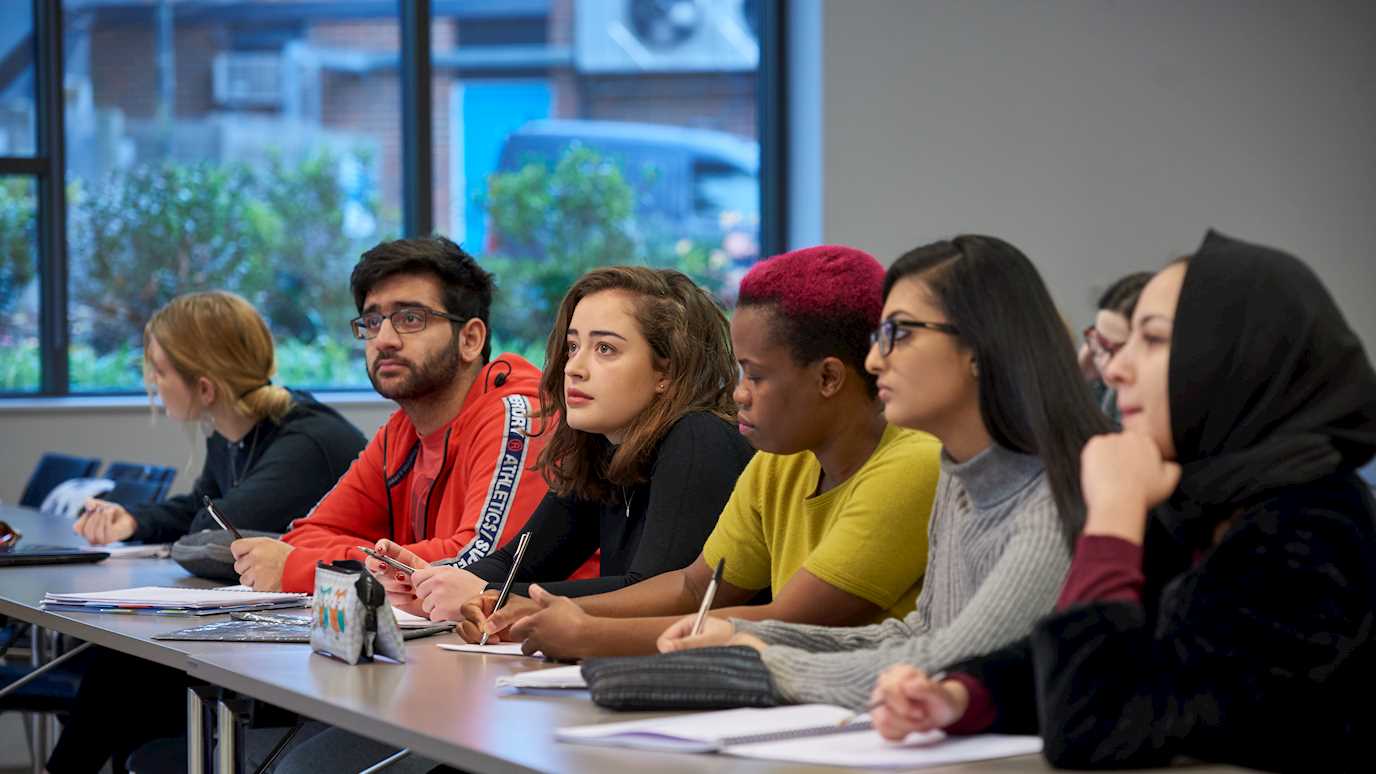
Taught in both central London and on our Surrey campus, the MA in Public History offers students a dynamic, creative and challenging combination of practical and theoretical learning. Through a variety of highly engaging modules and varied assignments, students develop a wide range of practical skills and in-depth knowledge of the themes, debates and concepts that are central to public history today. In our seminars we explore not just how history is communicated to the public, but who gets to be part of the history-making process, what narratives tend to be privileged and why, whose voices and experiences tend to be marginalised, and how this can be redressed. These discussions are complemented with practical guidance on the role of the public historian in helping to provide accurate, nuanced, and more inclusive histories.
Many of our graduates have gone on to forge exciting careers in organisations such as The National Archives, the Imperial War Museum, the National Trust, the BBC, the V&A, and a wide range of other heritage and history organisations. Some have also gone on to undertake PhD research at Royal Holloway, with recent students working on collaborative doctoral projects with the UK Parliament, The National Archives, the Black Cultural Archives, the Bishopsgate Institute, and The London Archives. Graduates of the MA also join a growing community of public history professionals, who we continue to support with a range of networking and continuing professional development opportunities.
We sometimes make changes to our courses to improve your experience. If this happens, we’ll let you know as soon as possible.
Course structure
Core Modules
-
Pathways to the Past: Public History in Theory and Practice
This module introduces students to ideas about, and approaches to, public history in Britain and the wider world, with seminars providing a weekly forum for students to learn about and discuss the rich variety of ways in which historians engage public interest in the past. Students are encouraged to explore the history of public history and heritage and to understand that the representation of ‘the past’ has often been, and continues to be, contested and exploited for political, commercial and community ends.
Over the course of two terms, students acquire a repertoire of skills and approaches (combined with the development of advanced skills in the writing of history) to enable them to act as effective and engaging public historians. These include knowledge about ethics, inclusivity, strategic planning, along with a range of issues that arise when working with partners and communities. The successful communication of narrative of the about the past and developing your own ‘philosophy of public history’ are key, overarching themes of the module.
The module offers an exciting combination of internal and external seminars, with the latter taking place at public history institutions and heritage sites, including Hampton Court Palace, the Imperial War Museum, the Black Cultural Archives, the Bishopsgate Institute, and the Museum of the Home.
-
Making History on the Airwaves: Broadcasting and Radio Documentary Production
This module seeks to introduce students to the various ways in which history is communicated to the public. In particular, it equips students with a practical skillset to enable them to produce their own public history podcasts that are not only informative and accurate, but also entertaining and engaging, while also learning how to review and critique the representation of the past in various media.
In the first half of the module, we explore how history is communicated to the public via film and television, social media, podcasts, and museum galleries. These sessions are led by experienced industry professionals and include a wide range of creative practical exercises drawn from sector experience.
Over the module students will also learn how to devise, research, record, structure, script, edit and present podcasts to professional standard. In addition, students will be introduced to a variety of creative tools and platforms to enhance their podcast and set themselves apart in the marketplace, including branding and logo design. AI tools are employed mindfully and critically, giving students the opportunity to think about the ethics of AI use in public history. No previous knowledge or expertise of recording or editing is required. Importantly, the very transferable skills students acquire on this course can be used to create a wide range of other aural and audio projects.
-
Nothing About Us Without Us: The Power of Oral History
This module invites students to explore the theory and practice of oral history in the wider context of public history. Beginning with an exploration of the development of oral history as a rigorous academic field with strong grassroots and community-led foundations, we will go on to discover the ways in which oral history and public history have developed together as potentially radical ways in which to ‘do’ history.
We will examine the challenges and opportunities of employing oral history in a range of public history settings, including museums, the web, film and television, and community histories.
Crucially, students will apply theory to practice via a class project devised and delivered with an external project partner. Students will learn how to conceptualise and plan an oral history project, develop funding applications, and understand good practice for effective partnership work. We will also explore ethics in oral history, and the role and responsibilities of the interviewer. The culmination of the module sees students conducting their own oral history interviews to archive and publication standards. The completed interviews are then deposited in an archive, where they will be made accessible to future researchers. Previous partners have included the National Trust, Egham Museum and Dulwich Picture Gallery.
Through this highly applied module, students will gain valuable experience and skills equipping them for a range of roles in the sector and beyond, including project management, undertaking fieldwork, and managing community and partner relationships.
-
The Historian’s Toolkit: Studying and Communicating the Past
This module introduces students to the research skills, concepts and resources they need as historians at postgraduate level. Understanding the range, scope and depth of physical and digital archives and museums, the use of documents, recordings, artefacts and images, as well as how to critically interpret them is essential for constructing a convincing historical narrative.
Students will interpret a variety of evidence, including manuscript and printed texts and material culture; engage theoretically and conceptually with history as both a process and discipline; and put different historical methods and concepts into practice. By the end of the module, students will be skilled and knowledgeable historical researchers, having engaged closely with important historical sources and theories.
-
Final Project
In lieu of a conventional academic thesis, all students are required to design and create a project through which they communicate with the public about the past in a meaningful and engaging fashion. The project can take the form of an exhibition, a teaching resource, a website, a podcast series, a documentary, a children’s book, or indeed any substantial output through which the author conveys ideas about the past to a wider public. This can focus on any historical period or theme, and, over the years, students have truly excelled when engaging with the final project and produced some extraordinarily creative and professional pieces of work.
-
Academic Integrity
This module will describe the key principles of academic integrity, focusing on university assignments. Plagiarism, collusion and commissioning will be described as activities that undermine academic integrity, and the possible consequences of engaging in such activities will be described. Activities, with feedback, will provide you with opportunities to reflect and develop your understanding of academic integrity principles.
Teaching & assessment
Teaching is largely seminar based, involving discussion of key concepts and debates, along with practical exercises. Many modules also feature guest speakers and Pathways to the Past includes fieldtrips to leading public history and heritage sites and organisations across London and Surrey.
Assignments take a variety of forms including conventional academic essays, critical reviews, blog posts, literature reviews, mock funding applications, podcasts, and oral history interviews accompanied by reflective essays.
Part-time students typically take Pathways to the Past and Making History on the Airwaves in year one and The Historian’s Toolkit, ‘Nothing about us without us’: the power of oral history, and the Final Project in year two. Part-time students wishing to take the MA over a longer period are required to discuss and confirm this with the MA Director when applying for a place. Students planning to commute over a long distance are also encouraged to discuss this with the course Director when applying.
Entry requirements
2:2
UK Honours degree (2:2) or equivalent, in History or a related subject in the Humanities or Social Sciences.
Candidates with professional qualifications and work experience in an associated area will also be considered.
Applicants come from a diverse range of backgrounds and we accept a broad range of qualifications (including first degrees in subjects other than History).
Interviews are usually offered to applicants and for those who are unable to attend a face-to-face interview will be interviewed by telephone.
One academic reference is required as part of the application before assessment is made. A second reference may be required.
Applicants may also be asked to provide a 1,500-2,000 word critical essay.
International & EU requirements
Bachelors Degree/ Bachelor Honours Degree: GPA 2.6
Masters degree: GPA 3.0/ 80%
Diplomë e Integruar e Nivelit të Dytë:or Diplomë e Nivelit të Parë: 7/10, or Master i Shkencave në Mjekësi të Përgjithshme / në Mjekësi Veterinarë / ne Stomatologji: 7/10
Licence, Diplôme, Diplôme d'Études Supérieures, Diplôme de Docteur en Pharmacie: 11/20
Batxelor: 5/10
Grau de Licenciado/a: 13/10
Bachelor degree from The University of the West Indies: GPA 2.5
Título, Grado de Licenciado/A: 6/10
Specialist Diploma, (Diplom bakalavri astichan), Bachelor degree from American University of Armenia: 70%, GPA 3.0 out of 4, or 14 out of 20
Bachelor degree (Honours) with a 2:2, or a Bachelor degree (Ordinary) with a Pass with 57% overall.
Bachelor degree or Fachhochschuldiplom/Diplom (FH): Bestanden- PASS, Befriedigend - Satisfactory, or 3 out of 5
Bachelor degree (Bakalavr) or Specialist Diploma with 3.5 out of 5 or 70% overall.
Bachelor degree from The University of the West Indies: 2:2, GPA 2.5
Bachelor degree: 2.6/4 or 3.2/5 or 65%
4 year Bachelor degree from Bangladesh University of Engineering and Technology (BUET) with a First Class Division or a Masters Degree following a 3 or 4 year degree.
Specialist Diploma 6/10, or Bachelor Degree 8/10
Bachelor degree with grade 12 overall or the Licentiaat or Licence and other two cycle diplomas with grade 12 overall.
Bachelor degree from The University of the West Indies: 2:2 or GPA 2.5
Diplôme d'études Approfondies/Supérieures/Master: 13 out of 20
Bachelors degree: 60%
Licenciado/Titulo de.... :60%, or Titulo de Bachiller Universitario: 70%
Diploma Visokog Obrazovanja Diploma Visokog Obrazovanja / Diplomirani with Grade 8
Bachelors or Masters: 60%
Título de Bacharel/ Titlo de... 6.5/10
Bachelor degree from The University of the West Indies: 2:2
Bachelor (Honours) Degree: Lower Second Class, or Bachelor (Ordinary) Degree GPA 2.5/5
Bakalavar or Diploma of Completed Higher Education with a Grade 4 out 6 overall.
Diploma d’Etudes Approfondies: 13/20
Diplome d’Etudes Approfondies: 70%
Masters degree: 60%
12/20 or GPA 2.5/4
4 year Bachelor degree with 62%, a GPA 2.5 out of 4, Grade 6 out of 12 or grade C+ overall OR 3 year Bachelor degree with 73%, a GPA of 3.1 out of 4, Grade 8 out of 12 or grade B overall, depending on the grading scheme.
Grau de Licenciado/a: 13/20
The University of the West Indies, or University of College of the Cayman Islands: 65%
Diplome d’Ingenieur (non-honours): 14/20
Diplôme d'Etat de Doctorat en Médecine, Diplome d'Etudes Approfondies 13/20
Grado de Licenciado en..., or Grado de Bachiller: 4.6/7
4 year Bachelors degree with an overall 65% to 70% or GPA of 2.8 to 3.0 out of 4.0 depending on the institution.
Licenciado en, Licenciado en, or Diploma de: 3.5/5
Licenciado, Bachiller: 7.5/10
Diplôme d'études supérieures spécialisées, Diplôme d'études approfondies, Diplôme d'Etat de docteur en Pharmacie: 13/20
3 out of 5 overall in the Baccalaureus Prvostupnik or Visoko Obrazovanja/Level VII/1 (second level degree obtained on completion of 4-6 year course).
Titulo de Licenciado/ Arquitecto / Inginiero / Doctor: 3.5/5
Overall 6.5 out of 10 or a GPA of 2.5 out of 4 in a Bachelor degree from a public university, Ptychion (from University of Cyprus) or Bachelor degree awarded by a private institution (the programme must be accredited by the Ministry of Education and Culture).
Bakalar with dobre (good), score of 2 or Grade C overall.
Diplome d’Etudes Speciales, Diplome d'Etudes Approfondies, Maistrise/Diplome d'Ingenieur/Diplome d'etudes superieures:
7 from 13 points grading system or 4 from 7 points grading system in a Bachelor degree, Candidatus Philosophiae or Professionbachelor.
Diplome d'Ingenieur Bien, or Maitrise/ Master: 14
The University of the West Indies: Lower Second Class Honours, or BSc in Nursing from Dominica State College
Licenciado/Titulo: 75%
Titulo de Licenciado/a from Universidade Nacional Timor Lorosa'e
Titulo de Licenciado/ Titulo: 7/10 OR 70%
University bachelors degree with a GPA of 2.4 overall or 65% overall
Licenciado/ Titulo de: 6.5/10
Masters Degree: 2.6/4
71-80%, 3 or C overall in a Bakalaurusekraad/Diploma, Magister or Magistrikraad
2.5 out of 4
Bachelor Degree: 2.5 or overall grade Satisfactory
GPA of 1.4 where marks are in 1 - 3 system or GPA of 2.5 where marks are in 1 - 5 system in a Kandidaattii/Kandidat or Maisteri/Magister
Licence awarded from 2009 with grade 10-11.99 or Maitrise (pre-Bologna) with grade 11
Diplome D'Ingenieur, or Maitrise: Bien
Master's degree: 60%/ GPA 2.7/4.3
Bakalarvis Khariskhi: 71%
Grade 3 overall in a Bachelor, Fachhochschuldiplom or Magister Artium
Bachelor degree with a Second Class Lower Division overall.
6 out of 10 overall in a Diploma from the Faculties of Engineering and Agriculture or a Ptychion (Bachelor degree) awarded by an AEI.
Bachelor degree from The University of the West Indies: GPA 2.5
Licenciado/ Titulo: Pass mark of 51% University: 60% or Pass mark of 61% Universities: 70%
Diplôme d'Etat de docteur en médecine, or Diplome d’Etudes Superieures/Maitrise/Diplome d’Etudes Approfondies : 14/20
65%, or 3.0 out of 4
Titulo de Licenciado/a/Grado Academico de Licenciatura: 70%
Bachelors degree degree with a Second Class Honours, Lower Division.
Egyetemi Oklevel /Foiskola Oklevel/ Alapfokozat with 3 out of 5 overall.
Baccalaurreatus with grade 6.5 out of 10 overall or Kandidatsprof / Cadidatus Mag with 6 out of 10 overall.
Bachelor degree with 55% to 60% overall or a CGPA of 5.5 to 6 out of 10 overall depending on the NIRF 1-100 institution ranking
Bachelor degree or Diploma IV with overall GPA of 2.8.
Bachelor Degree/Professional Doctorate with 12 out of 20 overall.
Bachelor’s degree (four years) in Medicine/Dentistry/Veterinary Medicine/Pharmacy/Architectural Engineering with 70% overall.
Bachelors degree with at least 65% overall depending on the mark scheme.
Diploma di Laurea or Licenza di Accademia di Belle Arti with 80 out of 110 overall.
Bachelor degree (when accredited by the University Council of Jamaica, or when awarded by the Council of Community Colleges of Jaimaica): Second Class Lower Division
Bachelor degree (Gakushi) with a B overall, dependent on the mark scheme.
Bachelor degree: GPA 2.8 out of 4, Good, C, 68%
Bakalavr or Specialist Diploma with 3.5 out of 5, 75% or 2.67 out of 4.33, or 2.67 out of 4 overall.
Bachelor degree with a Second Class Honours (lower division) overall.
Bacelor/Bachelor Degree: C - Good
Bachelor degree with B or a GPA of 2.6 overall.
Specialist Diploma, Bachelor Degree, Masters Degree: 3.0 out of 4 or 4.0 out of 5
Masters degree: C or GPA 2.0
Bakalaura Diploms or Professional Bakalaura Diploms with Grade 6 overal.
Bachelor Degree/ Licence: 70%
Masters Degree: 65%
Master's degree: 70% or GPA 2.4 out of 4.0
Bachelor Degree of Medicine/Surgery/Architecture/Engineering: 65% or 2.6/4
Dipl Ing (FH) or Dipl Arch (FH) from Liechtenstein Technical College with a Grade 4.4/6 overall.
7 out of 10 overall in a Bakalauras or Specialist Diploma.
Bachelor or Diplome d'ingenieur industriel: 14/20
Licenciatura: Lower Second Class Honours or GPA 2.5
Diplome d'Ingenieur: 13/20
Masters Degree: 60%
Bachelor degree with Class 2 Division ii, B or 2.6 out of 4.0 overall.
Bachelor degree (Maldives National University): GPA 2.5
Diplôme d'Etat de docteur en Pharmacie: GPA 15 out of 20
Honours degree with a Second Class (Lower Division) overall.
Maitrise: 13/20
Bachelor Degree: Class II division II
Titulo de Licenciado/Titulo: GPA 7 out of 10 or 70%
Diplomă de Licenţă: 7/10
Bachelor degree (awarded after 2012): 80 out of 100
Masters Degree: 70%
Diploma o završenim osnovnim akademskim studijama: Grade C
Licence/Licence d'Etudes Fondamentales/Licence Profesionnelle: GPA 111 out of 20
Grau de Mestre: 12/20
Master's degree: 60%
Bachelor Honours / Professional Bachelor degree: 60%
Bachelor degree (4 years) or Master's degree (following a 3-year Bachelor degree): 65%
Bachelor degree or Doctoraal with Grade 6.0 out of 10 overall.
Bachelor degree Honours or Ordinary with an overall Grade C+ or Grade 3 out of 9 points grading system.
Licenciado/Titulo: 80%
Diplôme d'études Approfondies or Diplôme d'études Supérieures Spécialisées: 15 out of 20
Bachelor degree with a Second Class Honours, Lower Division or overall GPA of 2.4 out of 5.
Visoko Obrazovanja with 7 out of 10 overall.
Bachelor degree GPA 2.6 to 2.8 depending on your institution.
Bachelor degree, Candidatus Magisterii, Sivilingeni-r (siv. ing.) (Engineering degree ) or Sivil?konom (siv. ?k.) (Economics degree) Grade D or 3.25 where 1 is the highest.
Bachelor degree with an overall GPA of 2.6/4
4 year Bachelor degree or combined bachelors degree and Master degree for the duration of 4 years with 58% - 65% or a CGPA of 2.8 - 3.2 overall depending on your institution.
Bachelor degree: GPA 3.0 out of 4.0, 80%, B
Licenciado/ Titulo: 70%
Bachelor Honours Degree: Class II, Division B
Titulo de Licenciado/ TItulo: 3.5/5
Grado Academico de Bachiller: 13/20
Bachelor degree (awarded from 2022): 2.5/4, or Masters degree: 2.5/5
Licencjat, Inzynier or Bachelor with grade 4 out of 5
Diploma de Estudos Superiores Especializadoswith grade 14 overall or Licenciado with grade 13 overall.
Bachelor degree: 70/100 or GPA 2.0 out of 4.0
Bachelor degree with an overall GPA of 2.8 overall.
Maitrise: 13/20
Diploma de Licenta, Diploma Inginer or Diploma de Arhitect with 7.0 out of 10 overall.
Bakalavr Bachelor degree or Specialist Diploma with 3.5 out of 5 or 70% overall.
Bachelor Honours Degree: 13/20
Bachelor degree when studied at University of South Pacific, Samoa: GPA 2.5
Licenciatura: 13/20
Bachelor degree with 65%, 3.25 out of 5.0 or 2.5 out of 4.0 overall.
Diplom Visokog Obrazovanja (second-level degree obtained on completion of a four to six-year course) with 7 out of 10 overall.
Bachelor Degree: Lower Second Class
Bachelors Degree (Honours): Lower Second Class
Bachelor degree (from a public university) with a Class II (lower) overall.
Bakalar or Magister / Inzinier with vel'mi dobre (very good) or Grade 2 overall.
Diplomirani / Diplomirani Inzenir from Visoko izobrazevanje, University Diploma or Visoko Obrazovanja (until 1999) with 7 out of 10 (8 for Visoko Obrazovanja) overall.
Bachelor degree when studied at University of South Pacific, Vanuatu: GPA 2.5
Bachelor (Honours), Bachelor or Professional Bachelor degree with 60% or Second Class Lower Division.
Bachelor (Haksa) degree with 3.0 out of 4.5, 2.9 out of 4.3 or 2.8 out of 4.0.
Bachelor Honours degree: 2.5/4.0 Division Two Lower
Licenciado, Titulo de Ingeniero or Titulo de Arquitecto with 6 out of 10.
Bachelor degree from The University of the West Indies: GPA 2.5 Second Class Honours, Lower Division
Bachelor degree from The University of the West Indies: GPA 2.5 Second Class Honours, Lower Division
Bachelor degree from The University of the West Indies: GPA 2.5 Second Class Honours, Lower Division
Bachelor Honours Degree: 60%
Bachelor degreee, Masters Degree, MO-B Akte Diploma: Met Genoegen (Good)
Bachelor degree: 70%
Bachelor degree from National University or Private University with 68% to 73% or GPA 2.8 to 3.0 depending on your institution.
Specialist Diploma: 3.5/5
Bachelor degree with a 2nd Class Honours (Lower) overall.
Bachelor degree GPA 2.4 to 2.6 depending on your institution.
Diplôme d'études supérieures, Diplôme d'études approfondies: 13/20
Bachelor or Masters degree from the University of the South Pacific: 70%/ B+
Bachelor degree (when accredited by the Accreditation Council of Trinidad and Tobago (ACTT)): Lower Second Class Honours
12 out of 20 (Assez Bien)
Bachelor degree GPA 2.6 to 2.8 depending on your institution.
Ýokary bilim hakynda şahadatnama: 3.5/5
Bachelor degree (accredited by the Council of Community Colleges of Jamaica)
Bachelor degree: Class II Lower/ Honours Lower/ 3.0-3.9/ B
Bachelor degree (post 2007) or Specialist Diploma (after 1991) with a Grade 3, 9 out of 12 or 3.5 out of 5 overall.
Bachelor degree with 80%, a GPA of 2.8 out of 4, C+ or Good overall.
Bachelor degree with a GPA of 2.6 overall.
Bachelor Honours Degree: GPA 2.5 or Second Class Honours, Lower Division
Titulo de Licenciado/Titulo: GPA 7/12
Diplomi: 70%
Kandidatexamen with at least a Pass (godkand) overall.
Bachelor degree when studied at University of South Pacific, Vanuatu: GPA 2.5
Titulo de Licenciado/Titulo: 70% or 11 from high ranking institution
Bachelor degree or Bang tot nghiep dai hoc with 6.5 out of 10.
Masters Degree: 63%
Masters Degree: 55%
60%-64%, Second Class Honours, Lower Division
English language requirements
- IELTS: 6.5 overall. No subscore lower than 6.0.
- Pearson Test of English: 67 overall. No other subscore lower than 64.
- Trinity College London Integrated Skills in English (ISE): ISE III.
- Cambridge English: Advanced (CAE) grade C.
- TOEFL iBT: 88 overall with Reading 22 Listening 20 Speaking 22 Writing 24.
- Duolingo: 120 overall and no sub-score below 115.
Your future career
On completion of your MA in Public History at Royal Holloway you will be equipped to pursue a career in the world of museums, archives and heritage sites, in broadcasting, film or TV, with community organisations or in journalism. You will also have started to develop a valuable network of contacts, something we will help you to expand with ongoing networking and professional development opportunities. Our Careers team will also help prepare you for the choices ahead, with tailored CV and interview preparation and access to a wide range of events. Their support does not end when you graduate; you can access the service for up to two years after graduation.
Our graduates are highly employable and, in recent years, have gone on to pursue a variety of interesting careers with the BBC, Historic Royal Palaces, the Imperial War Museum, the Houses of Parliament, the National Archives, and as engagement officers, curators, and historians with a variety of public history institutions and heritage sites. The MA also equips you with a solid foundation for continuing your studies with a public history PhD, including Royal Holloway’s innovative PhDs by Practice in Public History.
Fees, funding & scholarships
Home (UK) students tuition fee per year*: £12,000
EU and international students tuition fee per year**: £27,000
Other essential costs***: : £350 (£200 for travel to heritage sites for the Pathways to the Past module; £50 for travel and interview expenses for the Voice of the Public and Public Communication modules; book purchases across all units approximately £100).
How do I pay for it? Find out more about funding options, including loans, grants, scholarships and bursaries.
* and ** These tuition fees apply to students starting their course on a full-time basis in the academic year 2026/27. Students studying on the standard part-time course structure over two years are charged 50% of the full-time applicable fee for each study year.
Royal Holloway reserves the right to increase all postgraduate tuition fees annually. For further information, see fees and funding.
** These estimated costs relate to studying this particular degree at Royal Holloway during the 2026/27 academic year, and are included as a guide. Costs, such as accommodation, food, books and other learning materials and printing, have not been included.