Influence and impact: the environmental movement and policy change
How – and how far – has the environmental movement influenced policy and legislation in the UK over the past 50 years, and what lessons can be learned from this work? Chris Church and Catriona Toms explore key discussions from our policy witness seminar.
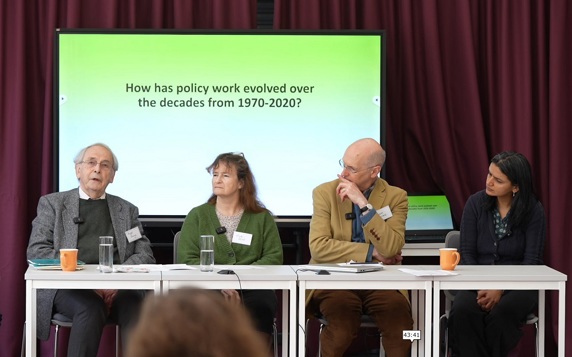
From pollution and habitat destruction to climate and energy, environmental campaigners have worked consistently across decades to push for changes to policy and legislation in response to the loss of nature and escalating climate impacts.
This policy focus and lobbying for change was one of three key pillars – alongside protests and projects – that the Oral History of the Environmental Movement (OHEM) project set out to explore, aiming to contribute to greater understanding of how civil society has engaged with environmental issues over the past 50 years.
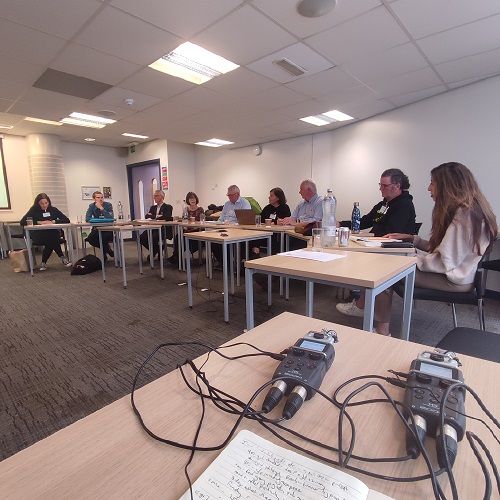
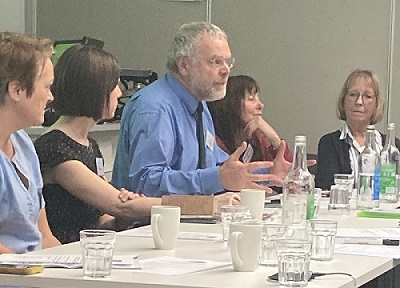
Earlier this year, we brought together a group of 12 people who have been central to this work to share their knowledge, experience and insights in a ‘Witness Seminar’. We were interested in how matters evolved over the decades, the experience of work with different governments and political parties, and the links between policy, protest and project work within the movement. What lessons can be learned from this history to help campaigners now and in the future?
This blog post looks at some of the key themes that emerged from the seminar, whilst the edited transcript gives a sense of the wide-ranging and insightful discussions.
Challenges and opportunities
Our participants drew on a broad range of experience from different decades, allowing us to look at multiple sectors – including transport, energy, nature and agriculture – and to explore different strategies and tactics, successes and struggles.
Panellists discussed how the environmental movement has worked together, often in coalition with other movements, to try to make a positive impact in an ever-changing ecological, political, social, cultural and economic landscape. They highlighted a shift in focus from single-issue campaigns in the 1970s to increasingly complex global problems, such as global biodiversity, ozone depletion and climate change. Discussions examined key external factors such as: the impact of the global economic system; changes in government, devolution, and membership of the European Union; transformations in communication methods and the role of the media; and the increasing influence of industry lobbyists.
The challenges and opportunities of working with different governments, departments, Ministers and political parties were explored, with discussion of how long periods of slow progress were punctuated by moments of rapid policy shifts, highlighting the importance of keeping issues in the public eye and being ready for opportunities to influence change. Experience over the decades had led to some to be very wary of voluntary commitments and codes of practice, with examples of backsliding and missed targets in a range of areas emphasising the importance of pushing for binding legislation.
Building on successes
Looking at what could be learned from key successes, the panel reflected on the strategies and broader context of some pivotal campaigns, including the 1990s anti-roads movement, ‘The Big Ask’ and the Climate Change Act, the Environment Act, changes to agricultural policy, the end of open cast coal mining, anti-fracking campaigns, action on the ozone layer, the growth in renewable energy, and more. They explored the impact of various factors on these successes, including the breadth of the movement, the variety of approaches, the value of working in coalition with other movements, the crucial role of grassroots campaigners, and the importance of research and evidence.
Within this, the seminar explored the effectiveness of different tactics used in policy work, including awareness-raising, media work, legal action, investigations, corporate campaigns, and working with sympathetic groups and individuals within political parties.
Recurring themes included the importance of understanding the workings of government and the motivations of policymakers, of telling compelling stories that connect with people’s lives, and of showing a mandate for change by highlighting how much people from across the political spectrum care about nature, climate and their local areas. These were all aspects that some saw as needing strengthening within the movement.
Protest and projects
Reflecting on how policy work sits alongside the other two pillars of the OHEM research – protest and projects – a number of panellists suggested that protest is a vital part of creating change, but it was argued that it could not necessarily succeed alone, requiring other strategies to be implemented at the same time.
The value of local projects – such as community food growing, community energy and green prescribing – was highlighted by one panellist’s example of using these to show policymakers that people in their constituencies were working together to find new ways forward.
A key theme here was the importance of coordinating strategies and tactics across protest, policy and projects, and between NGOs, academics, grassroots campaigners and community groups – another area that some participants felt needed strengthening within the movement.
Lessons for the future
Despite many hard-won successes, climate change and nature loss continue to accelerate and the seminar considered what the movement might have done differently, and what lessons can be learned from failures as well as successes.
Discussions ranged from the difficulty of creating change within a neoliberal capitalist system, and whether the movement should focus more on this as a fundamental issue, to the strengths and weaknesses of appealing to a broad base of UK nature-lovers versus more radical intersectional campaigns bringing together social and environmental justice. Whilst there were no easy answers, the seminar suggested a movement ready to ask difficult questions and to continue to evolve in the face of complex and urgent global challenges.
Our thanks to everyone who participated in the Witness Seminar for their time and insights. This was one of five seminars that brought together small groups of people to discuss key aspects of the environmental movement, complementing the 100 life story oral histories that form the mainstay of the project. You can read about some of the other seminars – including those focused on Scotland, Wales and Northern Ireland – on our project blog.
Witness Seminar: transcript of proceedings
Chris is OHEM Project Officer. He is Director of Community Environment Associates and specialises in work with communities on climate change and related issues. He has worked in the environmental sector for over 30 years. Catriona has been involved with the environmental movement for over 20 years and is providing project support.