Taking action together: The environmental movement in Scotland, 1970-present
What can be learned from the past 50 years of environmental protests, projects and policy work in Scotland, and how can this be taken forward into the future? Dr Toby Butler and Catriona Toms report from our final Witness Seminar.
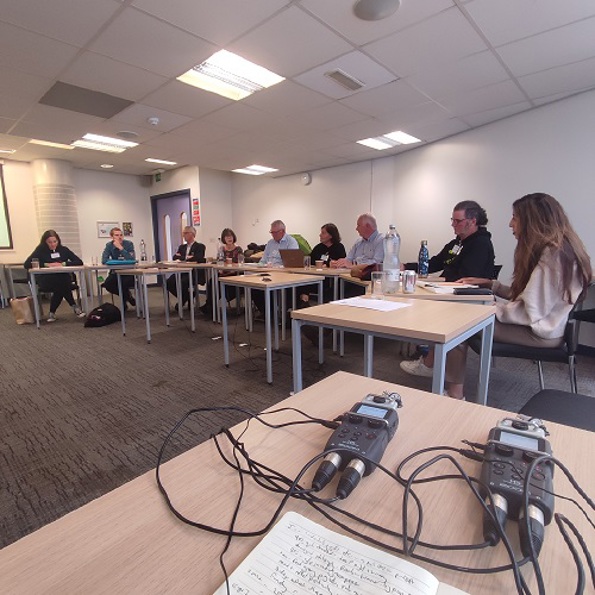
The key aim of the Oral History of the Environmental Movement (OHEM) project is to document the history and lived experience of environmental campaigns through the words of some of those who have been most closely involved. Whilst our core method of 100 life story interviews provides a rich and varied picture, a series of ‘Witness Seminars’ has also allowed us to bring people together to discuss key moments, challenges and lessons for the future.
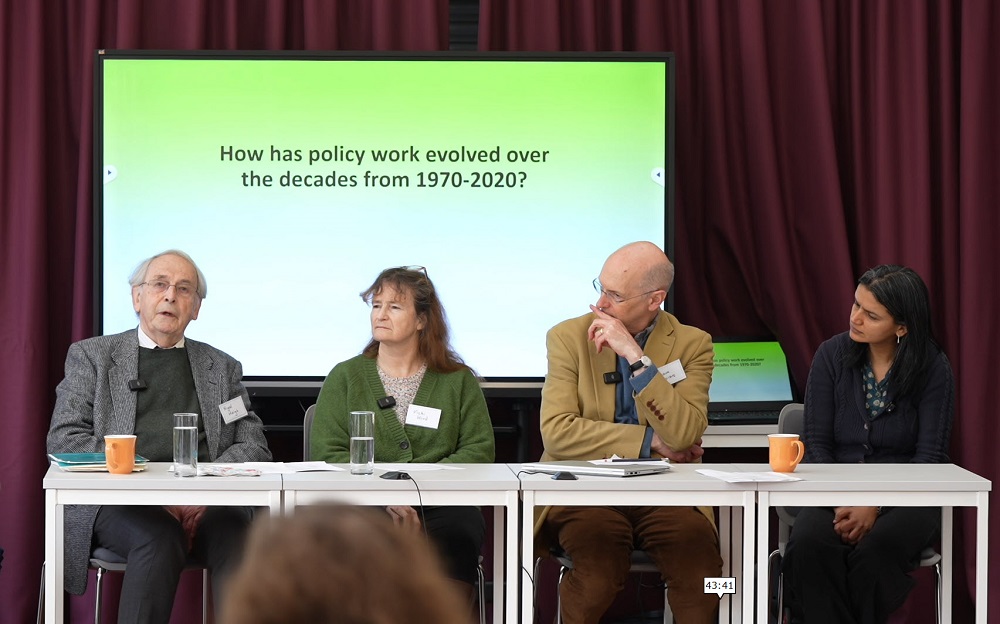
For our final seminar in the series, we gathered at the University of Strathclyde in Glasgow on 5th June 2025 to discuss the environmental movement in Scotland from the 1970s to present day.
The seminar brought together people with a range of roles and backgrounds, including long-established NGOs and smaller grassroots organisations. Participants’ experience covered everything from wildlife and nature conservation to environmental and social justice, often working with communities at the intersections of these and other issues. This mix of expertise allowed for a wide-ranging and fascinating discussion on the past, present and future of Scotland’s environmental movement.
Taking a broad view of the past 50 years, panellists reflected on the development of NGOs, pre- and post-devolution legislative change. They reported a dramatic change from lobbying Westminster to suddenly having access to a much more responsive civil service and easy access to ministers. They also reported a growth in public engagement with environmental issues over the period, including the increased focus on inclusivity and equality within the movement. Different approaches to environmental action were discussed, from policy campaigns, court cases and direct action to community gardening, food banks and Climate Cafés, with a wide range of examples given throughout the seminar.
Echoing discussions in our Wales Witness Seminar, devolution was seen as having led to increased access to policymakers, and to have allowed Scotland to make bolder environmental policy and legislative choices, often being seen as vying with other UK countries to go further faster. Panellists looked back on the first decade after devolution as a highly fruitful and exciting period in which people came together to share ideas and explore ways forward, with politicians actively welcoming the creativity and expertise of the environmental movement. However, there was a general feeling that this had gone backwards in recent years, and panellists reflected on the reasons for this and the changing approach of the environmental movement.
Another recurring theme, which we’ve also heard in previous Witness Seminars, was the importance of collaboration, including how crucial it is to work with local communities and to create spaces in which people can come together to create change from the ground up. In terms of collaboration between environmental organisations, panellists specifically highlighted the pivotal role of Scottish Environment Link, whilst the benefits of working in ‘unlikely alliances’ were also explored.
Looking at the importance of place-specific approaches, Scotland’s rich history of social and political activism was highlighted by several participants, with the panel exploring links to the trades unions movement, the land rights movement, and – more broadly – intersections between social and environmental justice.
Other key themes that emerged were the importance of hope, of building on momentum, and of learning from tried-and-tested methods alongside experimenting with new approaches.
There’s much in the transcript of this Witness Seminar to inspire and inform anyone who wants to explore the history of the movement and to take lessons forward into the future.
Our heartfelt thanks to our hosts, Professor Arthur McIvor and the Scottish Oral History Centre, for providing the venue for the session, and to all of our participants for sharing their invaluable knowledge and experience.
Witness Seminar: transcript of proceedings
Dr Toby Butler is Principal Investigator and Reader with the OHEM project.
Catriona has been involved with the environmental movement for over 20 years and is providing project support.