Key information
Duration: 1 year full time or 2 years part time
Institution code: R72
Campus: Egham
UK fees*: £12,500
International/EU fees**: £28,100
The course
Applied Neuroscience (MSc)
Our MSc Applied Neuroscience course gives a unique insight into neuroscience in real world settings. Studying the latest neuroscience methods, you’ll learn alongside our leading neuroscientists with contributions from professional experts, and have access to the Psychology department’s excellent neuroscience facilities. You’ll learn to conduct applied neuroscience research projects and acquire practical, hands-on experience for your future career.
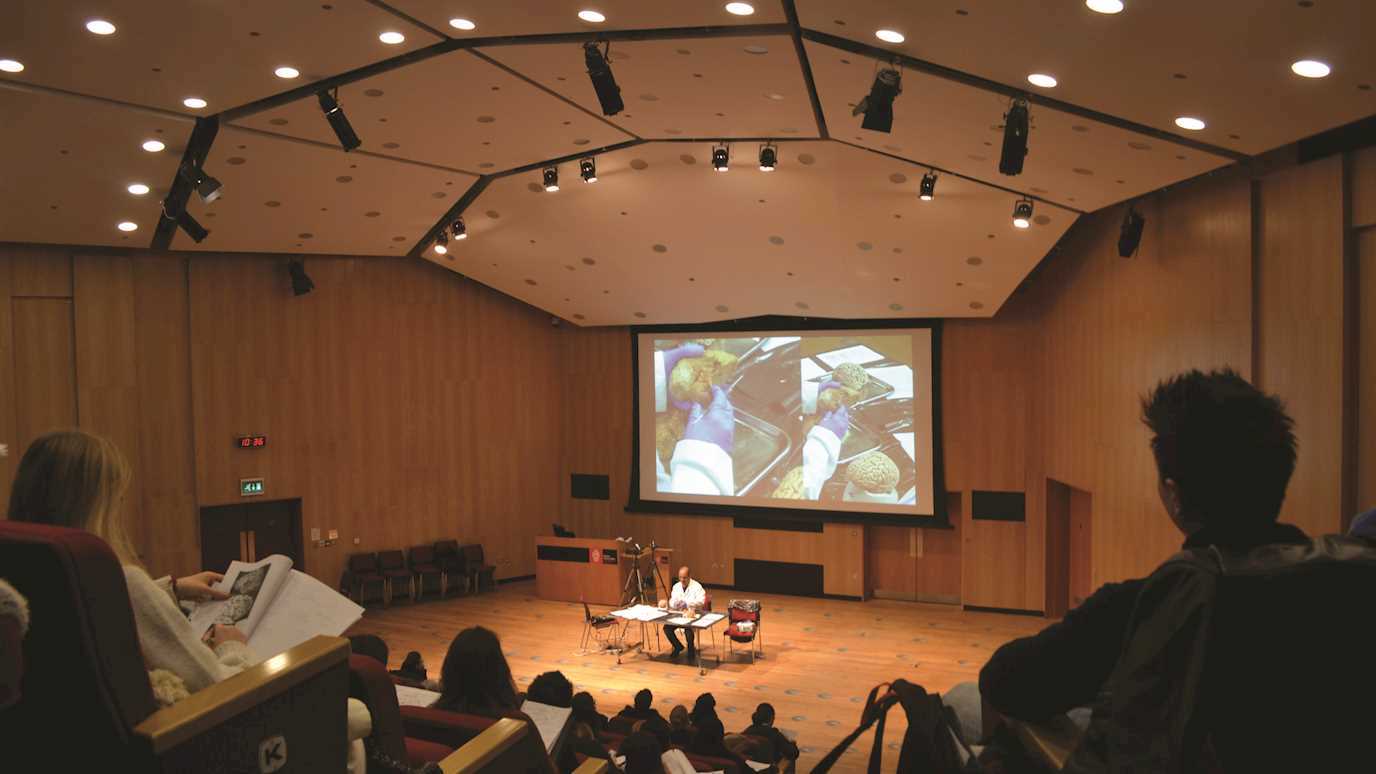
Students bring their learning to life through practice-based workshops to gain experience using cutting-edge technology such as fNIRS, VR, eye tracking, FMRI, and across the board EEG in our campus-based laboratories. You'll develop further expertise by taking part in experiments with neuroscience-based equipment, often with industry involvement.
The course is linked with our world-class research expertise in Psychology, and cross-disciplinary research community in Artificial Intelligence (AI), exploring areas of human interaction with digital media, technology, design and psychology. These are exciting and topical areas, making this course up to date and relevant to society.
The Department of Psychology at Royal Holloway has been placed joint third in the country for research quality following the publication of the most recent Research Excellence Framework (REF 2021 results ranked by subject, The Times Higher Education). This outstanding result reinforces the importance and value of the department’s research to society and the economy.
Join us as a postgraduate student on MSc Applied Neuroscience and you'll get the inspiration and support you need to achieve your academic and career goals in this innovative and exciting field.
On this course you will:
- Gain practical and hands on experience using neuroscience methodologies and data analysis, with teaching assuming no prior experience with the techniques.
- Complete assessments that have been developed to map on to relevant activities in both academic and industrial settings, which will enhance your employability.
- Engage with contemporary and cutting-edge neuroscience research questions and learn to conduct applied neuroscience research projects.
We sometimes make changes to our courses to improve your experience. If this happens, we’ll let you know as soon as possible.
Course structure
Core Modules
Year 1
-
Methods in Applied Neuroscience
This module will provide you with the possibility to gain some hands-on experience of neuroscience techniques that can be used in applied contexts, such as EEG, fMRI and eye-tracking. You will learn how to collect data and analyse the data in a meaningful way to gain insight into human neural processes underlying perceptions, decisions and emotions, within an experimental design. Throughout the module, you will make use of different programming languages to deal with the different types of neuroscientific data.
-
Statistics for Research
In this module you will develop an understanding of the main statistical methods used in psychology research. You will look at basic descriptive statistics before covering more complex techniques, including analysis of variance, analysis of covariance, correlation analysis, and simple and multiple regression. You will examine advanced statistical methods, such as structural equation modelling and factor analysis. You will gain hands-on experience in applying these methods of analyses to actual datasets and problems using statistical software, considering their respective strengths and weaknesses, and what type of problems each approach is best suited to address.
-
Neuroscience: clinical and social perspectives
This module will introduce you to the latest research in clinical and social neuroscience, train students to interpret and evaluate the research in this area, and to apply their knowledge to the analysis of real-life examples. Lectures topics could include, for example: how memory interacts with mental health; how emotions are regulated and how they relate to decision making; promises and pitfalls of clinical MRI; the neural basis of understanding others; and computational psychiatry approaches.
.
-
Neuroscience in the real world
This module will a) introduce you to the latest research concerning the possible real-world applications of neuroscience research and techniques, b) train you to interpret and evaluate both the research in this area and some broader claims relating to applied neuroscience, and c) train you to apply this knowledge to the analysis of real-world problems.
-
Applied Neuroscience Project
This module will provide students with the possibility to carry out a piece of empirical research on a topic of their interest within the broad area of applied neuroscience. Students will decide on a topic for their project in conjunction with their academic supervisors. Care will be taken to match students’ and supervisors’ interests as closely as possible.
-
Academic Integrity
This module will describe the key principles of academic integrity, focusing on university assignments. Plagiarism, collusion and commissioning will be described as activities that undermine academic integrity, and the possible consequences of engaging in such activities will be described. Activities, with feedback, will provide you with opportunities to reflect and develop your understanding of academic integrity principles.
Optional Modules
Below is a taster of some of the exciting optional modules that students on the course could choose from during this academic year. Please be aware these do change over time, and optional modules may be withdrawn or new ones added.
Year 1
You’ll choose one optional module from the list below
-
Psychology in Applied Settings
The module aims to help students understand the challenges but also benefits of conducting research in applied settings, as compared to laboratory settings. After discussing general opportunities and challenges in conducting psychological research in applied settings, the module will cover a variety of topics in applied psychology delivered by experts on the topics and practitioners. These may vary each year, but can include selected topics in organisational psychology, forensic psychology, educational psychology, counselling psychology, and applied social psychology. Some example topics include eyewitness testimony in the court, parenting interventions, and understanding donations.
-
Advanced and Applied Research Techniques
In this module you will develop an understanding of many of the key research techniques that are used in social, health, forensic, clinical and developmental research. You will look at both qualitative and quantitative research techniques, covering forms of data collection such as questionnaires, online data, interviewing and focus groups, observational research methods, computerised cognitive measures, and social neuroscience techniques. You will also consider other forms of data analysis, including grounded theory, interpretative phenomenological analysis, thematic analysis, content analysis, and the use of secondary data and meta-analytic and systematic review techniques.
-
Adjustment and Well-Being
The module will cover a variety of topics in adjustment and well-being delivered by experts on the topics and practitioners. These will include measurement of well-being, antecedents and consequences of well-being, ill-being and health psychology. Some example topics include materialism and well-being, delusions, and adjustment of personal values to life transitions.
-
Clinical Assessment and Treatment Approaches
In this module you will explore instruments that mental health professionals use to assess patients, as well as assess evidence-based treatment approaches to disorders.
-
Forensic Investigations: Cognitive and Social Approaches
In this module you will develop an understanding of cognitive, social and neuroscience approaches to forensic psychology. You will look at social approaches to different victim and offender groups, the neuroscience of psychopathy, interviewing victims, physiological approaches to deception, detection, and the role of eyewitness identifications in the legal system. You will also examine receiver operating characteristic (ROC) analysis and confidence relationships as they apply to decision makers and estimator and system variables.
-
User-Centred Design
This module focuses on user-centred design aspects and challenges in interactive traditional, augmented and virtual reality contexts, and addresses the approaches that can be used to create displays and interfaces to enhance user experience.
-
Psychological Science in the Real World
Seminars will adopt an interactive, discussion-based style, focused around a topical research paper or a wider issue relating to psychological science. The topics for discussion will be drawn from a broad range of research areas, including neuroscience, cognition and social psychology. Many of the discussions will be student-led, and the topics for these sessions will reflect individual students’ particular areas of interest. The taught module will be complemented by a series of departmental research seminars, through which students will be able to hear about the latest research from a variety of external speakers.
-
Neuroscience Placement
The placement is designed to give you the opportunity to gain practical work experience to enhance your CV for future applications for jobs or to undertake PhD-level study. You will be responsible for securing a placement that aligns with your individual career plans, but will provided with support by the Department of Psychology and the Careers and Employability Service.
Teaching & assessment
Teaching is delivered primarily through sessions lasting between one and five hours. These typically combine seminar discussions with practical workshops to develop statistical, methodological and analytical experience. Where possible, these will be student-led, with participants encouraged to devise exercises engaging with the relevant issues and to direct fellow students in these experiments.
We place emphasis on group discussion and the development of independent thought and analysis appropriate to carry out an independent piece of research of high quality, in an area of interest to you. In some contributing modules, you will give oral presentations which form part of the formative assessment. Summative assessment is usually by written assignment, with an emphasis on developing and demonstrating skills relevant in real-world settings (eg posters, grant proposals, podcasts). There are also some written exams, particularly for modules focusing on methodology and statistics.
Entry requirements
2:2
Psychology or Natural Science subject (Biology, Zoology, Medicine, Biochemistry, Neuroscience, Cognitive Science, Computer Science, Chemistry, Mathematics and Physics)
Other degrees within a related Social Science with evidence of having taken and passed methodological or statistics training at degree level will also be considered.
International & EU requirements
Bachelors Degree/ Bachelor Honours Degree: GPA 2.6
Masters degree: GPA 3.0/ 80%
Diplomë e Integruar e Nivelit të Dytë:or Diplomë e Nivelit të Parë: 7/10, or Master i Shkencave në Mjekësi të Përgjithshme / në Mjekësi Veterinarë / ne Stomatologji: 7/10
Licence, Diplôme, Diplôme d'Études Supérieures, Diplôme de Docteur en Pharmacie: 11/20
Batxelor: 5/10
Grau de Licenciado/a: 13/10
Bachelor degree from The University of the West Indies: GPA 2.5
Título, Grado de Licenciado/A: 6/10
Specialist Diploma, (Diplom bakalavri astichan), Bachelor degree from American University of Armenia: 70%, GPA 3.0 out of 4, or 14 out of 20
Bachelor degree (Honours) with a 2:2, or a Bachelor degree (Ordinary) with a Pass with 57% overall.
Bachelor degree or Fachhochschuldiplom/Diplom (FH): Bestanden- PASS, Befriedigend - Satisfactory, or 3 out of 5
Bachelor degree (Bakalavr) or Specialist Diploma with 3.5 out of 5 or 70% overall.
Bachelor degree from The University of the West Indies: 2:2, GPA 2.5
Bachelor degree: 2.6/4 or 3.2/5 or 65%
4 year Bachelor degree from Bangladesh University of Engineering and Technology (BUET) with a First Class Division or a Masters Degree following a 3 or 4 year degree.
Specialist Diploma 6/10, or Bachelor Degree 8/10
Bachelor degree with grade 12 overall or the Licentiaat or Licence and other two cycle diplomas with grade 12 overall.
Bachelor degree from The University of the West Indies: 2:2 or GPA 2.5
Diplôme d'études Approfondies/Supérieures/Master: 13 out of 20
Bachelors degree: 60%
Licenciado/Titulo de.... :60%, or Titulo de Bachiller Universitario: 70%
Diploma Visokog Obrazovanja Diploma Visokog Obrazovanja / Diplomirani with Grade 8
Bachelors or Masters: 60%
Título de Bacharel/ Titlo de... 6.5/10
Bachelor degree from The University of the West Indies: 2:2
Bachelor (Honours) Degree: Lower Second Class, or Bachelor (Ordinary) Degree GPA 2.5/5
Bakalavar or Diploma of Completed Higher Education with a Grade 4 out 6 overall.
Diploma d’Etudes Approfondies: 13/20
Diplome d’Etudes Approfondies: 70%
Masters degree: 60%
12/20 or GPA 2.5/4
4 year Bachelor degree with 62%, a GPA 2.5 out of 4, Grade 6 out of 12 or grade C+ overall OR 3 year Bachelor degree with 73%, a GPA of 3.1 out of 4, Grade 8 out of 12 or grade B overall, depending on the grading scheme.
Grau de Licenciado/a: 13/20
The University of the West Indies, or University of College of the Cayman Islands: 65%
Diplome d’Ingenieur (non-honours): 14/20
Diplôme d'Etat de Doctorat en Médecine, Diplome d'Etudes Approfondies 13/20
Grado de Licenciado en..., or Grado de Bachiller: 4.6/7
4 year Bachelors degree with an overall 65% to 70% or GPA of 2.8 to 3.0 out of 4.0 depending on the institution.
Licenciado en, Licenciado en, or Diploma de: 3.5/5
Licenciado, Bachiller: 7.5/10
Diplôme d'études supérieures spécialisées, Diplôme d'études approfondies, Diplôme d'Etat de docteur en Pharmacie: 13/20
3 out of 5 overall in the Baccalaureus Prvostupnik or Visoko Obrazovanja/Level VII/1 (second level degree obtained on completion of 4-6 year course).
Titulo de Licenciado/ Arquitecto / Inginiero / Doctor: 3.5/5
Overall 6.5 out of 10 or a GPA of 2.5 out of 4 in a Bachelor degree from a public university, Ptychion (from University of Cyprus) or Bachelor degree awarded by a private institution (the programme must be accredited by the Ministry of Education and Culture).
Bakalar with dobre (good), score of 2 or Grade C overall.
Diplome d’Etudes Speciales, Diplome d'Etudes Approfondies, Maistrise/Diplome d'Ingenieur/Diplome d'etudes superieures:
7 from 13 points grading system or 4 from 7 points grading system in a Bachelor degree, Candidatus Philosophiae or Professionbachelor.
Diplome d'Ingenieur Bien, or Maitrise/ Master: 14
The University of the West Indies: Lower Second Class Honours, or BSc in Nursing from Dominica State College
Licenciado/Titulo: 75%
Titulo de Licenciado/a from Universidade Nacional Timor Lorosa'e
Titulo de Licenciado/ Titulo: 7/10 OR 70%
University bachelors degree with a GPA of 2.4 overall or 65% overall
Licenciado/ Titulo de: 6.5/10
Masters Degree: 2.6/4
71-80%, 3 or C overall in a Bakalaurusekraad/Diploma, Magister or Magistrikraad
2.5 out of 4
Bachelor Degree: 2.5 or overall grade Satisfactory
GPA of 1.4 where marks are in 1 - 3 system or GPA of 2.5 where marks are in 1 - 5 system in a Kandidaattii/Kandidat or Maisteri/Magister
Licence awarded from 2009 with grade 10-11.99 or Maitrise (pre-Bologna) with grade 11
Diplome D'Ingenieur, or Maitrise: Bien
Master's degree: 60%/ GPA 2.7/4.3
Bakalarvis Khariskhi: 71%
Grade 3 overall in a Bachelor, Fachhochschuldiplom or Magister Artium
Bachelor degree with a Second Class Lower Division overall.
6 out of 10 overall in a Diploma from the Faculties of Engineering and Agriculture or a Ptychion (Bachelor degree) awarded by an AEI.
Bachelor degree from The University of the West Indies: GPA 2.5
Licenciado/ Titulo: Pass mark of 51% University: 60% or Pass mark of 61% Universities: 70%
Diplôme d'Etat de docteur en médecine, or Diplome d’Etudes Superieures/Maitrise/Diplome d’Etudes Approfondies : 14/20
65%, or 3.0 out of 4
Titulo de Licenciado/a/Grado Academico de Licenciatura: 70%
Bachelors degree degree with a Second Class Honours, Lower Division.
Egyetemi Oklevel /Foiskola Oklevel/ Alapfokozat with 3 out of 5 overall.
Baccalaurreatus with grade 6.5 out of 10 overall or Kandidatsprof / Cadidatus Mag with 6 out of 10 overall.
Bachelor degree with 55% to 60% overall or a CGPA of 5.5 to 6 out of 10 overall depending on the NIRF 1-100 institution ranking
Bachelor degree or Diploma IV with overall GPA of 2.8.
Bachelor Degree/Professional Doctorate with 12 out of 20 overall.
Bachelor’s degree (four years) in Medicine/Dentistry/Veterinary Medicine/Pharmacy/Architectural Engineering with 70% overall.
Bachelors degree with at least 65% overall depending on the mark scheme.
Diploma di Laurea or Licenza di Accademia di Belle Arti with 80 out of 110 overall.
Bachelor degree (when accredited by the University Council of Jamaica, or when awarded by the Council of Community Colleges of Jaimaica): Second Class Lower Division
Bachelor degree (Gakushi) with a B overall, dependent on the mark scheme.
Bachelor degree: GPA 2.8 out of 4, Good, C, 68%
Bakalavr or Specialist Diploma with 3.5 out of 5, 75% or 2.67 out of 4.33, or 2.67 out of 4 overall.
Bachelor degree with a Second Class Honours (lower division) overall.
Bacelor/Bachelor Degree: C - Good
Bachelor degree with B or a GPA of 2.6 overall.
Specialist Diploma, Bachelor Degree, Masters Degree: 3.0 out of 4 or 4.0 out of 5
Masters degree: C or GPA 2.0
Bakalaura Diploms or Professional Bakalaura Diploms with Grade 6 overal.
Bachelor Degree/ Licence: 70%
Masters Degree: 65%
Master's degree: 70% or GPA 2.4 out of 4.0
Bachelor Degree of Medicine/Surgery/Architecture/Engineering: 65% or 2.6/4
Dipl Ing (FH) or Dipl Arch (FH) from Liechtenstein Technical College with a Grade 4.4/6 overall.
7 out of 10 overall in a Bakalauras or Specialist Diploma.
Bachelor or Diplome d'ingenieur industriel: 14/20
Licenciatura: Lower Second Class Honours or GPA 2.5
Diplome d'Ingenieur: 13/20
Masters Degree: 60%
Bachelor degree with Class 2 Division ii, B or 2.6 out of 4.0 overall.
Bachelor degree (Maldives National University): GPA 2.5
Diplôme d'Etat de docteur en Pharmacie: GPA 15 out of 20
Honours degree with a Second Class (Lower Division) overall.
Maitrise: 13/20
Bachelor Degree: Class II division II
Titulo de Licenciado/Titulo: GPA 7 out of 10 or 70%
Diplomă de Licenţă: 7/10
Bachelor degree (awarded after 2012): 80 out of 100
Masters Degree: 70%
Diploma o završenim osnovnim akademskim studijama: Grade C
Licence/Licence d'Etudes Fondamentales/Licence Profesionnelle: GPA 111 out of 20
Grau de Mestre: 12/20
Master's degree: 60%
Bachelor Honours / Professional Bachelor degree: 60%
Bachelor degree (4 years) or Master's degree (following a 3-year Bachelor degree): 65%
Bachelor degree or Doctoraal with Grade 6.0 out of 10 overall.
Bachelor degree Honours or Ordinary with an overall Grade C+ or Grade 3 out of 9 points grading system.
Licenciado/Titulo: 80%
Diplôme d'études Approfondies or Diplôme d'études Supérieures Spécialisées: 15 out of 20
Bachelor degree with a Second Class Honours, Lower Division or overall GPA of 2.4 out of 5.
Visoko Obrazovanja with 7 out of 10 overall.
Bachelor degree GPA 2.6 to 2.8 depending on your institution.
Bachelor degree, Candidatus Magisterii, Sivilingeni-r (siv. ing.) (Engineering degree ) or Sivil?konom (siv. ?k.) (Economics degree) Grade D or 3.25 where 1 is the highest.
Bachelor degree with an overall GPA of 2.6/4
4 year Bachelor degree or combined bachelors degree and Master degree for the duration of 4 years with 58% - 65% or a CGPA of 2.8 - 3.2 overall depending on your institution.
Bachelor degree: GPA 3.0 out of 4.0, 80%, B
Licenciado/ Titulo: 70%
Bachelor Honours Degree: Class II, Division B
Titulo de Licenciado/ TItulo: 3.5/5
Grado Academico de Bachiller: 13/20
Bachelor degree (awarded from 2022): 2.5/4, or Masters degree: 2.5/5
Licencjat, Inzynier or Bachelor with grade 4 out of 5
Diploma de Estudos Superiores Especializadoswith grade 14 overall or Licenciado with grade 13 overall.
Bachelor degree: 70/100 or GPA 2.0 out of 4.0
Bachelor degree with an overall GPA of 2.8 overall.
Maitrise: 13/20
Diploma de Licenta, Diploma Inginer or Diploma de Arhitect with 7.0 out of 10 overall.
Bakalavr Bachelor degree or Specialist Diploma with 3.5 out of 5 or 70% overall.
Bachelor Honours Degree: 13/20
Bachelor degree when studied at University of South Pacific, Samoa: GPA 2.5
Licenciatura: 13/20
Bachelor degree with 65%, 3.25 out of 5.0 or 2.5 out of 4.0 overall.
Diplom Visokog Obrazovanja (second-level degree obtained on completion of a four to six-year course) with 7 out of 10 overall.
Bachelor Degree: Lower Second Class
Bachelors Degree (Honours): Lower Second Class
Bachelor degree (from a public university) with a Class II (lower) overall.
Bakalar or Magister / Inzinier with vel'mi dobre (very good) or Grade 2 overall.
Diplomirani / Diplomirani Inzenir from Visoko izobrazevanje, University Diploma or Visoko Obrazovanja (until 1999) with 7 out of 10 (8 for Visoko Obrazovanja) overall.
Bachelor degree when studied at University of South Pacific, Vanuatu: GPA 2.5
Bachelor (Honours), Bachelor or Professional Bachelor degree with 60% or Second Class Lower Division.
Bachelor (Haksa) degree with 3.0 out of 4.5, 2.9 out of 4.3 or 2.8 out of 4.0.
Bachelor Honours degree: 2.5/4.0 Division Two Lower
Licenciado, Titulo de Ingeniero or Titulo de Arquitecto with 6 out of 10.
Bachelor degree from The University of the West Indies: GPA 2.5 Second Class Honours, Lower Division
Bachelor degree from The University of the West Indies: GPA 2.5 Second Class Honours, Lower Division
Bachelor degree from The University of the West Indies: GPA 2.5 Second Class Honours, Lower Division
Bachelor Honours Degree: 60%
Bachelor degreee, Masters Degree, MO-B Akte Diploma: Met Genoegen (Good)
Bachelor degree: 70%
Bachelor degree from National University or Private University with 68% to 73% or GPA 2.8 to 3.0 depending on your institution.
Specialist Diploma: 3.5/5
Bachelor degree with a 2nd Class Honours (Lower) overall.
Bachelor degree GPA 2.4 to 2.6 depending on your institution.
Diplôme d'études supérieures, Diplôme d'études approfondies: 13/20
Bachelor or Masters degree from the University of the South Pacific: 70%/ B+
Bachelor degree (when accredited by the Accreditation Council of Trinidad and Tobago (ACTT)): Lower Second Class Honours
12 out of 20 (Assez Bien)
Bachelor degree GPA 2.6 to 2.8 depending on your institution.
Ýokary bilim hakynda şahadatnama: 3.5/5
Bachelor degree (accredited by the Council of Community Colleges of Jamaica)
Bachelor degree: Class II Lower/ Honours Lower/ 3.0-3.9/ B
Bachelor degree (post 2007) or Specialist Diploma (after 1991) with a Grade 3, 9 out of 12 or 3.5 out of 5 overall.
Bachelor degree with 80%, a GPA of 2.8 out of 4, C+ or Good overall.
Bachelor degree with a GPA of 2.6 overall.
Bachelor Honours Degree: GPA 2.5 or Second Class Honours, Lower Division
Titulo de Licenciado/Titulo: GPA 7/12
Diplomi: 70%
Kandidatexamen with at least a Pass (godkand) overall.
Bachelor degree when studied at University of South Pacific, Vanuatu: GPA 2.5
Titulo de Licenciado/Titulo: 70% or 11 from high ranking institution
Bachelor degree or Bang tot nghiep dai hoc with 6.5 out of 10.
Masters Degree: 63%
Masters Degree: 55%
60%-64%, Second Class Honours, Lower Division
English language requirements
- IELTS: 6.5 overall. No subscore lower than 6.0.
- Pearson Test of English: 61 overall. Writing 61. No other subscore lower than 54.
- Trinity College London Integrated Skills in English (ISE): ISE III.
- Cambridge English: Advanced (CAE) grade C.
- TOEFL iBT: 88 overall with Reading 22 Listening 20 Speaking 22 Writing 24.
- Duolingo: 120 overall and no sub-score below 115.
Your future career
Graduates in Applied Neuroscience at Royal Holloway are well equipped to progress to further PhD study and to careers in applied settings in commercial and governmental organisations. You will graduate with a desirable MSc degree from one of the UK’s top psychology departments and develop a range of transferable skills including analysis and interpretation of complex data, insight into human behaviour and neural processes, critical reading, conducting and managing research projects and scientific reporting.
You will have the skills to work in areas such as Data Science, User Experience, Interaction Design, as well as Neuroscience research, using neuroscience based insights and conducting research using cutting edge methods of studying the brain.
- Read more about our students' experiences and careers after graduating from MSc Applied Neuroscience here
Fees, funding & scholarships
Home (UK) students tuition fee per year*: £12,500
EU and international students tuition fee per year**: £28,100
Other essential costs***: There are no single associated costs greater than £50 per item on this course
How do I pay for it? Find out more about funding options, including loans, grants, scholarships and bursaries.
* and ** These tuition fees apply to students starting their course on a full-time basis in the academic year 2027/28. Students studying on the standard part-time course structure over two years are charged 50% of the full-time applicable fee for each study year.
Royal Holloway reserves the right to increase all postgraduate tuition fees annually. For further information, see fees and funding.
** These estimated costs relate to studying this particular degree at Royal Holloway during the 2027/28 academic year and are included as a guide. Refers to specific individual items of £50 or more, and excludes accommodation, commuting, food, books/other learning materials and printing costs.