Key information
Duration: 1 year full time
Institution code: R72
Campus: Central London
UK fees*: £12,000
International/EU fees**: £24,500
The course
Producing Film and Television (MA)
Our MA in Producing Film and Television at Royal Holloway develops your creative leadership skills, business acumen and practical expertise to succeed in this dynamic and rewarding world.
Learn to create, develop, and pitch standout ideas, collaborate with writers and directors, and manage productions from start to finish. You’ll also master production scheduling and budgeting, understand legal frameworks and marketing strategies, and navigate complex rights deals demanded by today’s screen industries.
Shape stories, shape the world
● Be taught by highly experienced industry experts Linda James, Sheryl Crown, and David Thompson alongside guest speakers such as successful producers, directors, writers, showrunners, agents, distributors, financiers and commissioners
● Understand how to market across platforms, develop scripts, pitch to commissioners, raise production finance and manage productions
● Create your own short film or pilot project, putting your creative ideas into action and refining your voice as a producer
● Attend major festivals (such as Cannes, Berlin, London) and network with top producers, writers, and execs in live masterclasses, to help build contacts for your future career
Producing the future
Graduates have gone on to work at Disney, Channel 4, Lionsgate, Warner Brothers, the BBC, Netflix and StudioCanal, or launched their own production companies.
We sometimes make changes to our courses to improve your experience. If this happens, we’ll let you know as soon as possible.
Course structure
Core Modules
You will take on one of either Masters’ Project or Independent Media Project and Essay
-
The Role of the Producer
In this module you will develop an understanding of the role of the producer as the driving force in creating, managing and selling film and television products. You will look at how the independent sector works, and consider how to programme and pitch ideas. You will also examine approaches to working with creative talent.
-
Script Development
In this module you will develop an understanding of how to write an industry standard script report. You will learn how to analyse both film and TV scripts, and produce reports that constructively engage writers with the process of script development. You will consider the analysis of structure, character, dialogue, genre, and how to transfer feedback verbally.
-
Producing Workshop
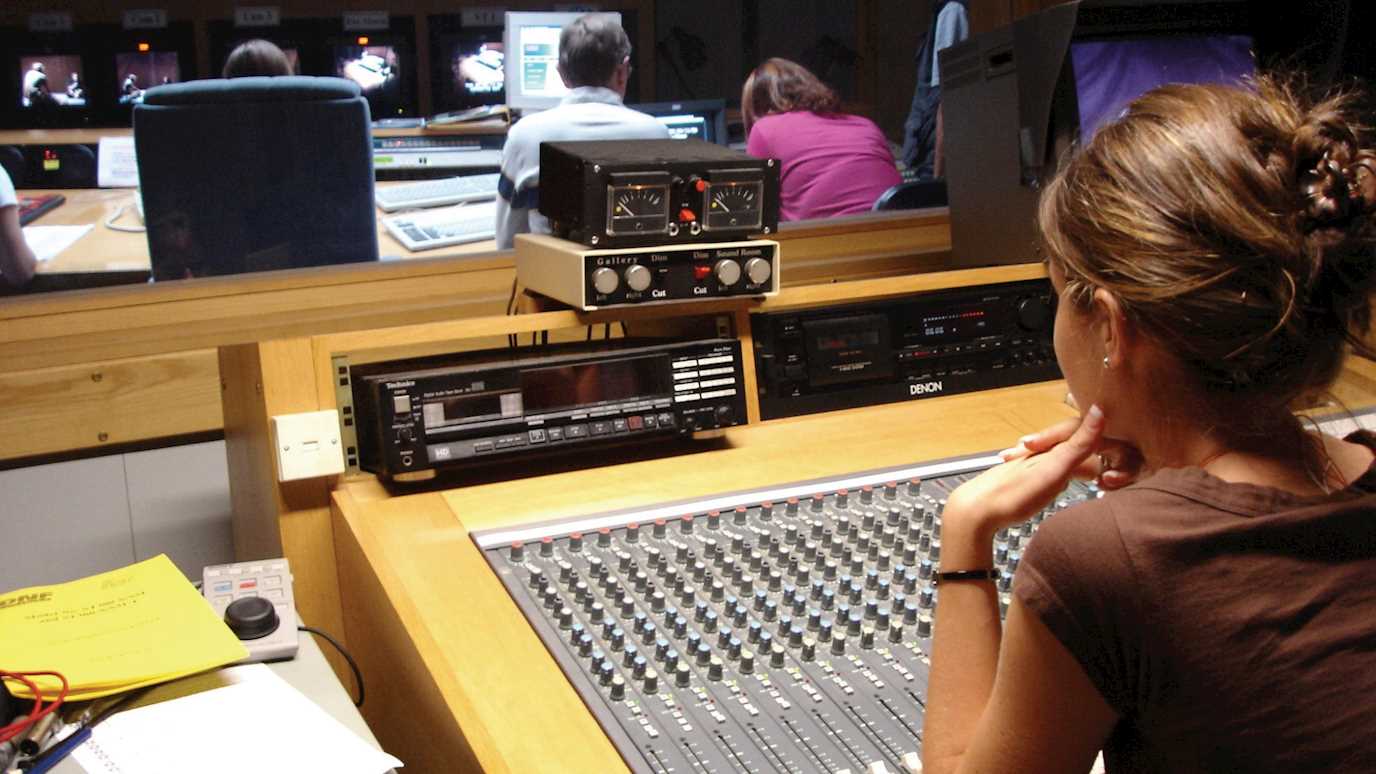
In this module you will develop an understanding of how to create and pitch ideas to film, television and new media executives and financiers. You will learn the basics of script development, set procedure, scheduling, camera work, audio equipment and post-production. You will consider how to develop and identify viable fiction projects and lead and manage the production of a short video, . You will work with creative talent, writers, directors, casting agents, and key craft team members, and examine how to finance and market your short film. You will put together a viable presentation package and pitch to a panel of industry professionals.
-
International Media Business
In this module you will develop an understanding of the global film and TV business. You will learn how to plan and conceptualise the creation and management of a sustainable media enterprise. You will examine the critical issues affecting the success or failure of film and television businesses, considering the role of financial planning in the life-cycle of visual media projects. You will also explore the wider context of finance in the development, marketing and distribution of film and television to investors, partners and government bodies, with a focus on the challenges faced by business startups.
-
Production Management
In this module you will develop an understanding of basic production accounting and the line management skills needed for film, TV and transmedia production. You will learn how to set-up a production company and budget, schedule, manage cash flow, and supervise a quality fiction production. You will consider how to manage 'below-the-line' deals on a drama production and identify financial issues and their implications for day-to-day management. You will also examine how to manage a film crew and supervise the daily operations of a production team, and manage production costs, equipment and facility deals.
-
Marketing and Media Law
In this module you will develop an understanding of media marketing and promotion in film and television distribution and exhibition. You will look at social media and new trends in the global marketing of films and media projects, including cross-platform marketing. You will consider the fundamental principles of media law, including contract and intellectual property law, and examine issues of content and regulation.
-
Academic Integrity
This module will describe the key principles of academic integrity, focusing on university assignments. Plagiarism, collusion and commissioning will be described as activities that undermine academic integrity, and the possible consequences of engaging in such activities will be described. Activities, with feedback, will provide you with opportunities to reflect and develop your understanding of academic integrity principles.
-
Masters’ Project
This module offers the opportunity to test your learning, share your subject knowledge, and explore in detail a topic that interests you by conducting research and/or by developing concepts and projects in the context of the creative industries. As the culmination of your masters degree, you will work under the guidance of a supervisor to produce and submit either a dissertation of between 13000-15000 words, or else an equivalent practice-as-research or professional project.
-
Independent Media Project and Essay
Teaching & assessment
Assessment is carried out by a variety of methods including essays, script reports, treatments, pitching exercises, studio exercises, production papers, practical film-making, business reports and presentations.
Linda James - Course Leader and teaches 'Producing Workshop'
In a long and successful career as an independent film and television producer/executive producer of over 20 drama series and 20 feature films, Linda co-founded Red Rooster Film and Television Entertainment (sold to Chrysalis Plc), Alibi Communications Plc (sold to Edge Investments) and Sly Fox Productions Limited. She has been a Governor of the British Film Institute, a Governor and Trustee of the National Film & Television School and sat on BAFTA Council, the National Theatre’s Production Board and the National Theatre’s Digital Advisory Board. She spent 6 years as an Intellectual Property Fund Manager before returning to frontline producing with the Emmy-nominated drama series Queens of Mystery for Acorn/AMC which launched in 2019 in the UK and USA before being renewed for a second series. She continues to executive produce with Sly Fox Productions Limited and is the Deputy Chair of the screen and cultural agency, Screen South Limited, which was awarded the status of a National Portfolio Organization in 2023. In January 2024, Linda took up to role of Course Director and Senior Lecturer of MA Producing at Royal Holloway, University of London, to work alongside producer colleagues Professor David Thompson and Sheryl Crown, and to share her knowledge and experience with a new generation of producers.
Sheryl Crown - teaches 'Role of the Producer' and 'Story Development'
Sheryl is a well-established Producer, with considerable experience of making high quality Films and Television, raising finance and managing public and private funds. With a respected track record of collaboration with new and established writers, directors and producers, plus a forensic passion for script and story development, she is an Oscar and BAFTA winner and nominee, independent producer and executive producer.
David Thompson - teaches 'International Media Business'
As a producer and executive producer David has been responsible for over 150 film and TV projects, winning numerous awards including BAFTAS, Golden Globes and Emmys. He was previously head of the feature film department of the BBC and now runs his own production company Origin Pictures.
David Thompson’s credits include Billy Elliot, Revolutionary Road, An Education,My Summer of Love , Fish Tank, Mandela and Catherine the Great. He has worked with numerous directors including Paul Greengrass, Danny Boyle, Stephen Frears, Woody Allen, Sam Mendes, Stephen Daldry David Kronenberg , Andrea Arnold, Jane Campion and Pawl Pawlikowski. The projects he has helped to develop have attracted major stars - Leonardo de Caprio, Mel Gibson, Scarlett Johannsen, Helen Mirren, Colin Firth, Naomie Harris, Daniel Craig, Judy Dench, Kate Winslet, Idris Elba, and Natalie Portman. He has worked with many award winning writers like William Nicholson, Steven Knight, Lee Hall, Peter Morgan and Armando Ianucci. He has worked with most of the major U.S and international film studios and tv companies, including Disney, HBO, SKY, Warner Bros, Amazon and Sony. He has made backing new talent a particular focus of his work which is why he is now so committed to teaching part time at Royal Holloway.
Visiting industry speaker credits:
(Please note, speaker list is indicative and may be subject to change)
Charlie Pattinson is a Golden Globe and Bafta-winning television producer. As CEO of TV company New Pictures he has produced programmes for the BBC, Channel 4, Netflix and Starz; prior to this he set up Company Pictures with George Faber in 1998, and grew it into one of the UK’s largest TV and film production companies.
Gaby Tana is an Academy Award-nominated film producer. Under her banner Magnolia Mae Films, she’s produced features which have received international acclaim, such as Philomena and The Dig. Gaby’s next film is a biopic about Katherine Parr, directed by Karim Ainouz and starring Michelle Williams.
William Nicholson is an Oscar and Bafta-winning screenwriter and playwright. His film credits include Shadowlands, Gladiator, Tom Hooper’s Les Miserables, and most recently Hope Gap, which was also his directorial debut. Bill is also a novelist and his popular children’s book trilogy Wind on Fire has sold millions of copies around the world.
William Boyd, award winning novelist and screenwriter. His work for the screen includes Scoop, Chaplin, The Trench, Sword of Honour, Any Human Heart, Restless & Spy City.
Cameron McCracken is the Managing Director of Pathé UK. He has co-produced or executive produced over 20 films including The Duke, Judy, Florence Foster Jenkins, Pride, The Queen, Suffragette and The Iron Lady. Prior to Pathé, Cameron was Director of Business Affairs at British Screen from 1997 to 2000.
Tracey Scoffield is an Emmy and Gold Globe-winning drama and film producer. Her company Turbine Studios most recently produced Steve McQueen’s TV anthology series Small Axe for the BBC and Amazon Prime. Prior to this she was an executive producer at BBC Films, where her credits included Dirty Pretty Things and The Gathering Storm.
Entry requirements
2:2
UK Honours degree or equivalent.
As part of the application candidates will also be required to submit a personal statement and a 500 word essay as part of the application, titled: "What film or television project would you like to produce if money was no object?". You will need to include details such as demand in the market, the audience it is aimed at, the potential budget and how you would go about getting it made.
Applicants will be required to attend an online interview before the outcome of the application is received.
Applicants with professional qualifications and/or relevant creative experience within the media are welcome to apply and will be considered. In these instances, a CV will be required.
International & EU requirements
Bachelors Degree/ Bachelor Honours Degree: GPA 2.6
Masters degree: GPA 3.0/ 80%
Diplomë e Integruar e Nivelit të Dytë:or Diplomë e Nivelit të Parë: 7/10, or Master i Shkencave në Mjekësi të Përgjithshme / në Mjekësi Veterinarë / ne Stomatologji: 7/10
Licence, Diplôme, Diplôme d'Études Supérieures, Diplôme de Docteur en Pharmacie: 11/20
Batxelor: 5/10
Grau de Licenciado/a: 13/10
Bachelor degree from The University of the West Indies: GPA 2.5
Título, Grado de Licenciado/A: 6/10
Specialist Diploma, (Diplom bakalavri astichan), Bachelor degree from American University of Armenia: 70%, GPA 3.0 out of 4, or 14 out of 20
Bachelor degree (Honours) with a 2:2, or a Bachelor degree (Ordinary) with a Pass with 57% overall.
Bachelor degree or Fachhochschuldiplom/Diplom (FH): Bestanden- PASS, Befriedigend - Satisfactory, or 3 out of 5
Bachelor degree (Bakalavr) or Specialist Diploma with 3.5 out of 5 or 70% overall.
Bachelor degree from The University of the West Indies: 2:2, GPA 2.5
Bachelor degree: 2.6/4 or 3.2/5 or 65%
4 year Bachelor degree from Bangladesh University of Engineering and Technology (BUET) with a First Class Division or a Masters Degree following a 3 or 4 year degree.
Specialist Diploma 6/10, or Bachelor Degree 8/10
Bachelor degree with grade 12 overall or the Licentiaat or Licence and other two cycle diplomas with grade 12 overall.
Bachelor degree from The University of the West Indies: 2:2 or GPA 2.5
Diplôme d'études Approfondies/Supérieures/Master: 13 out of 20
Bachelors degree: 60%
Licenciado/Titulo de.... :60%, or Titulo de Bachiller Universitario: 70%
Diploma Visokog Obrazovanja Diploma Visokog Obrazovanja / Diplomirani with Grade 8
Bachelors or Masters: 60%
Título de Bacharel/ Titlo de... 6.5/10
Bachelor degree from The University of the West Indies: 2:2
Bachelor (Honours) Degree: Lower Second Class, or Bachelor (Ordinary) Degree GPA 2.5/5
Bakalavar or Diploma of Completed Higher Education with a Grade 4 out 6 overall.
Diploma d’Etudes Approfondies: 13/20
Diplome d’Etudes Approfondies: 70%
Masters degree: 60%
12/20 or GPA 2.5/4
4 year Bachelor degree with 62%, a GPA 2.5 out of 4, Grade 6 out of 12 or grade C+ overall OR 3 year Bachelor degree with 73%, a GPA of 3.1 out of 4, Grade 8 out of 12 or grade B overall, depending on the grading scheme.
Grau de Licenciado/a: 13/20
The University of the West Indies, or University of College of the Cayman Islands: 65%
Diplome d’Ingenieur (non-honours): 14/20
Diplôme d'Etat de Doctorat en Médecine, Diplome d'Etudes Approfondies 13/20
Grado de Licenciado en..., or Grado de Bachiller: 4.6/7
4 year Bachelors degree with an overall 65% to 70% or GPA of 2.8 to 3.0 out of 4.0 depending on the institution.
Licenciado en, Licenciado en, or Diploma de: 3.5/5
Licenciado, Bachiller: 7.5/10
Diplôme d'études supérieures spécialisées, Diplôme d'études approfondies, Diplôme d'Etat de docteur en Pharmacie: 13/20
3 out of 5 overall in the Baccalaureus Prvostupnik or Visoko Obrazovanja/Level VII/1 (second level degree obtained on completion of 4-6 year course).
Titulo de Licenciado/ Arquitecto / Inginiero / Doctor: 3.5/5
Overall 6.5 out of 10 or a GPA of 2.5 out of 4 in a Bachelor degree from a public university, Ptychion (from University of Cyprus) or Bachelor degree awarded by a private institution (the programme must be accredited by the Ministry of Education and Culture).
Bakalar with dobre (good), score of 2 or Grade C overall.
Diplome d’Etudes Speciales, Diplome d'Etudes Approfondies, Maistrise/Diplome d'Ingenieur/Diplome d'etudes superieures:
7 from 13 points grading system or 4 from 7 points grading system in a Bachelor degree, Candidatus Philosophiae or Professionbachelor.
Diplome d'Ingenieur Bien, or Maitrise/ Master: 14
The University of the West Indies: Lower Second Class Honours, or BSc in Nursing from Dominica State College
Licenciado/Titulo: 75%
Titulo de Licenciado/a from Universidade Nacional Timor Lorosa'e
Titulo de Licenciado/ Titulo: 7/10 OR 70%
University bachelors degree with a GPA of 2.4 overall or 65% overall
Licenciado/ Titulo de: 6.5/10
Masters Degree: 2.6/4
71-80%, 3 or C overall in a Bakalaurusekraad/Diploma, Magister or Magistrikraad
2.5 out of 4
Bachelor Degree: 2.5 or overall grade Satisfactory
GPA of 1.4 where marks are in 1 - 3 system or GPA of 2.5 where marks are in 1 - 5 system in a Kandidaattii/Kandidat or Maisteri/Magister
Licence awarded from 2009 with grade 10-11.99 or Maitrise (pre-Bologna) with grade 11
Diplome D'Ingenieur, or Maitrise: Bien
Master's degree: 60%/ GPA 2.7/4.3
Bakalarvis Khariskhi: 71%
Grade 3 overall in a Bachelor, Fachhochschuldiplom or Magister Artium
Bachelor degree with a Second Class Lower Division overall.
6 out of 10 overall in a Diploma from the Faculties of Engineering and Agriculture or a Ptychion (Bachelor degree) awarded by an AEI.
Bachelor degree from The University of the West Indies: GPA 2.5
Licenciado/ Titulo: Pass mark of 51% University: 60% or Pass mark of 61% Universities: 70%
Diplôme d'Etat de docteur en médecine, or Diplome d’Etudes Superieures/Maitrise/Diplome d’Etudes Approfondies : 14/20
65%, or 3.0 out of 4
Titulo de Licenciado/a/Grado Academico de Licenciatura: 70%
Bachelors degree degree with a Second Class Honours, Lower Division.
Egyetemi Oklevel /Foiskola Oklevel/ Alapfokozat with 3 out of 5 overall.
Baccalaurreatus with grade 6.5 out of 10 overall or Kandidatsprof / Cadidatus Mag with 6 out of 10 overall.
Bachelor degree with 55% to 60% overall or a CGPA of 5.5 to 6 out of 10 overall depending on the NIRF 1-100 institution ranking
Bachelor degree or Diploma IV with overall GPA of 2.8.
Bachelor Degree/Professional Doctorate with 12 out of 20 overall.
Bachelor’s degree (four years) in Medicine/Dentistry/Veterinary Medicine/Pharmacy/Architectural Engineering with 70% overall.
Bachelors degree with at least 65% overall depending on the mark scheme.
Diploma di Laurea or Licenza di Accademia di Belle Arti with 80 out of 110 overall.
Bachelor degree (when accredited by the University Council of Jamaica, or when awarded by the Council of Community Colleges of Jaimaica): Second Class Lower Division
Bachelor degree (Gakushi) with a B overall, dependent on the mark scheme.
Bachelor degree: GPA 2.8 out of 4, Good, C, 68%
Bakalavr or Specialist Diploma with 3.5 out of 5, 75% or 2.67 out of 4.33, or 2.67 out of 4 overall.
Bachelor degree with a Second Class Honours (lower division) overall.
Bacelor/Bachelor Degree: C - Good
Bachelor degree with B or a GPA of 2.6 overall.
Specialist Diploma, Bachelor Degree, Masters Degree: 3.0 out of 4 or 4.0 out of 5
Masters degree: C or GPA 2.0
Bakalaura Diploms or Professional Bakalaura Diploms with Grade 6 overal.
Bachelor Degree/ Licence: 70%
Masters Degree: 65%
Master's degree: 70% or GPA 2.4 out of 4.0
Bachelor Degree of Medicine/Surgery/Architecture/Engineering: 65% or 2.6/4
Dipl Ing (FH) or Dipl Arch (FH) from Liechtenstein Technical College with a Grade 4.4/6 overall.
7 out of 10 overall in a Bakalauras or Specialist Diploma.
Bachelor or Diplome d'ingenieur industriel: 14/20
Licenciatura: Lower Second Class Honours or GPA 2.5
Diplome d'Ingenieur: 13/20
Masters Degree: 60%
Bachelor degree with Class 2 Division ii, B or 2.6 out of 4.0 overall.
Bachelor degree (Maldives National University): GPA 2.5
Diplôme d'Etat de docteur en Pharmacie: GPA 15 out of 20
Honours degree with a Second Class (Lower Division) overall.
Maitrise: 13/20
Bachelor Degree: Class II division II
Titulo de Licenciado/Titulo: GPA 7 out of 10 or 70%
Diplomă de Licenţă: 7/10
Bachelor degree (awarded after 2012): 80 out of 100
Masters Degree: 70%
Diploma o završenim osnovnim akademskim studijama: Grade C
Licence/Licence d'Etudes Fondamentales/Licence Profesionnelle: GPA 111 out of 20
Grau de Mestre: 12/20
Master's degree: 60%
Bachelor Honours / Professional Bachelor degree: 60%
Bachelor degree (4 years) or Master's degree (following a 3-year Bachelor degree): 65%
Bachelor degree or Doctoraal with Grade 6.0 out of 10 overall.
Bachelor degree Honours or Ordinary with an overall Grade C+ or Grade 3 out of 9 points grading system.
Licenciado/Titulo: 80%
Diplôme d'études Approfondies or Diplôme d'études Supérieures Spécialisées: 15 out of 20
Bachelor degree with a Second Class Honours, Lower Division or overall GPA of 2.4 out of 5.
Visoko Obrazovanja with 7 out of 10 overall.
Bachelor degree GPA 2.6 to 2.8 depending on your institution.
Bachelor degree, Candidatus Magisterii, Sivilingeni-r (siv. ing.) (Engineering degree ) or Sivil?konom (siv. ?k.) (Economics degree) Grade D or 3.25 where 1 is the highest.
Bachelor degree with an overall GPA of 2.6/4
4 year Bachelor degree or combined bachelors degree and Master degree for the duration of 4 years with 58% - 65% or a CGPA of 2.8 - 3.2 overall depending on your institution.
Bachelor degree: GPA 3.0 out of 4.0, 80%, B
Licenciado/ Titulo: 70%
Bachelor Honours Degree: Class II, Division B
Titulo de Licenciado/ TItulo: 3.5/5
Grado Academico de Bachiller: 13/20
Bachelor degree (awarded from 2022): 2.5/4, or Masters degree: 2.5/5
Licencjat, Inzynier or Bachelor with grade 4 out of 5
Diploma de Estudos Superiores Especializadoswith grade 14 overall or Licenciado with grade 13 overall.
Bachelor degree: 70/100 or GPA 2.0 out of 4.0
Bachelor degree with an overall GPA of 2.8 overall.
Maitrise: 13/20
Diploma de Licenta, Diploma Inginer or Diploma de Arhitect with 7.0 out of 10 overall.
Bakalavr Bachelor degree or Specialist Diploma with 3.5 out of 5 or 70% overall.
Bachelor Honours Degree: 13/20
Bachelor degree when studied at University of South Pacific, Samoa: GPA 2.5
Licenciatura: 13/20
Bachelor degree with 65%, 3.25 out of 5.0 or 2.5 out of 4.0 overall.
Diplom Visokog Obrazovanja (second-level degree obtained on completion of a four to six-year course) with 7 out of 10 overall.
Bachelor Degree: Lower Second Class
Bachelors Degree (Honours): Lower Second Class
Bachelor degree (from a public university) with a Class II (lower) overall.
Bakalar or Magister / Inzinier with vel'mi dobre (very good) or Grade 2 overall.
Diplomirani / Diplomirani Inzenir from Visoko izobrazevanje, University Diploma or Visoko Obrazovanja (until 1999) with 7 out of 10 (8 for Visoko Obrazovanja) overall.
Bachelor degree when studied at University of South Pacific, Vanuatu: GPA 2.5
Bachelor (Honours), Bachelor or Professional Bachelor degree with 60% or Second Class Lower Division.
Bachelor (Haksa) degree with 3.0 out of 4.5, 2.9 out of 4.3 or 2.8 out of 4.0.
Bachelor Honours degree: 2.5/4.0 Division Two Lower
Licenciado, Titulo de Ingeniero or Titulo de Arquitecto with 6 out of 10.
Bachelor degree from The University of the West Indies: GPA 2.5 Second Class Honours, Lower Division
Bachelor degree from The University of the West Indies: GPA 2.5 Second Class Honours, Lower Division
Bachelor degree from The University of the West Indies: GPA 2.5 Second Class Honours, Lower Division
Bachelor Honours Degree: 60%
Bachelor degreee, Masters Degree, MO-B Akte Diploma: Met Genoegen (Good)
Bachelor degree: 70%
Bachelor degree from National University or Private University with 68% to 73% or GPA 2.8 to 3.0 depending on your institution.
Specialist Diploma: 3.5/5
Bachelor degree with a 2nd Class Honours (Lower) overall.
Bachelor degree GPA 2.4 to 2.6 depending on your institution.
Diplôme d'études supérieures, Diplôme d'études approfondies: 13/20
Bachelor or Masters degree from the University of the South Pacific: 70%/ B+
Bachelor degree (when accredited by the Accreditation Council of Trinidad and Tobago (ACTT)): Lower Second Class Honours
12 out of 20 (Assez Bien)
Bachelor degree GPA 2.6 to 2.8 depending on your institution.
Ýokary bilim hakynda şahadatnama: 3.5/5
Bachelor degree (accredited by the Council of Community Colleges of Jamaica)
Bachelor degree: Class II Lower/ Honours Lower/ 3.0-3.9/ B
Bachelor degree (post 2007) or Specialist Diploma (after 1991) with a Grade 3, 9 out of 12 or 3.5 out of 5 overall.
Bachelor degree with 80%, a GPA of 2.8 out of 4, C+ or Good overall.
Bachelor degree with a GPA of 2.6 overall.
Bachelor Honours Degree: GPA 2.5 or Second Class Honours, Lower Division
Titulo de Licenciado/Titulo: GPA 7/12
Diplomi: 70%
Kandidatexamen with at least a Pass (godkand) overall.
Bachelor degree when studied at University of South Pacific, Vanuatu: GPA 2.5
Titulo de Licenciado/Titulo: 70% or 11 from high ranking institution
Bachelor degree or Bang tot nghiep dai hoc with 6.5 out of 10.
Masters Degree: 63%
Masters Degree: 55%
60%-64%, Second Class Honours, Lower Division
English language requirements
- IELTS: 6.5 overall. No subscore lower than 6.0.
- Pearson Test of English: 67 overall. No other subscore lower than 64.
- Trinity College London Integrated Skills in English (ISE): ISE III.
- Cambridge English: Advanced (CAE) grade C.
- TOEFL iBT: 88 overall with Reading 22 Listening 20 Speaking 22 Writing 24.
- Duolingo: 120 overall and no sub-score below 115.
Your future career
Our close links to the film and TV production industry make this a practical course – and one that gives you building blocks for your future.
While you're on the course, we'll encourage and guide you into work placements and internships. Past students have secured placements with industry leading organisations including:
- Walt Disney Studios
- Heyday Films
- West End Films
- Paramount
- Universal Pictures
- Channel 4
- Company Pictures
- Studio Canal
- Lionsgate
- Potboiler Productions
- Sony Music
- Warner Bros
- Hanway Films
- e-One Entertainment
- Origin Pictures
Graduates from the Department of Media Arts have gone on to work in independent television and film production, for broadcasters like the BBC and ITV, for distributors, exhibitors, talent agencies and entertainment lawyers.
Fees, funding & scholarships
Home (UK) students tuition fee per year*: £12,000
EU and international students tuition fee per year**: £24,500
Other essential costs***: Software cost of approximately £200 plus additional film production costs
How do I pay for it? Find out more about funding options, including loans, grants, scholarships and bursaries.
* and ** These tuition fees apply to students starting their course on a full-time basis in the academic year 2026/27. Students studying on the standard part-time course structure over two years are charged 50% of the full-time applicable fee for each study year.
Royal Holloway reserves the right to increase all postgraduate tuition fees annually. For further information, see fees and funding.
** These estimated costs relate to studying this particular degree at Royal Holloway during the 2026/27 academic year, and are included as a guide. Costs, such as accommodation, food, books and other learning materials and printing, have not been included.