Key information
Duration: 1 year full time or 2 years part time
Institution code: R72
Campus: Egham
UK fees*: £12,500
International/EU fees**: £24,000
The course
English Literature: Medieval Studies (MA)
This specialised pathway within the MA in English Literature offers an opportunity to study the literature of the English Middle ages from its earliest forms in Old English through to Middle English texts written up to the end of the medieval period. The course is taught by academic specialists who are actively engaged in research on the Middle Ages and its literatures, and who will inspire and challenge you to do your best work. We introduce you to many aspects of medieval society and culture, while giving you the opportunity to concentrate on the areas that interest you most. The course is run as a collaboration between the Departments of English and History and taught with contributions from experts in the Departments of Classics and Languages, Literatures and Cultures; students registered on the MA English pathway will have the opportunity to take a range of options from History, on topics that range across medieval Europe to Byzantium. This MA pathway offers training in a wide range of skills for postgraduate research in Medieval Studies that will enhance your understanding and appreciation of medieval texts. This training provides important preparation for students seeking to pursue doctoral research.
As part of the University of London, you will have the opportunity to participate in events taking place beyond Royal Holloway. Your registration includes membership the Institute of English Studies and the Institute of Historical Research in Senate House, London WC1 for the duration of your studies. Staff from the English Department convene the London Old and Middle English Research Seminar, which holds seminars twice termly, presenting new research on medieval literature by scholars from the UK and further afield. You will also have access to specialist libraries in and around Senate House such as the Warburg Institute.
You may choose to study for a Postgraduate Diploma in Medieval Studies, taking on the taught part of the course without completing the dissertation. This is designed for those who want advanced instruction in Medieval Studies but cannot commit to undertaking an independent research project. The MA and Postgraduate Diploma are designed to be flexible, so you can study either of them full time or part time.
We offer a wide range of postgraduate scholarships to help with funding your studies. We especially encourage eligible applicants to apply for one of the following:
Bedford Society Scholarship - £8,100 tuition fee reduction for Home or international students with, or expected to achieve, a First Class degree or equivalent.
Professor Barbara Raw Scholarship for MA in Medieval Studies - £10,000 scholarship for Home or international students with, or expected to achieve, at least a 2:1 or equivalent.
Dinah and Jessica Nichols scholarship - £6,250 scholarship for Home or international students with, or expected to achieve, a First Class degree or equivalent.
Professor Barbara Raw Masters Scholarships for English - £10,000 scholarship for Home or international students with, or expected to achieve, at least a 2:1 or equivalent.
Dr Pirkko Koppinen Scholarship - £12,000 tuition fee reduction and living costs contribution for Home or international students with, or expected to achieve, at least a 2:1 or equivalent.
Herringham Scholarship - £7,900 tuition fee reduction for Home or international students with, or expected to achieve, a First Class degree or equivalent.
- As part of the University of London, you will have the opportunity to participate fully in the variety of events taking place in the Institute of Historical Research and the Institute of English Studies. Staff from the English Department also run the London Old and Middle English Research Seminar (LOMERS).
- You may pursue a wide range of disciplines in small groups, as well as come together weekly to form a close-knit cohort, providing the foundations for a supportive research environment.
We sometimes make changes to our courses to improve your experience. If this happens, we’ll let you know as soon as possible.
Course structure
Core Modules
Students on the Medieval Studies pathway take the Research Development Course, three optional modules (at least two of which must be on medieval topics), and write a dissertation on a medieval topic agreed with the dissertation supervisor. Students must also complete an academic integrity course.
-
Research Development
All students pursuing the MA in Medieval Studies and the MA in Crusader Studies take this module, and so it creates and fosters an intellectual community of medievalists during your time on the degree. The module aims to make you aware of the issues and topics associated with the study of the Middle Ages on a wide and interdisciplinary basis, give you the skills that you need to undertake research in the field of Medieval Studies, and provide opportunities for you to engage in and practise academic dismodule, particularly in an oral context.
-
Dissertation
Using the skills learned during the taught parts of your MA, you will carry out your own independent research project. You will write a thesis of around 15,000 words on a topic of your choice which critically reflects upon established scholarship and provides original insight and independent judgements.
-
Academic Integrity
This module will describe the key principles of academic integrity, focusing on university assignments. Plagiarism, collusion and commissioning will be described as activities that undermine academic integrity, and the possible consequences of engaging in such activities will be described. Activities, with feedback, will provide you with opportunities to reflect and develop your understanding of academic integrity principles.
Optional Modules
Below is a taster of some of the exciting optional modules that students on the course could choose from during this academic year. Please be aware these do change over time, and optional modules may be withdrawn or new ones added.
Students on the medieval pathway are strongly advised to attend Introductory Latin for Research, although this module cannot be taken for credit.
This list presents a selection of optional modules that are likely to be available; new modules may be offered or existing modules withdrawn as we refresh the curriculum, and applicants will be informed if any significant changes are made.
-
Arthurian Literature and Tradition in England
This module examines the development of Arthurian literature and legend across four centuries and three languages. Beginning with Geoffrey of Monmouth’s History of the Kings of Britain, it focuses on the different ways in which Arthur’s reign was represented and understood in the Middle Ages.
-
Medieval Narratives
This interdisciplinary module explores the traditions and forms and varieties of medieval story-telling, through an in-depth study of two major works of literature. These may be texts in Old or Middle English, French, Latin, and Italian; all texts are read in translation, with opportunities to explore the original languages too.
-
Old English Riddles
In this module you will develop an understanding of the Old English poetic tradition, particularly as exemplified by the Exeter Book Riddles. You will look at unusual perspectives on Anglo-Saxon culture and literature, and examine topics such as military, religious and everyday worlds, the wonders of creation, animals, sources and analogues, sexuality and runic riddles.
-
Literature of Medieval London
This module examines a wide range of prose and poetry written in and about medieval London. You will explore the way that London, its inhabitants and its institutions are represented in medieval literature, and consider the city as a place where texts were composed and books were made.
-
Women, the Crusades, and the Frontier Societies of Medieval Christendom, 1000 to 1300
In this module you will develop an understanding of how the crusading movement arose at a time of significant change for women. You will look at the effects of the Gregorian Reform and contemporary societal change on women’s traditional roles. You will examine how medieval historians used gendered language and moral tales to express their disapproval of women who took the cross, and the role of women in supporting crusader battles, often becoming the casualties of warfare. You will consider the role of noble women in providing political stability through regency and marriage after the First Crusade in the Latin society established in the East, including the dramatic reign of Queen Melisende of Jerusalem, and the effects of crusading on women who remained in the West.
-
Pilgrimage in the Medieval World
This module explores the significance of pilgrimage in the medieval world through a combination of contextual study of the ideals and practices associated with this dimension of medieval piety, and specific study of contemporary pilgrimage accounts from the fourth to fifteenth centuries. You will explore a wide range of topics including the practice of pilgrimage in religious traditions from Late Antiquity onwards, Saints' cults and sacred space, specific pilgrimage destinations, pilgrims' writings, gender, class, and material culture.
-
Byzantium and The First Crusade
This module traces the response of the rulers of the Byzantine Empire to the First Crusade, which passed through their territory in 1096-7. The events of the First Crusade - its preaching by Urban II in 1095, its arrival at Constantinople in 1096-7, its progress through Byzantine territory to Antioch, the ‘third wave’ of 1101 – will all be discussed in this context through a range of Byzantine and Western source material in translation.
-
Byzantium and the Fourth Crusade
This module takes a long-term view of the crusade which captured and sacked Constantinople, the capital city of the Byzantine empire, in April 1204. Starting in around 1192, it places events in the context of relations between the Byzantines and previous crusades, of the internal situation of the empire and of the position in the Latin east in the aftermath of the Third Crusade. It then examines how the Fourth Crusade was preached and planned, how it was diverted first to Zara and then to Constantinople, and how it came to attack and pillage the city.
Teaching & assessment
For full-time students the course lasts an academic year from September to September; part-time students pursue the course over two years, completing the Research Development Course and one of their chosen options in their first year, and the remaining two options and the dissertation in their second year.
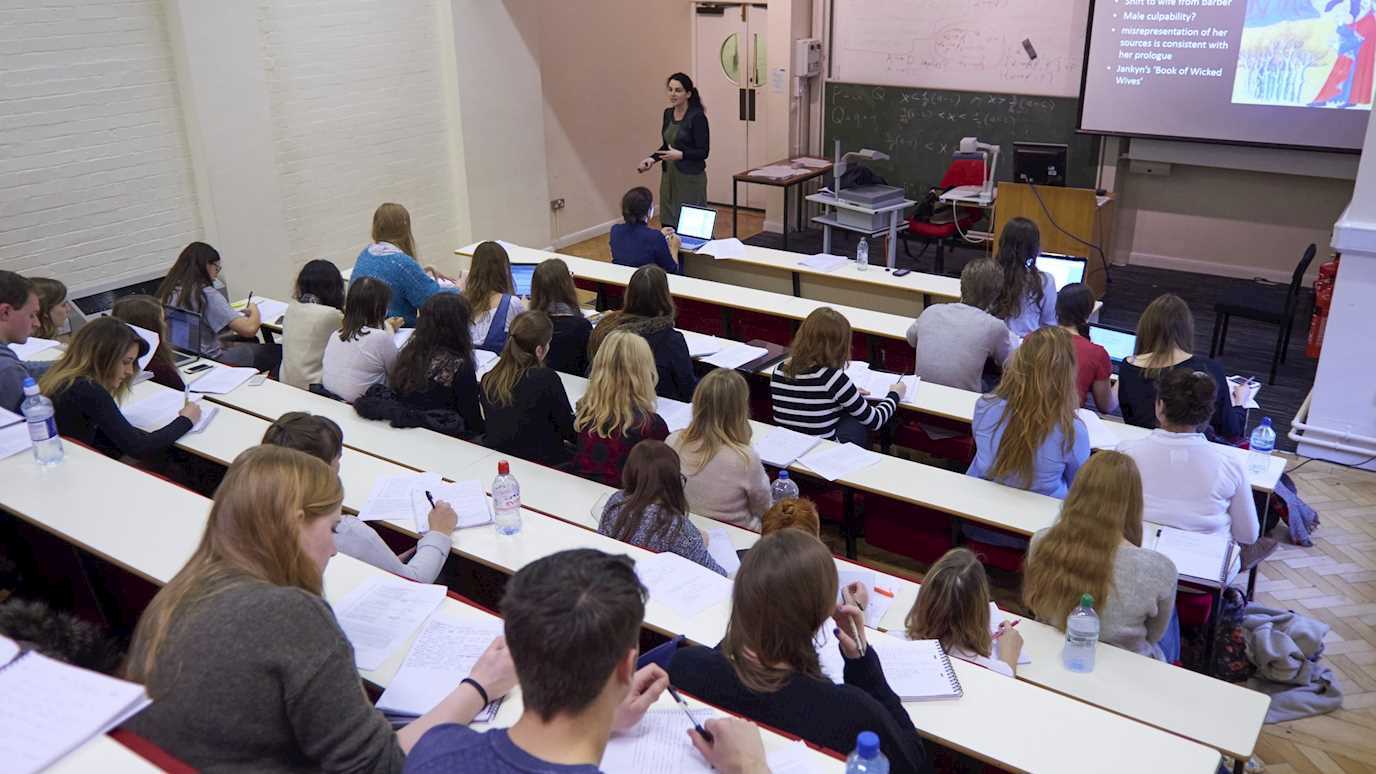
Courses are taught by means of a weekly structured two-hour seminar, and each course lasts for a term of 11 weeks in total. A full-time student thus has four hours of seminars a week for two terms and then further dissertation workshops and discussion groups in the summer term, in addition to individual supervision in the process of completing dissertations. Courses are assessed by academic essays and by a range of other kinds of assessment, including shorter commentaries and presentations. Students will receive formal written feedback on written and oral assessments throughout the two terms and can see staff individually during their office hours.
The dissertation, to be completed over the summer period, will be a piece of original written work of up to 12,000 words (excluding bibliography and appendices). The topic of the dissertation will be agreed between the student and whichever member of staff is allotted as supervisor. Dissertations are submitted at the end of the programme in the first week of September.
Entry requirements
2:2
UK Lower Class Honours degree (2:2) or equivalent in History or a related subject within the Humanities or Social Sciences.
Candidates with professional qualifications or relevant professional experience in an associated area will also be considered.
Applicants come from a diverse range of backgrounds and we accept a broad range of qualifications (including first degrees in subjects other than History).
An interview may be required if we would like more information upon which to base a decision. Applicants unable to attend an interview, such as overseas students, will be interviewed by telephone.
Academic writing sample of 1,500-3,000 words will be required. This could be an extract from a dissertation or an essay, showing your ability to analyse literature. Requirements are:
- Make an argument grounded in thorough analysis of textual details of works (including carefully selected quotations).
- Show evidence of research (for example journal articles, books, other sources) which expand or support the argument, including a bibliography.
When applying for the MA English Literature course please select MA English Literature from the list of courses and then select MA English Literature: Medieval Studies from the pathway menu.
International & EU requirements
Bachelors Degree/ Bachelor Honours Degree: GPA 2.6
Masters degree: GPA 3.0/ 80%
Diplomë e Integruar e Nivelit të Dytë:or Diplomë e Nivelit të Parë: 7/10, or Master i Shkencave në Mjekësi të Përgjithshme / në Mjekësi Veterinarë / ne Stomatologji: 7/10
Licence, Diplôme, Diplôme d'Études Supérieures, Diplôme de Docteur en Pharmacie: 11/20
Batxelor: 5/10
Grau de Licenciado/a: 13/10
Bachelor degree from The University of the West Indies: GPA 2.5
Título, Grado de Licenciado/A: 6/10
Specialist Diploma, (Diplom bakalavri astichan), Bachelor degree from American University of Armenia: 70%, GPA 3.0 out of 4, or 14 out of 20
Bachelor degree (Honours) with a 2:2, or a Bachelor degree (Ordinary) with a Pass with 57% overall.
Bachelor degree or Fachhochschuldiplom/Diplom (FH): Bestanden- PASS, Befriedigend - Satisfactory, or 3 out of 5
Bachelor degree (Bakalavr) or Specialist Diploma with 3.5 out of 5 or 70% overall.
Bachelor degree from The University of the West Indies: 2:2, GPA 2.5
Bachelor degree: 2.6/4 or 3.2/5 or 65%
4 year Bachelor degree from Bangladesh University of Engineering and Technology (BUET) with a First Class Division or a Masters Degree following a 3 or 4 year degree.
Specialist Diploma 6/10, or Bachelor Degree 8/10
Bachelor degree with grade 12 overall or the Licentiaat or Licence and other two cycle diplomas with grade 12 overall.
Bachelor degree from The University of the West Indies: 2:2 or GPA 2.5
Diplôme d'études Approfondies/Supérieures/Master: 13 out of 20
Bachelors degree: 60%
Licenciado/Titulo de.... :60%, or Titulo de Bachiller Universitario: 70%
Diploma Visokog Obrazovanja Diploma Visokog Obrazovanja / Diplomirani with Grade 8
Bachelors or Masters: 60%
Título de Bacharel/ Titlo de... 6.5/10
Bachelor degree from The University of the West Indies: 2:2
Bachelor (Honours) Degree: Lower Second Class, or Bachelor (Ordinary) Degree GPA 2.5/5
Bakalavar or Diploma of Completed Higher Education with a Grade 4 out 6 overall.
Diploma d’Etudes Approfondies: 13/20
Diplome d’Etudes Approfondies: 70%
Masters degree: 60%
12/20 or GPA 2.5/4
4 year Bachelor degree with 62%, a GPA 2.5 out of 4, Grade 6 out of 12 or grade C+ overall OR 3 year Bachelor degree with 73%, a GPA of 3.1 out of 4, Grade 8 out of 12 or grade B overall, depending on the grading scheme.
Grau de Licenciado/a: 13/20
The University of the West Indies, or University of College of the Cayman Islands: 65%
Diplome d’Ingenieur (non-honours): 14/20
Diplôme d'Etat de Doctorat en Médecine, Diplome d'Etudes Approfondies 13/20
Grado de Licenciado en..., or Grado de Bachiller: 4.6/7
4 year Bachelors degree with an overall 65% to 70% or GPA of 2.8 to 3.0 out of 4.0 depending on the institution.
Licenciado en, Licenciado en, or Diploma de: 3.5/5
Licenciado, Bachiller: 7.5/10
Diplôme d'études supérieures spécialisées, Diplôme d'études approfondies, Diplôme d'Etat de docteur en Pharmacie: 13/20
3 out of 5 overall in the Baccalaureus Prvostupnik or Visoko Obrazovanja/Level VII/1 (second level degree obtained on completion of 4-6 year course).
Titulo de Licenciado/ Arquitecto / Inginiero / Doctor: 3.5/5
Overall 6.5 out of 10 or a GPA of 2.5 out of 4 in a Bachelor degree from a public university, Ptychion (from University of Cyprus) or Bachelor degree awarded by a private institution (the programme must be accredited by the Ministry of Education and Culture).
Bakalar with dobre (good), score of 2 or Grade C overall.
Diplome d’Etudes Speciales, Diplome d'Etudes Approfondies, Maistrise/Diplome d'Ingenieur/Diplome d'etudes superieures:
7 from 13 points grading system or 4 from 7 points grading system in a Bachelor degree, Candidatus Philosophiae or Professionbachelor.
Diplome d'Ingenieur Bien, or Maitrise/ Master: 14
The University of the West Indies: Lower Second Class Honours, or BSc in Nursing from Dominica State College
Licenciado/Titulo: 75%
Titulo de Licenciado/a from Universidade Nacional Timor Lorosa'e
Titulo de Licenciado/ Titulo: 7/10 OR 70%
University bachelors degree with a GPA of 2.4 overall or 65% overall
Licenciado/ Titulo de: 6.5/10
Masters Degree: 2.6/4
71-80%, 3 or C overall in a Bakalaurusekraad/Diploma, Magister or Magistrikraad
2.5 out of 4
Bachelor Degree: 2.5 or overall grade Satisfactory
GPA of 1.4 where marks are in 1 - 3 system or GPA of 2.5 where marks are in 1 - 5 system in a Kandidaattii/Kandidat or Maisteri/Magister
Licence awarded from 2009 with grade 10-11.99 or Maitrise (pre-Bologna) with grade 11
Diplome D'Ingenieur, or Maitrise: Bien
Master's degree: 60%/ GPA 2.7/4.3
Bakalarvis Khariskhi: 71%
Grade 3 overall in a Bachelor, Fachhochschuldiplom or Magister Artium
Bachelor degree with a Second Class Lower Division overall.
6 out of 10 overall in a Diploma from the Faculties of Engineering and Agriculture or a Ptychion (Bachelor degree) awarded by an AEI.
Bachelor degree from The University of the West Indies: GPA 2.5
Licenciado/ Titulo: Pass mark of 51% University: 60% or Pass mark of 61% Universities: 70%
Diplôme d'Etat de docteur en médecine, or Diplome d’Etudes Superieures/Maitrise/Diplome d’Etudes Approfondies : 14/20
65%, or 3.0 out of 4
Titulo de Licenciado/a/Grado Academico de Licenciatura: 70%
Bachelors degree degree with a Second Class Honours, Lower Division.
Egyetemi Oklevel /Foiskola Oklevel/ Alapfokozat with 3 out of 5 overall.
Baccalaurreatus with grade 6.5 out of 10 overall or Kandidatsprof / Cadidatus Mag with 6 out of 10 overall.
Bachelor degree with 55% to 60% overall or a CGPA of 5.5 to 6 out of 10 overall depending on the NIRF 1-100 institution ranking
Bachelor degree or Diploma IV with overall GPA of 2.8.
Bachelor Degree/Professional Doctorate with 12 out of 20 overall.
Bachelor’s degree (four years) in Medicine/Dentistry/Veterinary Medicine/Pharmacy/Architectural Engineering with 70% overall.
Bachelors degree with at least 65% overall depending on the mark scheme.
Diploma di Laurea or Licenza di Accademia di Belle Arti with 80 out of 110 overall.
Bachelor degree (when accredited by the University Council of Jamaica, or when awarded by the Council of Community Colleges of Jaimaica): Second Class Lower Division
Bachelor degree (Gakushi) with a B overall, dependent on the mark scheme.
Bachelor degree: GPA 2.8 out of 4, Good, C, 68%
Bakalavr or Specialist Diploma with 3.5 out of 5, 75% or 2.67 out of 4.33, or 2.67 out of 4 overall.
Bachelor degree with a Second Class Honours (lower division) overall.
Bacelor/Bachelor Degree: C - Good
Bachelor degree with B or a GPA of 2.6 overall.
Specialist Diploma, Bachelor Degree, Masters Degree: 3.0 out of 4 or 4.0 out of 5
Masters degree: C or GPA 2.0
Bakalaura Diploms or Professional Bakalaura Diploms with Grade 6 overal.
Bachelor Degree/ Licence: 70%
Masters Degree: 65%
Master's degree: 70% or GPA 2.4 out of 4.0
Bachelor Degree of Medicine/Surgery/Architecture/Engineering: 65% or 2.6/4
Dipl Ing (FH) or Dipl Arch (FH) from Liechtenstein Technical College with a Grade 4.4/6 overall.
7 out of 10 overall in a Bakalauras or Specialist Diploma.
Bachelor or Diplome d'ingenieur industriel: 14/20
Licenciatura: Lower Second Class Honours or GPA 2.5
Diplome d'Ingenieur: 13/20
Masters Degree: 60%
Bachelor degree with Class 2 Division ii, B or 2.6 out of 4.0 overall.
Bachelor degree (Maldives National University): GPA 2.5
Diplôme d'Etat de docteur en Pharmacie: GPA 15 out of 20
Honours degree with a Second Class (Lower Division) overall.
Maitrise: 13/20
Bachelor Degree: Class II division II
Titulo de Licenciado/Titulo: GPA 7 out of 10 or 70%
Diplomă de Licenţă: 7/10
Bachelor degree (awarded after 2012): 80 out of 100
Masters Degree: 70%
Diploma o završenim osnovnim akademskim studijama: Grade C
Licence/Licence d'Etudes Fondamentales/Licence Profesionnelle: GPA 111 out of 20
Grau de Mestre: 12/20
Master's degree: 60%
Bachelor Honours / Professional Bachelor degree: 60%
Bachelor degree (4 years) or Master's degree (following a 3-year Bachelor degree): 65%
Bachelor degree or Doctoraal with Grade 6.0 out of 10 overall.
Bachelor degree Honours or Ordinary with an overall Grade C+ or Grade 3 out of 9 points grading system.
Licenciado/Titulo: 80%
Diplôme d'études Approfondies or Diplôme d'études Supérieures Spécialisées: 15 out of 20
Bachelor degree with a Second Class Honours, Lower Division or overall GPA of 2.4 out of 5.
Visoko Obrazovanja with 7 out of 10 overall.
Bachelor degree GPA 2.6 to 2.8 depending on your institution.
Bachelor degree, Candidatus Magisterii, Sivilingeni-r (siv. ing.) (Engineering degree ) or Sivil?konom (siv. ?k.) (Economics degree) Grade D or 3.25 where 1 is the highest.
Bachelor degree with an overall GPA of 2.6/4
4 year Bachelor degree or combined bachelors degree and Master degree for the duration of 4 years with 58% - 65% or a CGPA of 2.8 - 3.2 overall depending on your institution.
Bachelor degree: GPA 3.0 out of 4.0, 80%, B
Licenciado/ Titulo: 70%
Bachelor Honours Degree: Class II, Division B
Titulo de Licenciado/ TItulo: 3.5/5
Grado Academico de Bachiller: 13/20
Bachelor degree (awarded from 2022): 2.5/4, or Masters degree: 2.5/5
Licencjat, Inzynier or Bachelor with grade 4 out of 5
Diploma de Estudos Superiores Especializadoswith grade 14 overall or Licenciado with grade 13 overall.
Bachelor degree: 70/100 or GPA 2.0 out of 4.0
Bachelor degree with an overall GPA of 2.8 overall.
Maitrise: 13/20
Diploma de Licenta, Diploma Inginer or Diploma de Arhitect with 7.0 out of 10 overall.
Bakalavr Bachelor degree or Specialist Diploma with 3.5 out of 5 or 70% overall.
Bachelor Honours Degree: 13/20
Bachelor degree when studied at University of South Pacific, Samoa: GPA 2.5
Licenciatura: 13/20
Bachelor degree with 65%, 3.25 out of 5.0 or 2.5 out of 4.0 overall.
Diplom Visokog Obrazovanja (second-level degree obtained on completion of a four to six-year course) with 7 out of 10 overall.
Bachelor Degree: Lower Second Class
Bachelors Degree (Honours): Lower Second Class
Bachelor degree (from a public university) with a Class II (lower) overall.
Bakalar or Magister / Inzinier with vel'mi dobre (very good) or Grade 2 overall.
Diplomirani / Diplomirani Inzenir from Visoko izobrazevanje, University Diploma or Visoko Obrazovanja (until 1999) with 7 out of 10 (8 for Visoko Obrazovanja) overall.
Bachelor degree when studied at University of South Pacific, Vanuatu: GPA 2.5
Bachelor (Honours), Bachelor or Professional Bachelor degree with 60% or Second Class Lower Division.
Bachelor (Haksa) degree with 3.0 out of 4.5, 2.9 out of 4.3 or 2.8 out of 4.0.
Bachelor Honours degree: 2.5/4.0 Division Two Lower
Licenciado, Titulo de Ingeniero or Titulo de Arquitecto with 6 out of 10.
Bachelor degree from The University of the West Indies: GPA 2.5 Second Class Honours, Lower Division
Bachelor degree from The University of the West Indies: GPA 2.5 Second Class Honours, Lower Division
Bachelor degree from The University of the West Indies: GPA 2.5 Second Class Honours, Lower Division
Bachelor Honours Degree: 60%
Bachelor degreee, Masters Degree, MO-B Akte Diploma: Met Genoegen (Good)
Bachelor degree: 70%
Bachelor degree from National University or Private University with 68% to 73% or GPA 2.8 to 3.0 depending on your institution.
Specialist Diploma: 3.5/5
Bachelor degree with a 2nd Class Honours (Lower) overall.
Bachelor degree GPA 2.4 to 2.6 depending on your institution.
Diplôme d'études supérieures, Diplôme d'études approfondies: 13/20
Bachelor or Masters degree from the University of the South Pacific: 70%/ B+
Bachelor degree (when accredited by the Accreditation Council of Trinidad and Tobago (ACTT)): Lower Second Class Honours
12 out of 20 (Assez Bien)
Bachelor degree GPA 2.6 to 2.8 depending on your institution.
Ýokary bilim hakynda şahadatnama: 3.5/5
Bachelor degree (accredited by the Council of Community Colleges of Jamaica)
Bachelor degree: Class II Lower/ Honours Lower/ 3.0-3.9/ B
Bachelor degree (post 2007) or Specialist Diploma (after 1991) with a Grade 3, 9 out of 12 or 3.5 out of 5 overall.
Bachelor degree with 80%, a GPA of 2.8 out of 4, C+ or Good overall.
Bachelor degree with a GPA of 2.6 overall.
Bachelor Honours Degree: GPA 2.5 or Second Class Honours, Lower Division
Titulo de Licenciado/Titulo: GPA 7/12
Diplomi: 70%
Kandidatexamen with at least a Pass (godkand) overall.
Bachelor degree when studied at University of South Pacific, Vanuatu: GPA 2.5
Titulo de Licenciado/Titulo: 70% or 11 from high ranking institution
Bachelor degree or Bang tot nghiep dai hoc with 6.5 out of 10.
Masters Degree: 63%
Masters Degree: 55%
60%-64%, Second Class Honours, Lower Division
English language requirements
- IELTS: 6.5 overall. No subscore lower than 6.0.
- Pearson Test of English: 67 overall. No other subscore lower than 64.
- Trinity College London Integrated Skills in English (ISE): ISE III.
- Cambridge English: Advanced (CAE) grade C.
- TOEFL iBT: 88 overall with Reading 22 Listening 20 Speaking 22 Writing 24.
- Duolingo: 120 overall and no sub-score below 115.
Your future career
The course prepares students with the skills and knowledge to pursue doctoral study, and for a wide range of professional occupations where the ability to understand and explain complex information is key. Our recent graduates have gone on to pursue careers in education, media, law, the culture and heritage industry, and many other related fields.
Fees, funding & scholarships
Home (UK) students tuition fee per year*: £12,500
EU and international students tuition fee per year**: £24,000
Other essential costs***: There are no single associated costs greater than £50 per item on this course.
How do I pay for it? Find out more about funding options, including loans, grants, scholarships and bursaries.
* and ** These tuition fees apply to students starting their course on a full-time basis in the academic year 2027/28. Students studying on the standard part-time course structure over two years are charged 50% of the full-time applicable fee for each study year.
Royal Holloway reserves the right to increase all postgraduate tuition fees annually. For further information, see fees and funding.
** These estimated costs relate to studying this particular degree at Royal Holloway during the 2027/28 academic year and are included as a guide. Refers to specific individual items of £50 or more, and excludes accommodation, commuting, food, books/other learning materials and printing costs.