Key information
Duration: 4 years full time
Institution code: R72
Campus: Egham
UK fees*: £5,238
International/EU fees**: £23,200
About us
The innovative and exciting community of researchers in Electronic Engineering link excellent engineering with the ingenious application of creativity as the starting point for invention. We offer opportunities for cutting-edge research in fields including Microwave Photonics and Sensors, Nanotechnology, Voice, Music and Biosignal technologies, and Power systems.
We offer a range of postgraduate study opportunities around current and emerging electronic engineering trends. Research is structured into four main groups:
Microwave Photonics and Sensor Group
Audio, Biosignals and Machine Learning
At the start of each programme, there will be introductory activities on research skills, giving presentations, writing reports and laboratory safety.
Research facilities and environment
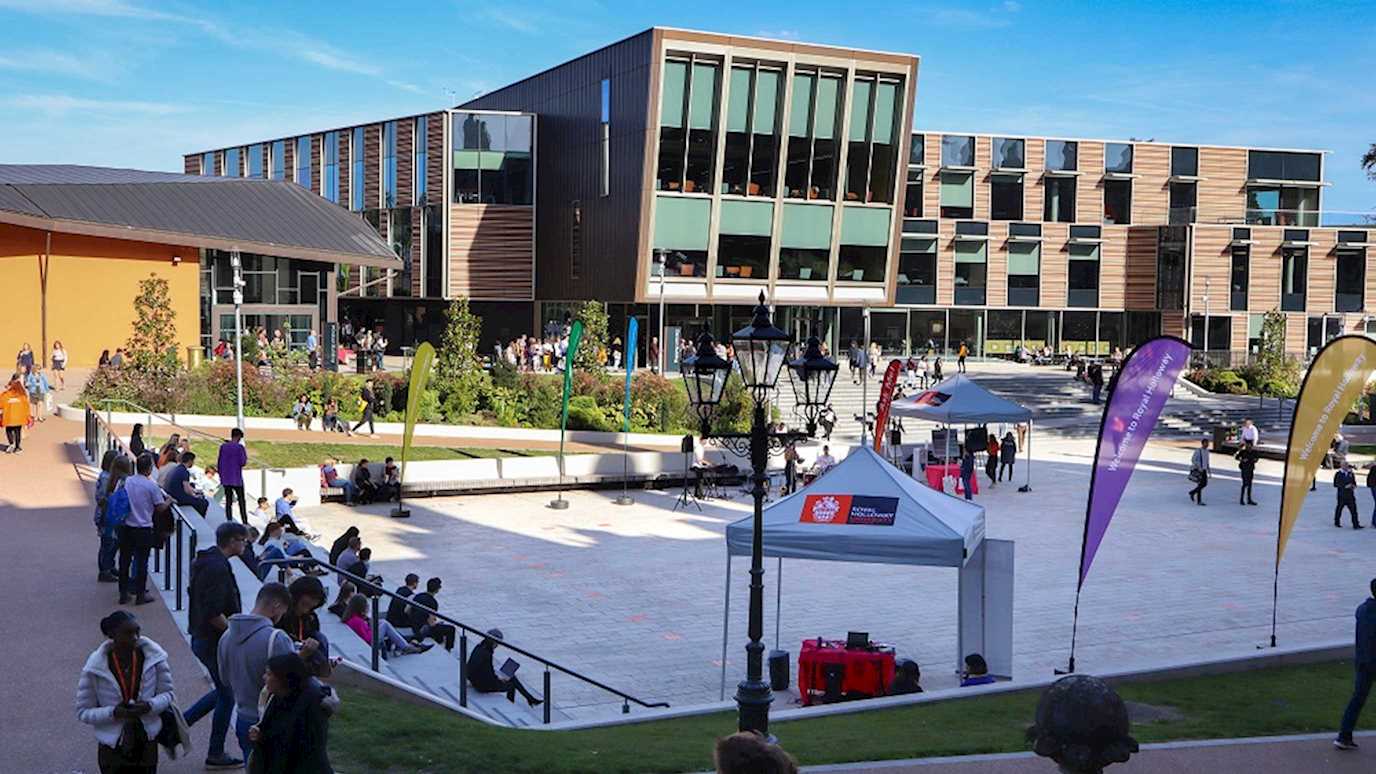
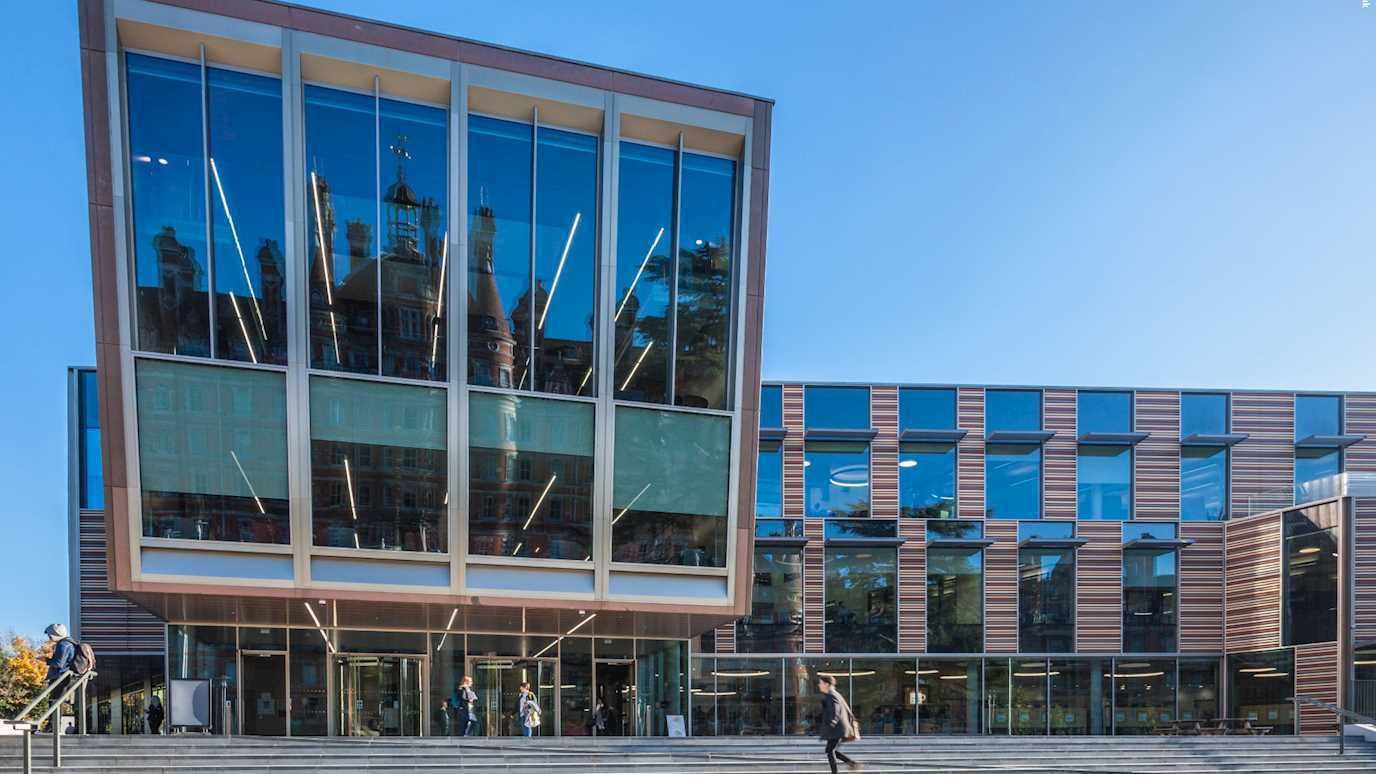
We are based in a purpose-designed new building right in the heart of campus, with ample space to grow teaching and research around our strengths, using state of the art commercial software, experimental and laboratories equipment.
Our research groups provide a lively and interactive environment for postgraduates and academic staff. Research group members, and other researchers across other departments and industry, meet frequently and hold research seminars or invite internal and external speakers to present to our students. These groups also serve as a useful forum for discussing current research activities, formulating ideas, sharing resources, discussing journal articles and problem solving. Students are expected to become active members of their relevant research group and to participate in wider Departmental events such as seminars and colloquia.
Students discuss their research skills training needs with their supervisor soon after they start their degree. The Researcher Development Programme offers a series of transferable skills courses designed for research students to help them to develop their skills alongside their research.
Students on our Research programmes are able to attend any of the 3rd or 4th year modules taught within our MEng programme as desired to support their research.
Assessment
PhD/MPhil. Topics linked to one of our research groups under the supervision of a specialist in their research field.
Must be something within the PhD that can be deemed as novel. Demonstrated by reviewing the research literature during the first 9 months to establish a specific area of interest where there is scope for moving knowledge forward. Some way of exploring that area is formally established, usually through experimentation. Writing of the thesis usually starts during the last 3-6 months of year three.
There is no expectation of ‘novelty’ for the MPhil. This degree is based around excellent research that furthers knowledge. Demonstrated by reviewing the research literature mainly during the first 6 months to establish a specific area of interest where there is scope for moving knowledge forward. Then some way of exploring that area formally is established, usually through experimentation. Writing of the thesis generally starts during the last 3-6 months of year two.
MSc by Research. A topic that fits well within one of our research groups. No formal taught modules, this degree is assessed on the research work itself. Regular supervisions underpin research with opportunities to present progress on research at internal Research Seminars.
We sometimes make changes to our courses to improve your experience. If this happens, we’ll let you know as soon as possible.
Entry requirements
UK Bachelor honours degree at 2:1 or equivalent within a Science or Engineering subject.
A Masters degree of Science in relevant disciplines is desirable but not essential.
Before applying we recommend securing a supervisor in order to apply for your research project but this is not essential. A research proposal is desirable at point of application.
We advise getting in touch with the Director of Postgraduate Education making an informal enquiry for your chosen research degree to inquire whether there is any other additional material they require you to submit in your application.
Depending on the project or topic of interest proposed, the academic department will assign a relevant supervisor.
English language requirements
All teaching at Royal Holloway is in English. You will therefore need to have good enough written and spoken English to cope with your studies right from the start.
The scores we require
- IELTS: 6.5 overall. Writing 7.0. No other subscore lower than 5.5.
- Pearson Test of English: 67 overall. Writing 71 no other subscore lower than 59.
- Trinity College London Integrated Skills in English (ISE): ISE III.
- Cambridge English: Advanced (CAE) grade C.
- TOEFL ib: 88 overall, with Reading 18 Listening 17 Speaking 20 Writing 26.
- Duolingo: 120 overall, 135 in Literacy, 135 in Production and no sub-score below 100.
Country-specific requirements
For more information about country-specific entry requirements for your country please see here.
Your future career
Students graduating from these research programmes will have great opportunities to work in world leading engineering sectors such as Electronics, Photonics, Telecoms, Music Technology, Nanotechnology, Computer Systems Engineering, Biomedicine etc. We will provide a range of expert support and information to our research graduates to support you in gaining a head start in the graduate job market.
Fees & funding
Home (UK) students tuition fee per year*: £5,238
EU and International students tuition fee per year**: £23,200
Other essential costs***: -
…How do I pay for it? Find out more about funding options, including loans, grants, scholarships and bursaries.
* and ** These tuition fees apply to students enrolled on a full-time basis in the academic year 2026/27.
* This figure is the fee for the academic year 2026/27 and is shown as a guide. Please note that for research courses, we adopt the minimum fee level recommended by the UK Research Councils for the Home tuition fee. Each year, the fee level is adjusted in line with inflation (currently, the measure used is the Treasury GDP deflator). Fees displayed here are therefore subject to change and are usually confirmed in the spring of the year of entry. For more information on the Research Council Indicative Fee please see the UKRI website.
** This figure is the fee for EU and international students enrolled on a full-time basis in the academic year 2027/28.
Royal Holloway reserves the right to increase fees for all students annually. For further information see fees and funding.
*** These estimated costs relate to studying this particular degree at Royal Holloway during the 2027/28 academic year and are included as a guide. Refers to specific individual items of £50 or more, and excludes accommodation, commuting, food, books/other learning materials and printing costs.