Please note that this degree is now closed for 2026 entry.
Key information
Duration: 1 year full time
Institution code: R72
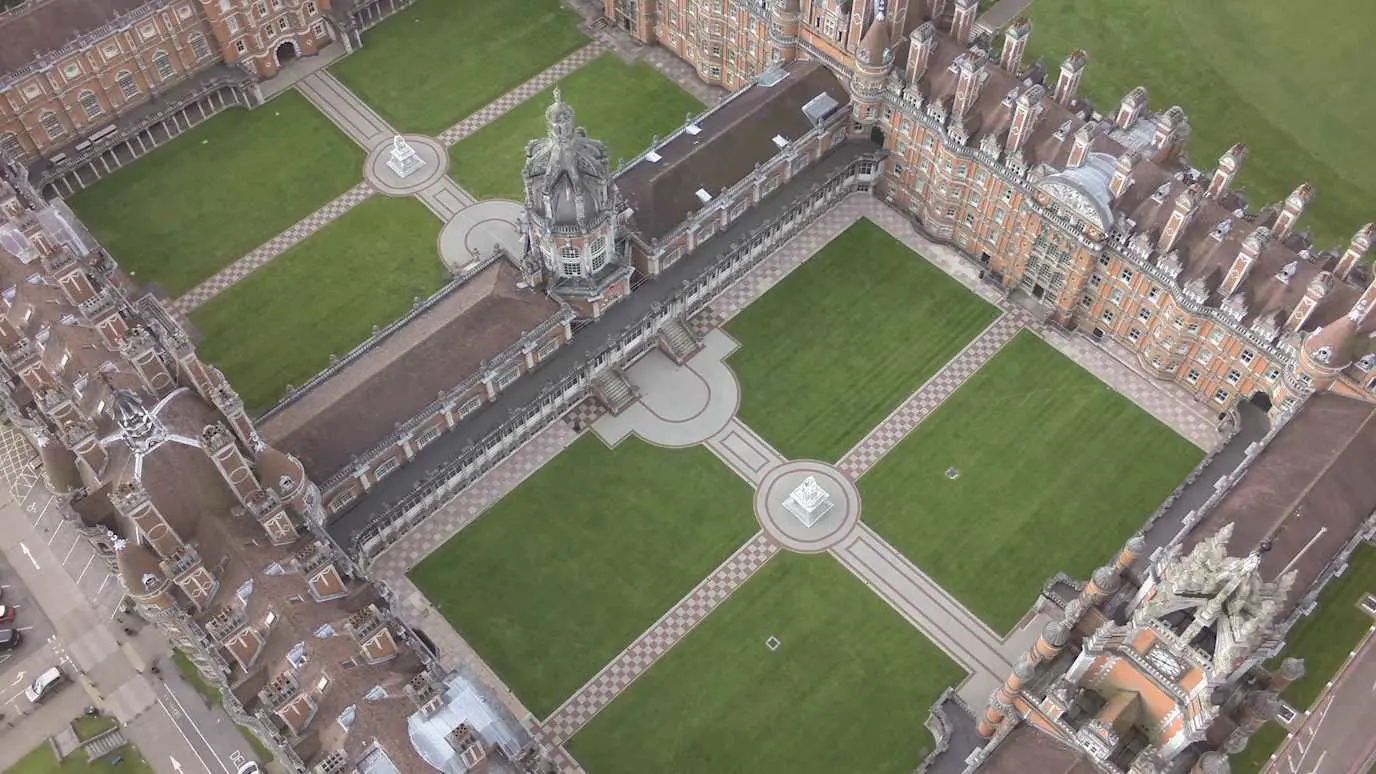
Campus: Egham
UK fees*: £14,900
International/EU fees**: £27,000
The course
Advanced Electronic and Electrical Engineering (MSc)
This MSc provides a varied and flexible curriculum informed by innovative research and current industrial needs with numerous optional modules so that the course can be tailored to suit your career aspirations. You will have the opportunity to integrate software, hardware, electronic and electrical engineering systems; design and implement System on Chip; and sustainable power generation to meet future carbon neutral targets. You will be based at our Egham campus for this degree.
This MSc is officially accredited by the IET (for Further Learning).
Students on this taught masters can also select optional modules from one of three pathways corresponding with research expertise in our department as follows:
Biomedical Electronic Engineering
(Optional pathway)
You’ll focus on the electronic aspects of biomedical engineering, ranging from embedded electronic systems to machine learning. Using open-source tools for biosensing and neuroscience, you’ll work in a creative space with the aim of making brain-computer interfacing and other biosensors more accessible for rapid prototyping and delivery of products in the consumer landscape.
Optional modules:
■ Fundamentals of biomedical engineering
■ Pattern recognition
■ Systems on chip
■ Real time digital processing
Microwave and Optical Fibre Communications
(Optional pathway)
You’ll focus on the usage of fibre optics and RoF communications in 5G/6G and beyond, as well as in areas such as space and defence. As one of the few UK institutions with the skills and resources to provide hands-on experience in this area, you’ll be linked with our unique microwave photonics and sensors research group.
Optional modules:
■ Advanced communication systems
■ Mobile and optical fibre communications
■ Systems on chip
■ Real time digital processing
Smart Power Systems
(Optional pathway)
You’ll focus on the crucial changes in modern power systems today, as well as developments for a sustainable energy future. You’ll be prepared for the large variety of jobs in the Power System sector, from smart meters and demand side management, to load forecasting, distribution and transmission, to energy generation, renewables and energy storage.
Optional modules:
■ Sustainable power generation
■ Pattern recognition
■ Power systems
■ Advance communication systems
On completion of this masters you will have an advanced understanding of:
- how to use industry standard tools to solve real practical problems
- how to integrate software and hardware electronic and electrical engineering systems
- designing, implementation and verification of complex circuitries in heterogeneous FPGA based platforms
- developments in sustainable power generation to meet future carbon neutral targets
- You will have the opportunity to gain advanced, research-specific skills and academic knowledge to take forward into further study or into your career.
- You will become part of a dynamic research environment where you will acquire industrially relevant knowledge to make a successful contribution to tomorrow’s systems that support everyday life.
Course structure
Core Modules
-
Team Project
This is a major group project in which students will work on an agreed practical problem that is relevant to tomorrow's societal needs and agreed with their supervisor. The working practice of the groups will be modelled on industrial practices in terms of planning, keeping proper records of meetings and the progress of work, and students will each take on a responsibility within the team that is vital to the professional and successful running of the group project. The overall aim is to provide students with a full appreciation of mechanisms that can support professional group working and its management in engineering practice in the context of exploring and researching solutions to a topic relevant to society.
-
Agile Engineering
This module is an introduction to the development of engineering projects using the Agile framework Scrum. Students work in sprints to develop a simple product that they have to specify using a backlog and other Scrum concepts. Students will also learn about the inception, design and specification of novel systems.
-
Engineering Project
The aim of this module is to provide students with the opportunity to carry out an in-depth engineering project, potentially in collaboration with industry, to solve a real-world problem or create a novel product. For specialised MScs, the project will be related to the specialisation topic.
Optional Modules
Below is a taster of some of the exciting optional modules that students on the course could choose from during this academic year. Please be aware these do change over time, and optional modules may be withdrawn or new ones added.
-
Advanced Communication Systems
This module covers advanced communications systems, focusing on microwave, optical, and broadband technologies. Students will gain knowledge and understanding of these systems and their applications in high-speed networks. They will learn to analyse complex microwave systems using mathematical and computational tools, such as estimating satellite link budgets. The module also covers the breakdown and categorisation of communication system elements, including high-speed optical data network architectures. Students will study radio propagation, design principles of advanced microwave systems, and sources of degradation, distortion, and losses. Additionally, they will be introduced to the latest CAD tools for evaluating and synthesising practical microwave systems.
-
Sustainable Power Generation
In this module you will develop an understanding of the various types of power generators, focussing on renewable technologies. You will look at the main benefits and drawbacks of different generation types and examine why a generation mix is desirable. You will consider the technical, environmental, sustainability, cost and political factors driving engineering and commercialisation decisions, and evaluate the objectives and constraints that are involved in optimisation procedures for power system applications, such as optimal wind farm layout.
-
Fundamentals of Biomedical Engineering
The aim of this module is to provide theoretical and practical knowledge relating to biomedical engineering, human physiological phenomena and the electronics used to acquire them safely and accurately. The indicative content for this module includes the study of fundamental modern healthcare technologies in relation to the data acquisition of EEG, ECG, EMG and PPG signals. The nature of these signals will be studied along with engineering techniques for developing diagnostic and therapeutic devices from them. Further, medical imaging technologies such as ultrasound, MRI and CT scanners will be studied. Signal processing and pattern recognition techniques relevant to biomedical engineering applications will also be investigated. Finally, students will undertake group projects over the last few weeks of term which will revolve around developing complete end-to-end bioinstrumentation systems.
-
Pattern Recognition
The aim of this module is to provide theoretical and practical knowledge relating to pattern recognition. The indicative content for this module includes the study of fundamental pattern recognition in relation to supervised and unsupervised learning. Topics will include Bayesian decision theory, Artificial Neural Networks and Support Vector Machines (amongst others). The nature of these algorithms will be studied along with engineering techniques for developing smart applications. Further, deep learning for engineering applictions (e.g. classification of electrocardiograms) will be studied. Finally, students will undertake coursework to an apply an appropriate machine learning methodology to solve a real-world pattern recognition problem.
-
Mobile and Optical Fibre Communications
The main aims of the module are to provide guidance and experience of working in Mobile and Fibre Optic high-speed smart communication systems ensuring that user requirements are understood and used to produce suitable advanced solutions. Students will acquire knowledge of fundamental concepts, terminology, techniques, and principles: Radio over Fibre (RoF) components; causes and techniques to remove radio frequency interference; optical multiplexing and switching technologies; link budget calculation; optical network architectures; increased dynamic range. Furthermore, students will be exposed to the importance of RoF systems in the broadband mobile and fibre telecommunication systems, where they are used for applications such as fibre optics, microwave and photonic components, antenna remoting, radar detection, satellite communications, signal generation, and electronic warfare systems. Students will interact with leading UK communication industries and learn from experienced communication leaders on how to apply communication engineering skills to real-world problems.
-
Real-Time Digital Signal Processing
This module develops a comprehensive understanding of the theory behind digital signal processing (DSP) and progresses to include how DSP can be implemented in real-time and embedded systems. Initially, students will be introduced to the theory behind signal processing progressively increasing the depth and breadth of their knowledge using Matlab software interface. Material will include sampling theorem, digital filtering, the discrete Fourier transform, the z-transform and adaptive filtering. Then, students will gain an understanding of how to program hardware to perform industry standard DSP algorithms such as filtering, spectral analysis and including Wiener filtering and adaptive echo cancellation. Advanced topics include high-resolution spectral estimation techniques and speech processing. Limitations of hardware such as finite precision, floating point operations will also be studied.
-
System on Chip Design
The module extends the knowledge acquired in digital systems with advanced topics in the emergent area of FPGA based system on chip design. The module will cover state-of-the-art features available in modern FPGAs exploring their fine-grained internal architecture and embedded macro blocks such as DSP slices, IPs and hardcore/softcore processors. A design language based on C/C++ will be presented as an alternative to traditional RTL design (VHDL). High level synthesis tools will be used to compute signal processing applications.
-
Power Systems
On this module you’ll cover the entire process of using a primary source of energy, converting it to electricity and delivering the generated electricity to where it is required. You’ll gain useful knowledge and skills. On power system basics, such as complex power, calculations including phasors, reactive compensation, power factor, conversion of circuits to phasor domain, instantaneous values, three phase circuits, calculations related to transmission lines, transformers, per unit calculations, synchronous and induction machines, powerflow and optimal power flow. In labs you’ll actively engage with the covered material and work through the calculations using Matlab as well as hand calculations.
Teaching & assessment
This MSc consists of 3 core modules, 4 optional modules culminating in an in-depth electronic engineering project. Teaching follows several different complementary models: face-to-face, online, pre-recorded, workshops, presentations, practical sessions, labs. Assessments cover a variety of activities: groupwork, presentations, reports, Moodle quizzes, etc. Across the curriculum, examples and case-studies are international and cover many different backgrounds. Modules feature built-in formative assessments (e.g. Moodle quizzes, workshops, presentations) that complement and lead up to summative assessment.
Students have a close relationship with their tutors, and with the teaching staff in general, which means they have many opportunities for feedback. They receive oral feedback in workshops, presentations, practical sessions, and labs.
Entry requirements
2:2
2:2 UK Bachelor honours degree or equivalent in Electrical, Electronics, Computer Systems Engineering, or Industrial Engineering background.
Relevant professional qualifications in an associated area will be considered
International & EU requirements
Bachelors Degree/ Bachelor Honours Degree: GPA 2.6
Masters degree: GPA 3.0/ 80%
Diplomë e Integruar e Nivelit të Dytë:or Diplomë e Nivelit të Parë: 7/10, or Master i Shkencave në Mjekësi të Përgjithshme / në Mjekësi Veterinarë / ne Stomatologji: 7/10
Licence, Diplôme, Diplôme d'Études Supérieures, Diplôme de Docteur en Pharmacie: 11/20
Batxelor: 5/10
Grau de Licenciado/a: 13/10
Bachelor degree from The University of the West Indies: GPA 2.5
Título, Grado de Licenciado/A: 6/10
Specialist Diploma, (Diplom bakalavri astichan), Bachelor degree from American University of Armenia: 70%, GPA 3.0 out of 4, or 14 out of 20
Bachelor degree (Honours) with a 2:2, or a Bachelor degree (Ordinary) with a Pass with 57% overall.
Bachelor degree or Fachhochschuldiplom/Diplom (FH): Bestanden- PASS, Befriedigend - Satisfactory, or 3 out of 5
Bachelor degree (Bakalavr) or Specialist Diploma with 3.5 out of 5 or 70% overall.
Bachelor degree from The University of the West Indies: 2:2, GPA 2.5
Bachelor degree: 2.6/4 or 3.2/5 or 65%
4 year Bachelor degree from Bangladesh University of Engineering and Technology (BUET) with a First Class Division or a Masters Degree following a 3 or 4 year degree.
Specialist Diploma 6/10, or Bachelor Degree 8/10
Bachelor degree with grade 12 overall or the Licentiaat or Licence and other two cycle diplomas with grade 12 overall.
Bachelor degree from The University of the West Indies: 2:2 or GPA 2.5
Diplôme d'études Approfondies/Supérieures/Master: 13 out of 20
Bachelors degree: 60%
Licenciado/Titulo de.... :60%, or Titulo de Bachiller Universitario: 70%
Diploma Visokog Obrazovanja Diploma Visokog Obrazovanja / Diplomirani with Grade 8
Bachelors or Masters: 60%
Título de Bacharel/ Titlo de... 6.5/10
Bachelor degree from The University of the West Indies: 2:2
Bachelor (Honours) Degree: Lower Second Class, or Bachelor (Ordinary) Degree GPA 2.5/5
Bakalavar or Diploma of Completed Higher Education with a Grade 4 out 6 overall.
Diploma d’Etudes Approfondies: 13/20
Diplome d’Etudes Approfondies: 70%
Masters degree: 60%
12/20 or GPA 2.5/4
4 year Bachelor degree with 62%, a GPA 2.5 out of 4, Grade 6 out of 12 or grade C+ overall OR 3 year Bachelor degree with 73%, a GPA of 3.1 out of 4, Grade 8 out of 12 or grade B overall, depending on the grading scheme.
Grau de Licenciado/a: 13/20
The University of the West Indies, or University of College of the Cayman Islands: 65%
Diplome d’Ingenieur (non-honours): 14/20
Diplôme d'Etat de Doctorat en Médecine, Diplome d'Etudes Approfondies 13/20
Grado de Licenciado en..., or Grado de Bachiller: 4.6/7
4 year Bachelors degree with an overall 65% to 70% or GPA of 2.8 to 3.0 out of 4.0 depending on the institution.
Licenciado en, Licenciado en, or Diploma de: 3.5/5
Licenciado, Bachiller: 7.5/10
Diplôme d'études supérieures spécialisées, Diplôme d'études approfondies, Diplôme d'Etat de docteur en Pharmacie: 13/20
3 out of 5 overall in the Baccalaureus Prvostupnik or Visoko Obrazovanja/Level VII/1 (second level degree obtained on completion of 4-6 year course).
Titulo de Licenciado/ Arquitecto / Inginiero / Doctor: 3.5/5
Overall 6.5 out of 10 or a GPA of 2.5 out of 4 in a Bachelor degree from a public university, Ptychion (from University of Cyprus) or Bachelor degree awarded by a private institution (the programme must be accredited by the Ministry of Education and Culture).
Bakalar with dobre (good), score of 2 or Grade C overall.
Diplome d’Etudes Speciales, Diplome d'Etudes Approfondies, Maistrise/Diplome d'Ingenieur/Diplome d'etudes superieures:
7 from 13 points grading system or 4 from 7 points grading system in a Bachelor degree, Candidatus Philosophiae or Professionbachelor.
Diplome d'Ingenieur Bien, or Maitrise/ Master: 14
The University of the West Indies: Lower Second Class Honours, or BSc in Nursing from Dominica State College
Licenciado/Titulo: 75%
Titulo de Licenciado/a from Universidade Nacional Timor Lorosa'e
Titulo de Licenciado/ Titulo: 7/10 OR 70%
University bachelors degree with a GPA of 2.4 overall or 65% overall
Licenciado/ Titulo de: 6.5/10
Masters Degree: 2.6/4
71-80%, 3 or C overall in a Bakalaurusekraad/Diploma, Magister or Magistrikraad
2.5 out of 4
Bachelor Degree: 2.5 or overall grade Satisfactory
GPA of 1.4 where marks are in 1 - 3 system or GPA of 2.5 where marks are in 1 - 5 system in a Kandidaattii/Kandidat or Maisteri/Magister
Licence awarded from 2009 with grade 10-11.99 or Maitrise (pre-Bologna) with grade 11
Diplome D'Ingenieur, or Maitrise: Bien
Master's degree: 60%/ GPA 2.7/4.3
Bakalarvis Khariskhi: 71%
Grade 3 overall in a Bachelor, Fachhochschuldiplom or Magister Artium
Bachelor degree with a Second Class Lower Division overall.
6 out of 10 overall in a Diploma from the Faculties of Engineering and Agriculture or a Ptychion (Bachelor degree) awarded by an AEI.
Bachelor degree from The University of the West Indies: GPA 2.5
Licenciado/ Titulo: Pass mark of 51% University: 60% or Pass mark of 61% Universities: 70%
Diplôme d'Etat de docteur en médecine, or Diplome d’Etudes Superieures/Maitrise/Diplome d’Etudes Approfondies : 14/20
65%, or 3.0 out of 4
Titulo de Licenciado/a/Grado Academico de Licenciatura: 70%
Bachelors degree degree with a Second Class Honours, Lower Division.
Egyetemi Oklevel /Foiskola Oklevel/ Alapfokozat with 3 out of 5 overall.
Baccalaurreatus with grade 6.5 out of 10 overall or Kandidatsprof / Cadidatus Mag with 6 out of 10 overall.
Bachelor degree with 55% to 60% overall or a CGPA of 5.5 to 6 out of 10 overall depending on the NIRF 1-100 institution ranking
Bachelor degree or Diploma IV with overall GPA of 2.8.
Bachelor Degree/Professional Doctorate with 12 out of 20 overall.
Bachelor’s degree (four years) in Medicine/Dentistry/Veterinary Medicine/Pharmacy/Architectural Engineering with 70% overall.
Bachelors degree with at least 65% overall depending on the mark scheme.
Diploma di Laurea or Licenza di Accademia di Belle Arti with 80 out of 110 overall.
Bachelor degree (when accredited by the University Council of Jamaica, or when awarded by the Council of Community Colleges of Jaimaica): Second Class Lower Division
Bachelor degree (Gakushi) with a B overall, dependent on the mark scheme.
Bachelor degree: GPA 2.8 out of 4, Good, C, 68%
Bakalavr or Specialist Diploma with 3.5 out of 5, 75% or 2.67 out of 4.33, or 2.67 out of 4 overall.
Bachelor degree with a Second Class Honours (lower division) overall.
Bacelor/Bachelor Degree: C - Good
Bachelor degree with B or a GPA of 2.6 overall.
Specialist Diploma, Bachelor Degree, Masters Degree: 3.0 out of 4 or 4.0 out of 5
Masters degree: C or GPA 2.0
Bakalaura Diploms or Professional Bakalaura Diploms with Grade 6 overal.
Bachelor Degree/ Licence: 70%
Masters Degree: 65%
Master's degree: 70% or GPA 2.4 out of 4.0
Bachelor Degree of Medicine/Surgery/Architecture/Engineering: 65% or 2.6/4
Dipl Ing (FH) or Dipl Arch (FH) from Liechtenstein Technical College with a Grade 4.4/6 overall.
7 out of 10 overall in a Bakalauras or Specialist Diploma.
Bachelor or Diplome d'ingenieur industriel: 14/20
Licenciatura: Lower Second Class Honours or GPA 2.5
Diplome d'Ingenieur: 13/20
Masters Degree: 60%
Bachelor degree with Class 2 Division ii, B or 2.6 out of 4.0 overall.
Bachelor degree (Maldives National University): GPA 2.5
Diplôme d'Etat de docteur en Pharmacie: GPA 15 out of 20
Honours degree with a Second Class (Lower Division) overall.
Maitrise: 13/20
Bachelor Degree: Class II division II
Titulo de Licenciado/Titulo: GPA 7 out of 10 or 70%
Diplomă de Licenţă: 7/10
Bachelor degree (awarded after 2012): 80 out of 100
Masters Degree: 70%
Diploma o završenim osnovnim akademskim studijama: Grade C
Licence/Licence d'Etudes Fondamentales/Licence Profesionnelle: GPA 111 out of 20
Grau de Mestre: 12/20
Master's degree: 60%
Bachelor Honours / Professional Bachelor degree: 60%
Bachelor degree (4 years) or Master's degree (following a 3-year Bachelor degree): 65%
Bachelor degree or Doctoraal with Grade 6.0 out of 10 overall.
Bachelor degree Honours or Ordinary with an overall Grade C+ or Grade 3 out of 9 points grading system.
Licenciado/Titulo: 80%
Diplôme d'études Approfondies or Diplôme d'études Supérieures Spécialisées: 15 out of 20
Bachelor degree with a Second Class Honours, Lower Division or overall GPA of 2.4 out of 5.
Visoko Obrazovanja with 7 out of 10 overall.
Bachelor degree GPA 2.6 to 2.8 depending on your institution.
Bachelor degree, Candidatus Magisterii, Sivilingeni-r (siv. ing.) (Engineering degree ) or Sivil?konom (siv. ?k.) (Economics degree) Grade D or 3.25 where 1 is the highest.
Bachelor degree with an overall GPA of 2.6/4
4 year Bachelor degree or combined bachelors degree and Master degree for the duration of 4 years with 58% - 65% or a CGPA of 2.8 - 3.2 overall depending on your institution.
Bachelor degree: GPA 3.0 out of 4.0, 80%, B
Licenciado/ Titulo: 70%
Bachelor Honours Degree: Class II, Division B
Titulo de Licenciado/ TItulo: 3.5/5
Grado Academico de Bachiller: 13/20
Bachelor degree (awarded from 2022): 2.5/4, or Masters degree: 2.5/5
Licencjat, Inzynier or Bachelor with grade 4 out of 5
Diploma de Estudos Superiores Especializadoswith grade 14 overall or Licenciado with grade 13 overall.
Bachelor degree: 70/100 or GPA 2.0 out of 4.0
Bachelor degree with an overall GPA of 2.8 overall.
Maitrise: 13/20
Diploma de Licenta, Diploma Inginer or Diploma de Arhitect with 7.0 out of 10 overall.
Bakalavr Bachelor degree or Specialist Diploma with 3.5 out of 5 or 70% overall.
Bachelor Honours Degree: 13/20
Bachelor degree when studied at University of South Pacific, Samoa: GPA 2.5
Licenciatura: 13/20
Bachelor degree with 65%, 3.25 out of 5.0 or 2.5 out of 4.0 overall.
Diplom Visokog Obrazovanja (second-level degree obtained on completion of a four to six-year course) with 7 out of 10 overall.
Bachelor Degree: Lower Second Class
Bachelors Degree (Honours): Lower Second Class
Bachelor degree (from a public university) with a Class II (lower) overall.
Bakalar or Magister / Inzinier with vel'mi dobre (very good) or Grade 2 overall.
Diplomirani / Diplomirani Inzenir from Visoko izobrazevanje, University Diploma or Visoko Obrazovanja (until 1999) with 7 out of 10 (8 for Visoko Obrazovanja) overall.
Bachelor degree when studied at University of South Pacific, Vanuatu: GPA 2.5
Bachelor (Honours), Bachelor or Professional Bachelor degree with 60% or Second Class Lower Division.
Bachelor (Haksa) degree with 3.0 out of 4.5, 2.9 out of 4.3 or 2.8 out of 4.0.
Bachelor Honours degree: 2.5/4.0 Division Two Lower
Licenciado, Titulo de Ingeniero or Titulo de Arquitecto with 6 out of 10.
Bachelor degree from The University of the West Indies: GPA 2.5 Second Class Honours, Lower Division
Bachelor degree from The University of the West Indies: GPA 2.5 Second Class Honours, Lower Division
Bachelor degree from The University of the West Indies: GPA 2.5 Second Class Honours, Lower Division
Bachelor Honours Degree: 60%
Bachelor degreee, Masters Degree, MO-B Akte Diploma: Met Genoegen (Good)
Bachelor degree: 70%
Bachelor degree from National University or Private University with 68% to 73% or GPA 2.8 to 3.0 depending on your institution.
Specialist Diploma: 3.5/5
Bachelor degree with a 2nd Class Honours (Lower) overall.
Bachelor degree GPA 2.4 to 2.6 depending on your institution.
Diplôme d'études supérieures, Diplôme d'études approfondies: 13/20
Bachelor or Masters degree from the University of the South Pacific: 70%/ B+
Bachelor degree (when accredited by the Accreditation Council of Trinidad and Tobago (ACTT)): Lower Second Class Honours
12 out of 20 (Assez Bien)
Bachelor degree GPA 2.6 to 2.8 depending on your institution.
Ýokary bilim hakynda şahadatnama: 3.5/5
Bachelor degree (accredited by the Council of Community Colleges of Jamaica)
Bachelor degree: Class II Lower/ Honours Lower/ 3.0-3.9/ B
Bachelor degree (post 2007) or Specialist Diploma (after 1991) with a Grade 3, 9 out of 12 or 3.5 out of 5 overall.
Bachelor degree with 80%, a GPA of 2.8 out of 4, C+ or Good overall.
Bachelor degree with a GPA of 2.6 overall.
Bachelor Honours Degree: GPA 2.5 or Second Class Honours, Lower Division
Titulo de Licenciado/Titulo: GPA 7/12
Diplomi: 70%
Kandidatexamen with at least a Pass (godkand) overall.
Bachelor degree when studied at University of South Pacific, Vanuatu: GPA 2.5
Titulo de Licenciado/Titulo: 70% or 11 from high ranking institution
Bachelor degree or Bang tot nghiep dai hoc with 6.5 out of 10.
Masters Degree: 63%
Masters Degree: 55%
60%-64%, Second Class Honours, Lower Division
English language requirements
- IELTS: 6.5 overall. No subscore lower than 5.5.
- Pearson Test of English: 67 overall. No subscore lower than 59.
- Trinity College London Integrated Skills in English (ISE): ISE III.
- TOEFL iBT: 88 overall, with Reading 18 Listening 17 Speaking 20 Writing 17.
- Duolingo: 120 overall and no sub-score below 100.
Your future career
This specialised course provides a strong theoretical and practical understanding of electronic and electrical engineering with links to industry-related topics and employability skills.
Students on this course will have an opportunity to access micro-placements schemes to build experience and develop your career by applying state of the art knowledge to present engineering challenges.
Prospective career pathways include:
- Specialised Electronic Engineer
- Embedded Systems Design Engineer
- System on Chip Design Engineer
- Biomedical Engineer
- Power System Engineer
- Healthcare Systems Engineer
- Project Engineers
The course is a fantastic route to professional registration – top-up and update your BEng or BSc on route to CEng registration*.
* Our MSc Advanced Electronic and Electrical Engineering has been accredited by the Institution of Engineering and Technology (IET) on behalf of the Engineering Council for Further Learning for registration as a Chartered Engineer. Note that you must already hold a CEng accredited BEng/BSc (Hons) undergraduate first degree to comply with full CEng registration requirements.
Fees, funding & scholarships
Home (UK) students tuition fee per year*: £14,900
EU and international students tuition fee per year**: £27,000
Other essential costs***: There are no single associated costs greater than £50 per item on this course.
How do I pay for it? Find out more about funding options, including loans, grants, scholarships and bursaries.
* and ** These tuition fees apply to students starting their course on a full-time basis in the academic year 2026/27. Students studying on the standard part-time course structure over two years are charged 50% of the full-time applicable fee for each study year.
Royal Holloway reserves the right to increase all postgraduate tuition fees annually. For further information, see fees and funding.
** These estimated costs relate to studying this particular degree at Royal Holloway during the 2026/27 academic year, and are included as a guide. Costs, such as accommodation, food, books and other learning materials and printing, have not been included.