Please note that this degree is now closed for 2027 entry.
Key information
Duration: 1 year full time or 2 years part time
Institution code: R72
Campus: Egham and Central London
UK fees*: £12,500
International/EU fees**: £24,000
The course
British Literature, Theatre and Cultures (MA)
This course will give you the chance to combine your passion for literature, theatre, and British culture, and combine them in an interdisciplinary exploration of the arts. Through this course, you will become acquainted with one of the world capitals of culture. You’ll gain knowledge of not only major British cultural institutions such as the Victoria and Albert Museum and the Royal Court but also fringe organisations and charities, as well as have the chance to meet individual writers, performers, practitioners and representatives of those institutions. You’ll explore the different and diverse relationships between the historical and the contemporary in both literature and theatre, developing critical thinking and analytical skills that you can use in your own arts career – whether that be as a creative writer, a critic, or working for an arts institution.
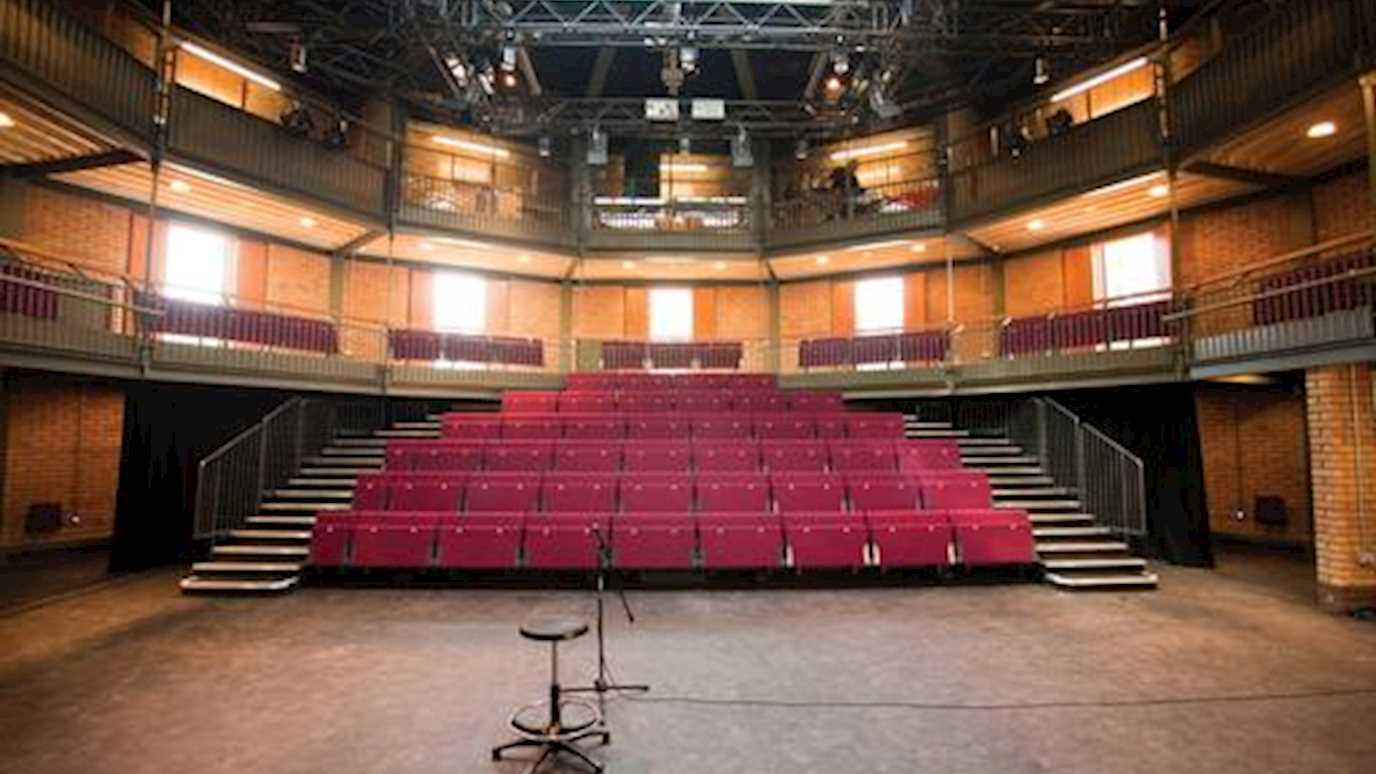
Royal Holloway's Department of Drama, Theatre and Dance is internationally recognised for the quality of its creative arts programmes, and this course is the only UK postgraduate degree of its kind to offer a diverse overview of contemporary British culture with a focus on literature and theatre.
We sometimes make changes to our courses to improve your experience. If this happens, we’ll let you know as soon as possible.
Course structure
Core Modules
-
British Literature, Theatre and Cultures
Taught by a team of academics, British Literature, Theatre, Cultures offers a broad interdisciplinary discussion of different cultural forms and institutions and their significance to conceptions of British culture. Each week will focus on a particular case study, which will be curated to build into a cumulatively coherent narrative offering you an overview of different elements of cultural practice. Case studies may include the discussion of specific institutions (e.g., the Royal Court as a centre for new writing in theatre, the BBC, the Victoria and Albert Museum), individual writers and performers, films and television programmes, specific authors and texts, or performances currently on showing on in London. Representatives from, or with connections to, institutions will be brought into the module where possible to provide an understanding of the mechanics of the cultural industry and facilitate networking connections with practitioners.
-
Contemporary British Theatre
This module explores the work of a wide range of contemporary British dramatists and directors including, indicatively, debbie tucker green, Lucy Prebble, Bola Agbaje, Lucy Kirkwood, Caryl Churchill, Moira Buffini, Tanika Gupta, Roy Williams, Nick Payne, Simon Stephens, Mike Bartlett, Rob Drummond, and Anders Lustgarten. Specifically, it enables you to situate playwriting and performance as powerful modes of intervention in the public sphere. The aim of the module is to widen and deepen your understanding of theatre as a material and meaningful intervention in the contemporary world, to enable you to identify key developments in recent British theatre, and to utilise interdisciplinary modes of research.
-
Concept and Dramaturgy
Dramaturgy is the process of creative research that facilitates a successful transfer of source material to the stage. In this module, you will develop the multi-dimensional skills of the dramaturge in order to then propose and construct a directorial concept. You will be introduced to a broad range of contemporary directors working in Europe and beyond with a specific focus on their dramaturgical approaches and the shaping of an overriding concept. Case studies will include directors who adapt canonical 19th century plays, such as Yana Ross, or Shakespeare texts, such as Thomas Ostermeier, or adapt films or novels for the stage, such as Ivo van Hove. In addition, you will analyse the complex dramaturgical strategy of adapting multiple texts for a single performance in works by directors such as Krzysztof Warlikowski, or those who use real-life scenarios and documented histories, such as Lola Arias and Oliver Frljić. You will then have the chance to adapt a text for performance through a dramaturgical portfolio and propose an original concept.
-
Dissertation or Creative Dissertation
Optional Modules
Below is a taster of some of the exciting optional modules that students on the course could choose from during this academic year. Please be aware these do change over time, and optional modules may be withdrawn or new ones added.
-
Cultural Keywords
This module investigates some of the common keywords used regularly and perhaps often unconsciously in literary and cultural studies and around which whole discourses have emerged. This module explores how the meaning of chosen keywords evolves over time, place, language, and culture, using a cultural studies approach. It aims to build students’ methodological skills by developing a reflexive and critical understanding of what words ‘do’ and how we use them. Materials used to explore the keywords will be drawn from a transnational corpus of literary, historical, philosophical and creative works and will make connections across languages, cultures, times, and geographic regions, developing skills in comparative analysis and cross-cultural awareness.
-
Victorian London
This module will introduce you to the theories and methods of a variety of humanities disciplines through an in-depth study of the literature, history, geography, and visual culture of nineteenth-century London. You will be asked to reflect critically on your own approach to the material studied, through engagement with both primary materials and a variety of recent secondary sources.
-
The Nineteenth-Century Novel - Contexts, Theories and Readers
This module aims to equip you with a systematic understanding of the scope and range of the mid nineteenth-century novel in the context of Victorian publishing, reading and critical practices. We study a range of novels in depth, and discuss recent critical approaches to each text in order to provide you with a comprehensive understanding of the critical techniques and discourses that will be applicable to your own advanced scholarship in the assessed essay and final dissertation. -
Shakespeare and Dramaturgy
This module will divide into two halves: the first half will explore Shakespeare in relation to dramaturiges of the past. The second half will examine dramaturgies of the present and look to possible dramaturgies for the future. There will be opportunities for archival research; for analysing performance history; and for creative practice, which might take the form, for example, of editing a play for performance, designing for a production, constructing a research packet for a production, creating a programme for a production. The second half of the module will be based on, and respond to, the plays by Shakespeare on in London during the term. The dramaturgies of mainstream and fringe, professional and amateur Shakespeare productions will be investigated.
Teaching & assessment
If you’re a full-time student you’ll be assessed across six modules in one year, whilst if you’re part-time then you’ll be assessed across three modules per year. You’ll be taught in lively and engaging seminars, giving you the chance to share your thoughts and ideas with your peers.
You’ll be encouraged to undertake visits to institutions, museums, archives, and live performances, which will inform class debates and contribute to your exposure to British literature, theatre, and culture.
You’ll also have a personal tutor who will support you throughout your course. Assessment is by essay or presentation, with a dissertation or creative dissertation.
Entry requirements
2:2
UK Lower Class Honours degree (2:2) or equivalent in a relevant subject.
Relevant subjects include: Drama, Theatre and Performance, English, Languages, Literature, Philosophy, Religious Studies, History, Anthropology, Journalism, Linguistics, Art History and Theory, Teaching, Classical Studies, Cultural Studies, Media Arts and Visual Culture.
Candidates with professional qualifications or relevant professional experience in an associated area will also be considered.
Applicants will be required to submit an academic writing sample of 2000 words maximum that shows the ability to analyse literature. The sample could be an extract from a dissertation or two shorter essays.
International & EU requirements
Bachelors Degree/ Bachelor Honours Degree: GPA 2.6
Masters degree: GPA 3.0/ 80%
Diplomë e Integruar e Nivelit të Dytë:or Diplomë e Nivelit të Parë: 7/10, or Master i Shkencave në Mjekësi të Përgjithshme / në Mjekësi Veterinarë / ne Stomatologji: 7/10
Licence, Diplôme, Diplôme d'Études Supérieures, Diplôme de Docteur en Pharmacie: 11/20
Batxelor: 5/10
Grau de Licenciado/a: 13/10
Bachelor degree from The University of the West Indies: GPA 2.5
Título, Grado de Licenciado/A: 6/10
Specialist Diploma, (Diplom bakalavri astichan), Bachelor degree from American University of Armenia: 70%, GPA 3.0 out of 4, or 14 out of 20
Bachelor degree (Honours) with a 2:2, or a Bachelor degree (Ordinary) with a Pass with 57% overall.
Bachelor degree or Fachhochschuldiplom/Diplom (FH): Bestanden- PASS, Befriedigend - Satisfactory, or 3 out of 5
Bachelor degree (Bakalavr) or Specialist Diploma with 3.5 out of 5 or 70% overall.
Bachelor degree from The University of the West Indies: 2:2, GPA 2.5
Bachelor degree: 2.6/4 or 3.2/5 or 65%
4 year Bachelor degree from Bangladesh University of Engineering and Technology (BUET) with a First Class Division or a Masters Degree following a 3 or 4 year degree.
Specialist Diploma 6/10, or Bachelor Degree 8/10
Bachelor degree with grade 12 overall or the Licentiaat or Licence and other two cycle diplomas with grade 12 overall.
Bachelor degree from The University of the West Indies: 2:2 or GPA 2.5
Diplôme d'études Approfondies/Supérieures/Master: 13 out of 20
Bachelors degree: 60%
Licenciado/Titulo de.... :60%, or Titulo de Bachiller Universitario: 70%
Diploma Visokog Obrazovanja Diploma Visokog Obrazovanja / Diplomirani with Grade 8
Bachelors or Masters: 60%
Título de Bacharel/ Titlo de... 6.5/10
Bachelor degree from The University of the West Indies: 2:2
Bachelor (Honours) Degree: Lower Second Class, or Bachelor (Ordinary) Degree GPA 2.5/5
Bakalavar or Diploma of Completed Higher Education with a Grade 4 out 6 overall.
Diploma d’Etudes Approfondies: 13/20
Diplome d’Etudes Approfondies: 70%
Masters degree: 60%
12/20 or GPA 2.5/4
4 year Bachelor degree with 62%, a GPA 2.5 out of 4, Grade 6 out of 12 or grade C+ overall OR 3 year Bachelor degree with 73%, a GPA of 3.1 out of 4, Grade 8 out of 12 or grade B overall, depending on the grading scheme.
Grau de Licenciado/a: 13/20
The University of the West Indies, or University of College of the Cayman Islands: 65%
Diplome d’Ingenieur (non-honours): 14/20
Diplôme d'Etat de Doctorat en Médecine, Diplome d'Etudes Approfondies 13/20
Grado de Licenciado en..., or Grado de Bachiller: 4.6/7
4 year Bachelors degree with an overall 65% to 70% or GPA of 2.8 to 3.0 out of 4.0 depending on the institution.
Licenciado en, Licenciado en, or Diploma de: 3.5/5
Licenciado, Bachiller: 7.5/10
Diplôme d'études supérieures spécialisées, Diplôme d'études approfondies, Diplôme d'Etat de docteur en Pharmacie: 13/20
3 out of 5 overall in the Baccalaureus Prvostupnik or Visoko Obrazovanja/Level VII/1 (second level degree obtained on completion of 4-6 year course).
Titulo de Licenciado/ Arquitecto / Inginiero / Doctor: 3.5/5
Overall 6.5 out of 10 or a GPA of 2.5 out of 4 in a Bachelor degree from a public university, Ptychion (from University of Cyprus) or Bachelor degree awarded by a private institution (the programme must be accredited by the Ministry of Education and Culture).
Bakalar with dobre (good), score of 2 or Grade C overall.
Diplome d’Etudes Speciales, Diplome d'Etudes Approfondies, Maistrise/Diplome d'Ingenieur/Diplome d'etudes superieures:
7 from 13 points grading system or 4 from 7 points grading system in a Bachelor degree, Candidatus Philosophiae or Professionbachelor.
Diplome d'Ingenieur Bien, or Maitrise/ Master: 14
The University of the West Indies: Lower Second Class Honours, or BSc in Nursing from Dominica State College
Licenciado/Titulo: 75%
Titulo de Licenciado/a from Universidade Nacional Timor Lorosa'e
Titulo de Licenciado/ Titulo: 7/10 OR 70%
University bachelors degree with a GPA of 2.4 overall or 65% overall
Licenciado/ Titulo de: 6.5/10
Masters Degree: 2.6/4
71-80%, 3 or C overall in a Bakalaurusekraad/Diploma, Magister or Magistrikraad
2.5 out of 4
Bachelor Degree: 2.5 or overall grade Satisfactory
GPA of 1.4 where marks are in 1 - 3 system or GPA of 2.5 where marks are in 1 - 5 system in a Kandidaattii/Kandidat or Maisteri/Magister
Licence awarded from 2009 with grade 10-11.99 or Maitrise (pre-Bologna) with grade 11
Diplome D'Ingenieur, or Maitrise: Bien
Master's degree: 60%/ GPA 2.7/4.3
Bakalarvis Khariskhi: 71%
Grade 3 overall in a Bachelor, Fachhochschuldiplom or Magister Artium
Bachelor degree with a Second Class Lower Division overall.
6 out of 10 overall in a Diploma from the Faculties of Engineering and Agriculture or a Ptychion (Bachelor degree) awarded by an AEI.
Bachelor degree from The University of the West Indies: GPA 2.5
Licenciado/ Titulo: Pass mark of 51% University: 60% or Pass mark of 61% Universities: 70%
Diplôme d'Etat de docteur en médecine, or Diplome d’Etudes Superieures/Maitrise/Diplome d’Etudes Approfondies : 14/20
65%, or 3.0 out of 4
Titulo de Licenciado/a/Grado Academico de Licenciatura: 70%
Bachelors degree degree with a Second Class Honours, Lower Division.
Egyetemi Oklevel /Foiskola Oklevel/ Alapfokozat with 3 out of 5 overall.
Baccalaurreatus with grade 6.5 out of 10 overall or Kandidatsprof / Cadidatus Mag with 6 out of 10 overall.
Bachelor degree with 55% to 60% overall or a CGPA of 5.5 to 6 out of 10 overall depending on the NIRF 1-100 institution ranking
Bachelor degree or Diploma IV with overall GPA of 2.8.
Bachelor Degree/Professional Doctorate with 12 out of 20 overall.
Bachelor’s degree (four years) in Medicine/Dentistry/Veterinary Medicine/Pharmacy/Architectural Engineering with 70% overall.
Bachelors degree with at least 65% overall depending on the mark scheme.
Diploma di Laurea or Licenza di Accademia di Belle Arti with 80 out of 110 overall.
Bachelor degree (when accredited by the University Council of Jamaica, or when awarded by the Council of Community Colleges of Jaimaica): Second Class Lower Division
Bachelor degree (Gakushi) with a B overall, dependent on the mark scheme.
Bachelor degree: GPA 2.8 out of 4, Good, C, 68%
Bakalavr or Specialist Diploma with 3.5 out of 5, 75% or 2.67 out of 4.33, or 2.67 out of 4 overall.
Bachelor degree with a Second Class Honours (lower division) overall.
Bacelor/Bachelor Degree: C - Good
Bachelor degree with B or a GPA of 2.6 overall.
Specialist Diploma, Bachelor Degree, Masters Degree: 3.0 out of 4 or 4.0 out of 5
Masters degree: C or GPA 2.0
Bakalaura Diploms or Professional Bakalaura Diploms with Grade 6 overal.
Bachelor Degree/ Licence: 70%
Masters Degree: 65%
Master's degree: 70% or GPA 2.4 out of 4.0
Bachelor Degree of Medicine/Surgery/Architecture/Engineering: 65% or 2.6/4
Dipl Ing (FH) or Dipl Arch (FH) from Liechtenstein Technical College with a Grade 4.4/6 overall.
7 out of 10 overall in a Bakalauras or Specialist Diploma.
Bachelor or Diplome d'ingenieur industriel: 14/20
Licenciatura: Lower Second Class Honours or GPA 2.5
Diplome d'Ingenieur: 13/20
Masters Degree: 60%
Bachelor degree with Class 2 Division ii, B or 2.6 out of 4.0 overall.
Bachelor degree (Maldives National University): GPA 2.5
Diplôme d'Etat de docteur en Pharmacie: GPA 15 out of 20
Honours degree with a Second Class (Lower Division) overall.
Maitrise: 13/20
Bachelor Degree: Class II division II
Titulo de Licenciado/Titulo: GPA 7 out of 10 or 70%
Diplomă de Licenţă: 7/10
Bachelor degree (awarded after 2012): 80 out of 100
Masters Degree: 70%
Diploma o završenim osnovnim akademskim studijama: Grade C
Licence/Licence d'Etudes Fondamentales/Licence Profesionnelle: GPA 111 out of 20
Grau de Mestre: 12/20
Master's degree: 60%
Bachelor Honours / Professional Bachelor degree: 60%
Bachelor degree (4 years) or Master's degree (following a 3-year Bachelor degree): 65%
Bachelor degree or Doctoraal with Grade 6.0 out of 10 overall.
Bachelor degree Honours or Ordinary with an overall Grade C+ or Grade 3 out of 9 points grading system.
Licenciado/Titulo: 80%
Diplôme d'études Approfondies or Diplôme d'études Supérieures Spécialisées: 15 out of 20
Bachelor degree with a Second Class Honours, Lower Division or overall GPA of 2.4 out of 5.
Visoko Obrazovanja with 7 out of 10 overall.
Bachelor degree GPA 2.6 to 2.8 depending on your institution.
Bachelor degree, Candidatus Magisterii, Sivilingeni-r (siv. ing.) (Engineering degree ) or Sivil?konom (siv. ?k.) (Economics degree) Grade D or 3.25 where 1 is the highest.
Bachelor degree with an overall GPA of 2.6/4
4 year Bachelor degree or combined bachelors degree and Master degree for the duration of 4 years with 58% - 65% or a CGPA of 2.8 - 3.2 overall depending on your institution.
Bachelor degree: GPA 3.0 out of 4.0, 80%, B
Licenciado/ Titulo: 70%
Bachelor Honours Degree: Class II, Division B
Titulo de Licenciado/ TItulo: 3.5/5
Grado Academico de Bachiller: 13/20
Bachelor degree (awarded from 2022): 2.5/4, or Masters degree: 2.5/5
Licencjat, Inzynier or Bachelor with grade 4 out of 5
Diploma de Estudos Superiores Especializadoswith grade 14 overall or Licenciado with grade 13 overall.
Bachelor degree: 70/100 or GPA 2.0 out of 4.0
Bachelor degree with an overall GPA of 2.8 overall.
Maitrise: 13/20
Diploma de Licenta, Diploma Inginer or Diploma de Arhitect with 7.0 out of 10 overall.
Bakalavr Bachelor degree or Specialist Diploma with 3.5 out of 5 or 70% overall.
Bachelor Honours Degree: 13/20
Bachelor degree when studied at University of South Pacific, Samoa: GPA 2.5
Licenciatura: 13/20
Bachelor degree with 65%, 3.25 out of 5.0 or 2.5 out of 4.0 overall.
Diplom Visokog Obrazovanja (second-level degree obtained on completion of a four to six-year course) with 7 out of 10 overall.
Bachelor Degree: Lower Second Class
Bachelors Degree (Honours): Lower Second Class
Bachelor degree (from a public university) with a Class II (lower) overall.
Bakalar or Magister / Inzinier with vel'mi dobre (very good) or Grade 2 overall.
Diplomirani / Diplomirani Inzenir from Visoko izobrazevanje, University Diploma or Visoko Obrazovanja (until 1999) with 7 out of 10 (8 for Visoko Obrazovanja) overall.
Bachelor degree when studied at University of South Pacific, Vanuatu: GPA 2.5
Bachelor (Honours), Bachelor or Professional Bachelor degree with 60% or Second Class Lower Division.
Bachelor (Haksa) degree with 3.0 out of 4.5, 2.9 out of 4.3 or 2.8 out of 4.0.
Bachelor Honours degree: 2.5/4.0 Division Two Lower
Licenciado, Titulo de Ingeniero or Titulo de Arquitecto with 6 out of 10.
Bachelor degree from The University of the West Indies: GPA 2.5 Second Class Honours, Lower Division
Bachelor degree from The University of the West Indies: GPA 2.5 Second Class Honours, Lower Division
Bachelor degree from The University of the West Indies: GPA 2.5 Second Class Honours, Lower Division
Bachelor Honours Degree: 60%
Bachelor degreee, Masters Degree, MO-B Akte Diploma: Met Genoegen (Good)
Bachelor degree: 70%
Bachelor degree from National University or Private University with 68% to 73% or GPA 2.8 to 3.0 depending on your institution.
Specialist Diploma: 3.5/5
Bachelor degree with a 2nd Class Honours (Lower) overall.
Bachelor degree GPA 2.4 to 2.6 depending on your institution.
Diplôme d'études supérieures, Diplôme d'études approfondies: 13/20
Bachelor or Masters degree from the University of the South Pacific: 70%/ B+
Bachelor degree (when accredited by the Accreditation Council of Trinidad and Tobago (ACTT)): Lower Second Class Honours
12 out of 20 (Assez Bien)
Bachelor degree GPA 2.6 to 2.8 depending on your institution.
Ýokary bilim hakynda şahadatnama: 3.5/5
Bachelor degree (accredited by the Council of Community Colleges of Jamaica)
Bachelor degree: Class II Lower/ Honours Lower/ 3.0-3.9/ B
Bachelor degree (post 2007) or Specialist Diploma (after 1991) with a Grade 3, 9 out of 12 or 3.5 out of 5 overall.
Bachelor degree with 80%, a GPA of 2.8 out of 4, C+ or Good overall.
Bachelor degree with a GPA of 2.6 overall.
Bachelor Honours Degree: GPA 2.5 or Second Class Honours, Lower Division
Titulo de Licenciado/Titulo: GPA 7/12
Diplomi: 70%
Kandidatexamen with at least a Pass (godkand) overall.
Bachelor degree when studied at University of South Pacific, Vanuatu: GPA 2.5
Titulo de Licenciado/Titulo: 70% or 11 from high ranking institution
Bachelor degree or Bang tot nghiep dai hoc with 6.5 out of 10.
Masters Degree: 63%
Masters Degree: 55%
60%-64%, Second Class Honours, Lower Division
English language requirements
- IELTS: 6.5 overall. No subscore lower than 6.0.
- Pearson Test of English: 67 overall. No other subscore lower than 64.
- Trinity College London Integrated Skills in English (ISE): ISE III.
- Cambridge English: Advanced (CAE) grade C.
- TOEFL iBT: 88 overall with Reading 22 Listening 20 Speaking 22 Writing 24.
- Duolingo: 120 overall and no sub-score below 115.
Your future career
By the end of this course, you will have enhanced skills of performance and textual analysis, as well as developing deep critical thinking skills. You will also have gained experience in working and networking with practitioners and subject experts.
Our graduates have started careers in professional theatre, film and television as well as training and education. If you come to the end of the course and find yourself curious about an area of study – or want to take your dissertation topic further – the MA is a perfect grounding for a PhD, which may be fully written or include a practice-based component.
The department gives you access to other creative areas of study like dance, media and art. Part of our reputation as a creative campus comes from this cross-pollination of studies and disciplines, so you'll have a good chance to push into those fields and gain knowledge of literature, theatre and the cultural scene in London and beyond. You'll leave the MA able to navigate an intense and growing field with credibility and creativity.
Fees, funding & scholarships
Home (UK) students tuition fee per year*: £12,500
EU and international students tuition fee per year**: £24,000
Other essential costs***: There are no single associated costs greater than £50 per item on this course.
How do I pay for it? Find out more about funding options, including loans, grants, scholarships and bursaries.
* and ** These tuition fees apply to students starting their course on a full-time basis in the academic year 2027/28. Students studying on the standard part-time course structure over two years are charged 50% of the full-time applicable fee for each study year.
Royal Holloway reserves the right to increase all postgraduate tuition fees annually. For further information, see fees and funding.
** These estimated costs relate to studying this particular degree at Royal Holloway during the 2027/28 academic year and are included as a guide. Refers to specific individual items of £50 or more, and excludes accommodation, commuting, food, books/other learning materials and printing costs.