What kind of stories live in the bones of places lost to time, and how can we bring them to life in the present?
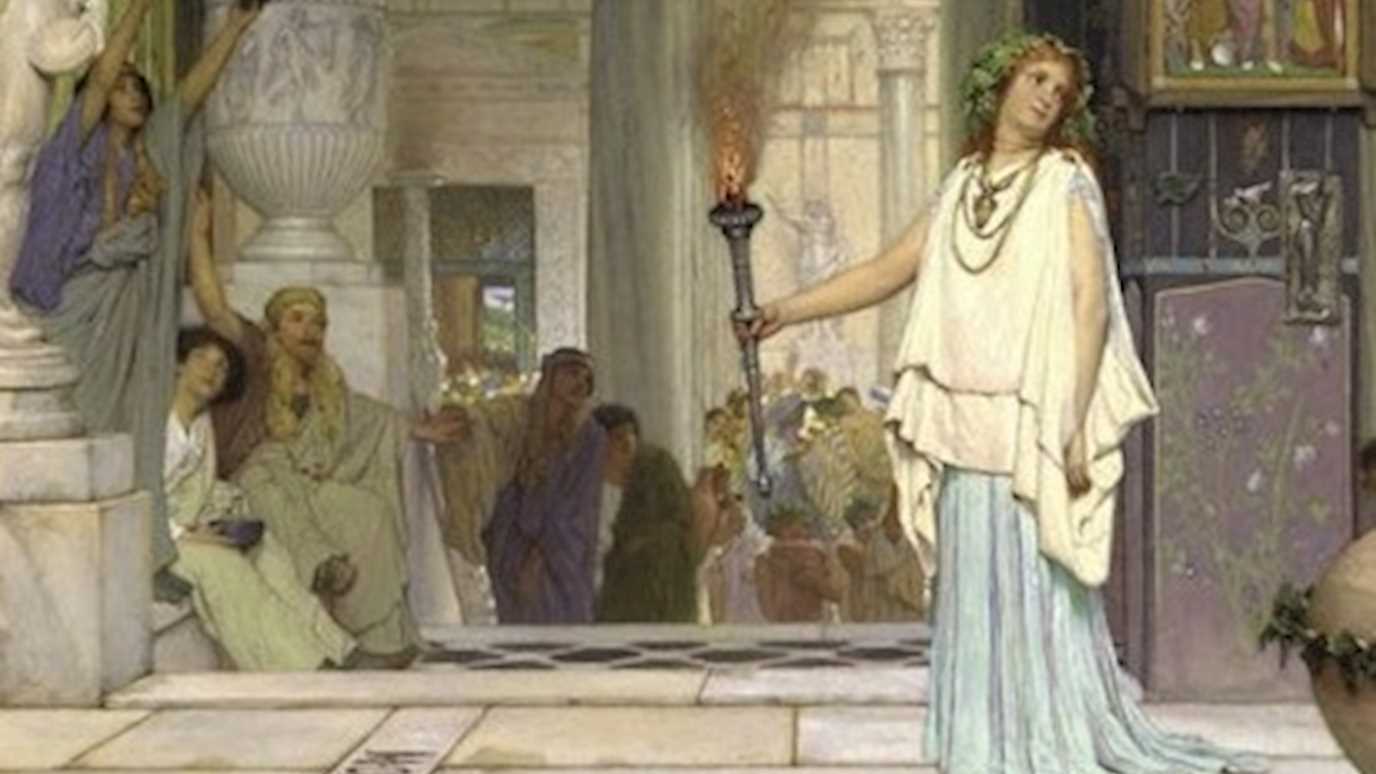
What might an ancient Roman house have smelled like?
How might Tudor courtiers have lived day-to day in a palace?
What were the final days of the Mary Rose like for her crew?
These are all questions that Dr Hannah Platts has been exploring over the last decade.
She has always been fascinated by the unique ways that history can be conveyed in museums and historical sites, particularly through interactivity and play. Her research uses that fascination to create new and innovative experiences for some renowned museums.
History you can hear, see, and smell
One of her most recent and high-profile projects is an immersive interactive game called Time Detectives: The Mystery of the Mary Rose, created for the Mary Rose Museum in Portsmouth.
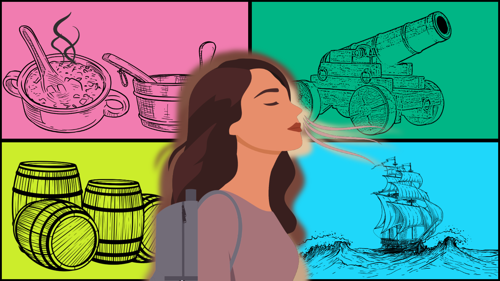
Visitors used the game to uncover two different perspectives from people of very different social classes – the ship’s boy and the captain – discovering the story behind the sinking of the Mary Rose. Playing the game, visitors carried backpack around the museum that emitted scents: gunpowder, pitch, cooking meat and the salt spray of the ocean weaving the sensory story together fluidly.
Smell is one of the senses most connected to our ability to form memories, so using it to bring the past to life is much less surprising than it might at first seem. |
Whilst developed to be played by families, the game was also designed to be competitive, with the team hoping that this element would drive people to engage more actively with the different characters of the historical story and various artefacts within the Museum. People were also able to play the game at home via an app, though without the smell features.
The game was a finalist for an award at the Museums and Heritage Awards in 2023, and was presented at the international cultural festival South by Southwest in Austin, Texas, where the team won an Innovation Award for Convergent Gaming. It was warmly received by guests and industry professionals alike.
Recreating lost worlds
Before Time Detectives, Dr Platts worked on several other projects.
One of these brought a lost Tudor palace back to life in a virtual reality app, after she received a grant through Royal Holloway’s StoryFutures. Dr Platts worked with Picture This Productions and Novelab to create an outdoor clue-finding game – Tudors Augmented - for the lost Tudor palace of Oatlands.
Using an augmented reality app, visitors could see, hear and at some points smell what the palace would have looked like, following a trail through both time and physical space and encountering 3D-modelled characters who would guide them through the story.
Another project was Sensations of Roman Life, an immersive experience at Fishbourne Roman Palace, in collaboration with a researcher from the University of Reading.
Visitors could explore a virtual reality model of a real Roman house, programmed with sounds and smells based on the excavated archaeological finds from in and around the dwelling. Audience feedback was very positive, with an average 28% increase in understanding the olfactory experience, and a 41% increase in understanding the auditory experience of life in the Roman home.
Bringing history home
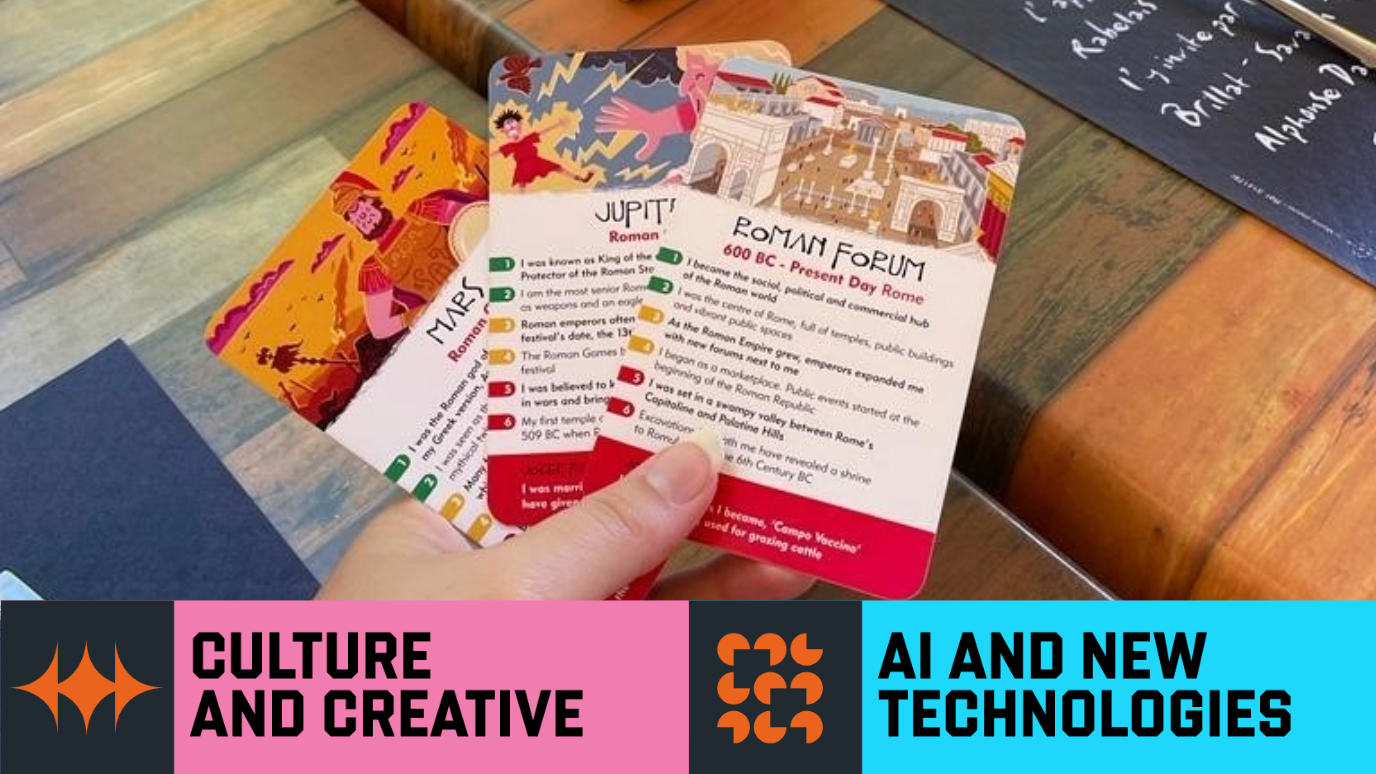
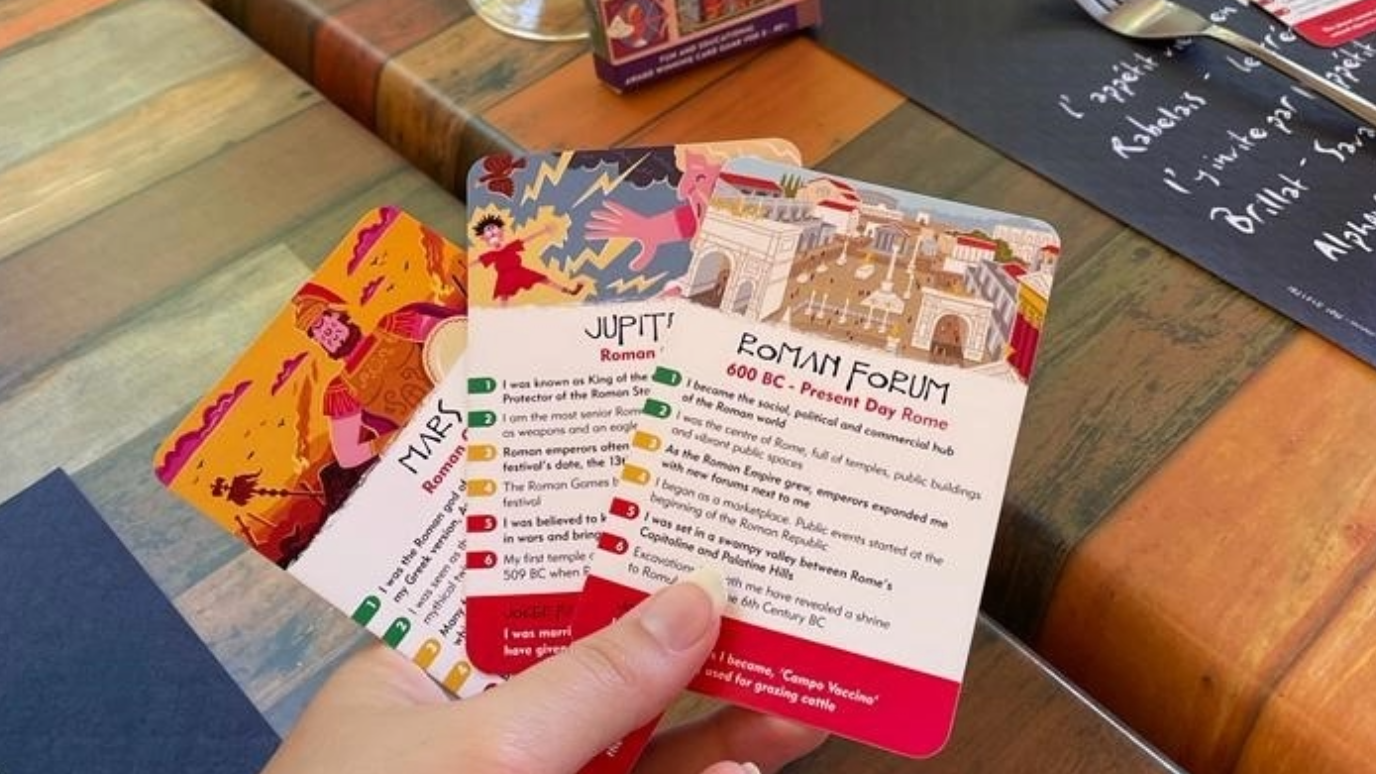
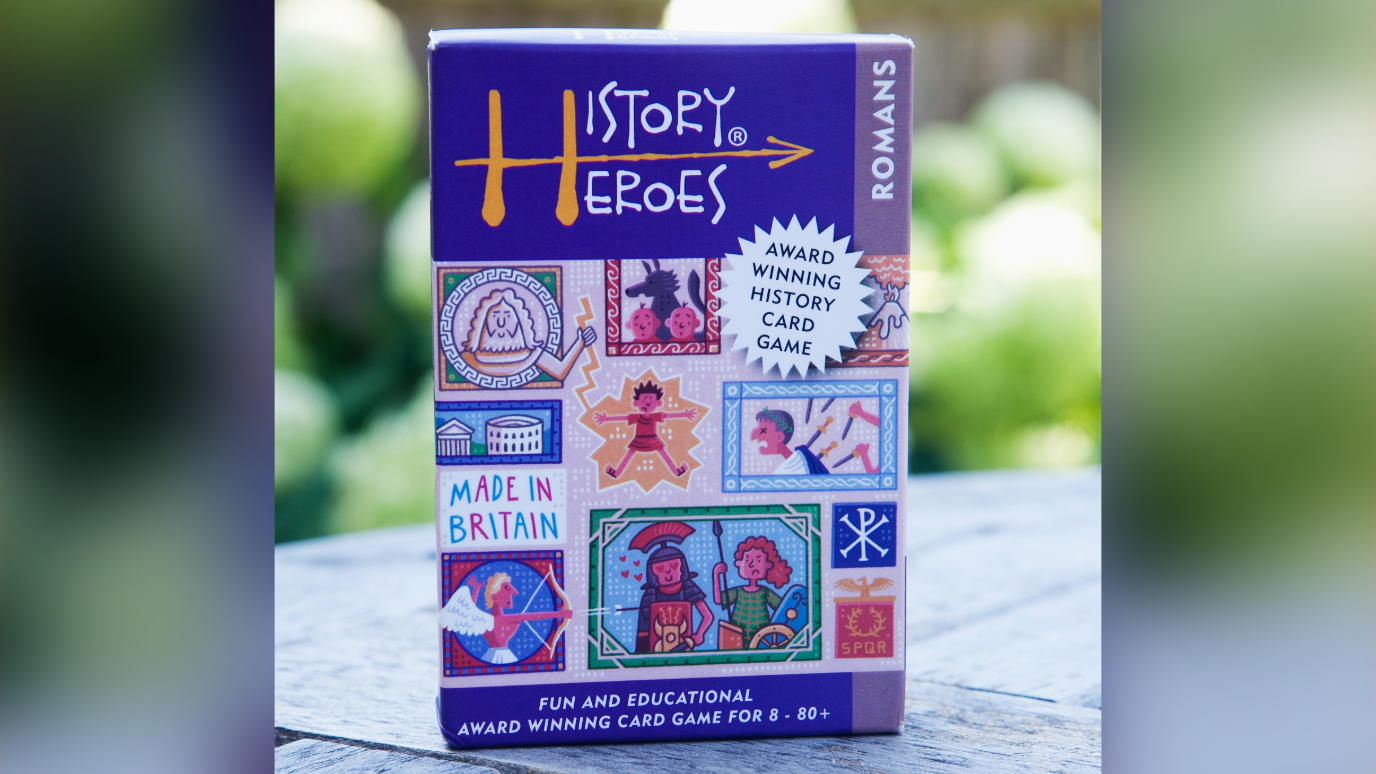
In addition to creating immersive digital games in virtual and augmented reality, Dr Platts has worked with the games company History Heroes to create low tech, low-cost historical games that can be more easily played at home. These include a Roman history-themed card game, and a best-selling historical board game called A Race in Time.
It’s something she hopes might reduce children’s screen time: “A lot of parents don't want their kids to always be behind a screen.”
“Board games can be a way to continue learning through gaming and play and engaging with topics as a family.”
She is also hoping to continue to work with other museums and heritage sites, channeling the knowledge gained from previous projects into new ideas to bring spaces and the history contained within them to life.
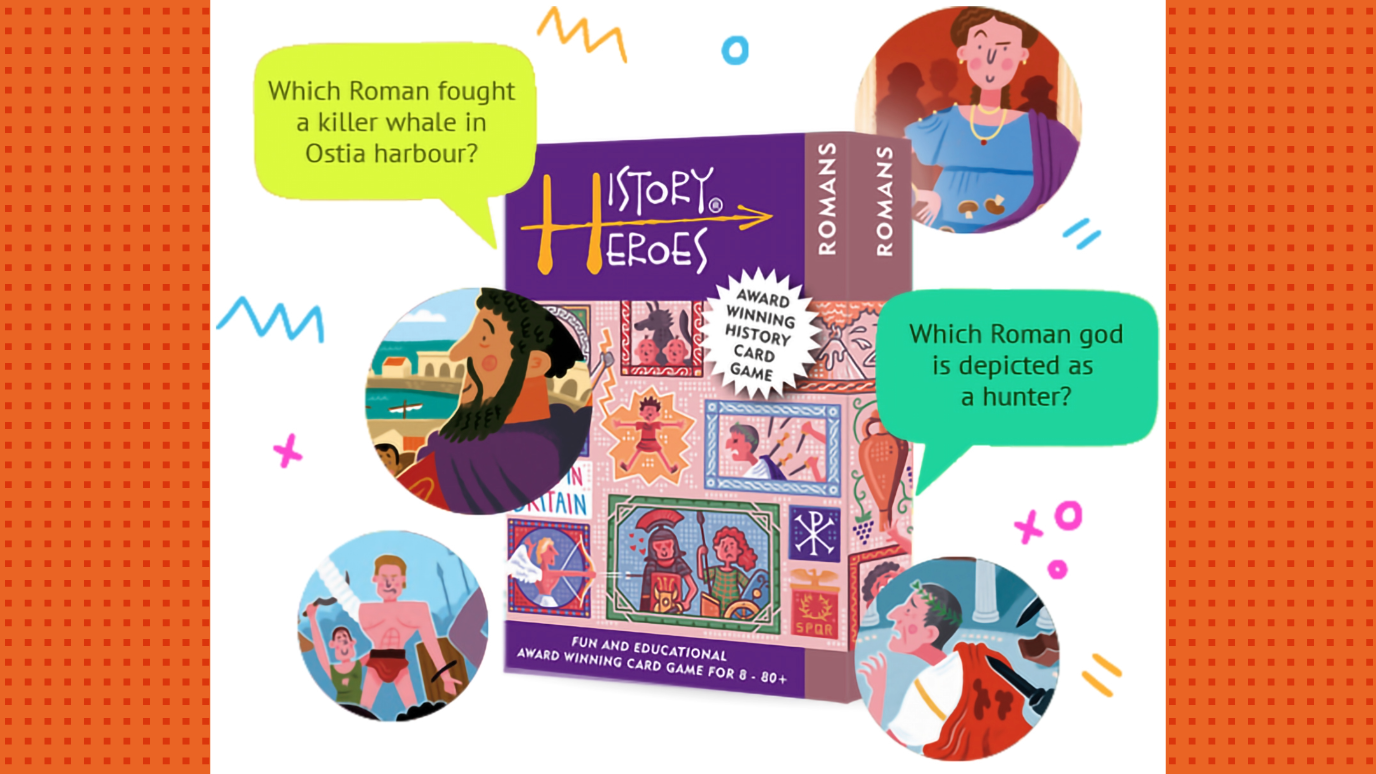
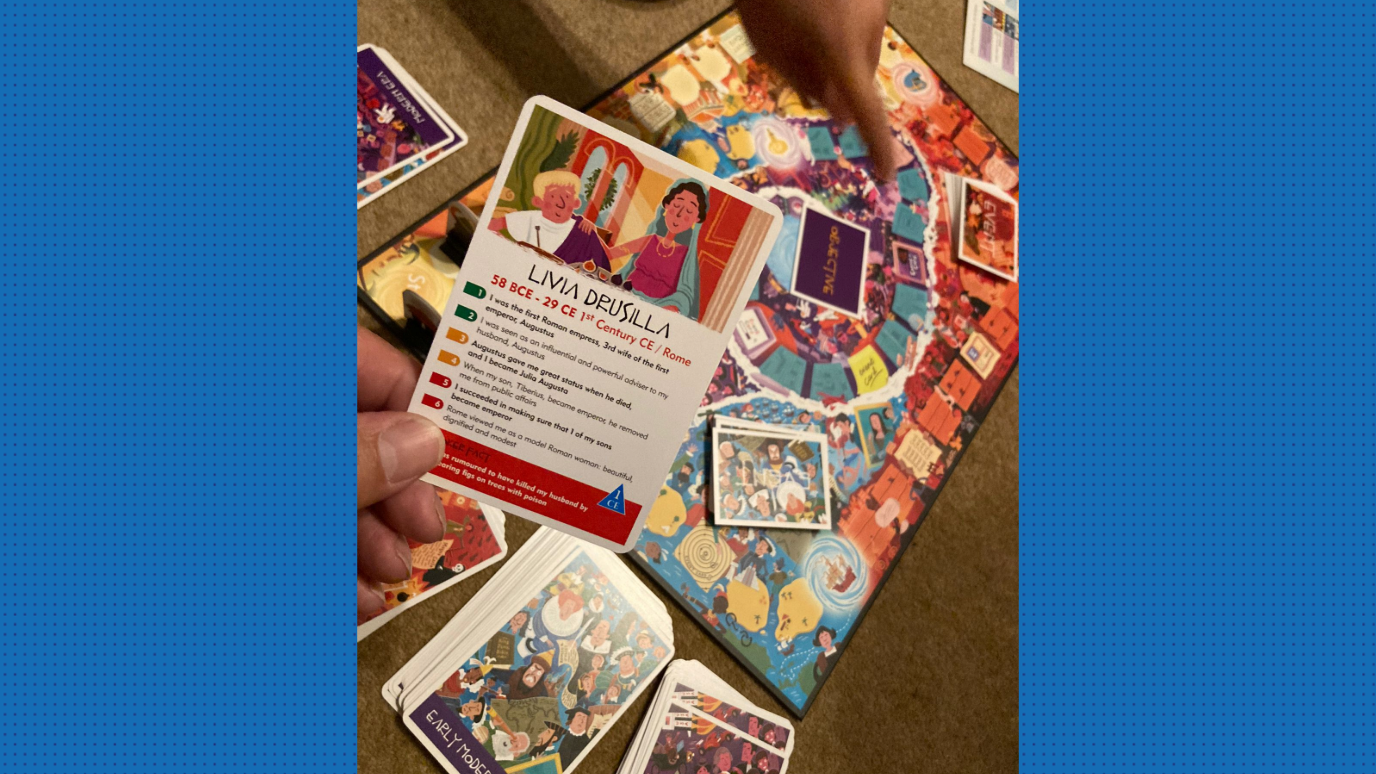
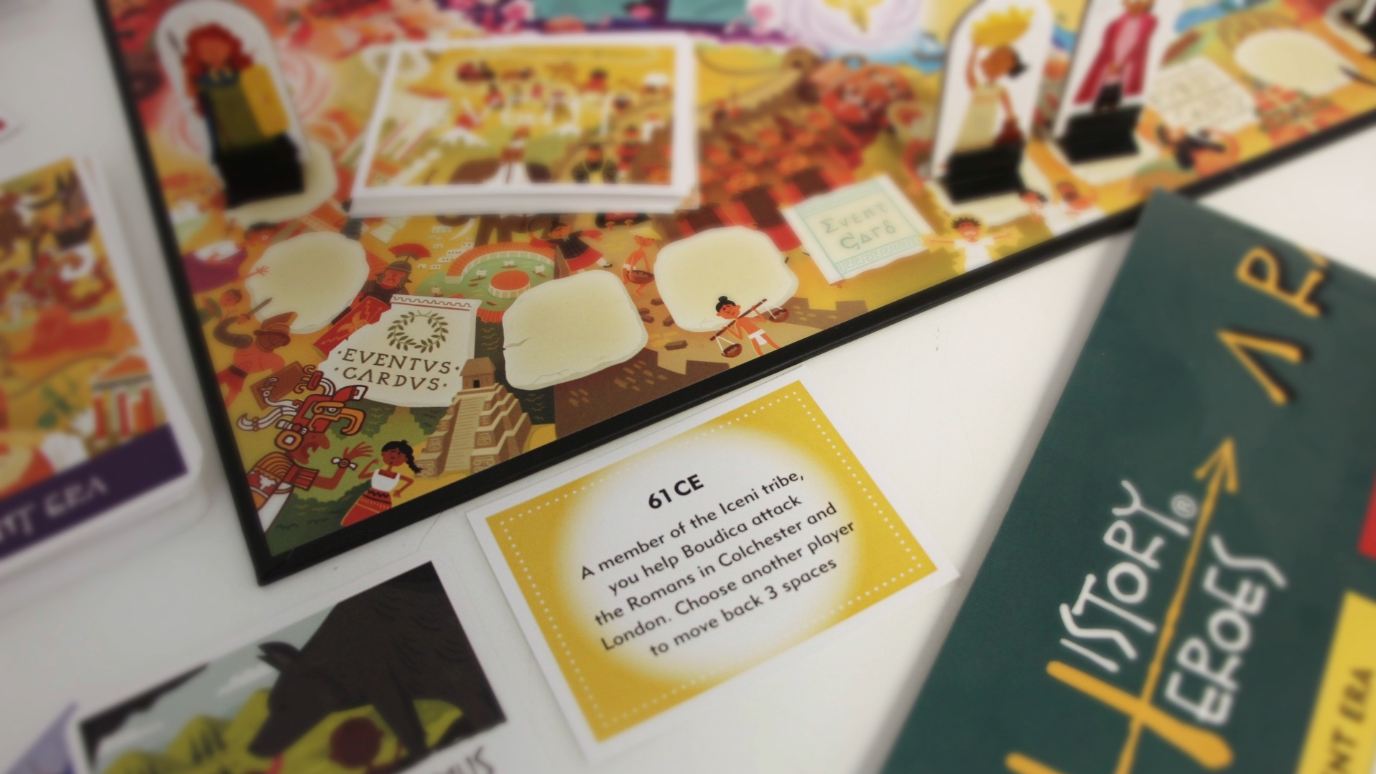
History Heroes: Romans - card game
(Image: History Heroes)
Find out more about Hannah's work here:
Dr Hannah Platts. . . . . . . . . .
Return to our Research in Focus page to uncover more exciting research happening at Royal Holloway, University of London.
Research in Focus