Key information
Duration: 4 years full time
UCAS code: LR21
Institution code: R72
Campus: Egham
The course
Politics, International Relations and Modern Languages (French) (BA)
Politics, International Relations and Modern Languages explores the key areas of contemporary politics and international relations, and combines these with the in-depth study of French language, society and culture.
Taught in partnership between the Department of Politics, International Relations and Philosophy, and the Department of Languages, Literatures and Cultures, this course is informed by the outstanding research and international outlook of both departments.
The politics element of the course provides an introduction to the working of international relations. This includes research into areas such as security, international diplomacy, and the use of military force, as well as European languages and cultures. As a modern linguist, you will not only learn to speak and write fluently, you will also develop excellent communication and research skills and combine language proficiency with cross-cultural perspectives.
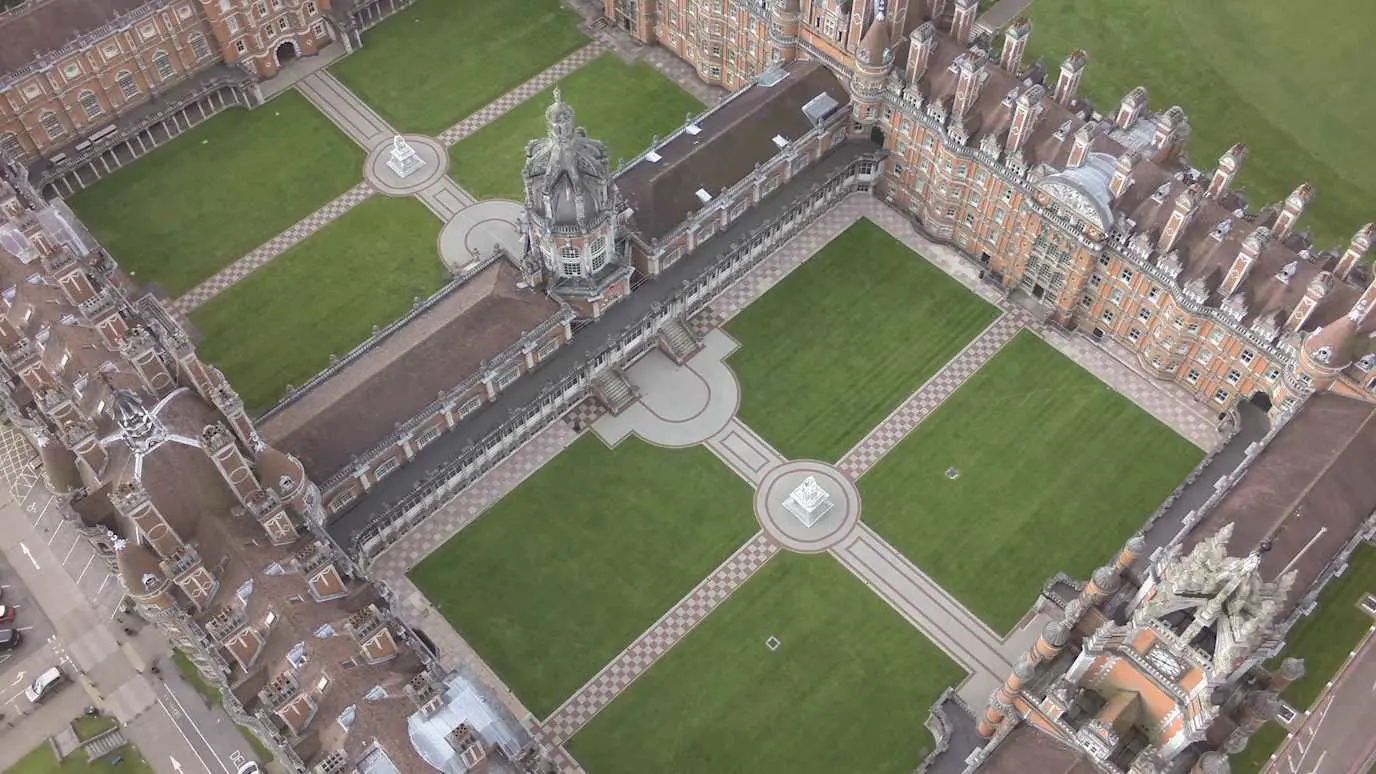
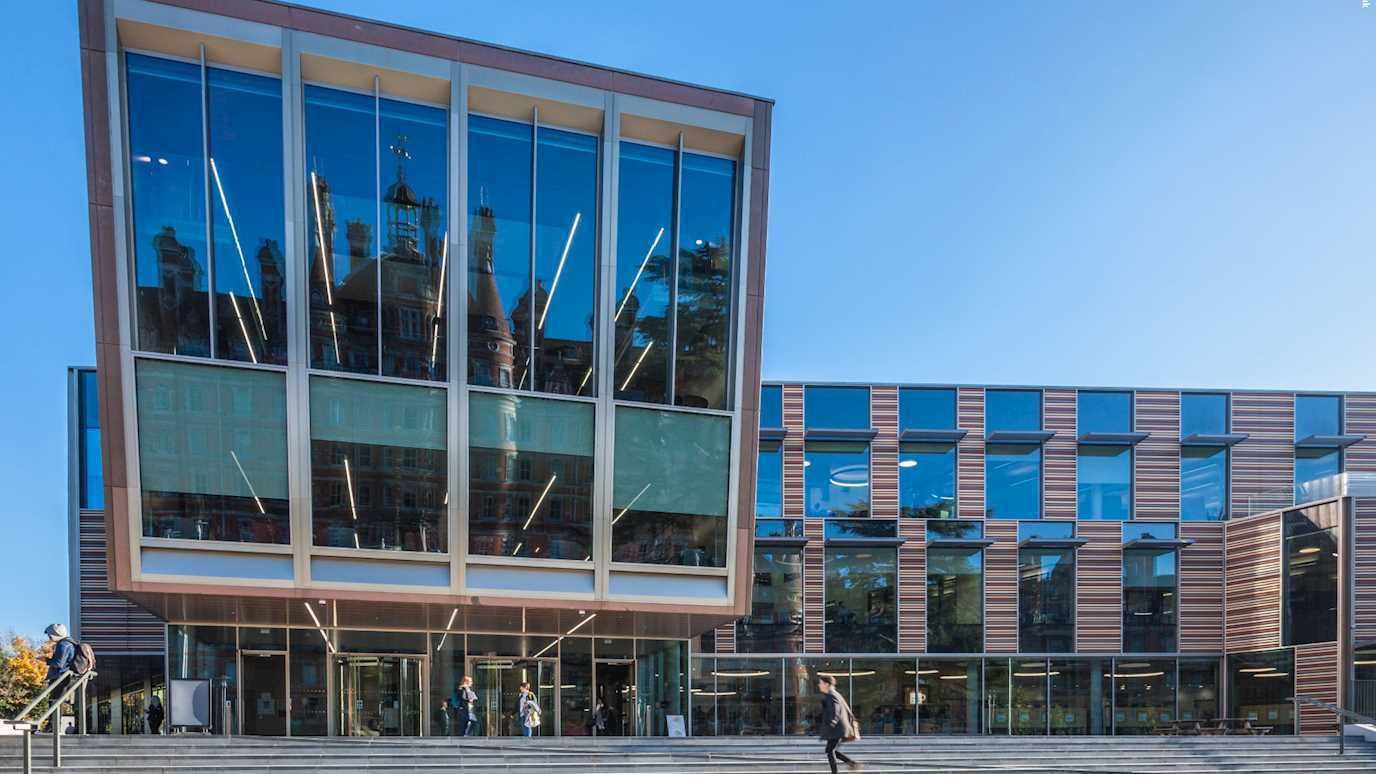
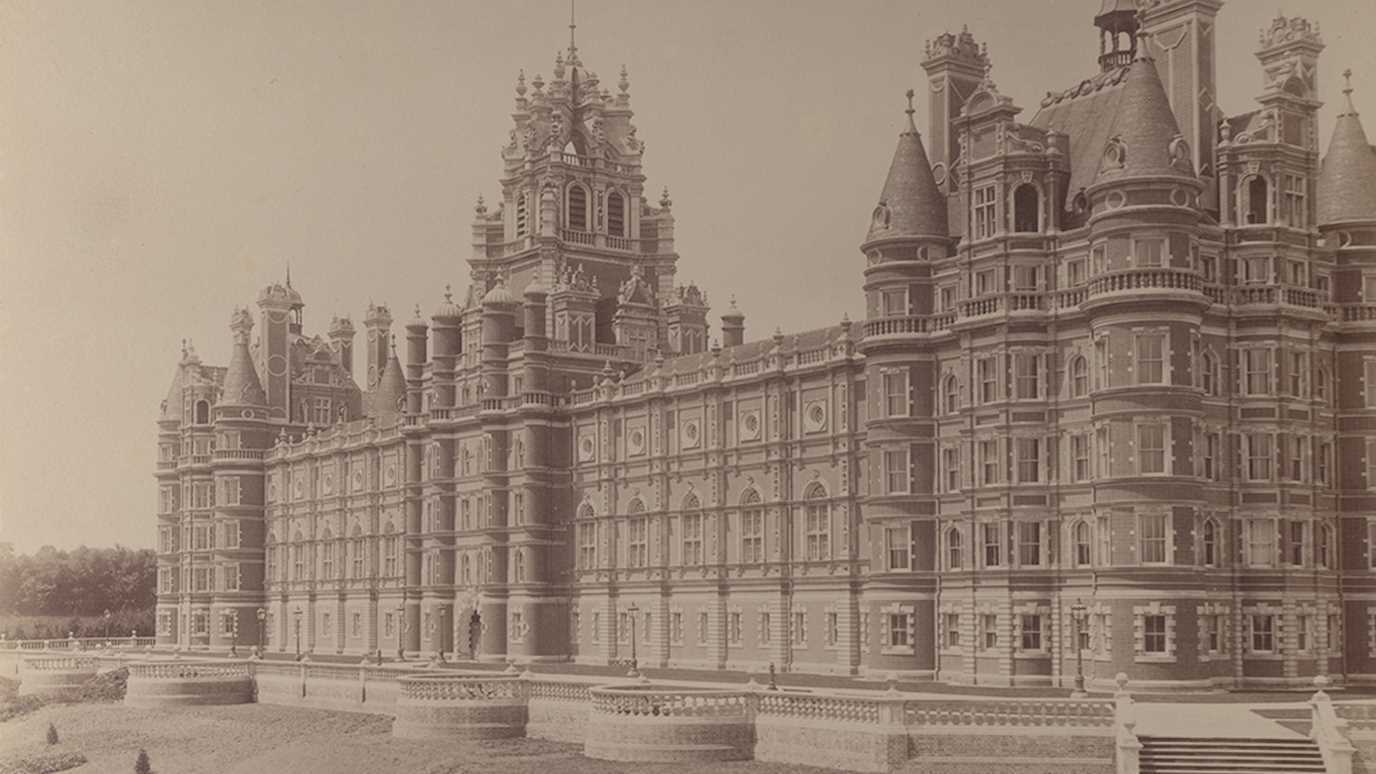
As a part of Royal Holloway’s close-knit international community based in our beautiful historic campus, you will be within easy reach of London. You will also have the exciting opportunity to spend a year working, teaching or studying in a French-speaking country, when you will immerse yourself in the language and culture and truly broaden your horizons.
- Study with leading experts Politics, International Relations and European affairs.
- Taught in partnership with the Department of Languages, Literatures and Cultures.
- Spend a year of study and/or work in a French-speaking country.
- Gain written and verbal fluency in French.
- Other language options in German, Italian and Spanish.
From time to time, we make changes to our courses to improve the student and learning experience. If we make a significant change to your chosen course, we’ll let you know as soon as possible.
Course structure
Core Modules
Year 1
All languages we teach have a beginners' and a post-A Level pathway in Year 1, allowing you to study one language ab initio (intensively, from scratch). From Year 2 onwards all students take the same language modules, regardless of your Year 1 pathway.
-
Introduction to International Relations
This module offers a broad introduction to theory and history in international relations since 1870. You will look at a variety of different theoretical lenses, ranging from orthodox to critical perspectives, in order to understand events from the collapse of the Bismarckian European order and the origins of World War 1 to the contemporary War on Terror. Along the way you will also explore the origins and the end of the Cold War, decolonisation and the End of Empire, the rise of international institutions, humanitarian intervention and new security issues.
-
Introduction to Politics and Government
This module will introduce you to the academic study of politics and to the ‘real world’ of contemporary politics. As a foundational course, it will give you all the essential tools to understand the nature of politics and analyse the way different political systems work. You will be introduced to key concepts such as politics, power, rights, ideologies, democracy and representation, and will learn about the different actors, institutions and processes that make up politics today.
-
French Language: Culture and Translation
This module develops your command of both French-English translation and critical analysis of French-language material by exposing you to a range of source material which might include prose fiction, poetry, drama, film, graphic novels, multimedia and web content, and newspaper and magazine articles. In weekly seminars, you will focus closely on the syntactical, stylistic, lexical and culturally specific features of a range of French-language text types.
-
French Ab Initio Written I
The module aims to develop reading and writing skills in French. Classes use French as much as possible and the course is assessed in French. The module uses a blended approach: it is based on a beginners' coursebook with additional material on Moodle and as weekly hand-outs based on authentic material. Themes studied vary from year to year but are likely to include every-day life in France, an introduction to French-speaking society and culture, regions and traditions.
-
French Ab Initio Oral I
The module aims to develop speaking and listening skills in French. Classes use French as much as possible and the module is assessed in French. The module uses a blended approach: it is based on a beginners' coursebook with additional material on Moodle and as weekly hand-outs based on authentic material.
-
French Advanced Oral I
The module aims to expand students’ ability to express themselves in accurate spoken French. Students will work on a wide range of authentic material in French to expand their vocabulary and range of expressions and to introduce them to contemporary issues and culture. The course will be taught and assessed in French.
-
French Advanced Written I
The module aims to expand students’ ability to express themselves in accurate written French. Major grammatical issues will be taught and/or revised, and students will work on a wide range of authentic material in French to expand their vocabulary and range of expressions. Key linguistic features of the texts will be identified and discussed to improve the student’s language acquisition and analysis skills. The course will be taught and assessed in French.
Year 2
-
Understanding the European Union: Politics and Theory
In this module you will analyse the contemporary politics of the European Union and its institutions, amid the challenges of the triple crisis of economics, migration and Brexit. You will learn about the political history of European integration after 1949 and the contemporary theory of European integration. The first term will begin with an introduction to the European Union as a political system followed by an overview of the European Union's historical development. The second term will focus on contestation of the European Union and the theories that underpin this, in order to explain how the EU developed and the challenges that it faces. Topics will include Euroscepticism, party politics, public opinion, Brexit and EU-UK relations, and European Parliament elections. The theory sessions comprise of federalism, neo-functionalism, liberal intergovernmentalism and the new institutionalisms.
-
French Language II
In written French, the module builds on techniques acquired in first-year language modules through a particular focus on techniques of analysis, writing and rewriting, in particular on learning to construct arguments and exposés in authentic, accurate and appropriate French. Themes studied help as preparation for the year abroad (themes may vary, examples include : Le travail en France, être jeune en France, la contestation sociale).
Year 3
-
Year Abroad
You will spend the third year of your degree programme abroad, either studying, working, or both, based on your own learning preferences as well as your professional goals and interests. It is usually expected that you will spend at least nine months in a country where the native language is the same as the language you are studying. The Year Abroad allows you to expand and refine your existing linguistic competencies in the relevant target language alongside the development of intercultural competency and employability skills. The Department of Languages, Literatures and Cultures will support you in finding a suitable study or work placement, or you may explore opportunities independently. This year forms an integral part of your degree programme and will be formally assessed.
Year 4
-
European Union Public Policy
In this module you will develop an understanding of regulation in the European Union, including delivery of policy and administration. You will look at how the world's largest market operates, with a focus on EU public policy, including de-regulation, re-regulation, budgets and spending. You will examine the concept of the single market, the Euro and its crisis, justice, home affairs and counter-terrorism, the EU budget, agriculture, regional development, and social and environmental policies.
-
Pratique du Français III
In this module you will enhance your ability to analyse and compare written material from different sources. You will develop competence in accurate and discursive French, and extend your oral presentation skills, with particular emphasis on the formal spoken register. You will look at extracts from French documentaries and feature films, and listen to recordings and podcasts, such as the France Inter and France Culture programmes. You will also look at a range of cultural questions and examine the key features of French culture and society.
Optional Modules
Below is a taster of some of the exciting optional modules that students on the course could choose from during this academic year. Please be aware these do change over time, and optional modules may be withdrawn or new ones added.
Year 1
Optional modules in French may include:
-
Key French Texts: The Individual and Society
This module examines images of French society through a selection of key literary texts and concentrates on how questions of social change, social mobility, success and failure, ambition and honour, oppression and alienation have been portrayed. Delivered by the appropriate specialist in the School of Modern Languages, the classes will offer a taste of the literature of the relevant periods, along with a discussion of its distinguishing stylistic features, and an overview of its intellectual, social, and historical background. Terms that often confuse or put off students new to literature (such as Romanticism, Realism, or Existentialism) will be explained and briefly contextualised. By the end of the module, students will have acquired an insight into a range of representative texts from a variety of periods and an understanding of the ideas and social structures they portray.
-
The Visual Image in French Culture and Society
The visual image has always played an important role in society, as a source of enjoyment and pleasure, and also as a means of communicating values, celebrating beauty, shaping thought and challenging assumptions. This module aims to develop understanding of the ways the visual image functions and the concepts and techniques needed to analyse it.
-
French Language: Culture and Translation
This module develops your command of both French-English translation and critical analysis of French-language material by exposing you to a range of source material which might include prose fiction, poetry, drama, film, graphic novels, multimedia and web content, and newspaper and magazine articles. In weekly seminars, you will focus closely on the syntactical, stylistic, lexical and culturally specific features of a range of French-language text types.
Year 2
-
Democracy in Britain
Democracy in Britain explores the theory and practice of modern British politics. It’s designed primarily to familiarise students with the ways in which British democracy has evolved, how it operates today and some of the challenges that confront it. You’ll gain knowledge of the ‘nuts and bolts’ of the political system and you’ll learn about how and why the system operates in the way it does, the quality of contemporary democratic governance and key features of political behaviour in Britain. The first half of the module will focus on the character, development and institutions of Britain’s ‘traditional’ democratic system. The second half will focus on dynamic elements of British democracy, including political parties and party competition, political and especially voting behaviour, and attitudes towards democracy.
-
Contemporary Political Theory
This module concerns the theories underlying discussion of political problems and issues today. Examining a range of key ideas and the thinkers who have developed them, the module will consider what lies at the roots of contemporary debates about laws, policies, protest, and resistance, and it will it enable you to make sense of these debates. Topics covered will likely include liberty, equality, human rights, punishment, democracy, gender, race, multiculturalism and cultural hegemony, civil disobedience, resistance and political violence – as well as other issues in domestic and international justice. Throughout, the module aims to show how abstract theories have practical relevance, and conversely how questions about what states, citizens and other actors ought to do are illuminated by thinking about them theoretically. In general, it offers a broad survey of political theorising today.
-
International Political Economy
This module examines the relationship between states and markets, power and wealth, in International Political Economy (IPE). You’ll be introduced to the key concepts and theoretical debates in IPE. It tackles issues such as the globalisation of trade, finance, and production, the continued problems of development and democratic governance in the world economy, and emerging questions surrounding global flows, networks and spaces. You’ll explore the history of regimes, crises, and competing theories of political economy from the nineteenth century to the present day. Throughout the module the emphasis is on how political institutions operate in international politics to regulate the creation of wealth, and who benefits from these arrangements.
-
War and Security in World Politics
This module provides a comprehensive overview of Security Studies as a field of International Relations. You’ll start by examining the issue of security and key security issues and then move on to look at more general theories of security and how these have changed, especially in an age of terrorism. The second half of the module will focus on the sub-field of military innovation studies as states around the world renew their focus on conventional/hybrid warfare and defence spending rises. It will explore the defence reforms of major powers including Britain, China, Germany, Russia, Ukraine, and the USA. We will examine the content and sources of change in defence policy, including changes to the objectives of defence policy, military procurement, force structures, and military doctrine. The module will analyse the extent to which these reforms have helped states concerned to deliver defence and security policy and the factors which facilitate effective innovation, emulation and adaptation within military organisations. It also explores the challenges that states face in mobilising societies to face contemporary security threats.
-
Modern Political Thought
This module introduces students to major political thinkers from the 17th, 18th, and 19th centuries, including the works of Hobbes, Locke, Rousseau, Wollstonecraft, Mill, Marx, Nietzsche, and Douglass. The module will introduce you to the themes, argumentative strategies, and critical interpretations of these thinkers, and critically assess these interpretations against the texts themselves. It also aims to show how study of these thinkers illuminates contemporary discussion of freedom, pluralism, sovereignty, and legitimacy, even where no reference is made to them.
-
Introduction to Political Communication
The purpose of this module is to provide a broad overview of how citizens, politicians and the media interact across Western democracies during both electoral and governing periods. The first part of the module will focus on the production and consumption of political news, while the second part will address campaigns and their effects as well as focusing on contemporary debates in political communication, including ethical issues. While the module will cover key aspects of political communication in the United Kingdom, the focus will be mostly comparative across countries. Seminars are centred on practical activities that allow students to apply the knowledge presented in the module to contemporary real-world examples of political communication in action. Examples include analysis of political speeches, advertisements, candidate debates, campaign strategies, and news coverage of political issues.
-
Government and Politics of the United States
This module introduces institutions and politics of the United States. It offers a thorough grounding in the empirical and theoretical literature on American politics. The module covers the Constitution, Congress, the Presidency and federal bureaucracy, separation of powers, federalism and state governments, the Supreme Court, elections, political parties, the media, and interest groups. By the end of the module, you’ll be prepared to engage knowledgeably with American political news and to tackle advanced modules in American Political Development and/or US Foreign Policy. This is a good all-round introduction to one of the world’s most influential democracies.
-
Politics Outside the West
This module is a key bridge between the first year modules in comparative politics and international relations and the third year modules in the politics of Africa, China, Latin America, the Middle East, and South Asia. It is designed to equip you with a critical understanding of the most important features of the history of international development which build the foundations of our modern world: the transition from empires to states, colonialism, de-colonisation, and the subsequent post-colonial political issues facing the Global South. This means you don’t necessarily learn about politics “outside the West”, as if it’s a phenomenon separate from the West, but, instead, develop ideas of politics and international relations from the vantage point of the Global South, including its prominent political thinkers.
-
Writing Romance and Desire
This module will focus on four texts dealing with love and desire taken from French literature; these will be studied in the light of their common themes and will be used to explore issues around the representation and understanding of passion and romance in the literary text.
-
Cinema in France
This year-long module examines key examples of French cinema from its beginnings to the present day, focusing on the avant-garde and surrealist films of the 1920s, social realist films of the 1930s, the New Wave which began in the late 1950s, and its ‘postmodern’ legacy in the 1980s followed by a return to realism in the new millennium. The module entails close, critical analysis of film style, though no prior knowledge of film theory is required.
-
Advanced French Translation: Skills and Practice
In this module you will develop an understanding of translation from French to English through sustained translation practice. You will look at the syntactical, stylistic, lexical and culturally specific problems generated when translating from French source text to English target text in a range of translation scenarios and across a range of text types. You will consider common translation challenges, such as conversion, transfer, compensation, gloss, exoticism, deceptive cognates, lexical gaps and cultural specificities, as well as examining the constraints of character count and house style.
Year 4
-
US Foreign Policy - History
This course provides third-year undergraduate students with a highly advanced knowledge of the key concepts, history, themes and contemporary issues in US foreign policy. This course will familiarize students with theoretical explanations of US foreign policy, historical and contemporary American thinking on international affairs, the structure of foreign policy making in Washington DC, as well as some of the major challenges facing contemporary American policy-makers. The reading list for this course is extensive, and you will be expected to work diligently to accomplish the course aims.
-
Young People's Politics
The module opens with an introduction and asks What is Young People’s Politics? It then branches out to consider youth, citizenship and democracy, exploring the theoretical and empirical issues that define citizenship in contemporary democracies, focusing on issue that particularly effect young people (especially those raised in the Youth Citizenship Commission). The focus is extended to youth participation in politics, primarily Electoral Politics (e.g. voting, party membership). We will question how and why youth participation in electoral politics has altered. Why did it decline so rapidly after 1997? We will then explore youth participation in politics further by looking at new forms of participation, asking: how has youth participation in non-electoral forms of politics changed in recent decades? What is distinctive about youth participation in politics (e.g. Pattie et al. 2004). Do these changes strengthen or weaken democracy? This leads us to a focus on new values and lifestyles (e.g. increasing prominence of post-materialist concerns versus consumerism). We will question how have changing values and lifestyles impacted upon political participation amongst young people? To what extent are these changes distinctive?
We will then move on to examine a new state and consider how the relationship between the state and the citizen (and young people, in particular) has changed in recent years (e.g. developments in the welfare state and public services – in particular, youth-focuses services - and in notions of rights and responsibilities e.g. welfare-to-work)? We will ask how has this impacted upon young people’s engagement in politics and society? We then move on to a new democracy, considering how political responsibility has changed/been undermined in recent years (in particular, the transfer of political power to the EU, the international level and NGOs and the changing nature of news media). We will explore what opportunities young people have (or have lost) for engaging in this democracy. The course develops a focus on reform, the Supply-Side (focusing on issues raised by Power Inquiry and Youth Citizenship Commission) and evaluates measures that have been proposed and/or implemented to make electoral politics more attractive to young people. We then propose further measures to improve the situation. The focus on reform continues with the Demand-Side (focusing on education/citizenship education, and the recent International Civic and Citizenship Education Study study). We will evaluate measures that have been proposed and/or implemented to reengage young people in civil society and/or electoral politics. We will again propose further measures to improve the situation. Our final focus will be on young people's politics beyond the UK, looking at how the disengagement of young people in politics has developed (e.g. the US Civic and Political Health of the Nation Report). We will consider how this has been addressed in other countries, proposing lessons that may be drawn by the UK.
-
Leadership, Power and the British Prime Ministership
The course’s primary purpose is to provide students with an in-depth knowledge and understanding of the British prime ministership. It will help students to evaluate the problems of leadership in an advanced industrial democracy and to critically evaluate the performance of those holding executive office. The course will cover both the institutional characteristics and development of the office of prime minister, the organisation and structure of the political executive and the prime ministership’s relationship with other key actors, such as ministers, parliament and the media. The course will also engage with claims about the ‘personalisation’ and ‘presidentialisation’ of British politics. At the same time, the course is designed to introduce students to a more focused range of literature and to develop students’ own awareness of the political-science research process. To this end, it will encourage students to confront issues of conceptualisation and measurement through class activities, as well as highlighting the problems and pitfalls of taking models and frameworks of analysis from other systems and applying them to the British prime ministership. -
Visual Politics
There is an urgent need for critical examination of the role of visual media in politics. Many argue that ‘the power of images’ has policymakers, journalists and citizens spellbound. For others, thanks to media technologies it has never been easier for ordinary people to create, disseminate, play with and contest political images. This course examines the role of visual materials and practices in politics and international relations. Students will become familiar with research traditions in the discipline of Politics and IR that engage with visual media, how they conceptualise and conduct research, and the limitations of those traditions. The first half of the course covers core problems and theories and the second half covers methods and case studies. The course is comparative, examining how visual media have operated in different historical eras of politics and across policy issue areas. Assessment by way of traditional essay and online visual story (via Storify) will enable students to demonstrate their understanding of the course content.
The course is structured as follows and opens with an introduction to visual political communication and moves on to explore producing Images; consuming Images; images, identity and power; and political icons. The course then examines quantitative and qualitative visual methods; environmental politics; welfare politics; nuclear politics; and global crises.
-
American Political Development
-
The Politics of Russia and Eastern Europe
This course introduces students to key developments and topics in the politics of post-communist Russia and Eastern Europe. Part I of the course focuses on how communist legacies and modes of post-communist transition shaped the region’s different political systems. Students will engage with current academic debates on Europeanisation processes in Central and Eastern Europe and the specific post-communist trajectory of Russian domestic politics. Part II explores key topics in contemporary post-communist politics, such as for example: transitions to capitalism, inequality and corruption; elections and the peculiarities of post-communist party systems; nationalism, the politics of memory, and minorities; communist and post-communist gender politics; political participation and grassroots politics; and the latest scholarly debates on the perceived democratic backsliding of the region. The course foresees a strong component of student participation, with student-led case-study presentations, comparison-oriented class discussions on the weekly theme, and two substantial pieces of assessed coursework. By the end of this course students will have a nuanced understanding of post-communist politics in the region and will be able to compare both within the region and with countries outside the region.
-
Politics in Action: The Politics and International Relations Experience Placement
Whilst a University degree opens many doors to careers, the experience and skills enhanced during a placement provide an extra dimension to the qualification. The Politics in Action placement scheme is a third year undergraduate, assessed, full unit course module. It has a novel structure which combines participation in a workplace environment for one day a week during term time (and three days a week for each term’s reading week) with scholarly reflection on the nature of the organizational, professional, and policy contexts of the placement. Placements are organised in settings such as Parliament, local government, the offices of MEPs, NGOs, campaigning and activist organizations, political parties, media organizations, and the policy or communications divisions of local companies working in relevant fields.
-
Political Theories of Freedom
This module critically examines different theoretical understandings of freedom, together with their strengths and limitations. It falls into two parts. Part 1 examines liberal understandings of freedom, and part 2 looks at contrasting non-liberal and republican accounts. It does so by considering the contributions of important recent and contemporary political theorists. From the liberal tradition these include Berlin, Hayek, Hirschmann and Gray. From the non-liberal tradition, writers will include Taylor, Honneth, Pettit and Skinner. Animating the discussion of these figures is the apparently simple but ultimately complex question of whether political freedom is a matter of the ability to act unimpeded by others, or whether it requires forms of social activity.
-
Politics of the Law and Rights
This course describes and analyses the many ways in which politics affects the law, and in particular the decisions made by judges on top courts.
It looks at some of the big divides between legal systems in their attitudes to judges and judicial discretion, and the different rights which judges are asked to guarantee.
It looks at different ways in which judiciaries vary, from more to less active, more to less independent, and more or less collegial or confrontational.
It also hints at advanced debates in political science about the study of judicial behaviour, in particular the kinds of explanations offered for why US Supreme Court Justices decide the way they do -- and whether these explanations travel outside the United States.
The course is targeted at final year undergraduates doing either Politics (in combination with other subjects).
Over the term, Politics students will get a grounding in the analysis of judicial decisions. Conversely, law students will get a grounding in techniques of political analysis applied to the courts.
Because the course is an advanced (i.e., third year) course, there will be no set text. There will however be a selection of essential readings for each week, which will include (in every other week) two chosen cases which demonstrate the week's topic in two different jurisdictions. -
Comparative Political Leadership
Party leaders, and their public image, are increasingly considered important for a party’s electoral success, for the smooth running of government and for regime legitimacy. Perhaps the most important variable for successful politicians is their ability to effectively communicate and connect with their audiences. This module will show you the techniques most frequently used by politicians, communicators and speechwriters to effectively deliver their messages in different contexts and settings. You will analyse how these techniques have been used by the greatest leaders in the world to justify their regimes. By the end of the module you will be able to evaluate leadership styles during and after elections and design communication strategies that will deliver political messages effectively.
-
Military Change in the 21st Century
Defence budgets comprise a significant proportion of national wealth, while decision-making in defence has profound implications for the lives of citizens in the country concerned, as well as people at the receiving end of military operations. Military power also forms a central dimension of states’ power and influence in the international system. However, the post-Cold War era has witnessed significant variation in the extent to which states’ defence reforms have delivered a strategic advantage, with a number of cases of inappropriate or faulty military innovation and/or emulation.
This module analyses the content and sources of change in defence policy during the post-Cold War era. It will focus on changes to the objectives of defence policy, military procurement, force structures and doctrines of the world’s major military powers, including the US, China, Russia, France, Germany, the UK, India and Pakistan. In doing so, it will analyse the extent to which these reforms have helped the state concerned to meet its central security challenges.
The course will be informed by the insights of political science and IR approaches to the sources of military change. These approaches include neorealism, neoclassical realism, bureaucratic politics, organisation theory, strategic culture, organisational culture and public policy approaches. In its examination of the sources of military change, the course also looks at the factors which facilitate effective ‘bottom-up’ learning and adaptation within military organisations. -
Radical Political Theory I: Hegel, Marx, Nietzsche
This module aims to introduce students to key questions and arguments concerning the relationship between identity, power, meaning and knowledge, through close examination of texts from GWF Hegel, Karl Marx, and Friedrich Nietzsche. It should lead students to appreciate critiques of modern Western societies and their values, which not only underpin recent “postmodernist” or “post-structuralist” thought but also form crucial theoretical elements in debates about gender, multiculturalism, nationalism, post-colonialism, new social movements, etc., across the social sciences. It aims to develop in students the ability to critically reflect about the nature and scope of politics and ethics through engagement with texts that have sought to provide insights and new ways of thinking about these realms.
-
Foundations in Middle East Politics
The course surveys political systems, movements, conflicts and trends in the contemporary Middle East. It explores the international and regional context of current problems and conditions, including the process of state formation, variations in regime consolidation and state-society relations, regional rivalries and conflicts, the Islamist challenge, the political economy of development, and democracy and civil society. The course begins in the Autumn term with a consideration of comparative analysis and cultural interpretation, and a general survey of the region’s religious and ethnic-cultural diversity. It then reviews the political and historical background of the contemporary Middle Eastern states system (the birth and spread of Islam, the Ottoman Empire, and the construction of the states system that succeeded it). The course moves on to explore the region-wide political, socio-economic, and ideological developments after 1945. In the Spring term the course focuses on the Arab-Israeli wars and other regional conflicts, Islamic beliefs and practices, the Islamist challenge, and recent events.
-
Global Health Policy
Since the turn of the millennium, global health has received dramatically increased attention, both as an emergent academic discipline and in terms of heightened policy salience. This course serves as an introduction to the global health policy environment, synthesising findings from a range of disciplines, such as political economy, epidemiology, and public health. It examines the constellation of health actors involved in policy formulation, including international organisations, governments, public-private partnerships, non-governmental organisations, philanthropic foundations, and commercial actors. It tackles key contemporary policy debates surrounding the health effects of, for instance, rising economic inequalities, global trade, and austerity politics. Students are also taken through approaches to effective policymaking encompassed in the planning, delivery, and evaluation of policy responses to global health issues. Throughout the course, emphasis is placed on how health policies, systems, and outcomes are influenced by the so-called ‘social determinants of health’—the political, economic, social, and cultural factors that operate at both national and transnational levels.
-
Politics and Government of Africa
This module examines theoretically and empirically the evolution of politics and statehood in “sub-Saharan” Africa since the 1960s. It examines the material institutions, resources and capacities of states, alongside ideas of political authority and the imagination of statehood. It particular, the module explores how states have been realised through a web of relationships, including Africans’ relations to the colonial state and its legacies, the way relations between state elites and societies have evolved since independence. Many theoretical approaches have evolved to address the issues of African politics. Not all are helpful – and that includes those developed both in the West and Africa itself. The module will critically examine some of these approaches while assisting students to develop their understanding of the politics of the continent using a variety of materials alongside academic literature, including fiction, film, music, and art.
-
Politics of South Asia
The politics of South Asia – India, Pakistan, Sri Lanka, Bangladesh - are central to understanding some of the themes at the core of modern politics: poverty and development, security and warfare, migration and transnationalism, decolonisation and postcolonialism, the international economy and globalisation. This module deals with the social and political development of these countries since independence from British rule in 1947. We will analyse issues including caste politics, the role of religious violence and the place of women in politics and society. Sources will come from a range of disciplines – politics and IR, history, sociology, anthropology, novels and films. We will study regional cooperation and conflict including the troubled relationship between India and Pakistan over Kashmir and their nuclear status. By the end of the module you will have a specialised understanding of the major social, economic and political developments in the region.
-
Social Diversity and Political Representation
This module examines the contemporary literature on social diversity and political representation. It introduces students to theories of representation, debates over women’s and other group’s interests. It applies these frameworks to consider why social diversity in our parliaments might matter and what difference – symbolic, substantive and affective – sex, gender, ethnicity, disability and other demographic characteristics make to elected political institutions, the policy process, political outcomes, and healthy democracies. Discrete topics include theories of representation and the link between the general public, political actors and the media; descriptive representation in national legislatures and executives with a focus on gender, ethnicity and disability; strategies for increasing descriptive representation; the media’s representation of political (gender, ethnic and disabled) minorities. The module will introduce key theoretical research on political representation; introduce current empirical research regarding participation and representation in electoral politics; and examine extant empirical and theoretical literature on representation across its various dimensions: descriptive, substantive and symbolic, and to introduce newer research on other forms of representation.
-
Parliamentary Studies
This final-year half module offers students the opportunity to obtain an in-depth knowledge and understanding of the British parliament and its place in British democracy. It will help students to evaluate the work and role of Parliament and parliamentarians, appreciate ongoing debates about contemporary legislative practice, and engage critically with previous academic scholarship in this area. It will also help students to develop their own awareness and experience of conducting research.
The course covers Parliament’s development and place in the British political system, its internal organisation and operation, and the work and behaviour of individual Members of Parliament. It is co-taught with officials from Parliament, who will provide students with practical and vocational teaching about the work, processes and business of Parliament based on their own experiences.
The course will be delivered through 9 weekly three-hour sessions, each of which will be organised around a lecture and a variety of complementary seminar activities, including discussions, debates and practical exercises. Most of the third hour each week will be set aside to supporting students with the assessment. The tenth week will involve a visit to Parliament: this is partly to see parliamentarians in action, and partly to enable students to collect additional material for their research report. -
Freedom of Expression: Concepts and Controversies
Issues of free speech are amongst the most contentious in current political debate. The module aims to give you an in depth understanding of the nature, value and limits of freedom of speech, from the perspective of normative political theory. It is not a course in the law of free speech, nor about the free speech situation in any particular country. Though the module touches on both the latter, the aim is to enable you to understand the values, norms and principles at issue in contexts where free speech is promoted, regulated, limited or denied- especially contexts where that choice is contentious. You will be encouraged to look beyond the headlines to explore the rich and varied academic scholarship on free speech, and to offer critical analyses of that scholarship. By the end of the module, you should be able to interrogate your own and others’ intuitive reactions in controversial cases of e.g. hate speech, and to develop a reasoned, nuanced approach to these issues.
-
Latin American Politics
This module is designed to introduce advanced undergraduates to the major themes of contemporary Latin American politics and, consequently, democracy and political development. Although the module does not assume that you already have knowledge of the region, you are expected to be familiar with basic concepts of comparative political analysis. While the module stresses the political aspects of the developmental process, its objective is to show the linkages between economic, social, cultural, and political variables - both at national and international levels.
-
Image, Identity and Consumer Culture in Post-war Fiction and Film
This module explores how French novels and films of different genres and decades reflect, perpetuate and challenge the effects of fast-developing consumer capitalism and globalization on conceptions of identity between writers and artists over a century of experimentation.
-
Villains and Villainy in Early Modern French Theatre
In theory at least, early modern French theatre had little time for villains. Genuine wickedness, vice and evil were regarded as too serious a subject matter for comedy, while theorists of tragedy insisted that a wicked character – whether ultimately defeated or triumphant – could not produce pity, one of the key tragic emotions. And yet, as this module demonstrates, wicked and villainous characters recur throughout ‘classical’ French theatre. Indeed, by refusing to present villainous characters who are simply outright monsters – a straightforward ‘other’ to the social and moral norm – playwrights sometimes suggest that the most troubling characters are those in whom we might recognise elements of ourselves.
-
Text and Image in France: from Cubism to the Present
-
Blindness and Vision in French Culture
Teaching & assessment
The course has a modular structure, whereby you will take 14 units at the rate of four per year in the first, second and fourth years, plus two in the third year, which is spent working or studying abroad. Most modules contain an element of assessed coursework, which contributes to the final mark awarded.
Your first year is formative, though your results will determine whether you can progress to the second year. Your second and fourth year results, alongside those of the third year spent abroad, will contribute to your final degree classification. Work completed in your fourth year will count for a larger proportion of the result.
In Modern Languages you will also take a study skills module during your first year, designed to equip you with and enhance the writing skills you will need to be successful in your degree. This module does not count towards your final degree award but you are required to pass it to progress to your second year.
You will be assigned a personal tutor who will provide you with support, guidance and advice throughout your studies.
You will also have access to the comprehensive e-learning facility Moodle, which features lecture handouts and other supporting materials, such as lecture slides, quizzes, video clips, and links to relevant academic journal articles.
Entry requirements
A Levels: ABB-BBB
Required subjects:
- At least one A-level in an essay based subject.
- We require English Language and Mathematics GCSE at grade 4 (C)
- Grade B at A-level in French for the advanced level language pathway. For the beginners' language pathway there is no language requirement.
HL 655 (without Diploma) or 32 overall (with Diploma)
EUROPEAN BACCALAUREATE 77%
If you have completed Secondary or High School in this country then you will need to take our one year International Foundation Year , or the equivalent from another institution, before beginning your undergraduate studies.
If you have completed Secondary or High School in this country then you will need to take our one year International Foundation Year , or the equivalent from another institution, before beginning your undergraduate studies.
Year 12 High School Certificates: ATAR: 88, Queensland OP: 5
Reifezeugnis/Maturazeugnis: 2
If you have completed Secondary or High School in this country then you will need to take our one year International Foundation Year , or the equivalent from another institution, before beginning your undergraduate studies.
Bachelor degree studied for 2 years or less than 3: GPA of 3.25
Certificate D Enseignement Secondaire Superieur (CESS) (score out of 10) or Diploma van Hoger Secundair Onderwijs (score out of 20): 7/10 or 16/20 or 65%
Secondary School Leaving Diploma: 4/5
Diploma za Sredno Obrazovanie 5.5
Year 12 High School Graduation Diploma: 85%
National College Entrance Examination (NCEE) (Gaokao): 73%
Svjedodzba o Maturi: Overall grade of 4
Apolytirion of Lykeion: Average of 18 in Apolytirion
Maturitni Zkouska / Maturita: 2.0
Bevis for Studentereksamen or Hojere Forberedelseseksamen (HF) or Hojere Handelseksamen (HHX) / Hojere Teknisk Eksamen (HTX): Average grade of 7
Certificate of Nile Secondary Education (CNISE) Level 3: ABB
Gumnaasium Ioputunnistus (Secondary School Certificate) with Riigieksammid (state exams): 4 in Gumnaasium Ioputunnistus and 70% in Riigieksamid
Ylioppilastutkinto / studentexamen: EMMM
Baccalaureat / International Option Baccalaureate (OIB): 13/20
Zeugnis der Allgemeinen Hochschulreife / Abitur: 1.7
If you have completed Secondary or High School in this country then you will need to take our one year International Foundation Year , or the equivalent from another institution, before beginning your undergraduate studies.
Apolytirion of Lykeion: Average of 18 in Apolytirion
Achieve grades 5,5,4 overall in your Hong Kong Diploma of Secondary Education with a grade 5 in any A-level subject specified above
Achieve a grade of 4.5 overall in your Erettsegi / Matura with a grade 5 in any A-level subject specified above
Achieve a grade of 8/10 overall in your Studentsprofwith a grade 9 in any A-level subject specified above
Achieve a grade of 80% overall in your Higher Secondary School Certificate with 80% in any A-level subject specified above
If you have completed Secondary or High School in this country then you will need to take our one year International Foundation Year , or the equivalent from another institution, before beginning your undergraduate studies.
Achieve a grade of 16/20 or 80% overall in your National Entrance Examination (Konkur) with a grade 16 or 80% in any A-level subject specified above
If you have completed Secondary or High School in this country then you will need to take our one year International Foundation Year , or the equivalent from another institution, before beginning your undergraduate studies.
Achieve a grade of 8/10 overall in your Bagrut with a grade 8 in any A-level subject specified above
Achieve a grade of 85 overall in your Esame di Stato with a grade 18/20, 14/15 or 9/10 in any subject specified above
If you have completed Secondary or High School in this country then you will need to take our one year International Foundation Year , or the equivalent from another institution, before beginning your undergraduate studies.
Nazarbayev Intellectual Schools (NIS) Grade 12 Certificate: ABB
If you have completed Secondary or High School in this country then you will need to take our one year International Foundation Year , or the equivalent from another institution, before beginning your undergraduate studies.
Achieve a grade of 4 overall in your Diplome per Kryerjen e Shkolles se Mesme te Larte with a grade 5 in any subject specified above
If you have completed Secondary or High School in this country then you will need to take our one year International Foundation Year , or the equivalent from another institution, before beginning your undergraduate studies.
Achieve a grade of 8.5 overall in your Atestats par visparejo videjo izglitibu with a grade 9.5 in any subject specified above
If you have completed Secondary or High School in this country then you will need to take our one year International Foundation Year , or the equivalent from another institution, before beginning your undergraduate studies.
Achieve a grade of 5/6 overall in your Matura with a grade 5 in any A-level subject specified above
Achieve a grade of 8.5 overall in your Brandos Atestatas Secondary School Diploma / Maturity Certificate with a grade 9/90% in any subject specified above and at least 85% in three state exams.
Achieve a grade of 40 overall in your Diplome de Fin d'Etudes Secondaires with a grade 48 in any subject specified above
Achieve a grade of ABB overall in your Sijil Tinggi Persekolahan Malaysia with a grade A in any subject specified above
Achieve a grade of ABB overall in your Advanced Matriculation with a grade A in any subject specified above
Achieve ABB in the Cambridge Overseas Higher School Certificate/General Certificate of Education Advanced Level with grade A in any subject specified above.
Achieve ABB in the Cambridge Overseas Higher School Certificate (COHSC) with grade A in any subject specified above.
Achieve a grade of 7 overall in your Voorbereidend Wetenschappelijk Onderwijs with a grade 7 in any subject specified above
Achieve a grade of Excellence overall from three subjects in your NCEA level 3 with a grade of Excellence in any subject specified above
If you have completed Secondary or High School in this country then you will need to take our one year International Foundation Year , or the equivalent from another institution, before beginning your undergraduate studies.
Achieve a grade of 4.5 overall in your Matura with a grade 5 in any subject specified above
Achieve a grade of 70% overall in the final two years in your Devlet Lise Diplomas with a grade 80% in any subject specified above
Achieve a grade of 4 overall in your Videregaende Opplæring with a grade 5 in any subject specified above
If you have completed Secondary or High School in this country then you will need to take our one year International Foundation Year , or the equivalent from another institution, before beginning your undergraduate studies.
If you have completed Secondary or High School in this country then you will need to take our one year International Foundation Year , or the equivalent from another institution, before beginning your undergraduate studies.
Achieve a grade of 75% overall including 70% in three extended level subjects in your Matura with a grade 80% in any subject specified above
Achieve a grade of 17 overall including 18, 17, 17 in 3 year 11 or 12 exams in your Certificado de fim de Estudos Secundarios with a grade 18 in any subject specified above
If you have completed Secondary or High School in this country then you will need to take our one year International Foundation Year , or the equivalent from another institution, before beginning your undergraduate studies.
Achieve a grade of 8 overall in your Diploma de Bacalaureat with a grade 9 in any subject specified above
If you have completed Secondary or High School in this country then you will need to take our one year International Foundation Year , or the equivalent from another institution, before beginning your undergraduate studies.
If you have completed Secondary or High School in this country then you will need to take our one year International Foundation Year , or the equivalent from another institution, before beginning your undergraduate studies.
Achieve a grade of 4.5 overall in your Secondary School Leaving Diploma with a grade 4 in any subject specified above
Achieve a grade of 2.9 overall in your Polytechnic Diploma with a grade 3.5 in any subject specified above
Achieve a grade of 2 overall in your Maturita with a grade 1.5 in any subject specified above
Achieve a grade of 4 overall in your Matura with a grade 5 in any subject specified above
Achieve grades 66655 in at least 6 subjects overall in your National Senior Certificate (state board) or 65555 (IEB board)
If you have completed Secondary or High School in this country then you will need to take our one year International Foundation Year , or the equivalent from another institution, before beginning your undergraduate studies.
Achieve a grade of 7.5 overall in your Titulo de Bachillerato with a grade 8 in any subject specified above
If you have completed Secondary or High School in this country then you will need to take our one year International Foundation Year , or the equivalent from another institution, before beginning your undergraduate studies.
Achieve a grade of ABB overall in the Advanced Certificate of Secondary Education (CSEE) with a grade A in any subject specified above.
If you have completed Secondary or High School in this country then you will need to take our one year International Foundation Year , or the equivalent from another institution, before beginning your undergraduate studies.
Achieve a grade of 70% overall in the final two years in your Devlet Lise Diplomas with a grade 80% in any subject specified above
Achieve ABB in the Ugandan Advanced Certificate of Education (UACE) with a grade A in any subject specified above.
If you have completed Secondary or High School in this country then you will need to take our one year International Foundation Year , or the equivalent from another institution, before beginning your undergraduate studies.
If you have completed Secondary or High School in this country then you will need to take our one year International Foundation Year , or the equivalent from another institution, before beginning your undergraduate studies.
Achieve a grade of 4 in at least two relevant AP Examinations; or a composite score of 25 in the ACT Examinations (including the ACT writing test) with an AP grade 4 or College Class B in any A-level subject specified above; or SAT 1100 with an AP grade 4 or College Class B in any A-Level subject specified above.) Please note AP Calculus BC required for Computer Science or Electronic Engineering, or relevant College class.
Achieve a grade of 18 or B overall in your Avgangsbetyg or Slutbetyg with a grade 5 in any subject specified above
If you have completed Secondary or High School in this country then you will need to take our one year International Foundation Year , or the equivalent from another institution, before beginning your undergraduate studies.
Achieve a grade of 122 overall in your Caribbean Advanced Proficency Examination with a grade 1 in any subject specified above
English language requirements
All teaching at Royal Holloway (apart from some language courses) is in English. You will therefore need to have good enough written and spoken English to cope with your studies right from the start.
The scores we require
- IELTS: 6.5 overall with 6 in Writing and minimum of 5.5 in each subscore
- Pearson Test of English: 67 with 61 in writing (no other subscore lower than 54)
- Trinity College London Integrated Skills in English (ISE): ISE IV.
- Cambridge English: Advanced (CAE) grade C.
- TOEFL iBT: 88 overall, with Reading 18 Listening 17 Speaking 20 Writing 19
- Duolingo: 120 overall, 115 in Literacy, 115 in Production and no sub-score below 100.
Country-specific requirements
For more information about country-specific entry requirements for your country please visit here.
Undergraduate preparation programme
For international students who do not meet the direct entry requirements, for this undergraduate degree, the Royal Holloway International Study Centre offers an International Foundation Year programme designed to develop your academic and English language skills.
Upon successful completion, you can progress to this degree at Royal Holloway, University of London.
Your future career
A global economy offers exciting opportunities to those wanting to pursue successful and rewarding careers. An ability to speak languages and a keen analytical mind are among the most sought-after qualities in today’s highly competitive job market; Politics, International Relations and Modern Languages equips students with both.
Our course fosters a deeper cultural understanding of a foreign language which can be a great asset in industries such as export, trade and international marketing. In these fields, workers need to build and maintain solid relationships with foreign partners, so a cultural understanding can help workers anticipate foreign clients’ expectations. Many government jobs require language skills, particularly in the sectors of immigration and diplomacy.
This course produces high calibre graduates with the skills and knowledge to fully exploit every opportunity including those presented during the study year abroad. Studies show that students who have spent time abroad as part of their degree gain higher status and better-paid jobs. As part of the study year abroad, those of our students who wish to pursue a career in teaching can apply to work as an English language assistant in a continental school. Alternatively, there is an opportunity to spend the year in employment on an approved work placement (former students have worked for companies such as IBM in Marseilles, France) or apply to work as an intern for an MEP. This latter option is a popular choice for those who wish to gain work experience in politics.
Graduates from our department work in a range of careers including public affairs, political organisations, journalism, international law and charities. Roles include Ministry of Justice Fast Stream, political analyst at merchant banks, Foreign Office Fast Stream and graduate entry into a wide array of large companies. Many of our graduates also go on to further study, entering postgraduate courses both at Royal Holloway and at other prestigious institutions around the world.
Employers include The House of Commons, Unilever, Ministry of Defence, Amazon Nestle, Ipsos MORI and MPs’ offices.
Fees, funding & scholarships
Home (UK) students tuition fee per year*: £10,050
EU and international students tuition fee per year**: £24,600
Other essential costs***: The cost of your year abroad will vary by country. Typical living costs to consider will be accommodation, food and household items, entertainment, travel, books and bills (including your mobile phone). You'll also need to budget for travel to and from your country of study. Additional costs compared to studying in the UK will also depend on personal choices and it is important to research the cost of living before the year commences.
How do I pay for it? Find out more about funding options, including loans, scholarships and bursaries. UK students who have already taken out a tuition fee loan for undergraduate study should check their eligibility for additional funding directly with the relevant awards body.
*This figure is the fee for Home (UK) undergraduates on this course for the academic year 2027/28 and is controlled by Government regulations.
**This figure is the fee for EU and international students on this course for the academic year 2027/28.
Royal Holloway reserves the right to increase tuition fees annually for all students. For further information see fees and funding.
*** These estimated costs relate to studying this particular degree at Royal Holloway during the 2027/28 academic year and are included as a guide. Refers to specific individual items of £50 or more, and excludes accommodation, commuting, food, books/other learning materials and printing costs.