This programme is currently under development and may be subject to change
Key information
Duration: 3 years full time
UCAS code: L300
Institution code: R72
Campus: Egham
The course
Sociology (BA)
Study BA Sociology at Royal Holloway and discover how societies function, how people and institutions interact, and how social change shapes the world around us.
You’ll be taught by leading researchers within our Geography and Sociology department at Royal Holloway, an ideal environment to explore the connections between people, places, and social change. You’ll learn how to gather and analyse evidence as you investigate a world that is more complex, contested, and historically dependent than it first appears. You’ll engage with contemporary debates around culture, knowledge, gender, violence, religion, sexuality, inequality, health, ethnicity, migration, and technology.
In your first and second years, you’ll explore how major sociological thinkers offer different ways of understanding society and responding to challenges. You’ll build a strong foundation in sociological concepts, theories, and research methods, while developing your understanding of evidence, inquiry, and sociological analysis. In the second and third years, you’ll choose from a wide range of optional modules to deepen your knowledge in areas that interest you most.
Your final-year dissertation or placement-linked dissertation will give you the opportunity to pursue independent sociological inquiry in greater depth. You’ll apply the methods, analytical skills, and research techniques developed throughout the course to investigate some of the most pressing questions facing contemporary society.
Skills to succeed
This course develops your ability to think critically about how societies function, how people and institutions interact, and how evidence can be used to understand complex social issues.
You’ll build strong research and analytical expertise through hands-on training in qualitative and quantitative methods, data analysis, and independent inquiry.
Prepare for a meaningful career
The BA Sociology is a flexible degree that can take you into careers that centre on the challenges and demands facing society as well as giving you an edge in a wide range of businesses. This is because an understanding of sociological thinking can connect you to contemporary social and global challenges.
You’ll gain confidence in applying research, analytical, and communication skills to real-world questions, and develop the capacity to navigate complexity, evaluate evidence, and contribute to public and civic life.
Further enrich your experience through placement and networking opportunities with civil society and community organisations, preparing you for careers in policy, education, communications, media, NGOs, social and market research, public services, and beyond.
Course structure
Core Modules
Year 1
-
This module introduces you to key classical and contemporary social theories, including the ‘founding fathers’ of continental European sociology (Durkheim, Marx, and Weber) and the originators of US sociology (including Parsons, Goffman, and Garfunkel).
-
This module explores contemporary social issues, including poverty, inequality, unemployment and discrimination. You will learn about the foundations of the welfare state as well as social policies in areas such as education, housing, health and family life. Key questions to be discussed include: What are the most important social problems in contemporary society? Is the welfare state in crisis? Why are young people more vulnerable to unemployment? How does the media influence our perceptions of social problems?
-
This module will explore and examine how human behaviour and experience are influenced by social and interactional experiences and contexts across the lifespan. You will identify and critically analyse literature and research evidence on human experience and development to understand how life events and social contexts impact on people’s experiences. You will explore sociological, social psychological and ecological perspectives, focusing on understanding the person in their environment and will analyse and critique the intersections between developmental and life experiences, and the social contexts in which they occur. Own and others’ behaviours will furthermore be examined, reflecting on biases and assumptions in everyday life.
-
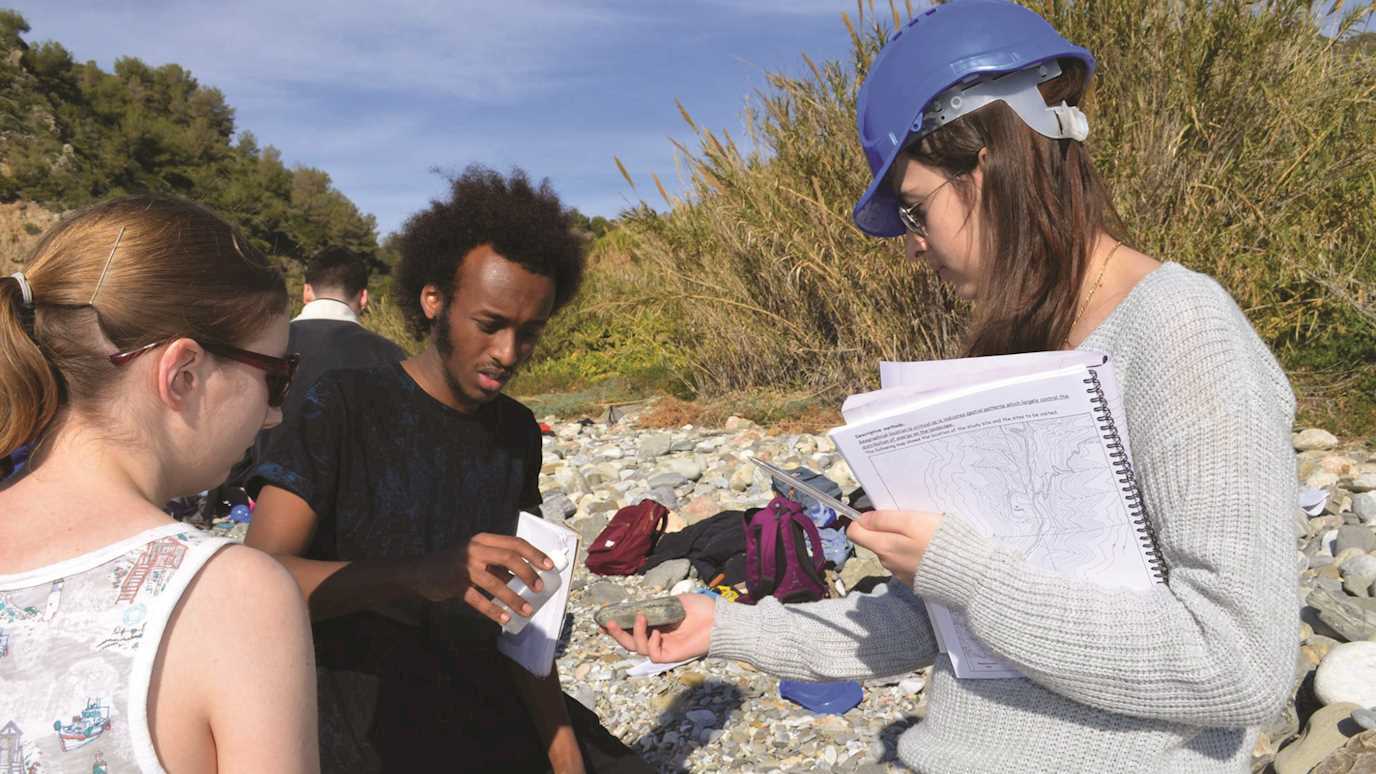
This module introduces students to key data collection and analysis techniques in sociology. Students develop foundational skills in questionnaire design, observation, interviewing, and both qualitative and quantitative data analysis. Teaching combines lectures with practical workshops, where students work individually and in small groups to build teamwork and independent research skills.
Through class-based and field-based activities, students gain hands-on experience in applying core sociological research methods and critically reflect on their use in different social contexts. Assessments emphasise care and rigour in the design, collection, and interpretation of qualitative and quantitative data, helping students to develop essential skills in constructing sociological arguments based on primary research material.
-
The module is divided into three parts. The first focuses on study skills for sociologists and introduces the skills needed to study Geography at university. Topics include critical reading and writing, finding and evaluating source material, referencing and bibliographies, using feedback effectively, academic integrity and research ethics, and the use of generative AI.
The second part focuses on sociology beyond university. It engages students with how sociological skills can be used outside the academic environment, with a focus on their own skills development and potential careers. It introduces the RHUL careers service, highlights the kinds of careers sociologists go into, and supports students in developing, reflecting on and communicating their skills.
The final part focuses on statistics and data visualisation, providing an introduction to statistical analysis and methods of presenting quantitative data visually.
-
The Writing Skills Quiz is a self-guided diagnostic quiz that takes students through five areas of written communication: spelling; punctuation; academic register; structure and argument, and conventions of presentation and referencing.
Year 2
-
-
This module provides a sociological analysis of contemporary society, exploring how modernity and its subsequent transformations have reshaped the relationship between individual persons, communities, and institutions. Drawing on key debates in sociology and social theory, you will examine changing forms of identity, belonging, authority, and culture, and apply these perspectives to today’s pressing social issues.
Year 3
-
The dissertation will enable students to demonstrate their skills as independent learners, give students the opportunity to research a topic in an area of Sociology in detail to a higher level and provide an opportunity to submit a substantial piece of written work.
Optional Modules
Below is a taster of some of the exciting optional modules that students on the course could choose from during this academic year. Please be aware these do change over time, and optional modules may be withdrawn or new ones added.
Year 1
-
All modules are core
Year 2
-
This module aims to introduce you to a number of key fields in value-philosophy: race theory, feminist theory, and queer theory. These discourses have had a lot to say about philosophy and have provided much needed scrutiny of both social structures and philosophy itself. This module will provide an introduction to some of the many ways in which race theory, feminist theory, and queer theory have attempted to combat forms of oppression in domains as diverse as politics, ethics, language, and how we acquire knowledge.
-
This course will provide an understanding of the relationship between violent and criminal behaviour. It will examine the role of social, institutional and psychological factors in the definition, experience and management of violence and aggression and provide an understanding of sociological, historical and psychological perspectives on violence and aggression.
-
Students will critically discuss the role, function and nature of the family in contemporary society as well as examining changing patterns of family life. The course also explores how social identities and different social positions (for example those related to class, gender, or ethnicity) impact upon the experience of family life. Families will also be discussed in relation to other areas of social life including education, the workplace and the community. Students will engage with questions such as: To what extent does the nuclear family remain seen as the ‘ideal’ family type? What are the experiences of lone-parent families in contemporary society? How easy is it for families to balance paid work and family life? What is the relationship between the family and social policy? The course will familiarise students with contemporary research related to families and family life and equip them to critically evaluate this material.
-
The aims of this module are:
- To present an overview of key areas in the sociology of youth.
- To cover the changing conceptions and meaning of 'youth' within western society.
- To detail and examine the changing social and economic position of the young
- To show the various ways in which wider society has sought to define the young and constructed social institutions (education, juvenile justice etc) to deal with the young as a distinctive social group in society.
- The importance of the young as a cultural force in modern society
-
What is this thing we call religion? And it is fated to inevitable decline in modern society? Or is religion returning to the forefront of politics and social life? What is the relationship between one’s social environment and one’s religious belief and practices? And why are some people religious and others not? Religion has been a central object of sociological study since the founding of the discipline in the nineteenth century. This module aims to introduce students to the key authors, concepts, and debates which have animated, and continue to animate, the sociology of religion. Each week, we will address a specific question about religion from a sociological perspective, looking at case-studies along the way. We will investigate the relationship between theory and empirical research and interrogate the cross-cultural applicability of the concept of religion. A key focus of this module will be the empirical study of young adults’ religious trajectories during our seminars; through this component, students will find their own religious interrogations and commitments reflected in the material studied in class. Finally, students will also have the opportunity to engage directly with spaces of religious practice or religious communities through an ethnography-based assessment.
Year 3
-
In this module you will develop an understanding of different sociological approaches to the study of health and illness, with an awareness of the social patterning and causes of ill health. You will critically examine debates in the sociology of health and illness, considering factors such as social class, gender and ethnicity.
-
In this module you will develop an awareness of the changing position of the young in society, considering changing ideas about adolescence, youth and the transition to adulthood. You will gain an insight into the significance of delinquency and the representation of delinquent and deviant youth in the media, including gangs in British society and youth riots in Britain.
-
In this module you will develop an understanding of key sociological, psychological and criminal-legal approaches to gender and sexuality. You will think critically about how theories of gender and sexuality have informed the study of crime and shaped our understanding of sexual offences, and the relationship between gender, sexuality and criminal justice, from the 19thcentury to the present day. You will look at case studies that have shaped the study of gender, sexuality, and crime historically and in the present day, such as the violations perpetrated against women through the diagnosis of 'hysteria', the development of the law of rape, sociological and psychological approaches to sex offenders, and debates about the criminalisation of pornography.
-
This module will provide students with a broad overview of violence and harm as committed by individuals or groups within society. Several forms of violence will be examined within the course including but not limited to intimate partner violence, stalking, sexual violence, and elder abuse. In addition to examining the nature and prevalence of violence and harm, the course will also examine the ways in which violence and harm are assessed, managed and communicated by professionals who work with perpetrators and victims of violence. Concepts related to violence or the prevalence and nature of violence such as psychopathy and gender will also be examined. Through a group presentation students will have the opportunity to learn about and present on an additional form of violence not covered in lectures.
-
This module would intend to analyse the social and cultural aspects of death, dying and bereavement. This will involve looking at rituals, religion and cultural practices associated with death and dying, as well as social taboos, mourning and remembrance. The module also has a specific focus on the sociology of the body, analysing the medicalisation of death and the social management of death, looking specifically at debates about euthenasia and legal issues associated with dying. The module aims to examine media representations of death in contemporary society and what impact this has on conceptualising death and dying, as well as focusing on the area of ‘dark tourism’; assessing cultural fascination in mortality and sites of death and remembrance. Students will be able to demonstrate an understanding of the social organisation of death and how different groups and individuals manage death and bereavement. The course will offer an opportunity to examine trends, attitudes and dynamics of different end-of-life issues.
-
In this module you will develop a historical and sociological understanding of the study of race, racism and ethnicity, with an awareness of the way in which these interact with other social divisions and inequalities. You will anylse the extent to which race and ethnicity are central to how society is organised and structured, with knowledge of the models of race relations and the relevance of geography and politics.
-
In this module you will develop an understanding of key debates in relation to children, society and risk, childhood, children's rights, citizenship and social harm. You will look at empirical and theoretical studies in these areas and understand the ways in which social policy, and criminal justics agencies, are adapting their responses to deal with crimes commited against children.
-
The aim of this module is to give an overview of the key arguments in the Sociology of Religion, and to develop an understanding of the social, cultural and political significance of religion for individuals, social groups and society at both national and global levels.
The module begins by covering the classical sociological theorists on religion (Durkheim, Weber and Marx) and examines key debates around secularisation and post-secularisation. It then introduces the social and cultural significance of new religious and New Age movements, as well as the rise of spirituality in the West. The module also considers the growth of fundamentalism around the world, and concludes by examining how religion is becoming globalised.
-
This module introduces students to contemporary debates on sex work, sexual and emotional labour, trafficking and sex tourism. It explores how different approaches to the sex industry relate to sociological questions of structure and agency, and to issues of gender, race, class and globalisation.
Students will apply their learning to critically comment on aspects of the sex industry. The module also develops writing and communication skills, and provides experience in working with and evaluating different sources of information, including media reports, NGO publications and academic research. Students are expected to work independently and produce work with critical insight within short time frames.
Teaching & assessment
You will be assigned a personal tutor who will provide support, guidance and advice throughout the three years of your degree course. You will also have access to the comprehensive e-learning facility Moodle, which features lecture handouts and other supporting materials.
You will attend a mixture of lectures, seminars and workshops. We use a variety of different methods of assessment. Assessment is both summative (e.g. essays, exams, presentations and a dissertation) and formative (essays and presentations to gain feedback without formal assessment).
In the final year, you will write a dissertation on a topic of your choice which you will research and write with individual guidance from a tutor with expertise in this field. The first year is foundational and marks do not count towards your final degree. The second year and final year marks do count, with more importance being given to the final year marks in order to reward progress and achievement.
Entry requirements
A Levels: ABB-BBB
Required subjects:
- We require English Language and Mathematics GCSE at grade 4 (C)
HL 655 (without Diploma) or 32 overall (with Diploma)
EUROPEAN BACCALAUREATE 77%
If you have completed Secondary or High School in this country then you will need to take our one year International Foundation Year , or the equivalent from another institution, before beginning your undergraduate studies.
If you have completed Secondary or High School in this country then you will need to take our one year International Foundation Year , or the equivalent from another institution, before beginning your undergraduate studies.
Year 12 High School Certificates: ATAR: 88, Queensland OP: 5
Reifezeugnis/Maturazeugnis: 2
If you have completed Secondary or High School in this country then you will need to take our one year International Foundation Year , or the equivalent from another institution, before beginning your undergraduate studies.
Bachelor degree studied for 2 years or less than 3: GPA of 3.25
Certificate D Enseignement Secondaire Superieur (CESS) (score out of 10) or Diploma van Hoger Secundair Onderwijs (score out of 20): 7/10 or 16/20 or 65%
Secondary School Leaving Diploma: 4/5
Diploma za Sredno Obrazovanie 5.5
Year 12 High School Graduation Diploma: 85%
National College Entrance Examination (NCEE) (Gaokao): 73%
Svjedodzba o Maturi: Overall grade of 4
Apolytirion of Lykeion: Average of 18 in Apolytirion
Maturitni Zkouska / Maturita: 2.0
Bevis for Studentereksamen or Hojere Forberedelseseksamen (HF) or Hojere Handelseksamen (HHX) / Hojere Teknisk Eksamen (HTX): Average grade of 7
Certificate of Nile Secondary Education (CNISE) Level 3: ABB
Gumnaasium Ioputunnistus (Secondary School Certificate) with Riigieksammid (state exams): 4 in Gumnaasium Ioputunnistus and 70% in Riigieksamid
Ylioppilastutkinto / studentexamen: EMMM
Baccalaureat / International Option Baccalaureate (OIB): 13/20
Zeugnis der Allgemeinen Hochschulreife / Abitur: 1.7
If you have completed Secondary or High School in this country then you will need to take our one year International Foundation Year , or the equivalent from another institution, before beginning your undergraduate studies.
Apolytirion of Lykeion: Average of 18 in Apolytirion
Achieve grades 5,5,4 overall in your Hong Kong Diploma of Secondary Education with a grade 5 in any A-level subject specified above
Achieve a grade of 4.5 overall in your Erettsegi / Matura with a grade 5 in any A-level subject specified above
Achieve a grade of 8/10 overall in your Studentsprofwith a grade 9 in any A-level subject specified above
Achieve a grade of 80% overall in your Higher Secondary School Certificate with 80% in any A-level subject specified above
If you have completed Secondary or High School in this country then you will need to take our one year International Foundation Year , or the equivalent from another institution, before beginning your undergraduate studies.
Achieve a grade of 16/20 or 80% overall in your National Entrance Examination (Konkur) with a grade 16 or 80% in any A-level subject specified above
If you have completed Secondary or High School in this country then you will need to take our one year International Foundation Year , or the equivalent from another institution, before beginning your undergraduate studies.
Achieve a grade of 8/10 overall in your Bagrut with a grade 8 in any A-level subject specified above
Achieve a grade of 85 overall in your Esame di Stato with a grade 18/20, 14/15 or 9/10 in any subject specified above
If you have completed Secondary or High School in this country then you will need to take our one year International Foundation Year , or the equivalent from another institution, before beginning your undergraduate studies.
Nazarbayev Intellectual Schools (NIS) Grade 12 Certificate: ABB
If you have completed Secondary or High School in this country then you will need to take our one year International Foundation Year , or the equivalent from another institution, before beginning your undergraduate studies.
Achieve a grade of 4 overall in your Diplome per Kryerjen e Shkolles se Mesme te Larte with a grade 5 in any subject specified above
If you have completed Secondary or High School in this country then you will need to take our one year International Foundation Year , or the equivalent from another institution, before beginning your undergraduate studies.
Achieve a grade of 8.5 overall in your Atestats par visparejo videjo izglitibu with a grade 9.5 in any subject specified above
If you have completed Secondary or High School in this country then you will need to take our one year International Foundation Year , or the equivalent from another institution, before beginning your undergraduate studies.
Achieve a grade of 5/6 overall in your Matura with a grade 5 in any A-level subject specified above
Achieve a grade of 8.5 overall in your Brandos Atestatas Secondary School Diploma / Maturity Certificate with a grade 9/90% in any subject specified above and at least 85% in three state exams.
Achieve a grade of 40 overall in your Diplome de Fin d'Etudes Secondaires with a grade 48 in any subject specified above
Achieve a grade of ABB overall in your Sijil Tinggi Persekolahan Malaysia with a grade A in any subject specified above
Achieve a grade of ABB overall in your Advanced Matriculation with a grade A in any subject specified above
Achieve ABB in the Cambridge Overseas Higher School Certificate/General Certificate of Education Advanced Level with grade A in any subject specified above.
Achieve ABB in the Cambridge Overseas Higher School Certificate (COHSC) with grade A in any subject specified above.
Achieve a grade of 7 overall in your Voorbereidend Wetenschappelijk Onderwijs with a grade 7 in any subject specified above
Achieve a grade of Excellence overall from three subjects in your NCEA level 3 with a grade of Excellence in any subject specified above
If you have completed Secondary or High School in this country then you will need to take our one year International Foundation Year , or the equivalent from another institution, before beginning your undergraduate studies.
Achieve a grade of 4.5 overall in your Matura with a grade 5 in any subject specified above
Achieve a grade of 70% overall in the final two years in your Devlet Lise Diplomas with a grade 80% in any subject specified above
Achieve a grade of 4 overall in your Videregaende Opplæring with a grade 5 in any subject specified above
If you have completed Secondary or High School in this country then you will need to take our one year International Foundation Year , or the equivalent from another institution, before beginning your undergraduate studies.
If you have completed Secondary or High School in this country then you will need to take our one year International Foundation Year , or the equivalent from another institution, before beginning your undergraduate studies.
Achieve a grade of 75% overall including 70% in three extended level subjects in your Matura with a grade 80% in any subject specified above
Achieve a grade of 17 overall including 18, 17, 17 in 3 year 11 or 12 exams in your Certificado de fim de Estudos Secundarios with a grade 18 in any subject specified above
If you have completed Secondary or High School in this country then you will need to take our one year International Foundation Year , or the equivalent from another institution, before beginning your undergraduate studies.
Achieve a grade of 8 overall in your Diploma de Bacalaureat with a grade 9 in any subject specified above
If you have completed Secondary or High School in this country then you will need to take our one year International Foundation Year , or the equivalent from another institution, before beginning your undergraduate studies.
If you have completed Secondary or High School in this country then you will need to take our one year International Foundation Year , or the equivalent from another institution, before beginning your undergraduate studies.
Achieve a grade of 4.5 overall in your Secondary School Leaving Diploma with a grade 4 in any subject specified above
Achieve a grade of 2.9 overall in your Polytechnic Diploma with a grade 3.5 in any subject specified above
Achieve a grade of 2 overall in your Maturita with a grade 1.5 in any subject specified above
Achieve a grade of 4 overall in your Matura with a grade 5 in any subject specified above
Achieve grades 66655 in at least 6 subjects overall in your National Senior Certificate (state board) or 65555 (IEB board)
If you have completed Secondary or High School in this country then you will need to take our one year International Foundation Year , or the equivalent from another institution, before beginning your undergraduate studies.
Achieve a grade of 7.5 overall in your Titulo de Bachillerato with a grade 8 in any subject specified above
If you have completed Secondary or High School in this country then you will need to take our one year International Foundation Year , or the equivalent from another institution, before beginning your undergraduate studies.
Achieve a grade of ABB overall in the Advanced Certificate of Secondary Education (CSEE) with a grade A in any subject specified above.
If you have completed Secondary or High School in this country then you will need to take our one year International Foundation Year , or the equivalent from another institution, before beginning your undergraduate studies.
Achieve a grade of 70% overall in the final two years in your Devlet Lise Diplomas with a grade 80% in any subject specified above
Achieve ABB in the Ugandan Advanced Certificate of Education (UACE) with a grade A in any subject specified above.
If you have completed Secondary or High School in this country then you will need to take our one year International Foundation Year , or the equivalent from another institution, before beginning your undergraduate studies.
If you have completed Secondary or High School in this country then you will need to take our one year International Foundation Year , or the equivalent from another institution, before beginning your undergraduate studies.
Achieve a grade of 4 in at least two relevant AP Examinations; or a composite score of 25 in the ACT Examinations (including the ACT writing test) with an AP grade 4 or College Class B in any A-level subject specified above; or SAT 1100 with an AP grade 4 or College Class B in any A-Level subject specified above.) Please note AP Calculus BC required for Computer Science or Electronic Engineering, or relevant College class.
Achieve a grade of 18 or B overall in your Avgangsbetyg or Slutbetyg with a grade 5 in any subject specified above
If you have completed Secondary or High School in this country then you will need to take our one year International Foundation Year , or the equivalent from another institution, before beginning your undergraduate studies.
Achieve a grade of 122 overall in your Caribbean Advanced Proficency Examination with a grade 1 in any subject specified above
English language requirements
All teaching at Royal Holloway (apart from some language courses) is in English. You will therefore need to have good enough written and spoken English to cope with your studies right from the start.
The scores we require
- IELTS: 6.5 overall. No subscore lower than 5.5.
- Pearson Test of English: 67 overall. No subscore lower than 59.
- Trinity College London Integrated Skills in English (ISE): ISE III.
- TOEFL iBT: 88 overall, with Reading 18 Listening 17 Speaking 20 Writing 17.
- Duolingo: 120 overall and no sub-score below 100.
Country-specific requirements
For more information about country-specific entry requirements for your country please visit here.
Undergraduate preparation programme
For international students who do not meet the direct entry requirements, for this undergraduate degree, the Royal Holloway International Study Centre offers an International Foundation Year programme designed to develop your academic and English language skills.
Upon successful completion, you can progress to this degree at Royal Holloway, University of London.
Your future career
Graduates with a BA in Sociology from Royal Holloway will be equipped for a wide range of careers that value analytical thinking, research expertise, and the ability to understand complex social issues and human behaviour.
Throughout the degree, you’ll develop highly transferable skills in research design, data analysis, critical evaluation, communication, and evidence-based problem solving — these skills are valued by employers across the public, private, and voluntary sectors.
We’ll support your career preparation – whether you aspire to social and market research, policy and government, education, communications, charities and NGOs, community and international development, public services, and organisational analysis, or go on to postgraduate study and research across the social sciences and related fields.
Fees, funding & scholarships
Home (UK) students tuition fee per year*: £10,050
EU and international students tuition fee per year**: £24,600
Other essential costs***: There are no single associated costs greater than £50 per item on this course.
How do I pay for it? Find out more about funding options, including loans, scholarships and bursaries. UK students who have already taken out a tuition fee loan for undergraduate study should check their eligibility for additional funding directly with the relevant awards body.
*The tuition fee for Home (UK) undergraduates is controlled by Government regulations. This figure is the fee for the academic year 2026/27 and is shown as a guide. The fee for the academic year 2027/28 has not yet been confirmed.
**This figure is the fee for EU and international students starting a degree in the academic year 2026/27 and is shown as a guide. The fee for the academic year 2027/28 has not yet been confirmed.
Royal Holloway reserves the right to increase tuition fees annually for all students. For further information see fees and funding.
*** These estimated costs relate to studying this particular degree at Royal Holloway during the 2026/27 academic year and are included as a guide. Refers to specific individual items of £50 or more, and excludes accommodation, commuting, food, books/other learning materials and printing costs.