Course options
Key information
Duration: 3 years full time
UCAS code: F764
Institution code: R72
Campus: Egham
The course
Environmental Science (BSc)
Explore the impact on our planet of unpredictable weather, hotter, drier or wetter environments and dwindling natural resources. Join us to understand the effects of climate change on life on Earth.
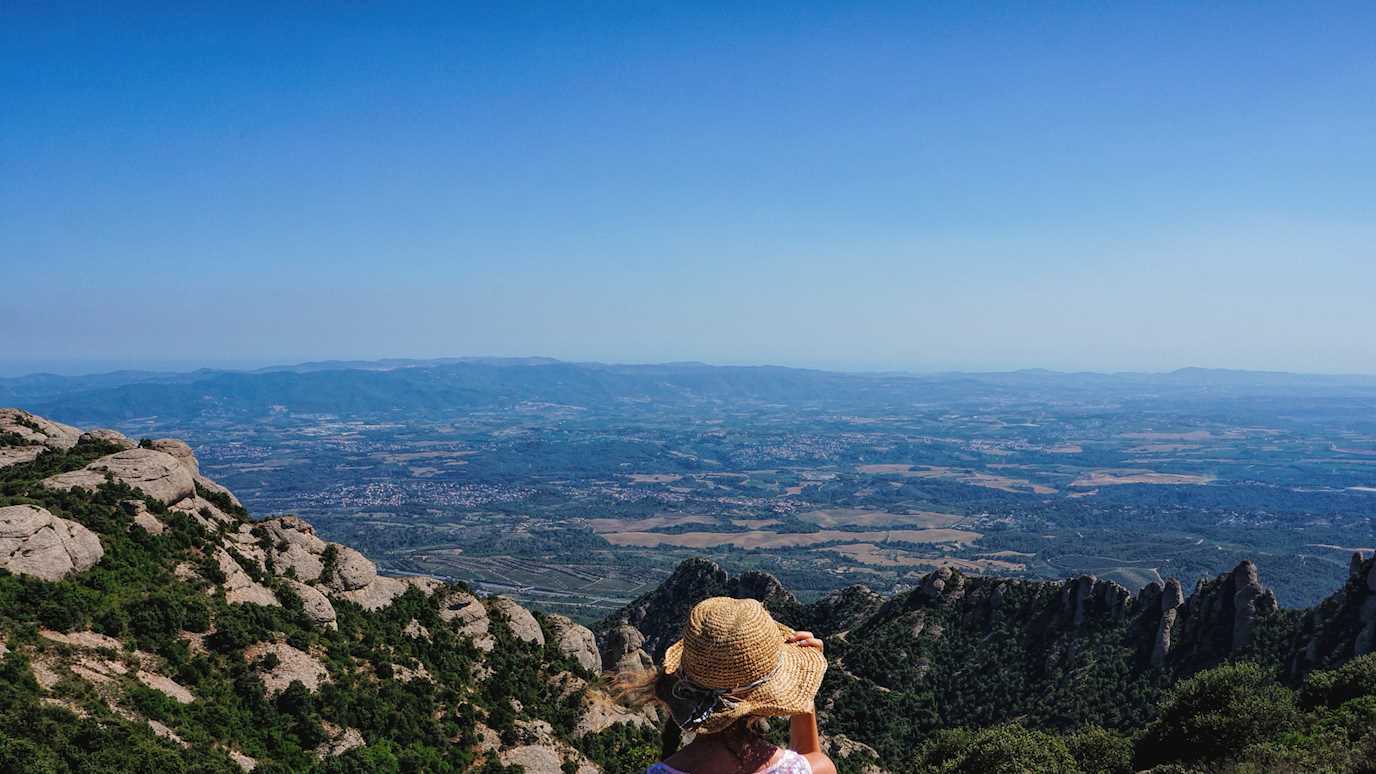
You’ll examine environmental science and how it has shaped today’s world. Experience research-led teaching, informed by data and delivered by academics in Earth Sciences. One day, you might be learning practical skills in laboratories on campus. The next, you might be putting them into practice on a field trip to Devon, Pembrokeshire, or even overseas.
Learn from leading scientists
Our teaching is inspired by our research, which spans a diverse range of subjects, meaning you’ll be in touch with the very latest developments in Earth and Environmental Sciences.
- Gain insights from experts in everything from greenhouse gas monitoring to geohazard prediction and mitigation
- Benefit from links to engineering consultancies, and government bodies like the Environment Agency
- Discover the latest breakthroughs from our research centres and real-world projects
Diverse opportunities
Graduate with the skills to tackle the manifestations of climate change happening all around us. Or go in a different direction by pursuing sub-surface exploration for crucial minerals and raw materials or continue into research.
Our alumni work in areas like geotechnics, environmental monitoring and mineral exploration. However, you’ll find opportunities everywhere, from start-ups to consultancies contributing towards building a cleaner, more sustainable society.
We sometimes make changes to our courses to improve your experience. If this happens, we’ll let you know as soon as possible.
Course structure
Core Modules
Year 1
-
Evolving Environments
-
Human Interaction with the Earth
With the adoption of the Paris Agreement and the recent COP26, a seismic societal shift towards issues related to sustainability and climate change is taking place globally. The next generation of geoscientists are now required to understand the complex interrelations between human activities and a changing Earth system. With this module, students will explore key themes at the core of human-Earth interaction such as anthropogenic climate change, geohazards, environmental pollution, and sustainable exploitation of energy resources and energy-critical elements.
-
Climate, Ocean and Atmosphere
Understanding the causes and trajectory of climatic change is an important task. In this module, students will learn about three interconnected phenomena: the global climate system and the atmospheric and oceanic processes that regulate the climate system over timescales of seconds to millions of years. These topics will be taught with an emphasis on the acquisition of practical skills in data handling and manipulation, statistics and interpretation, and by exposing students to active research topics in atmospheric and oceanic chemistry and the understanding of climate change. The module will introduce a wide range of themes that will be a springboard for more in-depth study of advanced climatic concepts in years 2–4.
-
Physics and Chemistry of the Earth
In this module you will develop an understanding of basic concepts in chemistry and physics and how to apply these to geological processes. You will look at atoms and atomic structure, the periodic table of elements, reactions, equations, geochemical analysis, the composition of the earth, interpretation of phase diagrams, solubility of minerals, weathering and the hydrological cycle. You will also consider Newton’s Laws, kinematics, circular motion, planetary orbits, gravity, magnetism, electricity, resistivity, stress, strain, seismicity, isostasy, radioactivity, and geochronology.
-
Earth Scientists Toolkit
In this module you develop an understanding of the skills required to practice geology in the field, carrying out a series of activities in South Devon and Pembrokeshire. You will learn to describe and interpret the origin of sedimentary, igneous and metamorphic rocks and how to prepare a geological map and cross-section using standard symbols. You will examine stereographic projections, sedimentary logging, the construction of stratigraphic columns for the identification of rocks, and the analysis of structural features using stereonets.
-
Ecology and Conservation
In this module you will develop an understanding of the key concepts of ecology and conservation, working up from organisms to populations and their interactions, through to communities and ecosystems. You will look at ecological patterns and processes and consider the fundamental interactions between species and their abiotic environment. You will also gain practical experience in using ecological sampling techniques, carrying out biostatistical analyses and experimental design.
Year 2
-
Geochemistry
In this module you will develop an understanding of advanced chemical concepts relevant to the Earth Sciences. You will focus on isotope geochemistry and consider techniques that are directly applicable in most geological contexts. You will attend practical classes and conduct a small project involving the analysis and interpretation of a real geochemical dataset.
-
Contaminated Environments 1: Surface Waters and Land
-
Earth Scientists Environmental Toolkit
By the end of the module students should: Have gained an appreciation of some aspects of anthropogenic impact on the environment by visiting a range of field sites Understand the principles of environmental sampling, including sampling strategies, sources of error and sample contamination issues Have gained experience of a range of sample preparation methods and how to produce analytical data for a number of different sample types Understand how ICP-AES can be used for environmental analysis and gained practical experience of laboratory techniques Have gained experience of safe laboratory working practices Have developed team working skills, including time management, negotiation, and co-operation Have further developed their data analysis and report writing skills. Be able to plan and undertake an independent field-based environmental project.
-
Earth Scientists Digital Toolkit
The purpose of this module is to embed GIS and programming skills for the creation, analysis and interpretation of geospatial data and coding skills to facilitate data collection, analysis, modelling and interpretation. The module explains the origin of GIS and trains students in the creation of georeferenced point, line and polygon data, combine raster and vector data, and data analysis. It also introduces Python and the use of arrays, reading and writing, branching and repeating, and plotting.
Year 3
-
Advanced Practical Meteorology
This module will provide you with a working knowledge of basic meteorology. The module will begin with atmospheric basics and terminology including didactic sessions and workshops/practicals on solar radiation, thermodynamics, water vapour, stability, clouds and precipitation. It will progress into skill sessions (lectures and practicals) on radar, interpreting satellite maps and weather reports and finish with sessions (lectures and practicals) putting it all together (review and consolidation) for understanding of winds, fronts, air masses and thunderstorms. The module will finish up with lectures and practicals demonstrating how basic meteorological understanding can be applied for career useful consideration of meteorological hazards: tropical and extra tropical cyclones, regional winds boundary layers and pollutant dispersal, numerical weather prediction and atmospheric optics.
-
Contaminated Environments 2: Air and Waste
-
Earth Scientists Independent Project
Under the guidance of a departmental supervisor the student will design and execute an independent research project. The project may utilise data collected in the field, laboratory, and/or scientific literature. Data handling using statistical or GIS techniques must be integrated into the project. Departmental facilities are available for use by students either in supplementing data already acquired or in producing their main database. BSc Geology and MSci Geoscience projects must be based on a minimum of 21 days of mapping, either through field observations or digitally using remote sensing and other data as appropriate (which need not be terrestrial). Projects based on field observations will be supported by at least one day of guidance in the field by a departmental supervisor. Students on other departmental degree courses must complete a project in a topic appropriate to their degree. Guidance on data analysis and presentation will be provided in timetabled classes following the data collection stage. All students submit a written report, with other material as required, in a style appropriate to their topic (e.g. consultancy report, scientific paper) and give an oral presentation at the end of their project.
Optional Modules
Below is a taster of some of the exciting optional modules that students on the course could choose from during this academic year. Please be aware these do change over time, and optional modules may be withdrawn or new ones added.
Year 1
-
All modules are core
Year 2
-
Practical Meteorology – An introduction
-
Introduction to Modern Climate Change
-
Geohazards
In this module you will develop an understanding of the hazards associated with geological activity, their causes, and approaches to risk management. You will look at volcanoes, earthquakes, and radon, and the hazards associated with the exploitation of geological resources and associated anthropogenic activity, including asbestos, the mining industry, and contaminated land. You will examine a variety of geological and geochemical data, and learn to interpret and analyse these in order to make scientifically justified decisions as to the level of risk.
-
Applied Geophysics
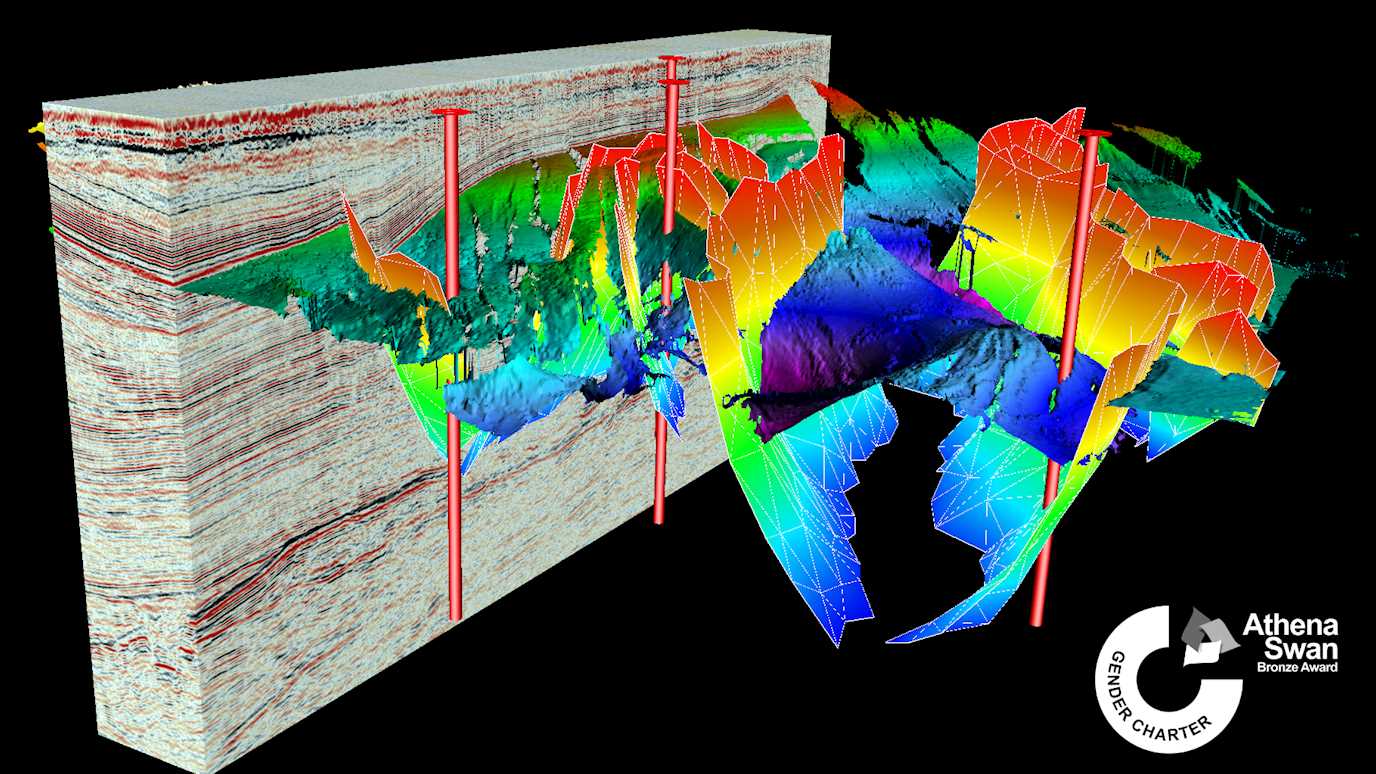
In this module you will develop an understanding of the theory and practice of seismic, gravity, magnetic and resistivity surveying. You will consider the methods used to manipulate, analyse, and display geophysical data to solve geological exploration problems, and examine the strengths and weaknesses of the different data types.
Year 3
-
Advanced Practical Meteorology
This module will provide you with a working knowledge of basic meteorology. The module will begin with atmospheric basics and terminology including didactic sessions and workshops/practicals on solar radiation, thermodynamics, water vapour, stability, clouds and precipitation. It will progress into skill sessions (lectures and practicals) on radar, interpreting satellite maps and weather reports and finish with sessions (lectures and practicals) putting it all together (review and consolidation) for understanding of winds, fronts, air masses and thunderstorms. The module will finish up with lectures and practicals demonstrating how basic meteorological understanding can be applied for career useful consideration of meteorological hazards: tropical and extra tropical cyclones, regional winds boundary layers and pollutant dispersal, numerical weather prediction and atmospheric optics.
-
Modern Climate Change
This course has two main aims:
1) To introduce you to the evidence for and mechanisms of modern climate change – what climate change is, how the climate change is manifested, what physical mechanisms are driving it, and what its future status might be.
2) Methods of research in multi-disciplinary topics, report writing, and communication of complex ideas for policy makers using Earth Science as a subject matter.
-
Advanced Geohazards
The module will cover hazards associated with geological activity, their causes and risk management including topics such as volcanoes and earthquakes, and those associated with anthropogenic activity such as mining and land contamination. Students will work in small groups to investigate geohazards pertinent to a city of their choice, bringing together all aspects of the course including physical, chemical and anthropogenic hazards. Formative assessments draw together a variety of geological, numerical and geochemical data that require analysis and interpretation of these data.
-
Further Applied Geophysics
This module will introduce the theory and practice of seismic, gravity, magnetic and resistivity surveying methods, and demonstrate their uses in industry. The main aims are to expose the students to the techniques used in geophysical exploration. The practical part of the module will allow students to understand the foundations of these methods.
Teaching & assessment
Your degree course is delivered in three stages, each of which comprises one year of full-time study during which you must follow modules to the value of 120 credits. Although full-time attendance is the normal mode of study, the BSc Environmental Science is also available in part-time mode, whereby you would normally take 60 credits per year.
Modules provide a broad base in skills and knowledge in stages one and two, followed by opportunities for specialisation and choice in stage three culminating in a final year research project supervised by a member of the Earth Science staff.
Some modules also have an element of compulsory fieldwork. Training in data collection, data analysis and presentation of reports is provided in core modules along with a range of transferrable skills that contribute to the successful progression of Earth Science graduates into a wide range of careers.
Teaching and learning in the course are designed to provide graduates with a sound basis of knowledge and skills in the Earth, Climate and Environmental sciences aligned to those required by professionals in these three sectors. Specialist modules offered in stages two and three are closely informed by the active research of staff in Earth Sciences and in other departments in the University.
Students on this course will benefit from pastoral support from a personal tutor.
Entry requirements
A Levels: ABB-BBC
Required subjects:
- A-level including B in a science subject
- We require English Language and Mathematics GCSE at grade 4 (C)
English language requirements
All teaching at Royal Holloway is in English. You will therefore need to have good enough written and spoken English to cope with your studies right from the start.
The scores we require
- IELTS: 6.5 overall. No subscore lower than 5.5.
- Pearson Test of English: 67 overall. No subscore lower than 59.
- Trinity College London Integrated Skills in English (ISE): ISE III.
- TOEFL iBT: 88 overall, with Reading 18 Listening 17 Speaking 20 Writing 17.
- Duolingo: 120 overall and no sub-score below 100.
Country-specific requirements
For more information about country-specific entry requirements for your country please visit here.
Undergraduate preparation programme
For international students who do not meet the direct entry requirements, for this undergraduate degree, the Royal Holloway International Study Centre offers an International Foundation Year programme designed to develop your academic and English language skills.
Upon successful completion, you can progress to this degree at Royal Holloway, University of London.
Your future career
You will graduate equipped with the specialist knowledge and practical skills to tackle the scientific challenges of a rapidly changing world, ideally prepared for a scientific or technical career in your chosen field.
Graduate destinations include postgraduate research, climate and environmental consultancy, analytical careers, Government/civil service, remote sensing agencies and regulatory bodies. Climate service companies, mining, extractive, and energy industries employ a large number of Earth Scientists to handle their environmental/climate obligations.
The majority of our graduates are working in geological careers, addressing global problems like climate change and waste disposal, or have a role in global exploration for the raw materials we need – water, minerals, oil and gas. Many others go on to study for a PhD degree and become a research scientist.
Fees, funding & scholarships
Home (UK) students tuition fee per year*: £10,050
EU and international students tuition fee per year**: £27,900
Other essential costs***: There are no single associated costs greater than £50 per item on this course.
How do I pay for it? Find out more about funding options, including loans, scholarships and bursaries. UK students who have already taken out a tuition fee loan for undergraduate study should check their eligibility for additional funding directly with the relevant awards body.
*This figure is the fee for Home (UK) undergraduates on this course for the academic year 2027/28 and is controlled by Government regulations.
**This figure is the fee for EU and international students on this course for the academic year 2027/28.
Royal Holloway reserves the right to increase tuition fees annually for all students. For further information see fees and funding.
*** These estimated costs relate to studying this particular degree at Royal Holloway during the 2027/28 academic year and are included as a guide. Refers to specific individual items of £50 or more, and excludes accommodation, commuting, food, books/other learning materials and printing costs.