



Key information
Duration: 1 year full time
Institution code: R72
Campus: Central London
UK fees*: £16,700
International/EU fees**: £27,000
The course
Entrepreneurship and Innovation (MSc)
This course is designed for individuals who wish to become entrepreneurs and launch new ventures with growth potential. You will be equipped with specialist and in-depth understanding of entrepreneurship and innovation together with practical skills and will leave with a ready-to-implement business plan that has been checked by practicing entrepreneurs.
You will work on your business plan throughout the course, having a chance to refine it following feedback from academic staff and through access to an entrepreneurial mentor from the Association of Business Mentors.
Mandatory modules on this course, which is taught at our campus in central London, will introduce you to a broad range of topics and tools necessary to plan and launch a new venture and you’ll furthermore be able to focus on your personal interests or needs with the optional modules available, which include digital marketing and branding, family business, technology entrepreneurship and entrepreneurial opportunities in emerging markets. You’ll hear from visiting speakers and go on field visits to gain further knowledge and expertise from successful and highly innovative entrepreneurs and businesses.
On graduating you will have a critical understanding of entrepreneurship and innovation research, an appreciation of the impact of entrepreneurship and innovation and the processes and practices at every level.
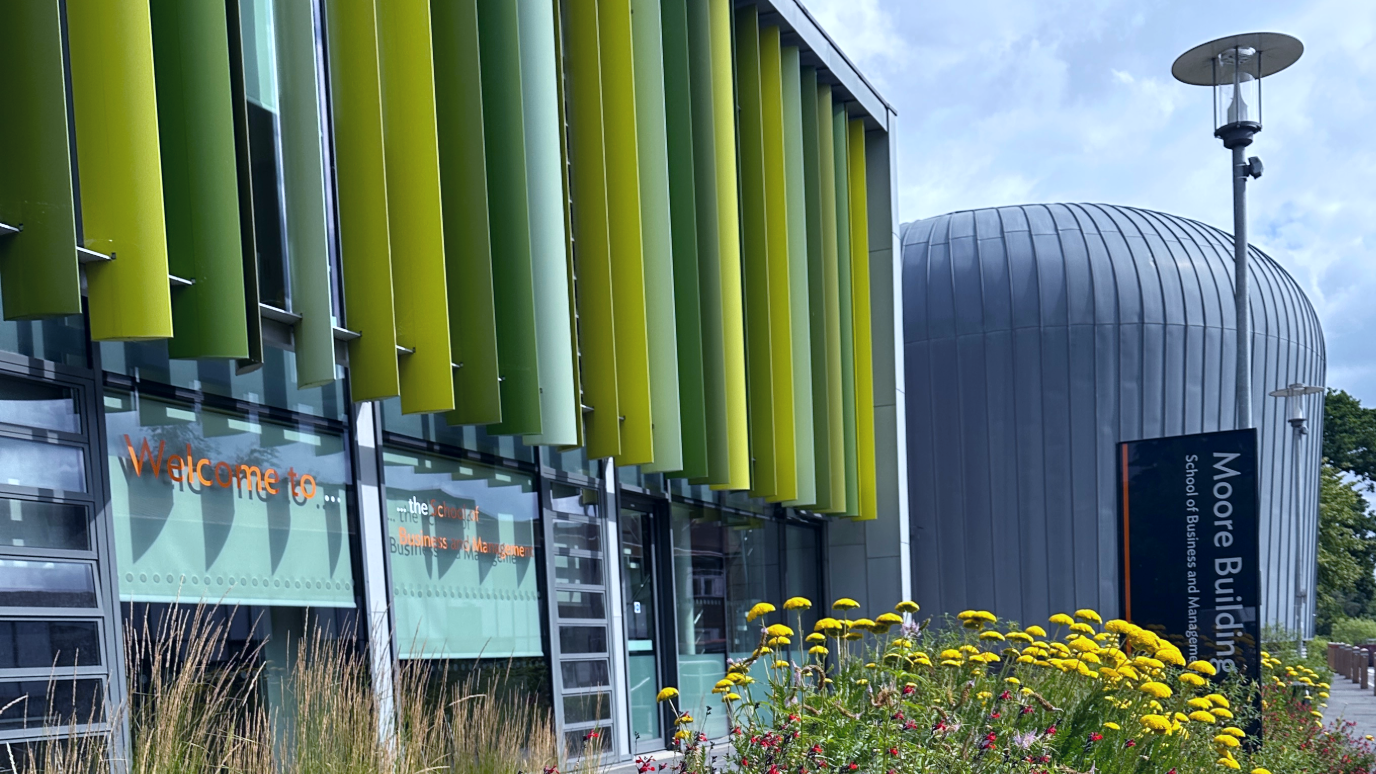
As a student in the School of Business and Management you will join an intellectually stimulating, friendly and supportive environment and, through working closely with our expert and experienced academic staff, you will be in a position to realise your potential.
Reasons to choose Entrepreneurship and Innovation MSc at Royal Holloway:
- Gain specialised understanding of entrepreneurship, how to develop a start-up and leave with a business plan.
- Course is co-designed with an experienced panel of entrepreneurs and venture capital/angel investors.
- You'll have access to an entrepreneurial mentor and will be able to build your professional network in London's dynamic entrepreneurial eco-system.
- Understand how to respond to ethical and sustainable global challenges.
- Flexibility to tailor your studies by choosing optional modules to suit your interests.
We sometimes make changes to our courses to improve your experience. If this happens, we’ll let you know as soon as possible.
Course structure
Core Modules
-
In this module you’ll acquire the knowledge and skills needed to facilitate the ideation process: generating, developing, refining and testing ideas. The module introduces students to frameworks that support creative problem-solving and innovation, helping individuals to move from vague concepts or challenges to concrete ideas that can be explored, prototyped, and implemented. The principles of effective product design that lead to the creation of products and services that are functional, aesthetically pleasing, user-friendly, and aligned with business goals will be explored. This module introduces a variety of concepts including product specification, life cycle, market positioning, and sales and planning.
-
This module introduces students to the theories and practices of venture finance and funding for start-ups with high growth potential. Emphasis is given to understanding different investment stages and the strategies used by investors to value start-ups, including the techniques used to evaluate proposals. The module examines the capital structure of start-up governance and control, exit strategies and the performance metrics used by investors. The module also explores financial planning and the need for flexibility to foster long term growth.
-
This module will introduce you to critical tools and skills needed to undertake a comprehensive assessment of a new market. These frameworks will enable the students to conceptualise, structure, and segment a market. Students will develop their skills in gathering and interpreting data to understand market size, trends, competitors and customer needs. In addition, you will examine successful business models, their components and arrangement. Building on this understanding, you will learn to structure appropriate business models and evaluate their design, to ensure they are effective in satisfying market demand and delivering the product/service to customers. Subsequently, you will experiment with creating, refining, and implementing strategies that align with identified organisational goals and market demands.
-
This module is designed to develop your entrepreneurial skills and capabilities through action learning seminars, interactive workshops, activities including field trips and interactions with expert external speakers. Students will be invited to evaluate their development needs at the start of the module and embark on a personal development project. This module will help you to develop key entrepreneurial skills, for example, in team working, time management, problem solving, forecasting, Excel skills, Report writing including infographics and online presentation, pitch performance, networking and negotiations.
-
The Business Proposal Project is the culmination of the MSc course where students produce a practical and outcome oriented business proposal. The overall objective of this module is that students on completion of their studies will have a fully developed and implementable business proposal that has been developed under supervision and vetted by both industry and academic experts. This module is supported by all the mandatory modules in the Autumn Term and the Skills Spine module “ESND” that runs over both the terms, which provides the necessary scaffolding through summative and formative feedback including a detailed presentation pitch to develop a detailed business proposal and also to reflect on their skills development. This BPP module also has in built supervisory support while the students complete the proposal.
-
This module will describe the key principles of academic integrity, focusing on university assignments. Plagiarism, collusion and commissioning will be described as activities that undermine academic integrity, and the possible consequences of engaging in such activities will be described. Activities, with feedback, will provide you with opportunities to reflect and develop your understanding of academic integrity principles.
Optional Modules
Below is a taster of some of the exciting optional modules that students on the course could choose from during this academic year. Please be aware these do change over time, and optional modules may be withdrawn or new ones added.
-
This module explores the role played by technology entrepreneurship, like identifying emerging technologies, launching- and growing firms, regional economic development and selecting the appropriate stakeholders for effective commercialisation. You’ll be introduced to the management tools and frameworks needed for successful exploitation of technology-based opportunities and will develop a theoretical understanding of the process of market opportunity identification, evaluation and planning in the context of new technologies. Areas around value proposition design, business model construction, intellectual property protection and securing a sustainable advantage will be explored.
-
This module explores the management processes of family businesses, reflecting both small and medium-sized enterprises SMEs and large multinationals-conglomerates. The module aims to explain the particularities of family businesses as a distinct type of organisational entity-especially, family-run businesses that are SMEs. The module provides students with the necessary knowledge and skills to negotiate with family businesses and deal with the challenges that family businesses face. Important topics represent the prevalence and economic contribution of family firms, as well as governance, strategic management, succession, change and transgenerational value creation, relationships and conflict in the family business.
-
This module develops an understanding of the key skills required for identifying entrepreneurial opportunities in emerging markets. The characteristics of emerging markets are explored before introducing frameworks for considering drivers and challenges of entrepreneurial behaviour in seeking market entry.
-
This module will use the principles of Design Thinking to consider how digital customer journeys are designed and delivered. Students will learn how to develop salient consumer insights to be able to explain multi-touch point customer experiences. Using the principles of agile design, students will learn how to develop emotionally engaging customer personas and use them to design extraordinary experiences. The module will consider how to develop effective email and social customer relationship management engagement.
-
This course aims to provide students with an overview of the art and discipline of digital brand storytelling across social media and online platforms. Students will learn how to harness the power of storytelling to build brands across digital platforms thus forging relationships with consumers and driving revenue.
The first part of the course will introduce students to the concept of storytelling as adopted by organizations to build relationships with the brand. Taking a historical view, students will recognize how the growth of social media and digital platforms has taken the role of digital storyteller to new heights, helping organizations to drive their brand value proposition.
Students will learn how narratives and content creation as originating from consumers outweigh the impact of firm-oriented narratives. They will be introduced to brand personas and brand narratives, as strategic tools adopted by business leaders in storytelling and in so doing will also address the issue of authenticity. The course will examine the science behind stories, exploring a number of different tried and tested storytelling frameworks for digital story building, including the story (narrative) arc, and Gustav Freytag’s pyramid. Students will be expected to critically assess the pros and cons of each and to identify which frameworks are most effective in constructing stories, which maximize impact on consumer-brand relationships.
Finally, taking a case study analysis approach, the course will unpack a series of real-world digital brand stories including for e.g. Burberry, Airbnb and Naked Wines. Focus will also be on the inspiring, higher purpose, social stories which have emerged from brands such as TOMS, Dove and Lifebuoy. Students will learn how to create storyboards and to undertake a story brand audit, critically examining how real brands have utilized multiple digital platforms to tell and sell their stories.
Teaching & assessment
The courses are interactive, usually offering a lecture-style background of key theories and principles in the first part, and more practical activities, exercises and group discussions in the second part of the lectures. Guest lectures are invited in different classes to give students a real-world experience on entrepreneurship. Participation from students in the classroom is a key principle for learning.
Outside the classroom, in the Autumn Term we organise a field trip to an entrepreneurship hub, and in the Spring term we organise a field trip to a small business. These provide more opportunities to visit and learn from real entrepreneurs in their environment, giving more opportunities to advance their ideas after their studies. In addition, entrepreneurship activities from student societies on campus could be integrated in the teaching process to bridge theory and practice.
Assessment
Assessment is carried out by a variety of methods. In the classroom, you will engage in a number of activities, simulations, case-study discussions and presentations where you will receive instant feedback from your lecturers.
Formal assessments include coursework in the form of individual or group assignments, but also presentations, posters, or digital media content creation depending on the course. Examinations are towards the May exam period and in-class test could take place during the last weeks of each course.
After the teaching term, students will be allocated a supervisor that will guide them through an Independent Business Research Project. The year-in-business students will be allocated a mentor that will follow their progress and work, assisting them in keeping a log and writing a similar final project. This final project gives an opportunity to test learn concepts and ideas in practice in a real business context via research and analysis.
Entry requirements
2:2
International & EU requirements
Bachelors Degree/ Bachelor Honours Degree: GPA 2.6
Masters degree: GPA 3.0/ 80%
Diplomë e Integruar e Nivelit të Dytë:or Diplomë e Nivelit të Parë: 7/10, or Master i Shkencave në Mjekësi të Përgjithshme / në Mjekësi Veterinarë / ne Stomatologji: 7/10
Licence, Diplôme, Diplôme d'Études Supérieures, Diplôme de Docteur en Pharmacie: 11/20
Batxelor: 5/10
Grau de Licenciado/a: 13/10
Bachelor degree from The University of the West Indies: GPA 2.5
Título, Grado de Licenciado/A: 6/10
Specialist Diploma, (Diplom bakalavri astichan), Bachelor degree from American University of Armenia: 70%, GPA 3.0 out of 4, or 14 out of 20
Bachelor degree (Honours) with a 2:2, or a Bachelor degree (Ordinary) with a Pass with 57% overall.
Bachelor degree or Fachhochschuldiplom/Diplom (FH): Bestanden- PASS, Befriedigend - Satisfactory, or 3 out of 5
Bachelor degree (Bakalavr) or Specialist Diploma with 3.5 out of 5 or 70% overall.
Bachelor degree from The University of the West Indies: 2:2, GPA 2.5
Bachelor degree: 2.6/4 or 3.2/5 or 65%
4 year Bachelor degree from Bangladesh University of Engineering and Technology (BUET) with a First Class Division or a Masters Degree following a 3 or 4 year degree.
Specialist Diploma 6/10, or Bachelor Degree 8/10
Bachelor degree with grade 12 overall or the Licentiaat or Licence and other two cycle diplomas with grade 12 overall.
Bachelor degree from The University of the West Indies: 2:2 or GPA 2.5
Diplôme d'études Approfondies/Supérieures/Master: 13 out of 20
Bachelors degree: 60%
Licenciado/Titulo de.... :60%, or Titulo de Bachiller Universitario: 70%
Diploma Visokog Obrazovanja Diploma Visokog Obrazovanja / Diplomirani with Grade 8
Bachelors or Masters: 60%
Título de Bacharel/ Titlo de... 6.5/10
Bachelor degree from The University of the West Indies: 2:2
Bachelor (Honours) Degree: Lower Second Class, or Bachelor (Ordinary) Degree GPA 2.5/5
Bakalavar or Diploma of Completed Higher Education with a Grade 4 out 6 overall.
Diploma d’Etudes Approfondies: 13/20
Diplome d’Etudes Approfondies: 70%
Masters degree: 60%
12/20 or GPA 2.5/4
4 year Bachelor degree with 62%, a GPA 2.5 out of 4, Grade 6 out of 12 or grade C+ overall OR 3 year Bachelor degree with 73%, a GPA of 3.1 out of 4, Grade 8 out of 12 or grade B overall, depending on the grading scheme.
Grau de Licenciado/a: 13/20
The University of the West Indies, or University of College of the Cayman Islands: 65%
Diplome d’Ingenieur (non-honours): 14/20
Diplôme d'Etat de Doctorat en Médecine, Diplome d'Etudes Approfondies 13/20
Grado de Licenciado en..., or Grado de Bachiller: 4.6/7
4 year Bachelors degree with an overall 65% to 70% or GPA of 2.8 to 3.0 out of 4.0 depending on the institution.
Licenciado en, Licenciado en, or Diploma de: 3.5/5
Licenciado, Bachiller: 7.5/10
Diplôme d'études supérieures spécialisées, Diplôme d'études approfondies, Diplôme d'Etat de docteur en Pharmacie: 13/20
3 out of 5 overall in the Baccalaureus Prvostupnik or Visoko Obrazovanja/Level VII/1 (second level degree obtained on completion of 4-6 year course).
Titulo de Licenciado/ Arquitecto / Inginiero / Doctor: 3.5/5
Overall 6.5 out of 10 or a GPA of 2.5 out of 4 in a Bachelor degree from a public university, Ptychion (from University of Cyprus) or Bachelor degree awarded by a private institution (the programme must be accredited by the Ministry of Education and Culture).
Bakalar with dobre (good), score of 2 or Grade C overall.
Diplome d’Etudes Speciales, Diplome d'Etudes Approfondies, Maistrise/Diplome d'Ingenieur/Diplome d'etudes superieures:
7 from 13 points grading system or 4 from 7 points grading system in a Bachelor degree, Candidatus Philosophiae or Professionbachelor.
Diplome d'Ingenieur Bien, or Maitrise/ Master: 14
The University of the West Indies: Lower Second Class Honours, or BSc in Nursing from Dominica State College
Licenciado/Titulo: 75%
Titulo de Licenciado/a from Universidade Nacional Timor Lorosa'e
Titulo de Licenciado/ Titulo: 7/10 OR 70%
University bachelors degree with a GPA of 2.4 overall or 65% overall
Licenciado/ Titulo de: 6.5/10
Masters Degree: 2.6/4
71-80%, 3 or C overall in a Bakalaurusekraad/Diploma, Magister or Magistrikraad
2.5 out of 4
Bachelor Degree: 2.5 or overall grade Satisfactory
GPA of 1.4 where marks are in 1 - 3 system or GPA of 2.5 where marks are in 1 - 5 system in a Kandidaattii/Kandidat or Maisteri/Magister
Licence awarded from 2009 with grade 10-11.99 or Maitrise (pre-Bologna) with grade 11
Diplome D'Ingenieur, or Maitrise: Bien
Master's degree: 60%/ GPA 2.7/4.3
Bakalarvis Khariskhi: 71%
Grade 3 overall in a Bachelor, Fachhochschuldiplom or Magister Artium
Bachelor degree with a Second Class Lower Division overall.
6 out of 10 overall in a Diploma from the Faculties of Engineering and Agriculture or a Ptychion (Bachelor degree) awarded by an AEI.
Bachelor degree from The University of the West Indies: GPA 2.5
Licenciado/ Titulo: Pass mark of 51% University: 60% or Pass mark of 61% Universities: 70%
Diplôme d'Etat de docteur en médecine, or Diplome d’Etudes Superieures/Maitrise/Diplome d’Etudes Approfondies : 14/20
65%, or 3.0 out of 4
Titulo de Licenciado/a/Grado Academico de Licenciatura: 70%
Bachelors degree degree with a Second Class Honours, Lower Division.
Egyetemi Oklevel /Foiskola Oklevel/ Alapfokozat with 3 out of 5 overall.
Baccalaurreatus with grade 6.5 out of 10 overall or Kandidatsprof / Cadidatus Mag with 6 out of 10 overall.
Bachelor degree with 55% to 60% overall or a CGPA of 5.5 to 6 out of 10 overall depending on the NIRF 1-100 institution ranking
Bachelor degree or Diploma IV with overall GPA of 2.8.
Bachelor Degree/Professional Doctorate with 12 out of 20 overall.
Bachelor’s degree (four years) in Medicine/Dentistry/Veterinary Medicine/Pharmacy/Architectural Engineering with 70% overall.
Bachelors degree with at least 65% overall depending on the mark scheme.
Diploma di Laurea or Licenza di Accademia di Belle Arti with 80 out of 110 overall.
Bachelor degree (when accredited by the University Council of Jamaica, or when awarded by the Council of Community Colleges of Jaimaica): Second Class Lower Division
Bachelor degree (Gakushi) with a B overall, dependent on the mark scheme.
Bachelor degree: GPA 2.8 out of 4, Good, C, 68%
Bakalavr or Specialist Diploma with 3.5 out of 5, 75% or 2.67 out of 4.33, or 2.67 out of 4 overall.
Bachelor degree with a Second Class Honours (lower division) overall.
Bacelor/Bachelor Degree: C - Good
Bachelor degree with B or a GPA of 2.6 overall.
Specialist Diploma, Bachelor Degree, Masters Degree: 3.0 out of 4 or 4.0 out of 5
Masters degree: C or GPA 2.0
Bakalaura Diploms or Professional Bakalaura Diploms with Grade 6 overal.
Bachelor Degree/ Licence: 70%
Masters Degree: 65%
Master's degree: 70% or GPA 2.4 out of 4.0
Bachelor Degree of Medicine/Surgery/Architecture/Engineering: 65% or 2.6/4
Dipl Ing (FH) or Dipl Arch (FH) from Liechtenstein Technical College with a Grade 4.4/6 overall.
7 out of 10 overall in a Bakalauras or Specialist Diploma.
Bachelor or Diplome d'ingenieur industriel: 14/20
Licenciatura: Lower Second Class Honours or GPA 2.5
Diplome d'Ingenieur: 13/20
Masters Degree: 60%
Bachelor degree with Class 2 Division ii, B or 2.6 out of 4.0 overall.
Bachelor degree (Maldives National University): GPA 2.5
Diplôme d'Etat de docteur en Pharmacie: GPA 15 out of 20
Honours degree with a Second Class (Lower Division) overall.
Maitrise: 13/20
Bachelor Degree: Class II division II
Titulo de Licenciado/Titulo: GPA 7 out of 10 or 70%
Diplomă de Licenţă: 7/10
Bachelor degree (awarded after 2012): 80 out of 100
Masters Degree: 70%
Diploma o završenim osnovnim akademskim studijama: Grade C
Licence/Licence d'Etudes Fondamentales/Licence Profesionnelle: GPA 111 out of 20
Grau de Mestre: 12/20
Master's degree: 60%
Bachelor Honours / Professional Bachelor degree: 60%
Bachelor degree (4 years) or Master's degree (following a 3-year Bachelor degree): 65%
Bachelor degree or Doctoraal with Grade 6.0 out of 10 overall.
Bachelor degree Honours or Ordinary with an overall Grade C+ or Grade 3 out of 9 points grading system.
Licenciado/Titulo: 80%
Diplôme d'études Approfondies or Diplôme d'études Supérieures Spécialisées: 15 out of 20
Bachelor degree with a Second Class Honours, Lower Division or overall GPA of 2.4 out of 5.
Visoko Obrazovanja with 7 out of 10 overall.
Bachelor degree GPA 2.6 to 2.8 depending on your institution.
Bachelor degree, Candidatus Magisterii, Sivilingeni-r (siv. ing.) (Engineering degree ) or Sivil?konom (siv. ?k.) (Economics degree) Grade D or 3.25 where 1 is the highest.
Bachelor degree with an overall GPA of 2.6/4
4 year Bachelor degree or combined bachelors degree and Master degree for the duration of 4 years with 58% - 65% or a CGPA of 2.8 - 3.2 overall depending on your institution.
Bachelor degree: GPA 3.0 out of 4.0, 80%, B
Licenciado/ Titulo: 70%
Bachelor Honours Degree: Class II, Division B
Titulo de Licenciado/ TItulo: 3.5/5
Grado Academico de Bachiller: 13/20
Bachelor degree (awarded from 2022): 2.5/4, or Masters degree: 2.5/5
Licencjat, Inzynier or Bachelor with grade 4 out of 5
Diploma de Estudos Superiores Especializadoswith grade 14 overall or Licenciado with grade 13 overall.
Bachelor degree: 70/100 or GPA 2.0 out of 4.0
Bachelor degree with an overall GPA of 2.8 overall.
Maitrise: 13/20
Diploma de Licenta, Diploma Inginer or Diploma de Arhitect with 7.0 out of 10 overall.
Bakalavr Bachelor degree or Specialist Diploma with 3.5 out of 5 or 70% overall.
Bachelor Honours Degree: 13/20
Bachelor degree when studied at University of South Pacific, Samoa: GPA 2.5
Licenciatura: 13/20
Bachelor degree with 65%, 3.25 out of 5.0 or 2.5 out of 4.0 overall.
Diplom Visokog Obrazovanja (second-level degree obtained on completion of a four to six-year course) with 7 out of 10 overall.
Bachelor Degree: Lower Second Class
Bachelors Degree (Honours): Lower Second Class
Bachelor degree (from a public university) with a Class II (lower) overall.
Bakalar or Magister / Inzinier with vel'mi dobre (very good) or Grade 2 overall.
Diplomirani / Diplomirani Inzenir from Visoko izobrazevanje, University Diploma or Visoko Obrazovanja (until 1999) with 7 out of 10 (8 for Visoko Obrazovanja) overall.
Bachelor degree when studied at University of South Pacific, Vanuatu: GPA 2.5
Bachelor (Honours), Bachelor or Professional Bachelor degree with 60% or Second Class Lower Division.
Bachelor (Haksa) degree with 3.0 out of 4.5, 2.9 out of 4.3 or 2.8 out of 4.0.
Bachelor Honours degree: 2.5/4.0 Division Two Lower
Licenciado, Titulo de Ingeniero or Titulo de Arquitecto with 6 out of 10.
Bachelor degree from The University of the West Indies: GPA 2.5 Second Class Honours, Lower Division
Bachelor degree from The University of the West Indies: GPA 2.5 Second Class Honours, Lower Division
Bachelor degree from The University of the West Indies: GPA 2.5 Second Class Honours, Lower Division
Bachelor Honours Degree: 60%
Bachelor degreee, Masters Degree, MO-B Akte Diploma: Met Genoegen (Good)
Bachelor degree: 70%
Bachelor degree from National University or Private University with 68% to 73% or GPA 2.8 to 3.0 depending on your institution.
Specialist Diploma: 3.5/5
Bachelor degree with a 2nd Class Honours (Lower) overall.
Bachelor degree GPA 2.4 to 2.6 depending on your institution.
Diplôme d'études supérieures, Diplôme d'études approfondies: 13/20
Bachelor or Masters degree from the University of the South Pacific: 70%/ B+
Bachelor degree (when accredited by the Accreditation Council of Trinidad and Tobago (ACTT)): Lower Second Class Honours
12 out of 20 (Assez Bien)
Bachelor degree GPA 2.6 to 2.8 depending on your institution.
Ýokary bilim hakynda şahadatnama: 3.5/5
Bachelor degree (accredited by the Council of Community Colleges of Jamaica)
Bachelor degree: Class II Lower/ Honours Lower/ 3.0-3.9/ B
Bachelor degree (post 2007) or Specialist Diploma (after 1991) with a Grade 3, 9 out of 12 or 3.5 out of 5 overall.
Bachelor degree with 80%, a GPA of 2.8 out of 4, C+ or Good overall.
Bachelor degree with a GPA of 2.6 overall.
Bachelor Honours Degree: GPA 2.5 or Second Class Honours, Lower Division
Titulo de Licenciado/Titulo: GPA 7/12
Diplomi: 70%
Kandidatexamen with at least a Pass (godkand) overall.
Bachelor degree when studied at University of South Pacific, Vanuatu: GPA 2.5
Titulo de Licenciado/Titulo: 70% or 11 from high ranking institution
Bachelor degree or Bang tot nghiep dai hoc with 6.5 out of 10.
Masters Degree: 63%
Masters Degree: 55%
60%-64%, Second Class Honours, Lower Division
English language requirements
- IELTS: 6.5 overall. No subscore lower than 6.0.
- Pearson Test of English: 67 overall. No other subscore lower than 64.
- Trinity College London Integrated Skills in English (ISE): ISE III.
- Cambridge English: Advanced (CAE) grade C.
- TOEFL iBT: 88 overall with Reading 22 Listening 20 Speaking 22 Writing 24.
- Duolingo: 120 overall and no sub-score below 115.
Your future career
On graduating with a Masters degree in Entrepreneurship from Royal Holloway you will be highly employable and have a variety of career paths available, including: product development/research, business planning, growth and operations/strategic management in existing businesses, creating new businesses, providing business support and advice or specialising in entrepreneurship policy, research and education. You will also have a solid foundation to continue PhD studies.
“My degree has given me a solid theoretical framework with practical skills and the confidence to be my own boss” - Kola Akinola,Founder of Travelsoul and Co-founder of Savvykids, (MSc Entrepreneurship)
Postgraduate students from Royal Holloway Business School have gone on to roles in a variety of companies including Amazon, Tesco, Accenture, Ogilvy, KPMG, Boehringer Ingelheim, Bloomberg LP, Ocado Group, HSBC, Fuji film, Huawei, Deutsche Bahn and Qatar Airways.
Fees, funding & scholarships
Home (UK) students tuition fee per year*: £16,700
EU and international students tuition fee per year**: £27,000
Other essential costs***: There are no single associated costs greater than £50 per item on this course.
How do I pay for it? Find out more about funding options, including loans, grants, scholarships and bursaries.
* and ** These tuition fees apply to students starting their course on a full-time basis in the academic year 2026/27. Students studying on the standard part-time course structure over two years are charged 50% of the full-time applicable fee for each study year.
Royal Holloway reserves the right to increase all postgraduate tuition fees annually. For further information, see fees and funding.
** These estimated costs relate to studying this particular degree at Royal Holloway during the 2026/27 academic year, and are included as a guide. Costs, such as accommodation, food, books and other learning materials and printing, have not been included.