From measuring the galaxies above to studying the tremors below: how the same AI techniques are transforming our understanding of the acceleration of our Universe and earthquakes here on Earth.
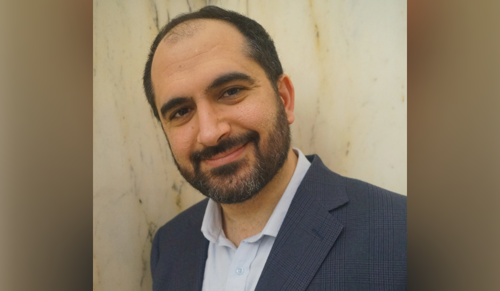
What links the hunt for dark energy with the study of earthquakes? For physicist Dr Alessio Spurio Mancini, it’s a shared language: combining physics, mathematics, statistics and AI, all working together in the process of scientific discovery.
“The overarching theme of my work is how we can use Artificial Intelligence and advanced statistical techniques to accelerate scientific discovery.”
A cosmologist and astrophysicist by training, Dr Alessio Spurio Mancini researches the Universe, examining billions of galaxies as he investigates the big questions: how did the Universe start? What is it really made of? How is it developing and where might it be going? But an unexpected opportunity in a postdoctoral project saw him take a sideways step into the field of seismology, leading his research down paths he never expected. “That was really the start for me — it opened up a new world of possibility. Where I could take the same techniques and use them to treat very different problems,” he explains.
What is dark energy?
For nearly 30 years, scientists have known that the Universe isn’t just expanding — it’s expanding at an accelerating rate. The puzzling and counter-intuitive part is that this acceleration shouldn’t happen if we apply the laws of gravity alone. “It means there must be some other mechanism driving this acceleration,” says Alessio. “We call this ‘dark energy’, and it acts like a repulsive force, stretching space itself and accelerating the expansion of the Universe.”
“In my opinion it’s one of the most intriguing and open questions in physics overall — not just for astronomers and astrophysicists.”
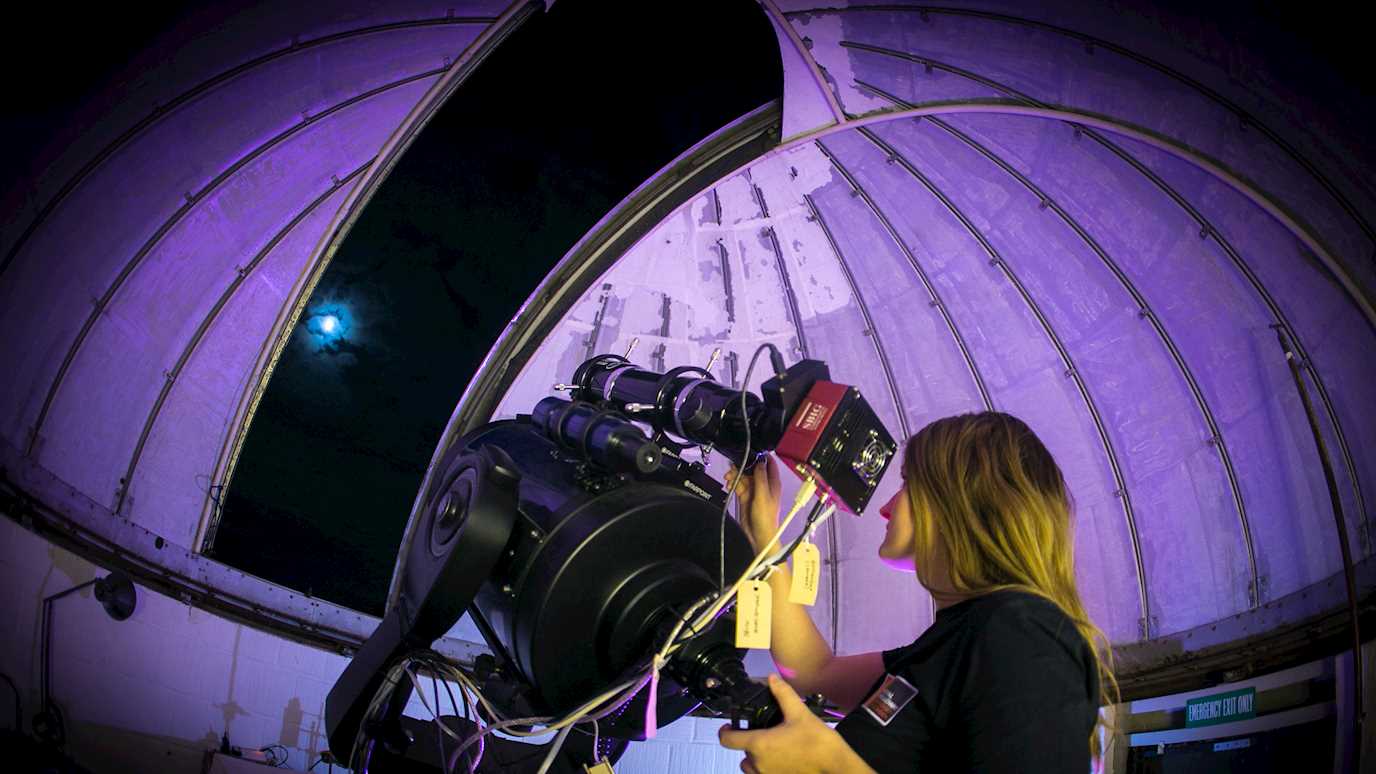
To try and discover what dark energy is, Alessio studies the Universe as a whole. He works with collaborators surveying billions of galaxies using the most sophisticated telescopes we have. They then analyse this huge quantity of information using advanced statistical techniques, building models that help them test ideas and understand why the Universe behaves the way it does.
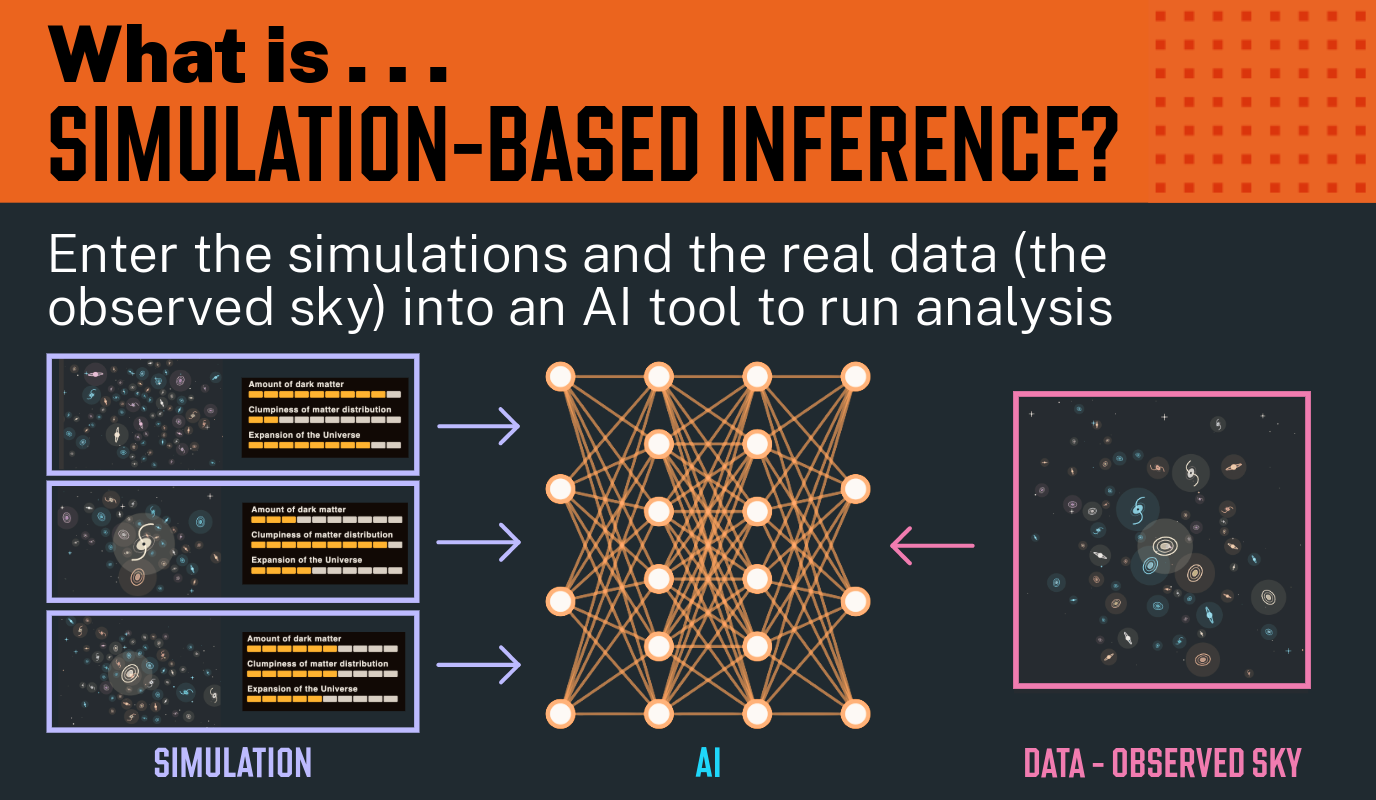
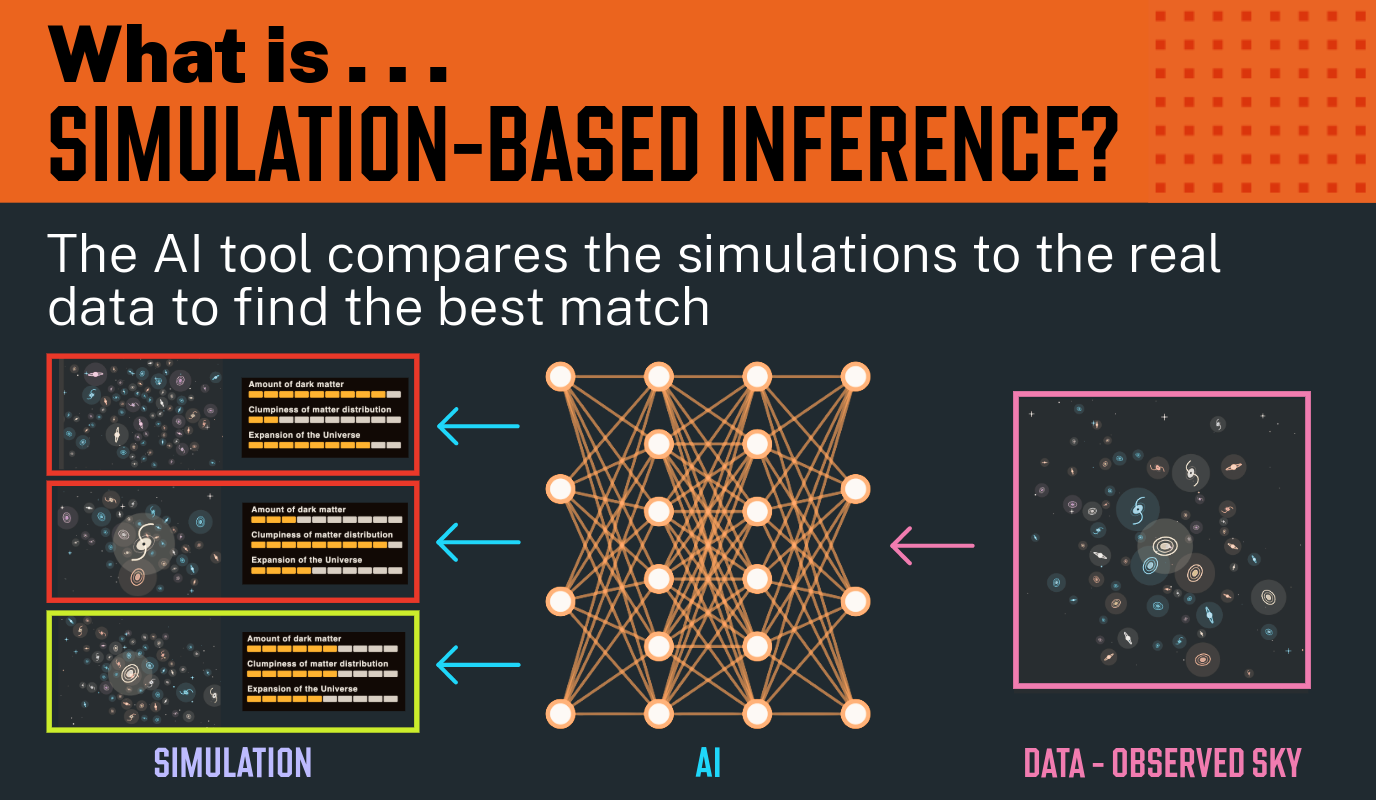
“We want to gather as much information as we can, then use it to take measurements and test scenarios to try and understand the nature of dark energy.” He uses advanced Bayesian methods – an approach that lets scientists refine their understanding as new evidence is discovered and incorporated. He also applies newer techniques called simulation-based inference that can tackle problems where the underlying physics is too complex for traditional mathematical approaches.
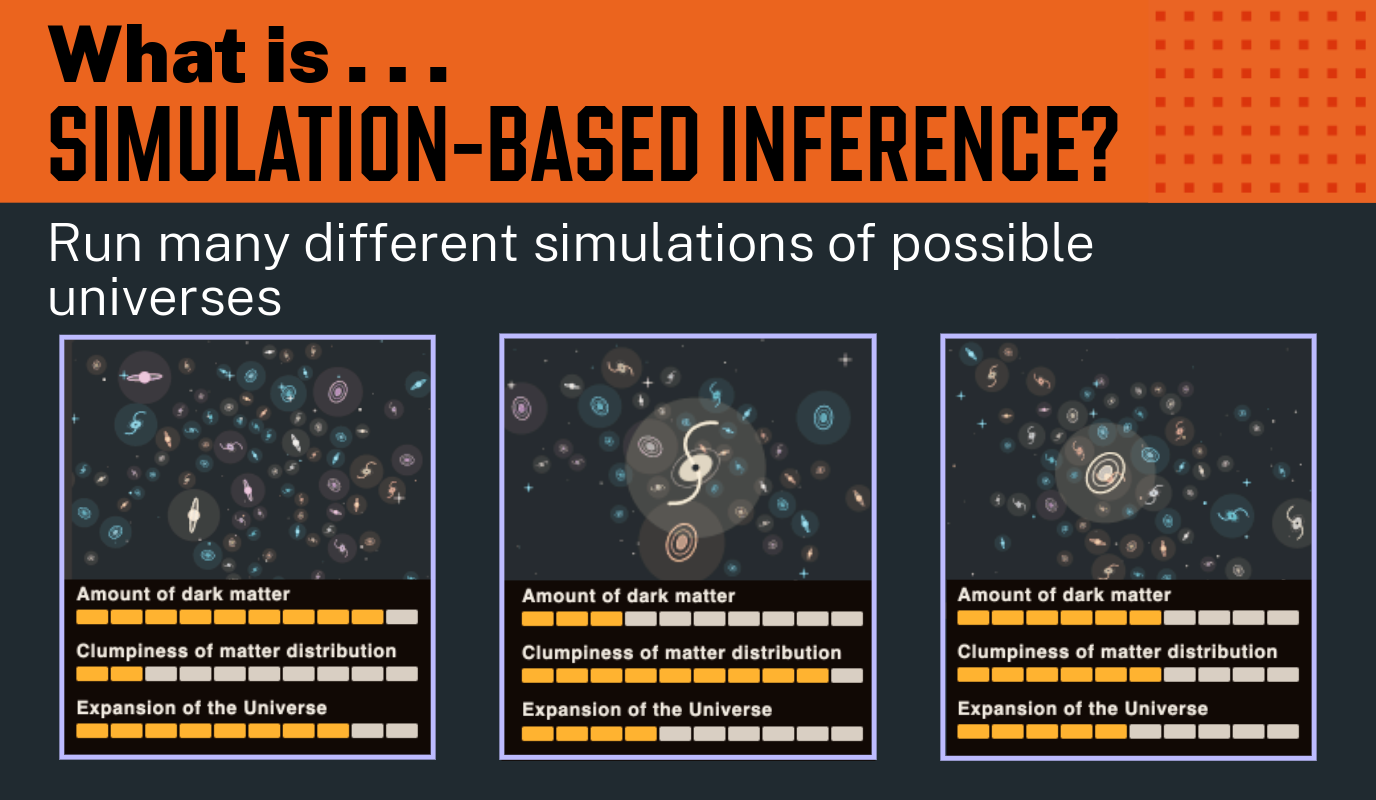
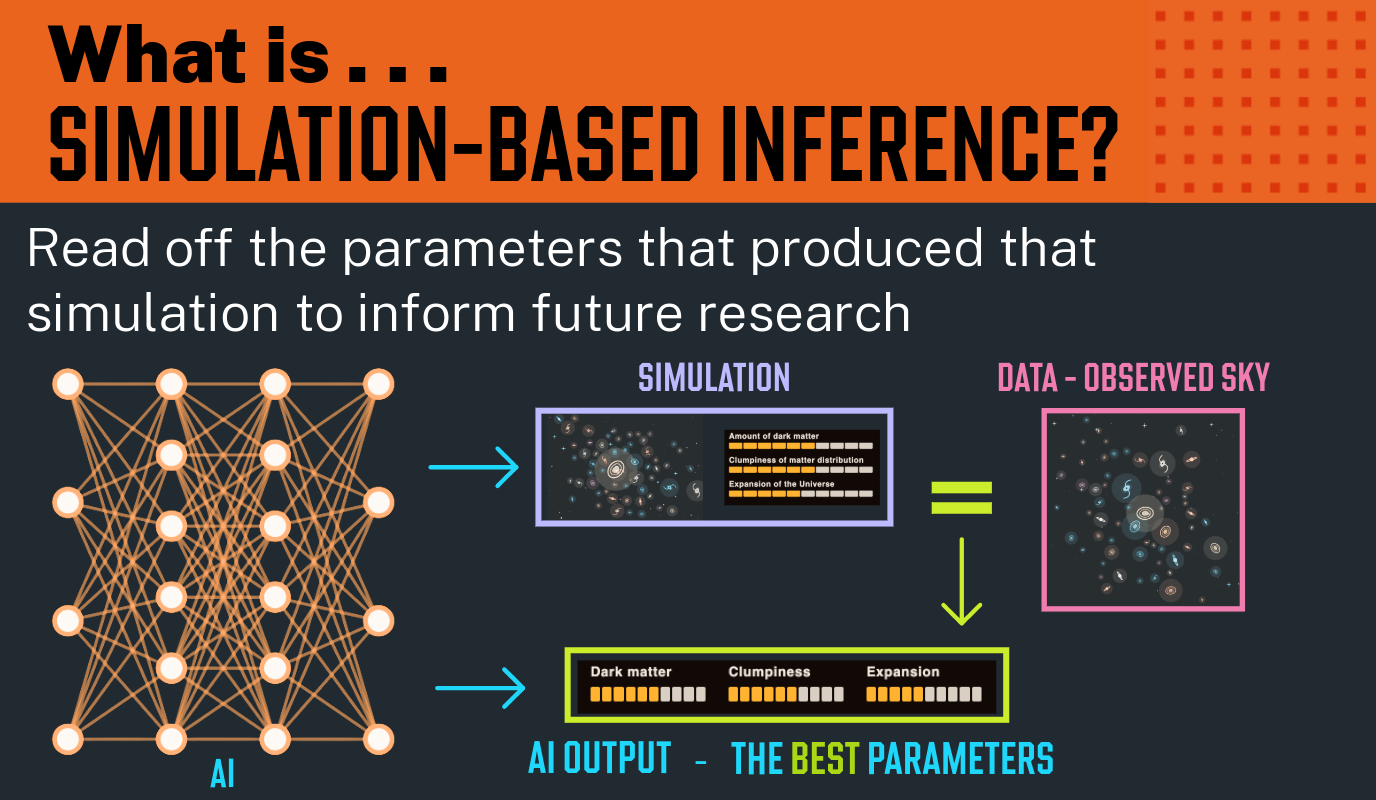
What is Simulation-Based Inference? Infographic - step 1
Alessio has been a member of the European Space Agency’s EUCLID Consortium since 2015, and now co-leads one of its flagship cosmological-analysis projects concentrating on producing results from the mission’s first data release. Euclid is ESA’s space-telescope mission launched in 2023 and is named after the Greek mathematician sometimes hailed as the ‘father of geometry’. The satellite is scanning the sky, mapping the 3-D geometry of the Universe in much greater detail than ever before thanks to the information collected from more than a billion galaxies. When complete it will have created the next-generation map of the cosmos.
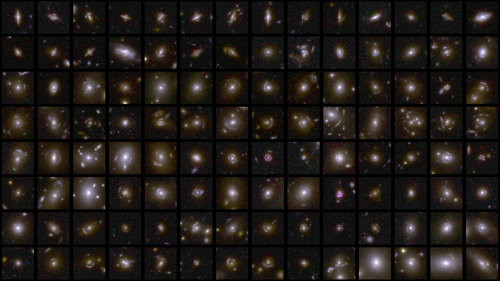
The key part of EUCLID’s technology isn’t just how many galaxies it can detect and image, but its ability to measure their shape. By doing this it is helping physicists see how the Universe is expanding, allowing them to study the presence of dark matter and uncover secrets about dark energy.
“It’s incredibly exciting. We’re still early in the project, but the data gathered so far is very good and we’re hopeful this will become a definitive dataset,” says Alessio.
The first official findings are set to be released later this year, with another two scheduled releases over the coming years as the mission continues as planned.
Discover ESA's Euclid Mission
Harnessing the power of AI to speed up science
But gathering more data comes with its own set of problems.
One of the major issues for Alessio’s work is the sheer complexity of modelling what is happening. To deal with this, physicists use simulations to test their theories. New data — like that collected by EUCLID — lets researchers pin down the values of the fundamental physical parameters that go into those simulations. But running these simulations requires a large amount of computer power and time. “On top of that, exploring all the possible scenarios means repeating those calculations many, many times — and that’s where AI ‘emulators’ come in,” says Alessio. “An emulator is a fast approximation that learns to mimic the expensive simulation, allowing us to run thousands or millions of cases in the time it once took for one.”
“The vast majority of my research is developing techniques that allow us to derive final scientific statements that are not just precise but accurate, and very robust.”
Alessio’s work has proved key in this field. A lot of his research concentrates on uncertainty quantification — essentially asking how confident we can be in the scientific conclusions we draw and quantifying our uncertainty. This is especially important when using AI tools, which can sometimes have hidden biases that distort results in ways that are hard to spot. “If something is wrong in our modelling and we don’t notice, we’ll end up with a measurement that is very accurate to our model, but far away from being true. As scientists, we don’t want the possibility of making very strong but very wrong scientific statements.”
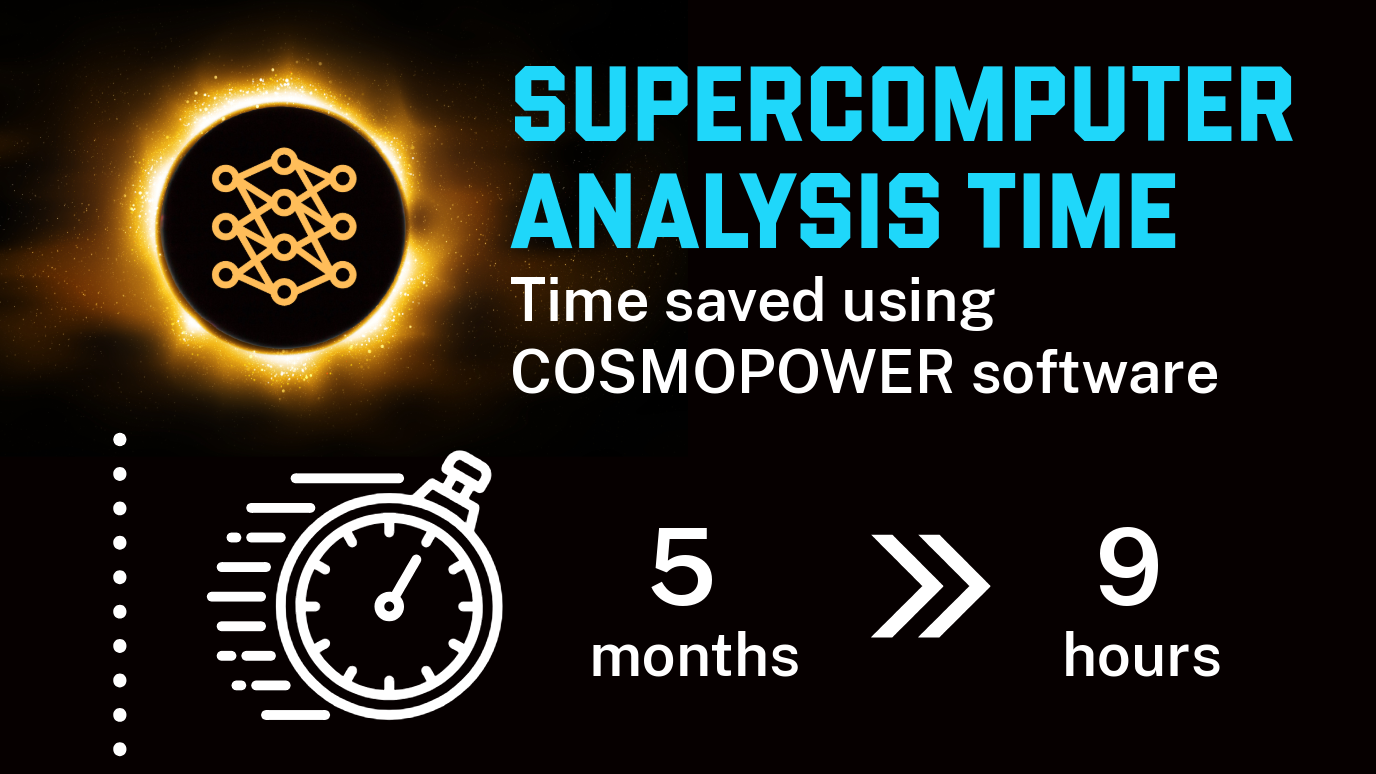
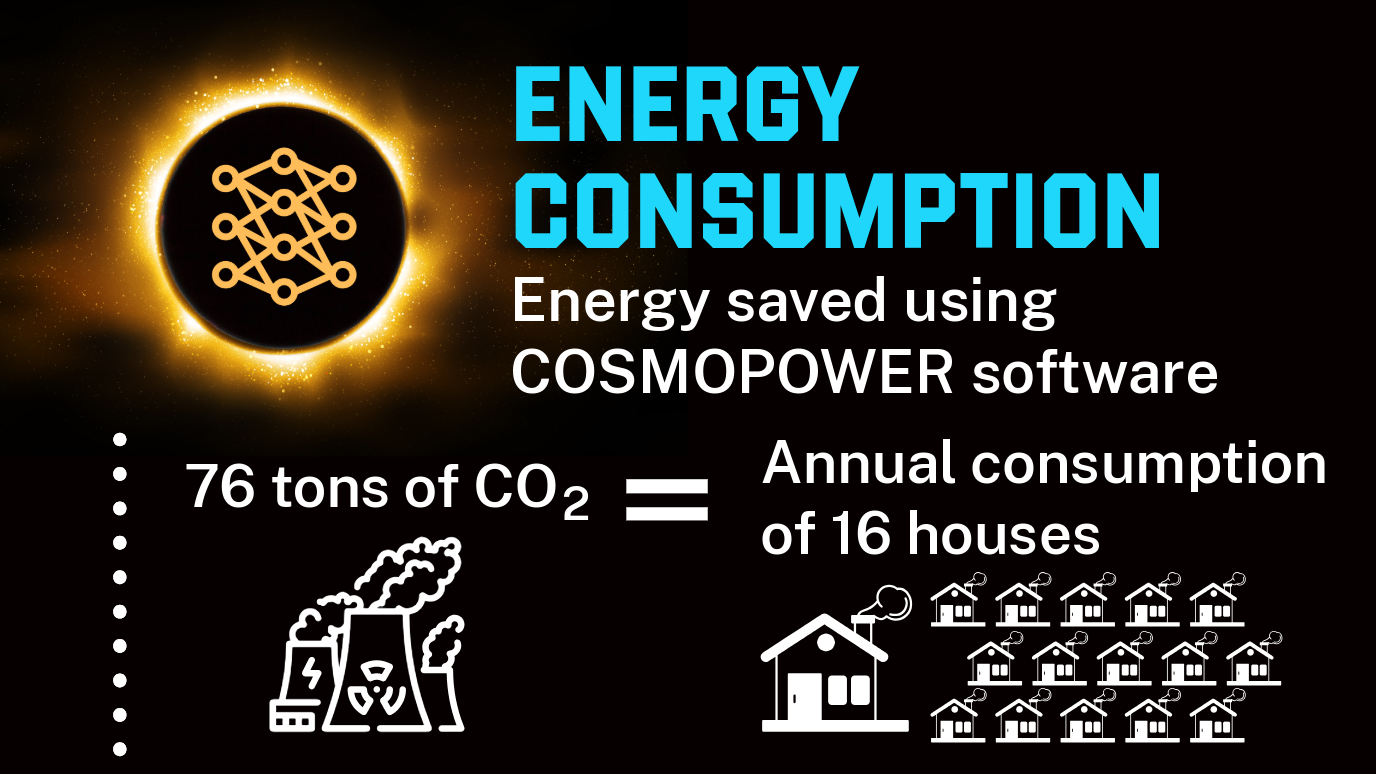
Alessio has built an AI tool, COSMOPOWER, that dramatically speeds up the analysis used in cosmology — for example, turning what used to take five months on a supercomputer into nine hours of work. The environmental impact is tangible: each analysis using this software saves approximately 76 tonnes of CO₂, equal to the annual energy consumption of 16 homes.
“There are valid concerns about the use of AI models, and we need to think hard about what we use AI for, but to me, this is a really positive outcome.”
Cosmopower
Solutions for seismology
COSMOPOWER is now widely used across the astrophysics community, but, in a surprising twist, the original code it was developed from began life in Alessio’s postdoctoral project in seismology. “They were trying to solve the same problems, just using different data.” Working across both disciplines he quickly realised how connected they truly are.
He applied the same AI techniques and statistics that built his models of the Universe to help seismologists build much sharper pictures of what’s happening below the Earth’s surface — how seismic waves travel, what materials they pass through, and how that information feeds into earthquake risk.
“We were the first to apply the simulation-based inference technique to seismology.”
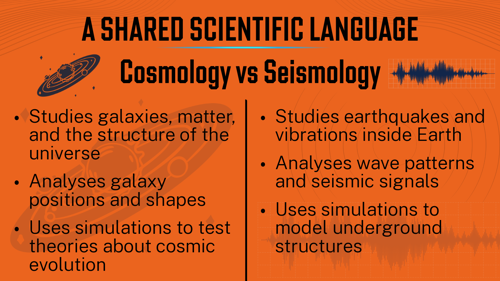
“Although we can’t predict exactly when an earthquake will occur, these methods are invaluable for assessing earthquake-related risk.” Going on to explain the potential for real-world impact far beyond academia. “From informing engineering decisions about how and where we build, to supporting tsunami risk modelling, to giving us a sharper picture of how the Earth is structured beneath our feet.”
The surprising thing about Alessio’s career
For Alessio, the biggest revelation hasn’t been the science itself, but how connected different fields can be.
“One of the things about physics and mathematics that I really like is that it’s a language you learn how to speak — and then you can use it in very, very different conversations.”
That philosophy runs throughout all his work at Royal Holloway. Leading the ‘AI for Science’ theme in the Centre for AI and Skills, he works closely with colleagues across the university, forming connections outside his discipline and looking for opportunities to use the potential of AI for the benefit of society.
“The cross-pollination is central to my research. I try to make as many connections as possible between the cosmos and the Earth.”
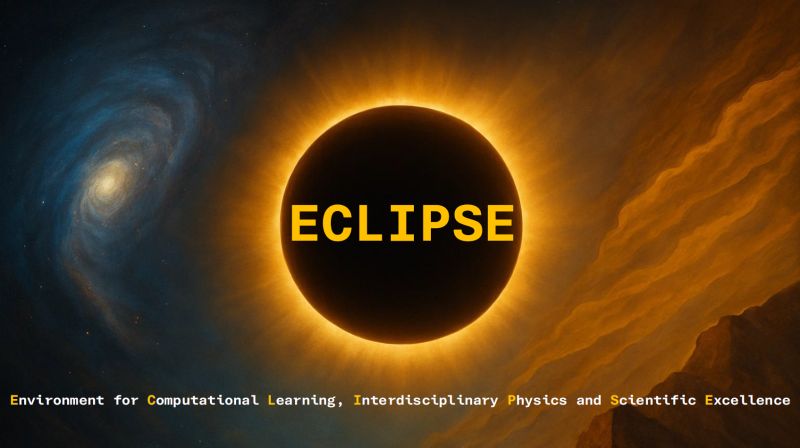
Alessio is excited about what’s coming next. Recently he received a grant to create a new research hub — the Environment for Computational Learning, Interdisciplinary Physics and Scientific Excellence (ECLIPSE). Focusing on his work with AI, this project will develop better and more trustworthy AI tools to help scientists push the boundaries of our understanding and knowledge. This is the promise of AI for Alessio: it can do things that other techniques have not.
“You can’t produce these complex models quickly enough without using AI.”
He’s already working closely with Dr Jonathan Paul, a seismologist at Royal Holloway, on a project using AI for carbon-capture monitoring and is excited by the possibility of incorporating research from the Computer Science department as well.
For Alessio, pursuing fundamental knowledge has been the driving force, tackling fascinating questions about how the Universe works and where we come from. But being able to apply techniques he’s developed in cosmology to problems that exist here on Earth is what has continued to motivate him. By following his passion and being open to the possibilities of new ways of thinking presented by interdisciplinary work, Alessio has shown that curiosity-led research can shape the world in ways no one could predict.
. . . . . . . . . .
Return to our Research in Focus page to uncover more exciting research happening at Royal Holloway, University of London.
Research in Focus homepage