The peregrine falcon is the world’s fastest bird, reaching airspeeds of up to a staggering 242 miles per hour! And here at Royal Holloway, we are lucky enough to have a breeding pair who successfully hatched three eggs this month.
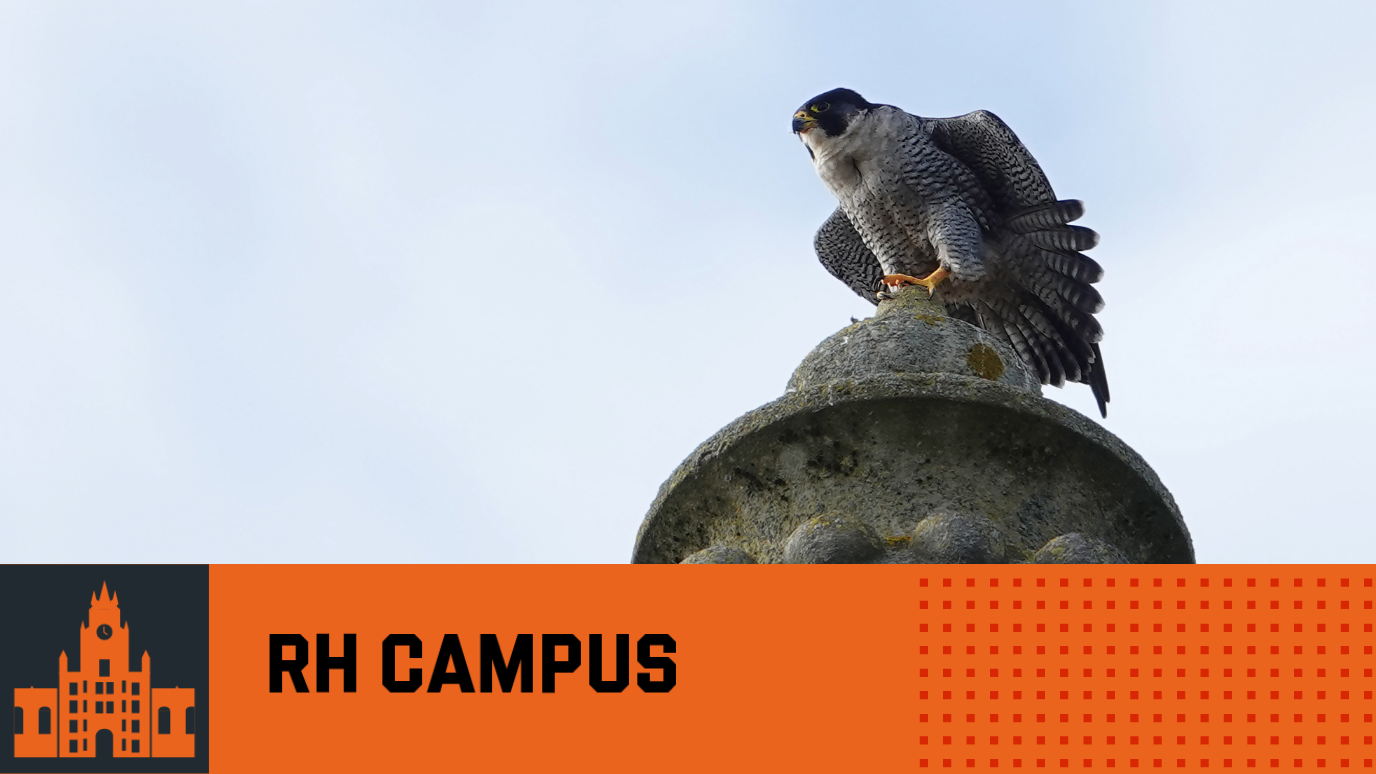
We sat down with Dr Becky Thomas, Senior Lecturer in the Department of Biological Sciences, who’s been observing the peregrine falcons at Royal Holloway for many years now, to learn more about these incredible birds and about biodiversity at Royal Holloway.
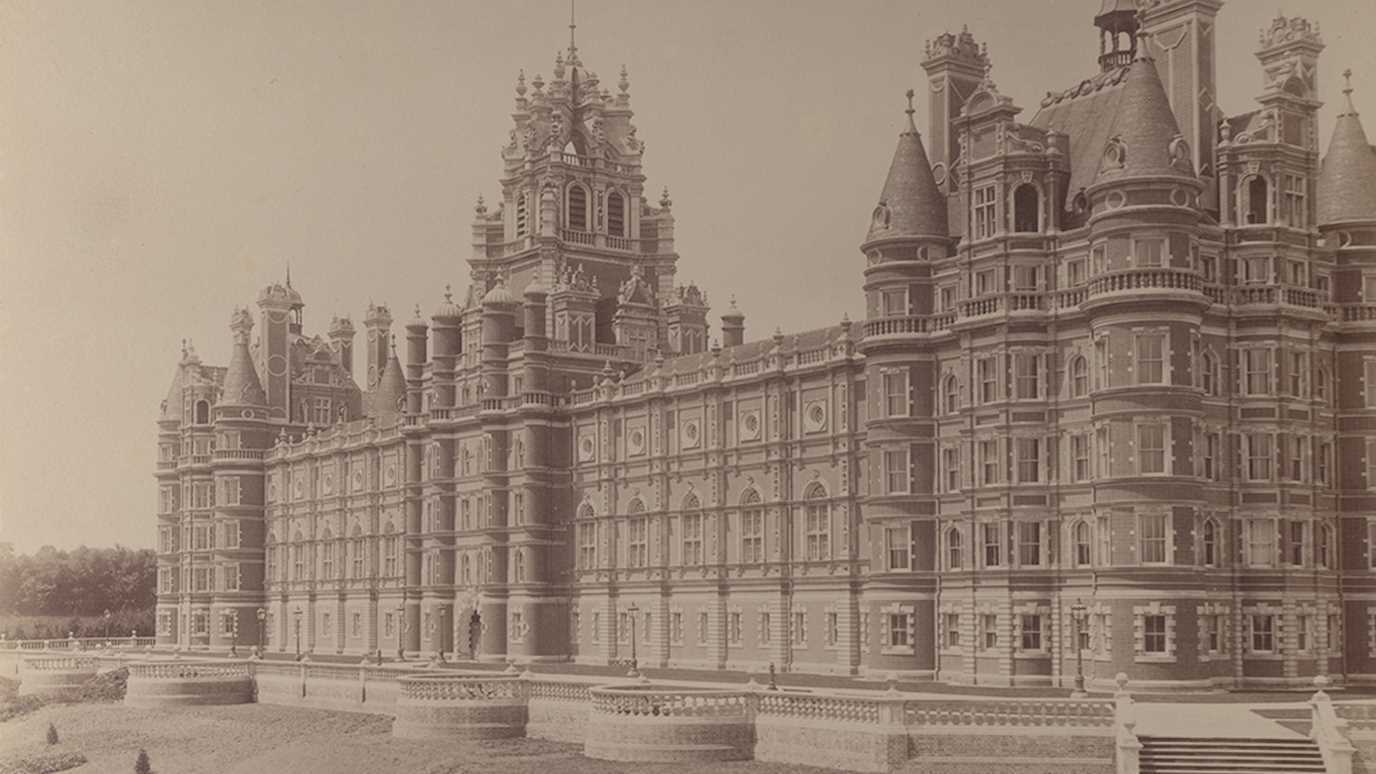
She told us that Peregrine Falcons have been nesting here for well over a decade. “Since the destruction of much of their traditional nesting spaces on cliff faces, many peregrines have moved to urban environments, such as Royal Holloway’s Founders’ Building.”
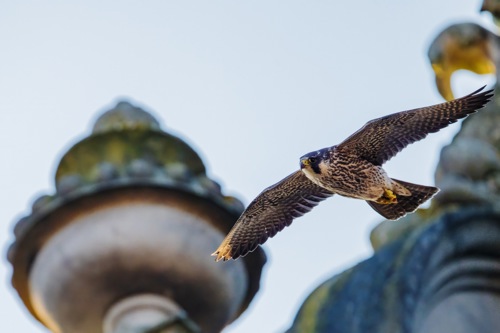
In general, urban peregrines nest earlier in the year than cliff nesting pairs. This is because urban environments can be a bit warmer and there is better food availability – pigeons, which peregrines hunt for food, are in abundance. Their ledges can often be more sheltered too.
The mated pair, Perrie and Gwyn, currently nesting in Founder’s Tower have been together for two years - although, interestingly, the male falcon has nested here in the past and had another partner before this.
"Generally, once they mate, peregrines will stay together, but sometimes 'divorces', where younger birds will displace older birds, can still happen" said Dr Thomas. "We think this might have been what happened with our last female. It’s been really interesting to see the courtship behaviour: the male will bring food gifts to the female, and he was bringing food to her in the tower."
"Another observation that I have had of our pair - and it's true of peregrines generally - is that the female takes the brooding night shift and longer periods during the day. This is because she is larger, so likely better at brooding, and perhaps better at defending the nest too."
The chicks are expected to remain in the nesting space until the end of August. Until then, they’ll be learning from their parents how to eat the smaller birds they’re expected to hunt and start taking their first exploratory flights.
Peregrine populations have steadily been rising, following their decline in the 1970s, linked to the pesticide DDT. The chemical was banned in the UK in 1984, after it was found to accumulate to dangerous levels in the environment, and cause health issues for many animals. In peregrine falcons, it caused their eggshells to become incredibly fragile, breaking when females would sit on them to brood.
This is the second year that cameras have been watching the birds, but it’s the first time we’ve been lucky enough to see them successfully hatch chicks. It’s a wonderful testament to the biodiversity we’ve cultivated on campus, and of the resiliency of these fascinating birds.