Dr Zubin Kanga, a composer, pianist, and researcher at Royal Holloway’s Department of Music, has spent the past five years exploring the boundaries between musicians and new technology through his groundbreaking project, Cyborg Soloists.
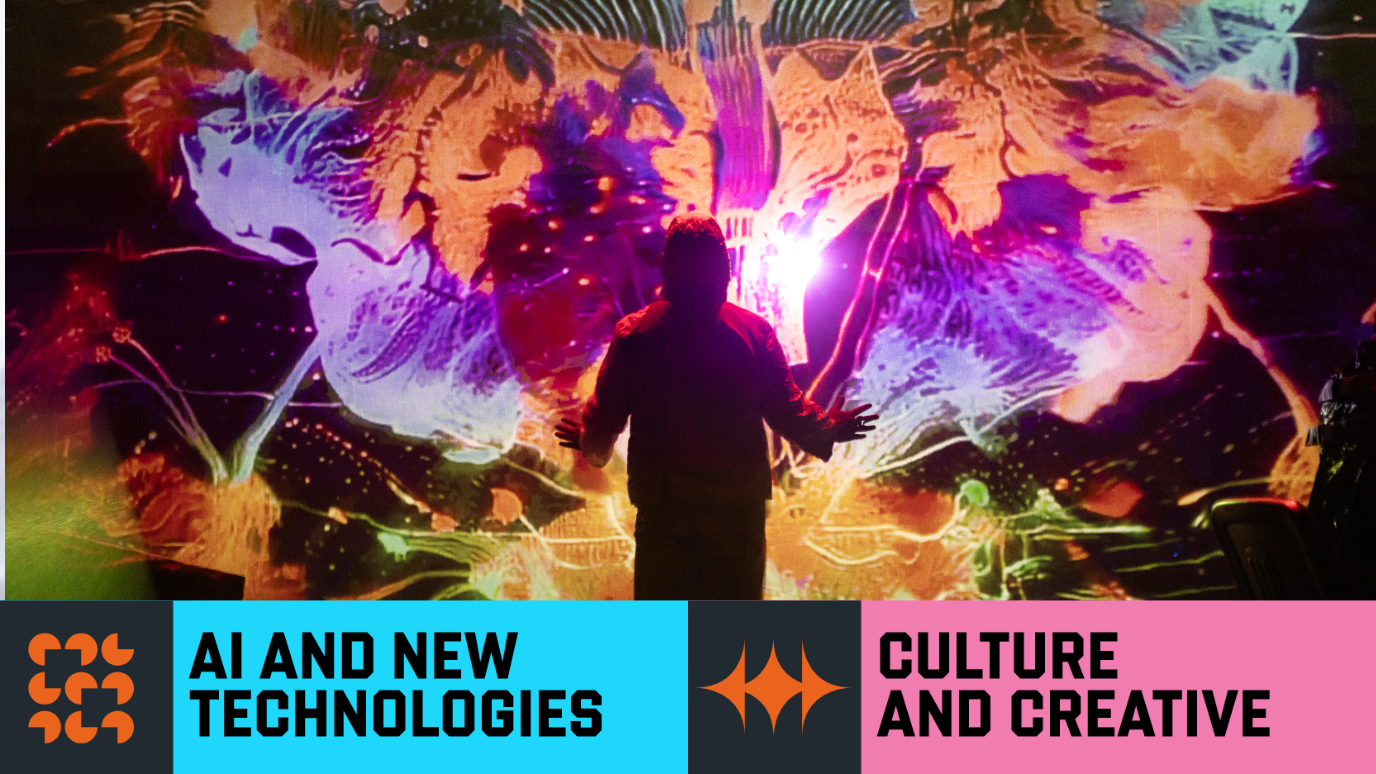
Image of Zubin Kanga, mid-performance. AI and New Technologies, Culture and Creative
What happens when a musician becomes part machine? When the boundaries between performer and instrument blur, and sound is shaped not just by fingers on keys, but by brainwaves, motion sensors and artificial intelligence?
Dr Zubin Kanga, a composer, pianist, and researcher at Royal Holloway’s Department of Music, has spent the past five years exploring these questions through his groundbreaking project, Cyborg Soloists. The initiative brings together nearly 200 musicians and over 20 industry partners to create more than 70 new compositions - each one pushing the limits of what live music can be.
At its heart, Cyborg Soloists is a radical rethinking of performance. It asks: how can new technologies - from AI models and EEG brain scanners to gesture controls and motion sensors - be used not just to enhance music, but to transform it into something entirely new?
One of the most striking works to emerge from the project is Steady State, a collaboration between Zubin and composer Alexander Schubert. First performed in 2024, the piece places Zubin in a surreal, sci-fi laboratory, where his brainwaves and physical movements control both the music and an accompanying holographic video in real time. The result is hypnotic and unsettling: repetitive breaths, glitchy electronic beeps, and ambient drones build into a chaotic crescendo as the performer becomes a cyborg trapped in a neurological loop.
“It’s like stepping into a future where the body and machine are fused,” Zubin says. “You’re not just playing music, you’re inhabiting it.”
The technology behind Steady State is as innovative as the concept. Using an EEG headset to read brain activity and motion sensors to track gestures, Zubin manipulates sound and visuals simultaneously. It’s the first time this combination has been used in live performance - and it opens up thrilling possibilities for what music can become.
Zubin’s own composition, Steel on Bone, builds on similar ideas, using gesture-based controls to shape sound. But the project isn’t just about spectacle, it’s also about accessibility. Zubin has worked closely with disabled composers and performers to explore how these technologies can be adapted to suit different bodies and needs, turning experimental tools into inclusive instruments.
“Technology can be a bridge. It allows us to rethink what performance means — who gets to perform, and how.”
Many of the new instruments developed through Cyborg Soloists are based on the piano, Zubin’s primary instrument. But they’re far from traditional. In TECHNO-UTOPIA, a concerto by composer Robert Laidlow performed by Zubin in July 2025, an AI model and an ‘8-dimensional’ instrument were used to create music that seemed to emerge from inside the listener’s own head. The piece drew on archival recordings from the BBC Philharmonic Orchestra, reimagined through real-time audio processing, so that the soloist performs an AI version of the orchestra’s history, alongside the orchestra itself. The effect is immersive and uncanny - like being inside the music itself.
Ethics are also central to the project. In line with Royal Holloway’s guidelines, any use of AI is done in collaboration with, and with permission from real artists and performers. The goal is not to replace human creativity, but to expand it.
“We’re not trying to automate art,” Zubin says. “We’re trying to open up new ways of making it.”
Zubin’s fascination with sound and space goes back to his early training in both music and computer science. “I’ve always been interested in how sound moves through a space, how it interacts with the body and the environment,” he says. “Technology gives us new ways to explore that - to make music that’s not just heard but felt.”
The origins of Cyborg Soloists lie in the COVID-19 pandemic, when remote collaboration became a necessity. Ironically, Zubin says, the constraints of lockdown helped the project flourish. “Suddenly, we weren’t limited by geography. We could work with artists all over the world, experiment with new tools and rethink what it means to perform together.”
That spirit of experimentation runs through every aspect of the project. From AI-generated scores to motion-controlled soundscapes, the works created under Cyborg Soloists are as diverse as they are daring. But they’re united by a common thread: a desire to push beyond the familiar, to imagine new futures for music.
There’s a strong science-fiction aesthetic to many of the performances - not just in their visuals, but in their conceptual DNA. The idea of the cyborg, the fusion of human and machine, is both metaphor and method. It speaks to a generation raised on digital media, gaming and immersive tech - and offers a way to engage young audiences in new and exciting ways.
“It’s about creating experiences,” Zubin says. “Not just concerts, but worlds.”
That experiential quality is key. These are not passive performances - they’re interactive, embodied, and often deeply emotional. Zubin’s passion for the work is palpable, and it’s reflected in the energy of the collaborators he brings together: composers, technologists, designers and performers, all working at the intersection of art and innovation.
With additional funding secured, Cyborg Soloists is set to continue evolving. New compositions, performances and technologies are already in development, and the project’s website offers a glimpse into what’s next - from upcoming events to behind-the-scenes insights.
For Zubin, the journey is just beginning. “There’s so much more to explore,” he says. “Music is changing, and we get to be part of that change.”
Discover more from our academics:
Return to our Research in Focus page to uncover more exciting research happening at Royal Holloway, University of London.
Research in focus