Royal Holloway has awarded just over £50,000 in funding to six collaborative projects through its Participatory Research Fund (PRF), supporting academics and community organisations to work in partnership to co-produce research grounded in lived experience and local priorities.
The fund forms part of a wider Participatory Research funding allocation from Research England (part of UK Research and Innovation), which supports universities to develop co-produced research in collaboration with communities and research users.
The scheme was launched in November 2025 and attracted more than 30 applications from across the University. The strength and range of proposals received made the selection process highly competitive, reflecting strong interest among Royal Holloway academics and their partners in working collaboratively through co-production.
The six funded projects will bring academics together with organisations including charities, museums, cultural venues and practitioner networks to co-design and co-deliver new activity between February and June 2026. Through a co-production approach, academics and community partners will shape the questions explored, the methods used, and the practical outputs produced. These may include workshops, toolkits, creative resources, short films, consultation protocols and other materials designed for use beyond the University setting.
The Participatory Research Fund supports Royal Holloway’s RH2030s vision of becoming a university of social purpose by creating opportunities for academics and community partners to work together on shared priorities.
Emily Gow, Research Impact Manager at Royal Holloway, commented on the funded projects: “The six funded projects bring academics and community, cultural and practitioner partners together to co-produce new work addressing shared priorities. It has been encouraging to see many of the proposals demonstrate genuine co-production from the outset, responding to needs identified by the organisations involved.”
Drawing on research in participatory performance by Dr Georgina Guy and Dr Rebecca McCutcheon (both from Department of Drama, Theatre and Dance), a collaboration with Richmond Arts Service and Orleans House Gallery will explore how play and imagination can support wellbeing and social connection through co-created ‘everyday play’ events linked to the Play & Imagine programme.
Building on Professor Victoria Mapplebeck’s work in media practice (Department of Media Arts), a partnership with Fruitfly Collective and Maggie’s Royal Free will co-produce smartphone filmmaking workshops for families impacted by a parental breast cancer diagnosis, supporting communication and creative expression through the making of short films together.
Led by Maeve O’Connell and Professor Roberta Mock (Department of Media Arts), a collaboration with Resource Productions CIC, Sustainable Film and Green Kit will explore how environmental sustainability can be meaningfully measured and embedded within short-form virtual production in regional creative industries, through co-designed workshops and shared testing in practice.
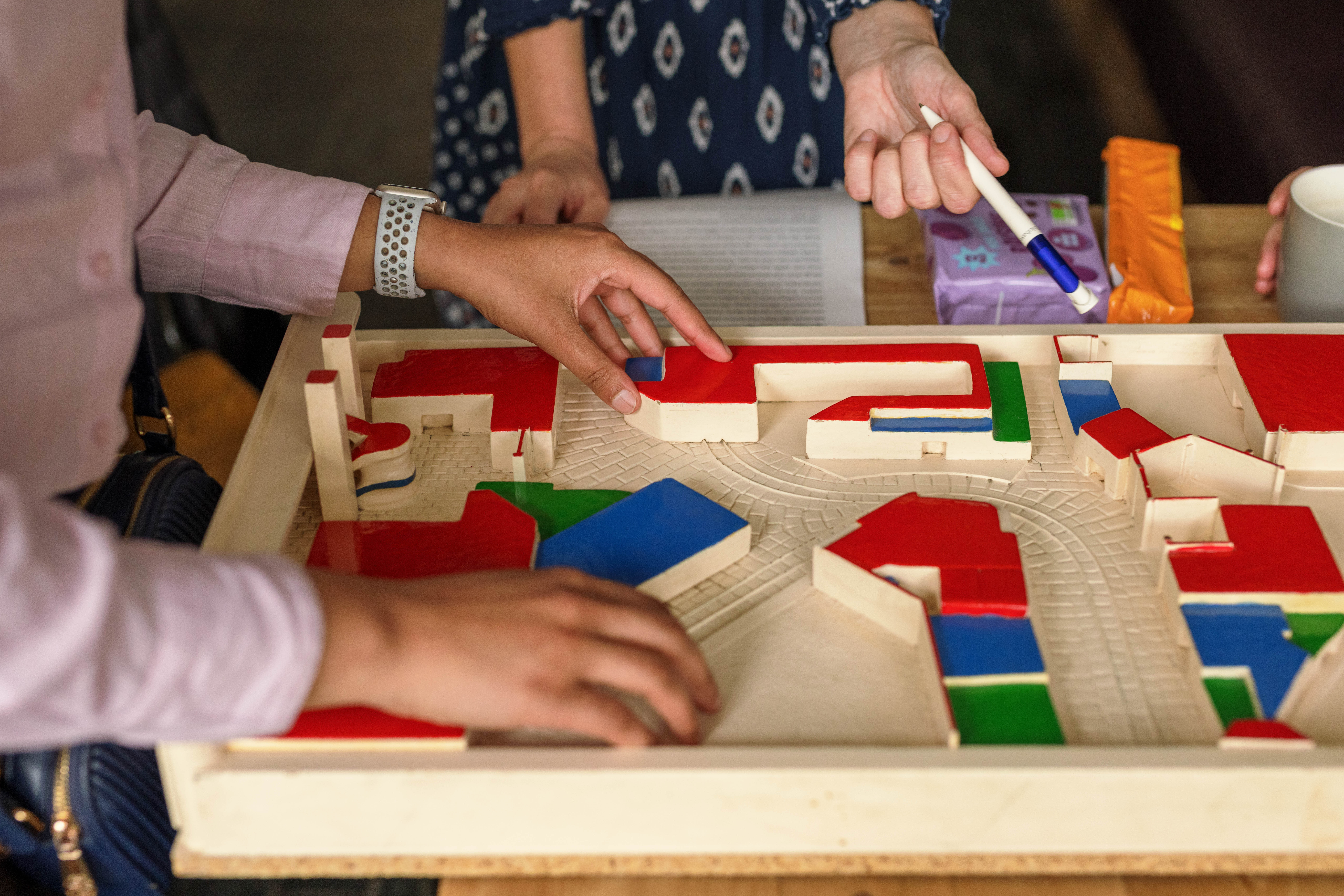
Drawing on Professor Hannah Thompson’s interdisciplinary research in accessibility and inclusive design (Department of Languages, Literatures and Cultures), a partnership with Milestones Living History Museum (Hampshire Cultural Trust) will work with blind and partially blind visitors and an audio description partner to co-create and evaluate approaches to more inclusive, multi-sensory museum experiences.
Led by Dr Christian Weinert (Department of Information Security), in collaboration with the Surrey Domestic Abuse Partnership (a collaboration of four local domestic abuse charities), one project will co-develop and test a structured consultation protocol to support frontline practitioners responding to technology-facilitated domestic abuse.
Working with peer-support networks for adopters in the London area (the Potato Group and We Are Family), Dr Helen Littleboy (Department of Media Arts) will lead a co-produced development lab to shape an ethical strategy for future media production and distribution, to help increase understanding of the impacts of early childhood trauma on adoptive families.
To find out more about Royal Holloway’s work with local partners, please visit our Local Community pages or sign up to receive updates through our Community Matters e-newsletter.