Key information
Duration: 3 years full time
UCAS code: P300
Institution code: R72
Campus: Egham
The course
Digital Media Culture and Technology BA (BA)
Our BA in Digital Media Culture and Technology equips you with the creative, technical, and critical skills to understand digital systems and shape the future.
We’re living through a digital revolution. AI, algorithms, and media platforms are shaping how we live, work, communicate, and perceive ourselves.
At Royal Holloway, you’ll learn to code, design games, create digital art, and build immersive experiences. Meanwhile, explore the ethics, politics, and cultures of emerging technologies.
Shape the media landscape
- Get hands-on with coding, open-source tools, app design, audio, film, 3D, and animation
- Explore topical issues like AI, surveillance, digital identity, software politics, and data ethics
- Learn from artist-researchers and technologists in groundbreaking labs like StoryFutures and the Critical Arts and Technologies Unit
- Build a career-ready portfolio and benefit from industry links with organisations like the BBC, NFTS, TikTok, and more
Preparing for the workplace
At Royal Holloway, you’ll build the creative and technical skills to launch a career in today’s fast-moving digital industries.
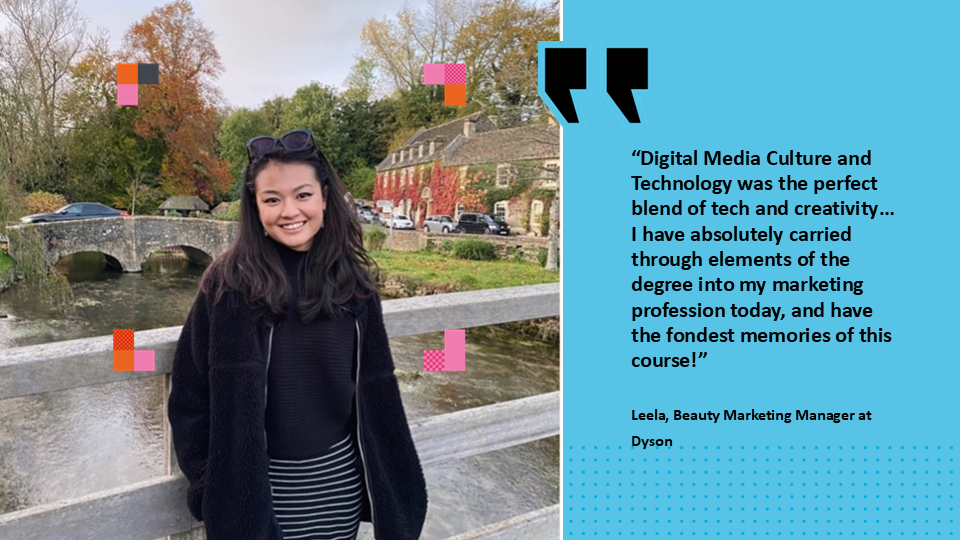
Our graduates go on to work across creative industries, tech, business, and beyond, showing just how versatile this degree is. Careers range from filmmaking and podcasting to motion design, content creation, digital marketing, and web development.
We sometimes make changes to our courses to improve your experience. If this happens, we’ll let you know as soon as possible.


Course structure
Core Modules
Year 1
-
Coding for the Arts
The module introduces students to coding and the creation of artistic and experimental digital projects. The first part of the course involves analysis and critique of existing projects and practices. Under the umbrella of creative code and digital art, students create an online digital media project, learning all the stages from design to delivery, while acquiring advanced coding skills that will enable them to create ambitious and innovative practice work in years two and three.
-
Introduction to Digital Media Theory
In this module you will develop an understanding of digital narratives and cultures with an emphasis on audiovisual storytelling. You will learn skills in the creative practice of audiovisual media for digital platforms, producing a three to five minute short film. You will work iteratively and gain weekly feedback on your ideas and work-in-progress. You will learn how to shoot stories on mobile phones and lightweight cameras, how to edit these on Final Cut Pro, and key sound design skills.
-
Introduction to Digital Media Practice
In this module you will develop an understanding of interactive digital projects and reflect on them in the context of digital media culture, history and theory. You will develop the ability to work iteratively between coding and critical understanding of digital culture. Lectures and practical sessions will revolve around key concepts and practices to obtain a sound understanding of the basics of digital media culture and technology.
-
Introduction to Media Histories 1
These companion modules (Introduction to Media Histories 1 and Introduction to Media Histories 2) introduce students to media histories encompassing complementary accounts of film, television, video games, computing, the internet, and social media.
-
Introduction to Media Histories 2
These companion modules (Introduction to Media Histories 1 and Introduction to Media Histories 2) introduce students to media histories encompassing complementary accounts of film, television, video games, computing, the internet, and social media
Year 2
-
Digital Media Communications
In this module you will learn the theoretical and practical skills to create content for a range of digital and social media, combining the ability to respond to a series of briefs with skills in working as a team to execute an online media project. You will be required to reflect on, and offer a critical analysis of the project and your own contribution to it. You will produce a social/digital media campaign demonstrating an awareness of the aesthetic cultural and practical possibilities of non-linear narrative forms. You will examine the digital culture and consider the socio-economic, cultural and regulatory forces that shape online experiences.
-
Digital Aesthetics
In this module you will develop an understanding of the core concepts of the digital age, looking at how today's computer networks, devices and infrastructure underpin nearly all forms of aesthetic, cultural social and political life. You will consider the concepts of technicity, affective turn, digital subjectivity and extended mind, creative expression and participation in the digital era, amateur production, free software, fun and politics, self-organisation, media archaeology and sonic architectures. You will examine the systematic challenges brought about by digital change and critically interpret and analyse digital phenomena.
-
Data Journalism and Visualisation
This module explores the aesthetics, function, and politics of ‘data’ as used in news media through the development of an original creative data journalism and visualisation project. During the early phase of the module, you will develop an understanding of selected key figures and projects in the practice and theory of information visualisation, and their respective relationships with their social, cultural, and political contexts. You will also examine contemporary data journalism and related artworks, learning about the frameworks and tools used in their prototyping and developmental processes, and present examples for discussion in class. The second phase of the module focuses closely on the initial design, prototyping, and development of an original web-based data journalism project, organised around a series of technical workshops in mapping, moving image, text, and interactive graphics tools. You will draw on a combination of the coding, design, and presentation skills attained earlier in your studies, while learning new processes and more advanced techniques for information visualisation, with a particular focus on how to publish projects online.
You will take one from the following:
-
Creative Interactive Media
-
Creative Digital Arts
-
Animation and Visual Effects
-
Creative Social Media
Year 3
-
Creativity, Entrepreneurship & Digital Marketing
This module aims to give you as real an understanding and experience of working in the digital industries as is possible within the context of a university. This module will help you to gain an understanding of digital business modelling; from both a value building perspective, and also a relationship building perspective which is vital to your ongoing success.
-
Media Arts Dissertation
A dissertation can be a sustained piece of writing about a single subject, person, theoretical field, or group of texts The dissertation is based primarily on students’ own course of independent study so will be a product of negotiation between the student and supervisor and will depend on the topic of research.
-
Advanced Digital Media Communications Project
In this module you will design, develop and execute a substantial original piece of digital media, combining still and moving image, sound, text and code. You will prepare and write a project proposal and budget and present your ideas in public. You will reflect on and critically analyse your work, showing an advanced understanding of the aesthetic ethical and technical issues involved in digital and social media. Here it is your chance to pursue your own passions and our students produce everything from digital magazines, interactive films, 2D and 3D animations, music videos, interactive and immersive websites, digital art installations and curations and augmented and virtual reality.
Optional Modules
Below is a taster of some of the exciting optional modules that students on the course could choose from during this academic year. Please be aware these do change over time, and optional modules may be withdrawn or new ones added.
Year 1
-
All modules are core
Year 2
-
Directing Screen Fiction
-
Cinematography
-
Screenwriting
-
Post-Classical Hollywood
-
Experimental Filmmaking
-
Editing
-
The Long Take in Global Filmmaking
-
Women’s Cinema
Year 3
-
Advanced Editing
-
Promo and Content Creation
-
Advanced Screenwriting
-
Digital Images, People and AI
-
Music Video
-
Film Form
Teaching & assessment
You will learn through a mix of lectures, seminars, small-group tutorials, screenings, and workshops. You will also get the opportunity to explore live media practice. This includes work in London. It also includes the use of our Virtual Production Volumetric Wall and many Computer labs.
You will also do group work and guided research and study. Private study and prep are key to your success. Through our world-class library, you will have access to many online resources and our e-learning site platforms. You will also be assigned a personal tutor to support you throughout your studies.
DMCT doesn't assess using exams. Assessment is dynamic and innovative. It tests your creative and critical skills across various platforms. These include blogging, short films, programming, PR tasks, and responding to live briefs. It also covers traditional assignments. These include essays, scripts, production papers, coursework, and a practical portfolio.
Beyond curriculum tasks, you have full access to use our facilities 24/7 allowing you to build your creative portfolio for the future.
Entry requirements
A Levels: ABB-BBB
Required subjects:
- We require English Language and Mathematics GCSE at grade 4 (C)
HL 655 (without Diploma) or 32 overall (with Diploma)
EUROPEAN BACCALAUREATE 77%
If you have completed Secondary or High School in this country then you will need to take our one year International Foundation Year , or the equivalent from another institution, before beginning your undergraduate studies.
If you have completed Secondary or High School in this country then you will need to take our one year International Foundation Year , or the equivalent from another institution, before beginning your undergraduate studies.
Year 12 High School Certificates: ATAR: 88, Queensland OP: 5
Reifezeugnis/Maturazeugnis: 2
If you have completed Secondary or High School in this country then you will need to take our one year International Foundation Year , or the equivalent from another institution, before beginning your undergraduate studies.
Bachelor degree studied for 2 years or less than 3: GPA of 3.25
Certificate D Enseignement Secondaire Superieur (CESS) (score out of 10) or Diploma van Hoger Secundair Onderwijs (score out of 20): 7/10 or 16/20 or 65%
Secondary School Leaving Diploma: 4/5
Diploma za Sredno Obrazovanie 5.5
Year 12 High School Graduation Diploma: 85%
National College Entrance Examination (NCEE) (Gaokao): 73%
Svjedodzba o Maturi: Overall grade of 4
Apolytirion of Lykeion: Average of 18 in Apolytirion
Maturitni Zkouska / Maturita: 2.0
Bevis for Studentereksamen or Hojere Forberedelseseksamen (HF) or Hojere Handelseksamen (HHX) / Hojere Teknisk Eksamen (HTX): Average grade of 7
Certificate of Nile Secondary Education (CNISE) Level 3: ABB
Gumnaasium Ioputunnistus (Secondary School Certificate) with Riigieksammid (state exams): 4 in Gumnaasium Ioputunnistus and 70% in Riigieksamid
Ylioppilastutkinto / studentexamen: EMMM
Baccalaureat / International Option Baccalaureate (OIB): 13/20
Zeugnis der Allgemeinen Hochschulreife / Abitur: 1.7
If you have completed Secondary or High School in this country then you will need to take our one year International Foundation Year , or the equivalent from another institution, before beginning your undergraduate studies.
Apolytirion of Lykeion: Average of 18 in Apolytirion
Achieve grades 5,5,4 overall in your Hong Kong Diploma of Secondary Education with a grade 5 in any A-level subject specified above
Achieve a grade of 4.5 overall in your Erettsegi / Matura with a grade 5 in any A-level subject specified above
Achieve a grade of 8/10 overall in your Studentsprofwith a grade 9 in any A-level subject specified above
Achieve a grade of 80% overall in your Higher Secondary School Certificate with 80% in any A-level subject specified above
If you have completed Secondary or High School in this country then you will need to take our one year International Foundation Year , or the equivalent from another institution, before beginning your undergraduate studies.
Achieve a grade of 16/20 or 80% overall in your National Entrance Examination (Konkur) with a grade 16 or 80% in any A-level subject specified above
If you have completed Secondary or High School in this country then you will need to take our one year International Foundation Year , or the equivalent from another institution, before beginning your undergraduate studies.
Achieve a grade of 8/10 overall in your Bagrut with a grade 8 in any A-level subject specified above
Achieve a grade of 85 overall in your Esame di Stato with a grade 18/20, 14/15 or 9/10 in any subject specified above
If you have completed Secondary or High School in this country then you will need to take our one year International Foundation Year , or the equivalent from another institution, before beginning your undergraduate studies.
Nazarbayev Intellectual Schools (NIS) Grade 12 Certificate: ABB
If you have completed Secondary or High School in this country then you will need to take our one year International Foundation Year , or the equivalent from another institution, before beginning your undergraduate studies.
Achieve a grade of 4 overall in your Diplome per Kryerjen e Shkolles se Mesme te Larte with a grade 5 in any subject specified above
If you have completed Secondary or High School in this country then you will need to take our one year International Foundation Year , or the equivalent from another institution, before beginning your undergraduate studies.
Achieve a grade of 8.5 overall in your Atestats par visparejo videjo izglitibu with a grade 9.5 in any subject specified above
If you have completed Secondary or High School in this country then you will need to take our one year International Foundation Year , or the equivalent from another institution, before beginning your undergraduate studies.
Achieve a grade of 5/6 overall in your Matura with a grade 5 in any A-level subject specified above
Achieve a grade of 8.5 overall in your Brandos Atestatas Secondary School Diploma / Maturity Certificate with a grade 9/90% in any subject specified above and at least 85% in three state exams.
Achieve a grade of 40 overall in your Diplome de Fin d'Etudes Secondaires with a grade 48 in any subject specified above
Achieve a grade of ABB overall in your Sijil Tinggi Persekolahan Malaysia with a grade A in any subject specified above
Achieve a grade of ABB overall in your Advanced Matriculation with a grade A in any subject specified above
Achieve ABB in the Cambridge Overseas Higher School Certificate/General Certificate of Education Advanced Level with grade A in any subject specified above.
Achieve ABB in the Cambridge Overseas Higher School Certificate (COHSC) with grade A in any subject specified above.
Achieve a grade of 7 overall in your Voorbereidend Wetenschappelijk Onderwijs with a grade 7 in any subject specified above
Achieve a grade of Excellence overall from three subjects in your NCEA level 3 with a grade of Excellence in any subject specified above
If you have completed Secondary or High School in this country then you will need to take our one year International Foundation Year , or the equivalent from another institution, before beginning your undergraduate studies.
Achieve a grade of 4.5 overall in your Matura with a grade 5 in any subject specified above
Achieve a grade of 70% overall in the final two years in your Devlet Lise Diplomas with a grade 80% in any subject specified above
Achieve a grade of 4 overall in your Videregaende Opplæring with a grade 5 in any subject specified above
If you have completed Secondary or High School in this country then you will need to take our one year International Foundation Year , or the equivalent from another institution, before beginning your undergraduate studies.
If you have completed Secondary or High School in this country then you will need to take our one year International Foundation Year , or the equivalent from another institution, before beginning your undergraduate studies.
Achieve a grade of 75% overall including 70% in three extended level subjects in your Matura with a grade 80% in any subject specified above
Achieve a grade of 17 overall including 18, 17, 17 in 3 year 11 or 12 exams in your Certificado de fim de Estudos Secundarios with a grade 18 in any subject specified above
If you have completed Secondary or High School in this country then you will need to take our one year International Foundation Year , or the equivalent from another institution, before beginning your undergraduate studies.
Achieve a grade of 8 overall in your Diploma de Bacalaureat with a grade 9 in any subject specified above
If you have completed Secondary or High School in this country then you will need to take our one year International Foundation Year , or the equivalent from another institution, before beginning your undergraduate studies.
If you have completed Secondary or High School in this country then you will need to take our one year International Foundation Year , or the equivalent from another institution, before beginning your undergraduate studies.
Achieve a grade of 4.5 overall in your Secondary School Leaving Diploma with a grade 4 in any subject specified above
Achieve a grade of 2.9 overall in your Polytechnic Diploma with a grade 3.5 in any subject specified above
Achieve a grade of 2 overall in your Maturita with a grade 1.5 in any subject specified above
Achieve a grade of 4 overall in your Matura with a grade 5 in any subject specified above
Achieve grades 66655 in at least 6 subjects overall in your National Senior Certificate (state board) or 65555 (IEB board)
If you have completed Secondary or High School in this country then you will need to take our one year International Foundation Year , or the equivalent from another institution, before beginning your undergraduate studies.
Achieve a grade of 7.5 overall in your Titulo de Bachillerato with a grade 8 in any subject specified above
If you have completed Secondary or High School in this country then you will need to take our one year International Foundation Year , or the equivalent from another institution, before beginning your undergraduate studies.
Achieve a grade of ABB overall in the Advanced Certificate of Secondary Education (CSEE) with a grade A in any subject specified above.
If you have completed Secondary or High School in this country then you will need to take our one year International Foundation Year , or the equivalent from another institution, before beginning your undergraduate studies.
Achieve a grade of 70% overall in the final two years in your Devlet Lise Diplomas with a grade 80% in any subject specified above
Achieve ABB in the Ugandan Advanced Certificate of Education (UACE) with a grade A in any subject specified above.
If you have completed Secondary or High School in this country then you will need to take our one year International Foundation Year , or the equivalent from another institution, before beginning your undergraduate studies.
If you have completed Secondary or High School in this country then you will need to take our one year International Foundation Year , or the equivalent from another institution, before beginning your undergraduate studies.
Achieve a grade of 4 in at least two relevant AP Examinations; or a composite score of 25 in the ACT Examinations (including the ACT writing test) with an AP grade 4 or College Class B in any A-level subject specified above; or SAT 1100 with an AP grade 4 or College Class B in any A-Level subject specified above.) Please note AP Calculus BC required for Computer Science or Electronic Engineering, or relevant College class.
Achieve a grade of 18 or B overall in your Avgangsbetyg or Slutbetyg with a grade 5 in any subject specified above
If you have completed Secondary or High School in this country then you will need to take our one year International Foundation Year , or the equivalent from another institution, before beginning your undergraduate studies.
Achieve a grade of 122 overall in your Caribbean Advanced Proficency Examination with a grade 1 in any subject specified above
English language requirements
All teaching at Royal Holloway is in English. You will therefore need to have good enough written and spoken English to cope with your studies right from the start.
The scores we require
- IELTS: 6.5 overall with 6 in Writing and minimum of 5.5 in each subscore
- Pearson Test of English: 67 with 61 in writing (no other subscore lower than 54)
- Trinity College London Integrated Skills in English (ISE): ISE IV.
- Cambridge English: Advanced (CAE) grade C.
- TOEFL iBT: 88 overall, with Reading 18 Listening 17 Speaking 20 Writing 19
- Duolingo: 120 overall, 115 in Literacy, 115 in Production and no sub-score below 100.
Country-specific requirements
For more information about country-specific entry requirements for your country please visit here.
Undergraduate preparation programme
For international students who do not meet the direct entry requirements, for this undergraduate degree, the Royal Holloway International Study Centre offers an International Foundation Year programme designed to develop your academic and English language skills.
Upon successful completion, you can progress to this degree at Royal Holloway, University of London.
Your future career
By the time you graduate you will be able to walk into an interview with a thorough grounding in the history and theory of digital media – invaluable for companies who look ahead to future trends – along with expertise in programming, analytics and data visualisation. You will also have a portfolio of creative work and transferrable skills such as written communication, presentation, time management, teamwork, research, problem solving, critical analysis and advanced IT skills.
Throughout your studies you will hear from practising professionals in lectures, and to have the opportunity to make connections through our staff and alumni industry networks. We also run a micro work placement scheme, where you can gain first-hand experience in the world of work and learn about what employers are looking for, before you apply for a job.
Open doors to a wide range of exciting job opportunities in digital media and the creative industries more broadly. Graduates from our Media Arts department can be found in almost every area of the media industries, from TV production to directing, writing, shooting and starring in films, software engineering, PR and brand management, through to games development and web design. With a BA degree you will be particularly well prepared for more creative career paths.
Fees, funding & scholarships
Home (UK) students tuition fee per year*: £10,050
EU and international students tuition fee per year**: £23,000
Other essential costs***: There are no single associated costs greater than £50 per item on this course.
How do I pay for it? Find out more about funding options, including loans, scholarships and bursaries. UK students who have already taken out a tuition fee loan for undergraduate study should check their eligibility for additional funding directly with the relevant awards body.
*This figure is the fee for Home (UK) undergraduates on this course for the academic year 2027/28 and is controlled by Government regulations.
**This figure is the fee for EU and international students on this course for the academic year 2027/28.
Royal Holloway reserves the right to increase tuition fees annually for all students. For further information see fees and funding.
*** These estimated costs relate to studying this particular degree at Royal Holloway during the 2027/28 academic year and are included as a guide. Refers to specific individual items of £50 or more, and excludes accommodation, commuting, food, books/other learning materials and printing costs.