



Key information
Duration: 3 years full time
UCAS code: QW26
Institution code: R72
Campus: Egham
The course
Comparative Literature and Culture and History of Art and Visual Culture (BA)
This Joint Honours course enables you to study Comparative Literature and Culture and History of Art and Visual Culture in equal parts.
History of Art and Visual Culture enables you to explore a rich variety of visual cultures - from paintings to sculpture, photography to film, fashion and beyond - from the early modern era to the present day. Exploring artworks from across the world, you will develop the skills to appreciate, interpret and analyse images and artefacts across cultures. You will benefit from the specialist research, curatorial experience and practice of staff in the Department of Languages, Literatures and Cultures, and they will guide you as you learn to assess the expressive and stylistic possibilities offered by different media in core modules and a wide range of options which explore key developments in art and cinema.
Comparative Literature and Culture (CLC) offers you the opportunity to study global literature as well as to explore film, philosophy and visual arts. CLC combines a fascinating breadth of material with a focus on contexts – places, periods, and genres – to explore how key cultural shifts transform how we see, represent, and make sense of our changing world. CLC at Royal Holloway is a unique and intellectually stimulating degree which will develop you as a culturally-aware, creative and adaptable thinker.
We’ve developed this degree so that you can tailor it to suit your own evolving interests, choosing from our exceptionally wide range of fascinating options, ranging across continents and centuries, from antiquity to the present day, novels and poetry to philosophy, cinema and art. We will read, watch, and compare from Ancient Greece to contemporary New York, from Cuba to Korea, from epics to crime fiction, and from tragedy to the avant-garde. CLC enables you to study texts originally written in many languages, all translated into English.
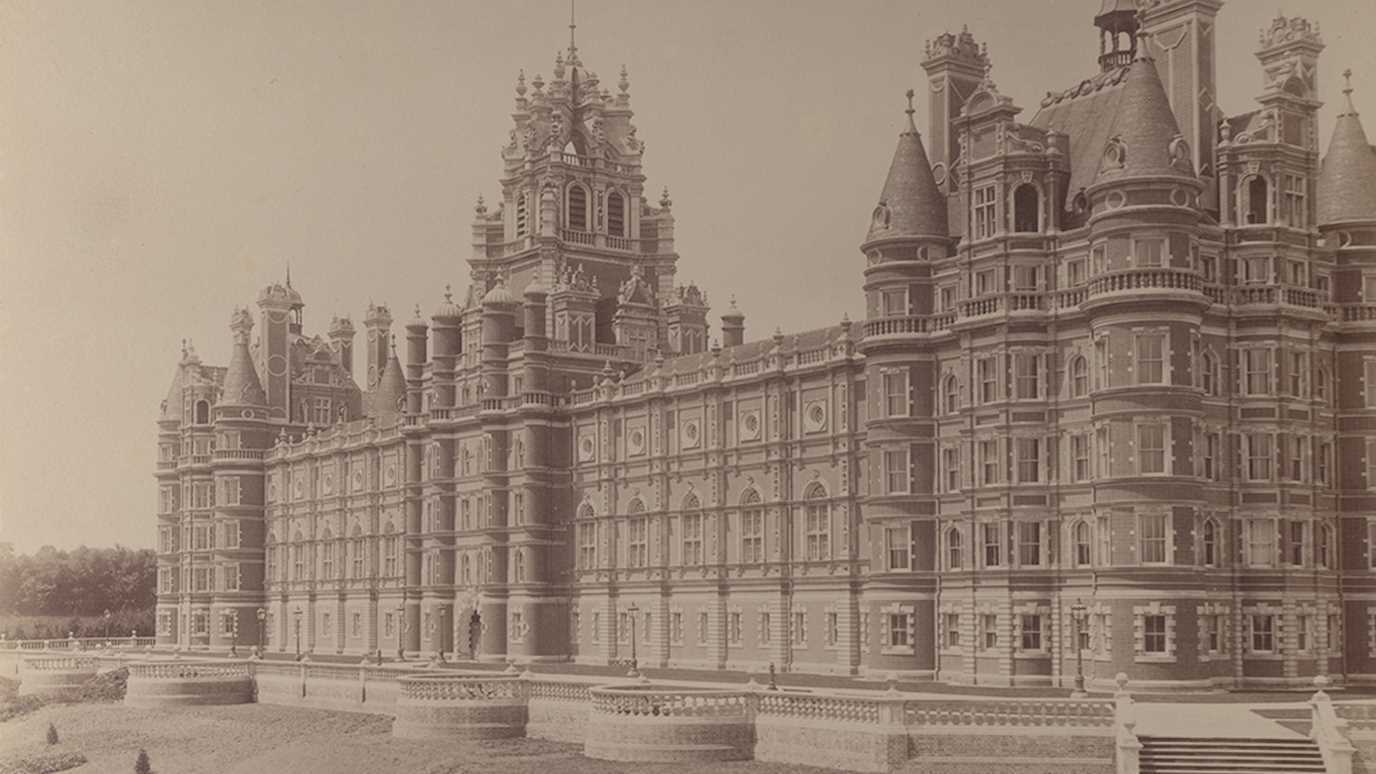
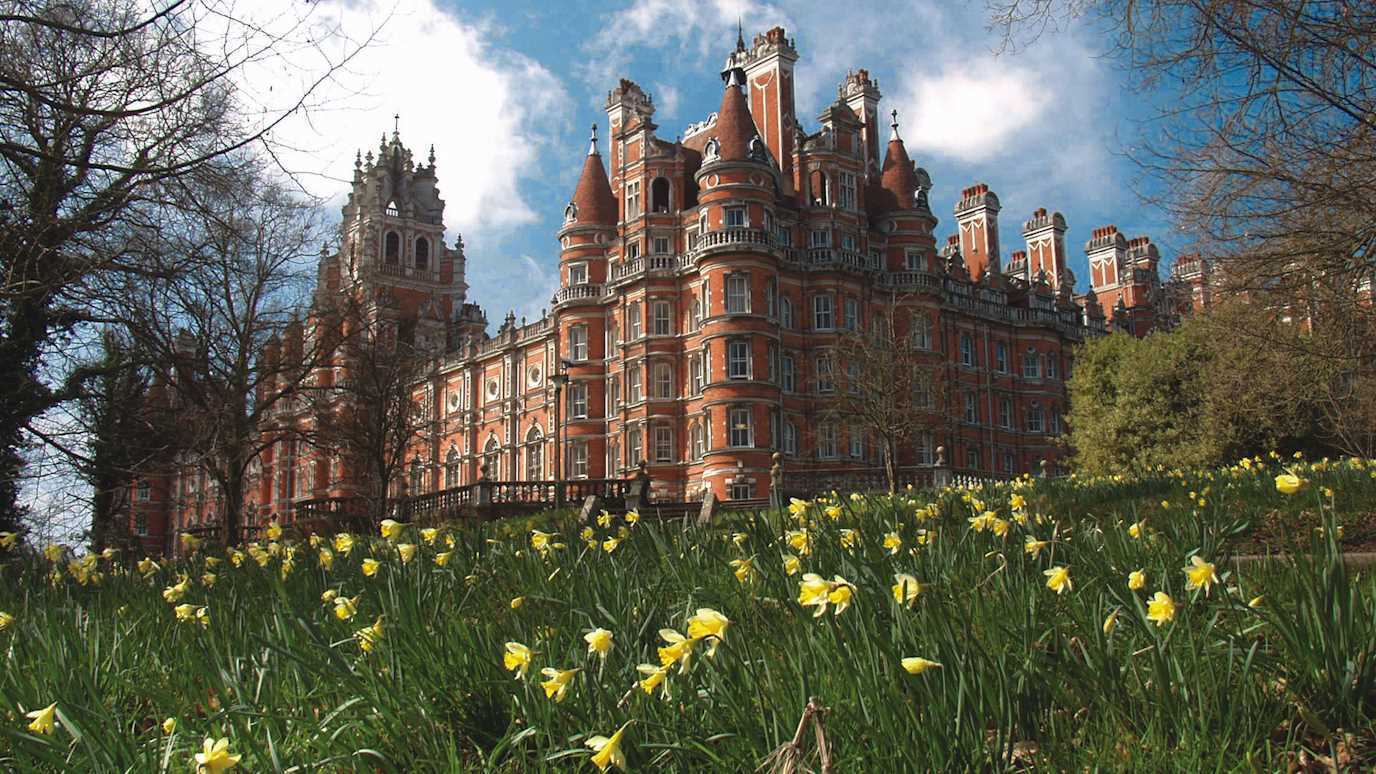
- Make use of Royal Holloway’s exceptional collection of Victorian Art housed in the Founder’s Picture Gallery
- Choose options in Visual Culture from across the School of Modern Languages, Literatures and Cultures
From time to time, we make changes to our courses to improve the student and learning experience. If we make a significant change to your chosen course, we’ll let you know as soon as possible.
Course structure
Core Modules
Year 1
-
This module introduces students to the theories and practices of textual analysis and comparative textual analysis as well as to the major debates about theories and practices of comparative literature in a transnational context. Students will read a small number of core literary texts - influential within comparatism and diverse in cultural, temporal and linguistic origin - alongside a range of historically, geographically, culturally, generically and stylistically varied textual extracts. The core literary texts will be read in their entirety, with particular attention to: the construction and interpretation of genre; transnationalism and translation; cultural and historical context; and questions of authorship, influence and canonicity.
-
This module will introduce students to a number of different media encountered in the study of visual culture. By understanding the technical characteristics of a range of art works students will be able to assess the expressive and stylistic possibilities of offered by different media. Students will study a rich variety of visual cultures in Europe and Latin America from the Middle Ages to the present day. Mediaeval illuminated manuscripts, mural decorations in Renaissance Italy, sculpture, photography and fashion and textiles will be among the media that will be the object of our analysis this year.
-
In this module you will develop an understanding of the key tenets of film theory and learn to apply these to a selection of important pre- and post-war European and international films. You will look at aspects of film style, genre and national and international contexts.You will consider canonical works from a century of cinema history by filmmakers such as Joseph von Sternberg, Alfred Hitchcock and Pedro Almodovar, and examine significant examples of technique and style.
-
The purpose of this module is to provide students with an introduction to the early phase of film history. Broadly speaking, the module will be concerned with the period between 1895 and the early 1930s, from the invention of motion pictures to the establishment of sound cinema. During this phase, film-making was largely national but the absence of the spoken word gave film a truly cosmopolitan dimension, with directors, actors and technical personnel moving freely across national boundaries. Nonetheless distinctive national film cultures emerged, with Italy specialising in dramas set in the ancient world, France making ample use of theatre and popular literature, Germany developing the new medium within broader artistic phenomena such as Expressionism, the Soviets pioneering political montage, and, of module, Hollywood, and its studio system, popularising stars and genres across the world.
Year 2
-
Comparing short stories from different periods and geographical areas is a great way of exploring how literature evolves structurally and thematically in response to different ideas and contexts. In this module we read short stories – and look at examples of visual art - from the eighteenth century to the present day to discover what structural and symbolic elements characterize major movements of Western art including the Enlightenment, Romanticism, Realism, Modernism and Postmodernism. All non-English-language texts are in English translation. These are explored both individually and in comparison, developing skills in close reading and comparative critical analysis and the ability to recognize and contrast different features of fiction and to situate evolving literary aesthetics in their historical context.
-
-
The module is divided into two parts, the first exploring crucial issues of filmmaking, film studies and the ‘transnational’ from the perspective of largely contemporary Latin American cinema, the second focusing on a range of European films from the 1970s to the present. The introductory two weeks of the module will introduce students to these concerns; the final two weeks of the module will bring both parts together and establish some conclusions (for example, what, if anything, constitutes a ‘European’ or ‘Latin American’ or ‘transnational’ film).
-
Year 3
-
This module explores cinematic representations of the transnational encounter between people, cultures and institutions interconnected by the forces of globalization. The topics covered range from (anti-)colonialism and revolution to neo-colonialism, postcoloniality and migration. Attention is paid to the ways in which the films deal with the themes of emancipation, hybridity, displacement, global capitalism and politics, and cosmopolitanism. The module covers the development of transnational cinema from its origins with Third Cinema and then goes on to explore postcolonial and migration cinema covering areas ranging from South America and Africa to Europe.
-
Optional Modules
For more information on optional modules available, please see the list here.
Teaching & assessment
The course has a modular structure. Some modules are compulsory while others are elective thereby offering flexibility and choice.
Our teaching combines a majority of seminars and small group work as well as role play and conversational activities, with some lectures. Private study and preparation are essential parts of every course, and you will have access to many online resources such as Powerpoint slideshows, copies of selected primary and secondary texts, audiovisual materials, class and seminar preparation aids, links to relevant external sites, quizzes and grammar and essay writing guidance, and the University’s comprehensive e-learning facility, Moodle. When you start with us, you are assigned a Personal Tutor to support you academically and personally and who holds regular surgery hours at least twice weekly.
Assessment is by a mixture of coursework and end-of-year examination in varying proportions, depending on the course units you take. Coursework includes essays, language exercises, translations and reports. Oral presentations and computer-based tests are used in some course units to assess grammar and comprehension skills. You can, to some extent, choose course units which suit your own assessment preferences. The first year is foundational and marks do not count towards your final degree. The second year, year abroad and final year marks do count, with more importance being given to the final year marks in order to reward progress and achievement.
You will take a study skills course during your first year, designed to equip you with and enhance the writing skills you will need to be successful in your degree. This course does not count towards your final degree award but you are required to pass it to progress to your second year.
Entry requirements
A Levels: ABB-BBB
Requires subjects:
- A Level with B in an essay based subject
- We require English Language and Mathematics GCSE at grade 4 (C)
HL 655 (without Diploma) or 32 overall (with Diploma)
EUROPEAN BACCALAUREATE 77%
If you have completed Secondary or High School in this country then you will need to take our one year International Foundation Year , or the equivalent from another institution, before beginning your undergraduate studies.
If you have completed Secondary or High School in this country then you will need to take our one year International Foundation Year , or the equivalent from another institution, before beginning your undergraduate studies.
Year 12 High School Certificates: ATAR: 88, Queensland OP: 5
Reifezeugnis/Maturazeugnis: 2
If you have completed Secondary or High School in this country then you will need to take our one year International Foundation Year , or the equivalent from another institution, before beginning your undergraduate studies.
Bachelor degree studied for 2 years or less than 3: GPA of 3.25
Certificate D Enseignement Secondaire Superieur (CESS) (score out of 10) or Diploma van Hoger Secundair Onderwijs (score out of 20): 7/10 or 16/20 or 65%
Secondary School Leaving Diploma: 4/5
Diploma za Sredno Obrazovanie 5.5
Year 12 High School Graduation Diploma: 85%
National College Entrance Examination (NCEE) (Gaokao): 73%
Svjedodzba o Maturi: Overall grade of 4
Apolytirion of Lykeion: Average of 18 in Apolytirion
Maturitni Zkouska / Maturita: 2.0
Bevis for Studentereksamen or Hojere Forberedelseseksamen (HF) or Hojere Handelseksamen (HHX) / Hojere Teknisk Eksamen (HTX): Average grade of 7
Certificate of Nile Secondary Education (CNISE) Level 3: ABB
Gumnaasium Ioputunnistus (Secondary School Certificate) with Riigieksammid (state exams): 4 in Gumnaasium Ioputunnistus and 70% in Riigieksamid
Ylioppilastutkinto / studentexamen: EMMM
Baccalaureat / International Option Baccalaureate (OIB): 13/20
Zeugnis der Allgemeinen Hochschulreife / Abitur: 1.7
If you have completed Secondary or High School in this country then you will need to take our one year International Foundation Year , or the equivalent from another institution, before beginning your undergraduate studies.
Apolytirion of Lykeion: Average of 18 in Apolytirion
Achieve grades 5,5,4 overall in your Hong Kong Diploma of Secondary Education with a grade 5 in any A-level subject specified above
Achieve a grade of 4.5 overall in your Erettsegi / Matura with a grade 5 in any A-level subject specified above
Achieve a grade of 8/10 overall in your Studentsprofwith a grade 9 in any A-level subject specified above
Achieve a grade of 80% overall in your Higher Secondary School Certificate with 80% in any A-level subject specified above
If you have completed Secondary or High School in this country then you will need to take our one year International Foundation Year , or the equivalent from another institution, before beginning your undergraduate studies.
Achieve a grade of 16/20 or 80% overall in your National Entrance Examination (Konkur) with a grade 16 or 80% in any A-level subject specified above
If you have completed Secondary or High School in this country then you will need to take our one year International Foundation Year , or the equivalent from another institution, before beginning your undergraduate studies.
Achieve a grade of 8/10 overall in your Bagrut with a grade 8 in any A-level subject specified above
Achieve a grade of 85 overall in your Esame di Stato with a grade 18/20, 14/15 or 9/10 in any subject specified above
If you have completed Secondary or High School in this country then you will need to take our one year International Foundation Year , or the equivalent from another institution, before beginning your undergraduate studies.
Nazarbayev Intellectual Schools (NIS) Grade 12 Certificate: ABB
If you have completed Secondary or High School in this country then you will need to take our one year International Foundation Year , or the equivalent from another institution, before beginning your undergraduate studies.
Achieve a grade of 4 overall in your Diplome per Kryerjen e Shkolles se Mesme te Larte with a grade 5 in any subject specified above
If you have completed Secondary or High School in this country then you will need to take our one year International Foundation Year , or the equivalent from another institution, before beginning your undergraduate studies.
Achieve a grade of 8.5 overall in your Atestats par visparejo videjo izglitibu with a grade 9.5 in any subject specified above
If you have completed Secondary or High School in this country then you will need to take our one year International Foundation Year , or the equivalent from another institution, before beginning your undergraduate studies.
Achieve a grade of 5/6 overall in your Matura with a grade 5 in any A-level subject specified above
Achieve a grade of 8.5 overall in your Brandos Atestatas Secondary School Diploma / Maturity Certificate with a grade 9/90% in any subject specified above and at least 85% in three state exams.
Achieve a grade of 40 overall in your Diplome de Fin d'Etudes Secondaires with a grade 48 in any subject specified above
Achieve a grade of ABB overall in your Sijil Tinggi Persekolahan Malaysia with a grade A in any subject specified above
Achieve a grade of ABB overall in your Advanced Matriculation with a grade A in any subject specified above
Achieve ABB in the Cambridge Overseas Higher School Certificate/General Certificate of Education Advanced Level with grade A in any subject specified above.
Achieve ABB in the Cambridge Overseas Higher School Certificate (COHSC) with grade A in any subject specified above.
Achieve a grade of 7 overall in your Voorbereidend Wetenschappelijk Onderwijs with a grade 7 in any subject specified above
Achieve a grade of Excellence overall from three subjects in your NCEA level 3 with a grade of Excellence in any subject specified above
If you have completed Secondary or High School in this country then you will need to take our one year International Foundation Year , or the equivalent from another institution, before beginning your undergraduate studies.
Achieve a grade of 4.5 overall in your Matura with a grade 5 in any subject specified above
Achieve a grade of 70% overall in the final two years in your Devlet Lise Diplomas with a grade 80% in any subject specified above
Achieve a grade of 4 overall in your Videregaende Opplæring with a grade 5 in any subject specified above
If you have completed Secondary or High School in this country then you will need to take our one year International Foundation Year , or the equivalent from another institution, before beginning your undergraduate studies.
If you have completed Secondary or High School in this country then you will need to take our one year International Foundation Year , or the equivalent from another institution, before beginning your undergraduate studies.
Achieve a grade of 75% overall including 70% in three extended level subjects in your Matura with a grade 80% in any subject specified above
Achieve a grade of 17 overall including 18, 17, 17 in 3 year 11 or 12 exams in your Certificado de fim de Estudos Secundarios with a grade 18 in any subject specified above
If you have completed Secondary or High School in this country then you will need to take our one year International Foundation Year , or the equivalent from another institution, before beginning your undergraduate studies.
Achieve a grade of 8 overall in your Diploma de Bacalaureat with a grade 9 in any subject specified above
If you have completed Secondary or High School in this country then you will need to take our one year International Foundation Year , or the equivalent from another institution, before beginning your undergraduate studies.
If you have completed Secondary or High School in this country then you will need to take our one year International Foundation Year , or the equivalent from another institution, before beginning your undergraduate studies.
Achieve a grade of 4.5 overall in your Secondary School Leaving Diploma with a grade 4 in any subject specified above
Achieve a grade of 2.9 overall in your Polytechnic Diploma with a grade 3.5 in any subject specified above
Achieve a grade of 2 overall in your Maturita with a grade 1.5 in any subject specified above
Achieve a grade of 4 overall in your Matura with a grade 5 in any subject specified above
Achieve grades 66655 in at least 6 subjects overall in your National Senior Certificate (state board) or 65555 (IEB board)
If you have completed Secondary or High School in this country then you will need to take our one year International Foundation Year , or the equivalent from another institution, before beginning your undergraduate studies.
Achieve a grade of 7.5 overall in your Titulo de Bachillerato with a grade 8 in any subject specified above
If you have completed Secondary or High School in this country then you will need to take our one year International Foundation Year , or the equivalent from another institution, before beginning your undergraduate studies.
Achieve a grade of ABB overall in the Advanced Certificate of Secondary Education (CSEE) with a grade A in any subject specified above.
If you have completed Secondary or High School in this country then you will need to take our one year International Foundation Year , or the equivalent from another institution, before beginning your undergraduate studies.
Achieve a grade of 70% overall in the final two years in your Devlet Lise Diplomas with a grade 80% in any subject specified above
Achieve ABB in the Ugandan Advanced Certificate of Education (UACE) with a grade A in any subject specified above.
If you have completed Secondary or High School in this country then you will need to take our one year International Foundation Year , or the equivalent from another institution, before beginning your undergraduate studies.
If you have completed Secondary or High School in this country then you will need to take our one year International Foundation Year , or the equivalent from another institution, before beginning your undergraduate studies.
Achieve a grade of 4 in at least two relevant AP Examinations; or a composite score of 25 in the ACT Examinations (including the ACT writing test) with an AP grade 4 or College Class B in any A-level subject specified above; or SAT 1100 with an AP grade 4 or College Class B in any A-Level subject specified above.) Please note AP Calculus BC required for Computer Science or Electronic Engineering, or relevant College class.
Achieve a grade of 18 or B overall in your Avgangsbetyg or Slutbetyg with a grade 5 in any subject specified above
If you have completed Secondary or High School in this country then you will need to take our one year International Foundation Year , or the equivalent from another institution, before beginning your undergraduate studies.
Achieve a grade of 122 overall in your Caribbean Advanced Proficency Examination with a grade 1 in any subject specified above
English language requirements
All teaching at Royal Holloway (apart from some language courses) is in English. You will therefore need to have good enough written and spoken English to cope with your studies right from the start.
The scores we require
- IELTS: 6.5 overall with 6 in Writing and minimum of 5.5 in each subscore
- Pearson Test of English: 67 with 61 in writing (no other subscore lower than 54)
- Trinity College London Integrated Skills in English (ISE): ISE IV.
- Cambridge English: Advanced (CAE) grade C.
- TOEFL iBT: 88 overall, with Reading 18 Listening 17 Speaking 20 Writing 19
- Duolingo: 120 overall, 115 in Literacy, 115 in Production and no sub-score below 100.
For more information about country-specific entry requirements for your country please visit here.
Undergraduate preparation programme
For international students who do not meet the direct entry requirements, for this undergraduate degree, the Royal Holloway International Study Centre offers an International Foundation Year programme designed to develop your academic and English language skills.
Upon successful completion, you can progress to this degree at Royal Holloway, University of London.
Your future career
On completion of your History of Art and Visual Culture and Comparative Literature and Culture degree at Royal Holloway you will have proven analytical skills and be an adaptable thinker with impressive communication and leadership skills - all of which will appeal to future employers. Your degree will demonstrate that you understand other values and cultures, a quality that will equip you to operate successfully in a fast-changing and increasingly globalised and multi-cultural environment.
On graduation you will be ready to pursue a career in a wide range of areas including publishing, marketing, the media, arts administration, fashion, international management, the civil service, accountancy or teaching. Alternatively you may choose to continue your studies by means of a postgraduate degree.
- Recent graduates have launched careers in diverse roles as film, content writing, photographic editorial, journalism, sales and marketing, teaching, publishing and retail buying.
Fees, funding & scholarships
Home (UK) students tuition fee per year*: £9,790
EU and international students tuition fee per year**: £26,800
Other essential costs***: There are no single associated costs greater than £50 per item on this course.
How do I pay for it? Find out more about funding options, including loans, scholarships and bursaries. UK students who have already taken out a tuition fee loan for undergraduate study should check their eligibility for additional funding directly with the relevant awards body.
*The tuition fee for Home (UK) undergraduates is controlled by Government regulations. This figure is the fee for the academic year 2026/27 and is shown as a guide. The fee for the academic year 2027/28 has not yet been confirmed.
**This figure is the fee for EU and international students starting a degree in the academic year 2026/27 and is shown as a guide. The fee for the academic year 2027/28 has not yet been confirmed.
Royal Holloway reserves the right to increase tuition fees annually for all students. For further information see fees and funding.
*** These estimated costs relate to studying this particular degree at Royal Holloway during the 2026/27 academic year and are included as a guide. Refers to specific individual items of £50 or more, and excludes accommodation, commuting, food, books/other learning materials and printing costs.