An opportunity for PGRs from the CVC and RCA to present their research and benefit from immediate feedback and discussion with others
This event has now taken place, you can view the recording of this workshop here.
This is the first part of a two-part series where the RHUL Centre for Visual Cultures and the Royal College of Art have collaborated to create workshops for their respective PGRs to present and receive feedback on their work in a friendly and constructive environment.
There will be four PGRs per session presenting their research in 10-12 minute slots, followed by a Q+A.
The link to the Zoom meeting will be sent to attendees ahead of the workshop.
The presenters in this training workshop are:
Charlotte Lengersdorf (School of Communication, Royal College of Art)
Charlotte is a visual communicator, researcher and lecturer born in Germany and based in London. Her research emerges from an intersection between type design, humancomputer interaction and a practice of programming with specific interest in the nonsensical, undetermined and unknown. She holds a BA from the Peter Behrens School of Arts in Düsseldorf and an MA from the Royal College of Art in London. She is currently a PhD candidate in the School of Communication at the Royal College of Art, funded by the German Academic Scholarship Foundation.
Charlotte's presentation will draw on her practice-based PhD which introduces the concept of uncausality as both method and methodology to uncover potentialities for action and thought beyond habitual patterns of causality and experience. The concept derives from an investigation of asemic writing’s paradoxical dynamic, also referred to as 'asemic effect’. Asemic writing’s formal and gestural resemblance to conventional writing evokes expectations of legibility and semantic meaning. At the same time, any effort to retrieve meaning remains unsuccessful.
The asemic effect is detached from its immediate context and explored to offer a dynamic that is divergent from the ‘causal pleasure’ of human-computer interaction. The direct and predictable causality between human action and computer reaction not only appeals to, but also consolidates the human being in their position as the all knowing agent in the face of an increasingly complex world. This thesis critiques the emphasis on pleasure, power and control that confines human thought and action to the comfortable, protected realm of the already known, hindering any venture into the unknown. The concept of uncausality taps into the potential of an encounter with the unknown, the nonsensical and the dissonant. The contemporary condition that asks humans to revaluate their habitual ways of being underlines the urgency for such an exploration.
Yuan Yu Chen Feng (School of Communication, Royal College of Art)
Yuan Yu Chen Feng is a London-based Venezuelan-born-Chinese 3D media practitioner and PhD student at the School of Communication, Royal College of art. His practice presents a spatial and cultural fluidity, investigating the texture of documentary representations and the social paradoxes of our post-digital age. Conventional narratives are erased, and situated experiences are multiplied and assembled in the theatrical and otherworld 3D environments in his practice. His work takes the forms of 3D rendered video, 3D audio-visual environments, and installation. Yuan has exhibited his work internationally, including the ASFF 2020, London, Estonia, and Beijing.
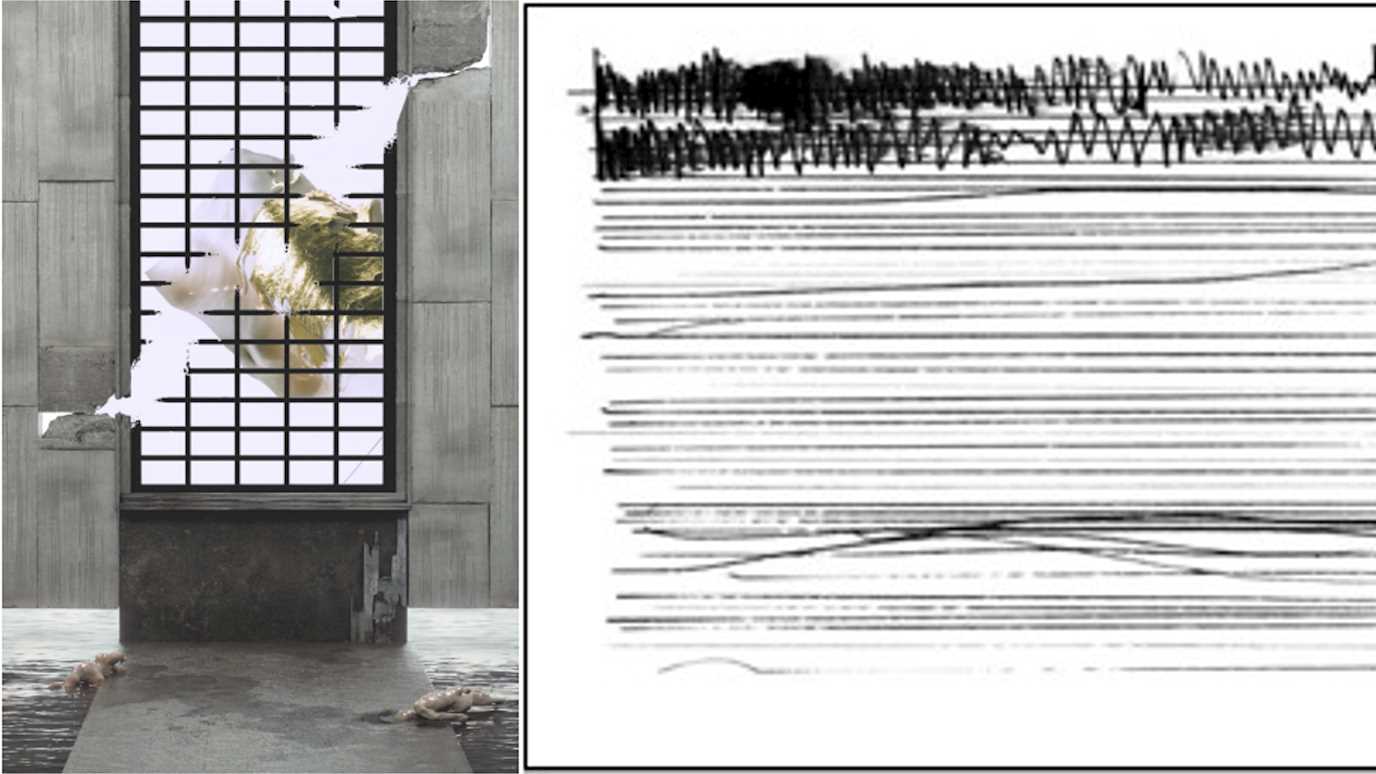
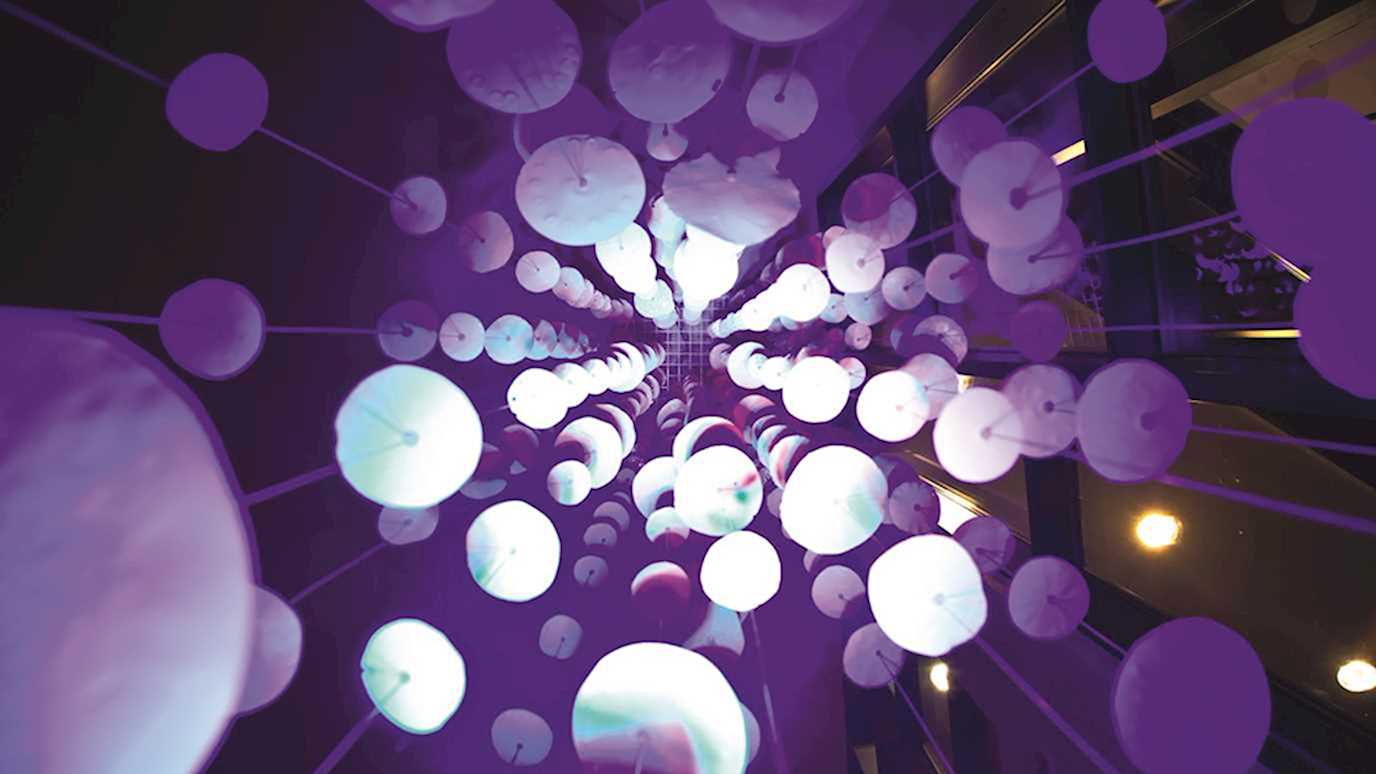
In this workshop, Yuan will present his recent work in progress, Project O, which critically investigates the conventional form of documentary and its assertive power dynamics. As an early experimentation from his practice-based PhD research, 'Transparency and Spatiality beyond Place: Perceiving Events in Virtual Environments', this fictional situated 3D environment experience depicts a fictional event, a barn caught on fire at night, through the views of objects, animals, and plants to evoke the implicit positioning in documentary, as well as constructing an ever-shifting power dynamic in this perspectival assemblage.
Taking Project O as an entry point to the research project, the presentation will connect this fictional experimentation with the project’s key proposition, 3D multi-perspectival experiences, an unfinished operation of the multiplicities of situated experiences. And further question how such experience in 3D environments documents the political complexities and historical contingencies of an event.
Gareth Hughes (Comparative Literatures and Cultures, Centre for Visual Cultures, Royal Holloway, University of London)
Gareth is a second-year PhD student in Comparative Literatures and Cultures at Royal Holloway, University of London. He is researching contemporary multilingual and intermedial poetry in France and beyond. He graduated with an MA in French from the University of St Andrews, and an MLitt and an MPhil in Comparative Literature from the University of Glasgow. He has also taught at the Sorbonne Nouvelle University in Paris. His thesis, ‘Sounds from Outside: Translingual Space in Contemporary Poetry’ examines the work of Christophe Tarkos, Michèle Métail, Michelle Grangaud, and Caroline Bergvall, and how they conceive of the poem as a site of translingual and intermedial connection. He is a member of the Centre for Visual Cultures at Royal Holloway, and his research is funded by the Techne AHRC consortium.
Gareth writes: 'Poetry is never limited to one mode of expression; instead, it engages often simultaneously in written word, spoken performance, and visual art. Contemporary poets working across a variety of media draw attention to the permeability of these modes, turning their poems into objects that exhibit spatio-temporal properties. The contact zone where the textual meets the visual becomes particularly apparent in the work of the French poet Christophe Tarkos (1963-2004), and in the work of French-Norwegian exophonic poet Caroline Bergvall (1962-). The transmedial, translingual space they create allows for an enactment of an embodied writing practice that exhibits language’s intimate relationship to bodily mechanics. By taking a closer look at Tarkos’s drawing-poems from Ma Langue (1998) and Le Kilo (2022), and Bergvall’s multimedia work Drift (2014), I shall explore a post-monolingual and transmedial poetic practice that calls on the reader/viewer to rethink where the boundaries lie between the written word and visual art.'
Anna Price (English and History, Centre for Visual Cultures, Royal Holloway, University of London)
Anna Price is a second year PhD candidate at Royal Holloway, University of London. Her thesis, ‘Representations of rowing in the long nineteenth-century literary and visual arts’, will explore the social, spatial and gendered dynamics of rowing and how these elements are manifested in Victorian literature and art. Anna graduated from her MA in Victorian Literature, Art and Culture with distinction at Royal Holloway in 2014 and has since worked as a private music teacher while conducting the early stages of her PhD. She is the current Centre for Visual Cultures Research Centre Associate and a regular volunteer on a collections project at the River and Rowing Museum, Henley, where she will be undertaking a two-month funded placement in May 2023.
Anna's presentation is derived from her current work-in-progress on the nineteenth-century urban Thames. This research takes a spatial approach in analysing nineteenth-century rowing and its manifestation in Charles Dickens’s Our Mutual Friend, accompanying illustrations, cartoons and fine art. She delves into the conflation of the London river, lower classes and immorality in nineteenth-century conceived notions of the urban Thames, and how these perceptions result in the conception of the upper-class, upper-Thames. I contend that these dichotomous societal notions are apparent in Our Mutual Friend, Punch cartoons and in pastoral visualisations of the river, as well as in the trend in locations of amateur rowing clubs founded during the latter-part of the nineteenth century. I further argue that the analysis of rowing as an activity and its representation in nineteenth-century literary and visual arts actually complicates the Victorian conceptual metaphor of the upper class/upper Thames, lower class/lower Thames and reveals the space of the river to be, in reality, multifaceted and socially layered.
Image is a compilation Yuan's Project O and Gareth's research on the textual-visual point of contact.