The Hellenic Institute is committed to the promotion of research in all matters Hellenic. We sponsor and encourage research across all periods from the antique to the contemporary and across all regions where Hellenic culture is studied and received. We are committed to international excellence in the study of matters Hellenic, fostering discussions and debates in these areas, and reaching out and engaging with communities in Greece, Cyprus and the diaspora and communities where Greek culture is received and studied.
Hellenic culture is uniquely positioned. It is both local and global. It has deep roots and a living history and a vibrant modern manifestation. Greece and Cyrus are positioned as inheritors of this globally important cultural tradition and as modern, diverse cultures at a crossroads in the Mediterranean. The reception of historical Greek cultures and the diasporic spread has positioned Greece and its traditions as a global culture. The Greek population in all their locations negotiate traditions and identity in communication and interaction and the place of Hellenic culture in the world. This has been the essence of Greece from the earliest times and Greek culture has always been a culture in communication.
To study matters Hellenic is inherently multidisciplinary. We look to bring together archaeologists and Classicists, Historians studying antiquity to modernity, economists and sociologists, literary studies (across all periods), drama and media studies.
We seek to work with institutions and individuals engaged in Hellenic studies and with community groups in UK, Greece, Cyprus and wherever else we can share our enthusiasms, interests and insights.
From March 2026, the directors of the Hellenic Institute are Dr Efi Spentzou and Professor Richard Alston. Efi is a Classical literary scholar who has worked on a wide range of Latin and Greek literature and the reception of the Classical in the modern world, including in Greek culture. Richard is a historian of antiquity who has worked on the Eastern Mediterranean and published on modern receptions of Greek and Roman culture, particularly on Athens after the revolution on 1821. See here for more details on the directors.
Foundation of the Hellenic Institute
November 10th: 18:00
Stewart House: 1st Floor; Room 1
Senate House Entrance: Malet Street, London WC1E 7HU/ Stewart House Entrance: 32 Russell Square, London WC1B 5DN
Bursaries 2026
Call for applications 2026
Thanks to the generosity of Ministry of Education, Sport and Youth of the Government of Cyprus, we are able to offer a small number of bursaries to support postgraduate studies at Royal Holloway.
We will offer two bursaries of £1,000 to PhD students who have a focus on Hellenic Studies and two bursaries of £500 for MA studies within the Faculty of Arts, Humanities and Social Sciences. To be eligible:
· PhD students must be working on a thesis which is substantially engaged in matter Hellenic.
· MA students must be taking at least 90 credits in Hellenic studies.
For these purposes, Hellenic Studies is defined as studying any subject which is wholly or largely concerned with matters of archaeology, history, society, economy, literature or culture in any period relating to Greece or Cyprus or the Greek or Cypriot diaspora. No preference will be shown for any chronological period or disciplinary study. In the event of candidates being equivalent on other criteria, preference may be given to students studying Cypriot issues and material.
The PhD awards will be judged on academic merit which will be ascertained through prior qualifications and by the quality of the research project. The MA awards will be judged on academic merit and commitment to Greek/Cypriot studies.
Application is by letter and CV to Professor Richard Alston. The letter should be no more than one page and should give details of why the applicant believes that they meet the criteria for the award. The CV should also be one page and give details of prior academic achievement.
The awards will be considered by an awards committee and judgements made against the criteria set out above. Applications should be submitted by 5 pm on October 21st and we will aim to make decisions within the next week.
Stathis Kalyvas: Revisiting National Pasts: Reflections from the Trenches
Hellenic Institute Twenty-Third Annual Lecture
November 10th: 18:00
Stewart House: 1st Floor; Room 1
Senate House Entrance: Malet Street, London WC1E 7HU
Stewart House Entrance: 32 Russell Square, London WC1B 5DN
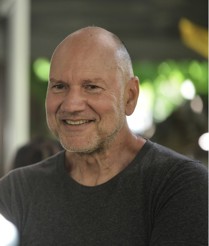
Stathis N. Kalyvas is Gladstone Professor of Government and fellow of All Souls College at Oxford University. Until 2018 he was Arnold Wolfers Professor of Political Science at Yale University, where he founded and directed the Program on Order, Conflict, and Violence and co-directed the Hellenic Studies Program. In 2019 he founded and currently directs the T. E. Lawrence Program on Conflict and Violence at All Souls College. He is the author of The Rise of Christian Democracy in Europe (Cornell University Press, 1996), The Logic of Violence in Civil War (Cambridge University Press, 2006), Modern Greece: What Everyone Needs to Know (Oxford University Press, 2015), the co-editor of Order, Conflict, and Violence (Cambridge University Press, 2008) the Oxford Handbook on Terrorism (Oxford University Press, 2019), and multiple volumes on modern Greek history and politics, including, Big Bang 1970-1973: Η άνθηση του πολιτισμού στα χρόνια της δικτατορίας/ Big Bang 1970-1973: The Flourishing of Culture during the Greek Dictatorship (Μεταίχμιο: 2025), with Natasha Triantaphylli. His work has received multiple awards, including the Woodrow Wilson Award for best book on government, politics, or international affairs, the Luebbert Award for best book in comparative politics, the European Academy of Sociology Book Award, the Luebbert Award for the best article in comparative politics (three times), and the Greenstone Award for best book in politics and history.
His lecture will reflect on his historical and political studies of Modern Greece (from the Greek Civil War to the Greek dictatorship) to consider why we care about history, the relationship between academic and public history, ‘doing’ history.
Please register for attendance by email here (Hellenic-Institute@rhul.ac.uk), giving names of those intending to attend.
The Hellenic Institute thanks the Greek Embassy in London and Ministry of Education, Sport and Youth of the Republic of Cyprus for their generous support.
Supporters and Funders
The Institute is funded by the donations of its supporters.
Many of the activities of the Institute are directly supported by the Government of Cyprus and the Embassy of Greece in the United Kingdom.
The Directors give thanks to the generosity of Ministry of Education, Sport and Youth of the Government of Cyprus. We thank the staff of the Embassy of Cyprus for their support and aid in securing those resources.
We also thank the Embassy of Greece in the United Kingdom for its staff for their encouragement, guidance and their financial support.
We thank the A.G Leventis foundation for its generous funding of the post-doctoral scholarship currently held by Dr Christopher Jotischky.
The Friends of the Hellenic Institute have established Prizes such as The Joan Mervyn Hussey Memorial Prize in Byzantine Studies and The John Penrose Barron Memorial Prize in Hellenic Studies and bursaries in honour the memories of Julian Chrysostomides, Kostas Kalimitzis, Konstantinos Kokonouzis, Pat Macklin and Joseph A. Munitiz.
You can make an online donation to The Hellenic Institute via this link.
If you would like to know more about supporting The Hellenic Institute, please contact us on: development@royalholloway.ac.uk or 01784 443100
Centre for Greek Diaspora Studies
The Hellenic Institute works in parallel with the The Centre for Greek Diaspora Studies (CGDS), the current Director is Dr Paris Chronakis.
Whereas the Institute covers the entire range of Hellenic history and culture, the Centre has a more specific focus in diasporic elements. The Hellenic Institute and CGDS work together to fund events, sponsor research, and outreach activities.
Core Academic Members
Directors
Prof. Richard Alston, Co-Director of The Hellenic Institute
Dr Efi Spentzou, Co-Director of The Hellenic Institute
Dr Paris Papamichos Chronakis, Director of Centre for Greek Diaspora Studies
Associated Staff
- Prof. Kate Cooper, BA, MTS, PhD: The Mediterranean world in the Roman period, particularly daily life and the family, religion and gender, social identity; early Christianity, Christian saints and martyrs
- Prof. Veronica Della Dora, BA, PhD: Cultural and historical geography; landscape studies; history of cartography; Byzantine and post-Byzantine sacred geographies
- Associate Prof. Charalambos Dendrinos, MA, PhD: Byzantine literature and Greek palaeography; editing and transmission of Byzantine texts
- Prof. Manolis Galenianos, MA, PhD: Contemporary Greek economy; the Greek financial crisis.
- Prof. David Gwynn, MA, DPhil (Reader): Late Antique history and theology
- Prof. Jonathan Harris, MA, PhD: Byzantine history, 1000-1453; Byzantium and the West, especially during the Crusades and the Italian Renaissance
- Dr Christopher Jotischky, DPhil (History): Greek intellectual culture and literature in 19th c., modern Greek national identity and classical antiquity, modern Greek prose literature
- Prof. Christos Kremmydas, MA, PhD: Greek rhetoric and oratory (especially Demosthenes); Athenian political and social history (especially law); Greek papyrology
- Dr Nick Lowe, MA, PhD (Reader): Greek and Latin literature, especially comedy; Greek religion
- Prof. Jari Pakkanen, BA, PhD: Greek archaeology and Architecture; the methodology of architectural reconstructions
- Prof. Lene Rubinstein, MA, PhD: Athenian social history; Athenian oratory and law; papyrology; Roman Egypt
- Prof. John Sellars, MA, PhD: Hellenistic philosophy, the Stoic tradition
Events
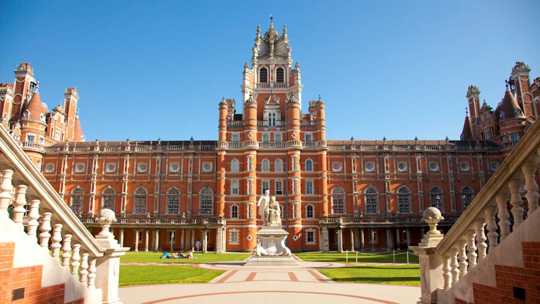
The Hellenic Institute, Royal Holloway, University of London
We are delighted to invite you to our forthcoming events below, organized also in collaboration with other institutions, addressed to students, scholars and the wider public this year. We look forward to seeing you, your family and friends.
You are also welcome to pray and attend meetings and Holy Services with Royal Holloway Multifaith Chaplaincy and the Greek Orthodox Church of the Holy Epiphany and St Andrew the Apostle in Egham Hythe, Staines.
For a guide to travel to the College, please click here.

5 March 2026: 'Orbits of Movement, Choreographies of Memory: Unfolding a Female Network of Modern “Greek” Dance' by Dr Amanda Kubic (University of Amsterdam)
Senate House, Room 104, Malet Street, London WC1E 7HU) at 6.15pm (London time)
To attend online via MS Teams please press this link
Meeting ID: 319 809 880 093 71
Passcode: Zu6yD7Df
The lecture unfolds various connections between four female figures in the history of modern “Greek” dance, both in Greece and abroad in the US and Europe over the last century. The focus is on Koula Pratsika, Rallou Manou, Martha Graham, and Valasia Simeon as a network of choreographers and dance educators who together can shed light on the personal, political, and aesthetic ideologies that have informed the development of Greek” dance since the 1920s, from the deployment of mythic narratives to the incorporation of disabled epistemologies.
Dr Amanda Kubic holds a PhD in Comparative Literature from the University of Michigan, Ann Arbor, and is currently Marilena Laskaridis Visiting Fellow in Modern Greek Studies at the University of Amsterdam. She has published in journals such as Modernism/modernity and in various edited volumes, and is currently working on her first monograph project.
The event is coorganised by the Centre for Greek Diaspora Studies and The Hellenic Institute of Royal Holloway, University of London and the Centre for Hellenic Studies of King's College London.
All welcome.
For further information please contact Dr Christopher Jotischky and Dr Paris Chronakis
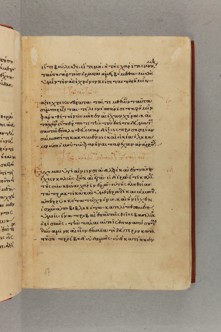
6 February-27 March 2026: The Letters of George of Cyprus
University of London Postgraduate Working Seminar on Editing Byzantine Texts
Room 103, Senate House, University of London, Malet Street, London WC1E 7HU and online via Zoom on Fridays 3-5pm
The Seminar is preparing a new annotated edition and translation of the Letters of George of Cyprus (later Ecumenical Patriarch Gregory II, 1283-1289). Scholars and graduate students from Colleges of the University of London and visiting students and scholars from other Universities and research centres are most welcome to participate.
For further information please contact Dr Charalambos Dendrinos and Jack Dooley

12 November 2025: Thomas de Aquino Byzantinus:
Ο Θωμάς Ακυινάτης στο Βυζάντιο
Hybrid International Colloquium
University of Patras, Building B, Rio Campus, 26504 Patras, Greece at 4pm (GMT)
To attend online via Zoom please press this link
Meeting ID: 916 0877 6720
Passcode: 647448
The theological and philosophical dialogue between the Greek East and the Latin West has witnessed a revival of interest among theologians, philosophers, historians, philologists, and palaeographers. Focusing on the reception of Thomas Aquinas’ works, the Colloquium presents and discusses findings of the research on critical editions of translations of, and commentaries on Thomisitic works by Byzantine scholars and theologians as part of the ongoing research project Thomas de Aquino Byzantinus.
The colloquium includes the presentation of two volumes of the project published by Brepols in the Corpus Christianorum – Series Graeca / Thomas de Aquino Byzantinus Series prima et altera:
- John Monfasani (ed.), Joannes Gattus, Notata, seu Tractatus qui erat fons libri III operis Bessarionis ‘In Calumniatorem Platonis adversus Georgium Trapezuntium’ (Corpus Christianorum – Series Graeca 94; Thomas de Aquino Byzantinus – Series altera XIII), Brepols, Turnhout, 2021.
- Marie-Hélène Blanchet, (ed.), Thomae de Aquino De rationibus fidei in Graecis versionibus Atoumis et Demetrii Cydonis (Corpus Christianorum – Series Graeca 104; Thomas de Aquino Byzantinus – Series Series prima, IV, 1), Brepols, Turnhout, 2025.
- Professor Panagiotis Ch. Athanasopoulos (Ioannina)
- Dr Marie-Hélène Blanchet (CNRS, Paris)
- Professor John A. Demetracopoulos (Patras)
- Thanos Kerefides (Patras / Athens)
- Dr Michail Konstantinou-Rizos (Patras / London)
- Aris Panopoulos (Paris / Patras)
To access the program of the event please press this link.
Co-organised by the Laboratory of Greek and Latin Philosophical Literature "Linos Benakis", School of Theology of the University of Patras and The Hellenic Institute of Royal Holloway.
For further information please contact Prof. John A. Demetracopoulos
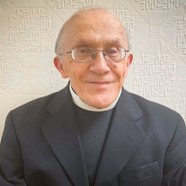
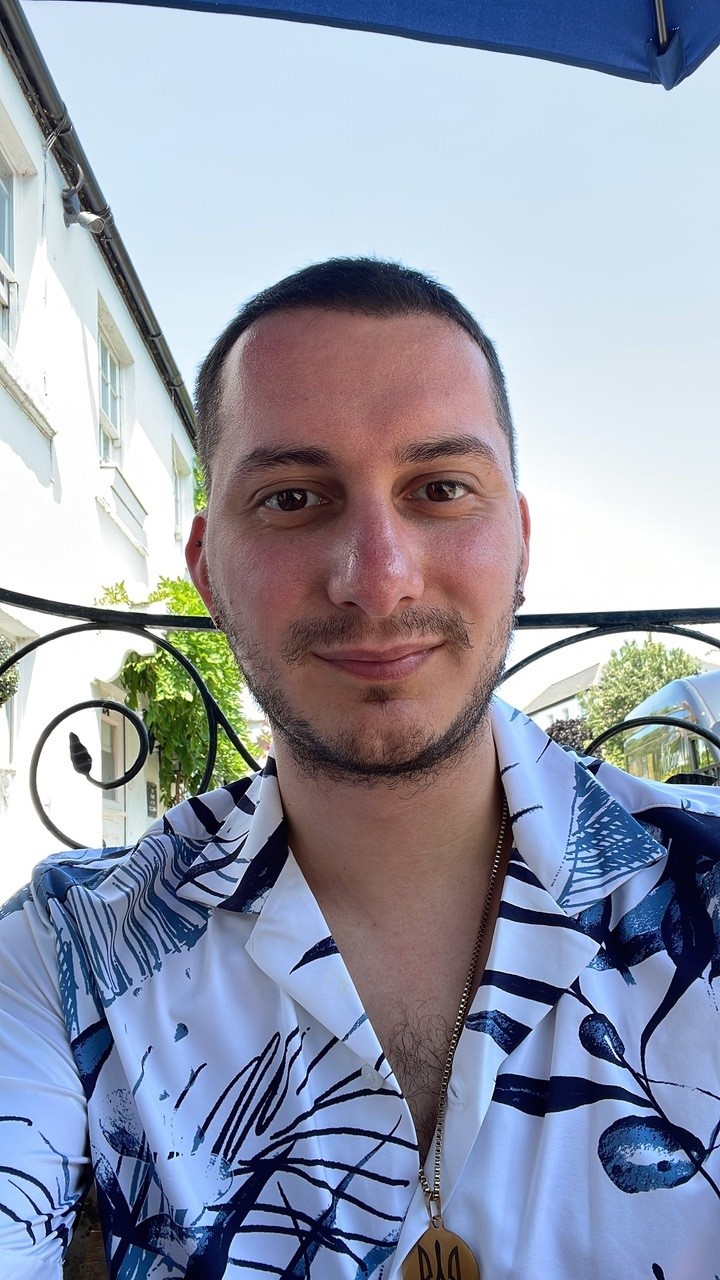
1 September 2025: Appointment of Dr Christopher Jotischky as Postdoctoral Fellow in Modern Greek Studies (2025-2027)
Thanks to generous funding from the A.G. Leventis Foundation, the first Postdoctoral Fellowship in Modern Greek Studies was established and advertised internationally in June 2025. The posting attracted a worldwide interest and the selection panel received 37 high-calibre applications from the United Kingdom, Europe, Greece, and the United States. The applicants represented a remarkably diverse range of disciplinary fields and areas of study, from Greek-American diaspora museums to reconciliatory practices in community archaeology in contemporary Cyprus, and from nostalgia for 1980s Greece to the role of music in multi-ethnic Thessaloniki. Taken together, the applications clearly demonstrate the vitality of the fields of Modern Greek and Greek Diaspora Studies, the impressive work being carried out by early-career researchers worldwide, and, equally, the urgent need to support them. The timing of the Fellowship could therefore not be better. The selection panel elected unanimously Dr Christopher Jotischky as the inaugural Postdoctoral Fellowship in Modern Greek Studies (2025-2007).
Dr Christopher Jotischky is a historian of the intellectual culture and literature of long nineteenth-century Greece, with a particular interest in the construction of Greek national identity through and around the legacy of classical antiquity, and the development of prose literature in the modern Greek language. He began his academic life as an undergraduate in Classics at the University of Oxford before completing a PhD combining Classics and Modern Greek Studies at Brown University, USA, in 2024. He has since held positions at the University of Amsterdam (Laskaridis Visiting Fellow in Modern Greek Studies, 2025) and the Institute of Classical Studies, University of London (Early Career Research Associate, 2024–2025). Dr Jotischky has published in journals such as Classical Receptions Journal (2023) and Skenè (2024), and is currently preparing his first monograph, The Silent Canon: Latin in Greece, 1821–1945, for publication with Oxford University Press. This will be the first monograph-length history of the Roman legacy in post-independence Greece to combine literary reception with the history of Latin pedagogy and the cultural impact of the Roman Empire in the country.
Dr Christopher Jotischky is joining The Hellenic Institute and the Centre for Greek Diaspora Studies, the Department of History and the Faculty of Arts, Humanities and Social Sciences for the next two academic years. We wish him wholeheartedly every success with his work - Καλή επιτυχία!
For earlier events see here.
MA Studies
The Hellenic Institute coordinates the following two MA courses:
- MA Late Antique and Byzantine Studies: An intercollegiate University of London course taught jointly with University College London and the collaboration of King's College London and Birkbeck, University of London. This course is designed especially for those who are interested in progressing to doctoral research in Late Antique and Byzantine studies. It also aims to relate the history of Late Antiquity and Byzantium to the wider world.
- MA History: Hellenic Studies: This course aims to give students from various backgrounds the opportunity to have an overall view and appreciation of Greek history and culture embracing the Homeric and Classical ages, the Hellenistic and Roman world, the Byzantine and Post-Byzantine periods, and the modern world. Its diachronic and interdisciplinary nature enable students to examine the elements which characterise Hellenic culture through the centuries, at the same time acquiring a deeper knowledge of a certain period and discipline, including philosophy, history, law, religion, theatre, language, literature, papyrology and palaeography.
Other related MA Programmes are offered at Royal Holloway, Classics Department:
The Greek Manuscript Collection of Lambeth Palace Library
A Descriptive Catalogue of the Greek Manuscript Collection of Lambeth Palace Library
Lambeth Palace Library (LPL) is the historic library of the archbishops of Canterbury and the principal library and record office for the history of the Church of England. Founded as a public library by Archbishop Bancroft in 1610, its collection have been freely available for research ever since. Officially designated by the Museums, Libraries and Archives Council as outstanding in national and international importance, the LPL Collection, which includes Western medieval and Byzantine manuscripts, focuses on ecclesiastical history. The Library forms part of the National Church Institutions and, as such, receives no public funding.
As part of an on-going collaborative programme which dates from 2003, University of London students attending Greek Palaeography courses and research students in Classical and Byzantine Studies have been visiting LPL at the invitation of the Librarians and Archivists Dr Richard Palmer and Giles Mandelbrote and the Archivist Mrs Clare Brown, to examine and study original Greek manuscripts as part of their training in Greek Palaeography and Codicology.
The Greek Manuscript Collection consists of fifty-five Greek codices acquired by LPL since its founding in 1610, including those received in 2006 from Sion College, an institution for clergy founded in the City of London in the late 1620s. Dated between the tenth and nineteenth centuries, these manuscripts include Gospel and Acts and Epistles Books and Lectionaries, an Octateuch with catena, patristic and other theological texts including works of John Chrysostom, Gregory of Nazianzus and John of Damascus, liturgical and hymnographic texts, classical texts by Aeschylus, Dionysios Periegetes, Pseudo-Aristotle, Plutarch, Lycophron and Demosthenes, chronographic and legal texts, post-Byzantine texts including an anonymous Chronicle in vernacular Greek and Damaskenos Stoudites, On Animals, and descriptions and collations of LPL manuscripts. Among the most important manuscripts is MS 461, containing a theological treatise on the procession of the Holy Spirit by George Scholarios (later Ecumenical Patriarch of Constantinople Gennadios II), with his autograph signature, notes and corrections.
An exhibition of the Greek Manuscript Collection was organised jointly by LPL and The Hellenic Institute on the occasion of the 21st International Congress of Byzantine Studies in London between 23-24 August 2006. The exhibition comprised the following sections: Doctrine; Liturgy and Spirituality; Byzantium, its Provinces and Neighbours; Before and after Byzantium; From Manuscript to Print. The last section, on Anglicanism and Orthodoxy, included printed books, documents and photographs illustrating the dialogue, past and present, between the two Churches. The exhibition catalogue included the first complete inventory of the LPL Greek Manuscript Collection.
Thanks to a generous grant (£121,000 over two years) awarded by The A. G. Leventis Foundation and with the support of LPL and Royal Holloway, University of London, a full descriptive catalogue of this important collection has been compiled by Dr Christopher Wright and Ms Maria Argyrou under the supervision of Dr Dendrinos and the guidance and support of eminent scholars and technical advisors, member of the Project Board:
- Mrs Clare Brown, LPL Archivist - Internal LPL Advisor
- Dr Annaclara Cataldi Palau, Visiting Professor in Greek Palaeography, RHUL Hellenic Institute, History Department - Internal RHUL Advisor
- + Dr Rachel Cosgrove, LPL Senior Archivist - Internal LPL Advisor
- Dr Charalambos Dendrinos, Senior Lecturer in Byzantine Literature and Greek Palaeography, Director, RHUL Hellenic Institute, History Department - Project Director
- Dr Pat Easterling, Emeritus Regius Professor of Greek, Cambridge University - External Advisor
- Giles Mandelbrote, LPL Librarian and Archivist - Chairman of the Project Board
- + Revd Dr Joseph A. Munitiz, S.J., former Master of Campion Hall, Oxford University - External Advisor
- Professor Nicholas Pickwoad, Director of the Ligatus Research Centre, University of the Arts London - Internal LPL Advisor
- Philip Taylor, Honorary Research Associate, Hellenic Institute, History Department, former RHUL webmaster - Internal RHUL IT Advisor
A Descriptive Catalogue of the Greek Manuscript Collection of Lambeth Palace Library was published online in Adobe PDF format on the websites of both LPL and the Hellenic Institute on 25 February 2016 (and revised in 2022), thus further enhancing the accessibility of, and interest in, this collection among scholars and the public worldwide. To access the electronic catalogue please click here.
The Editorial Board would be very pleased to receive any comments, corrections, criticisms, and/or suggestions for possible improvements. These should be sent by e-mail to: LPL-Greek-MSS-Catalogue@Hellenic-Institute.Uk
The publication of this catalogue sheds light on textual, palaeographical and codicological aspects of these important manuscripts which so far remain largely unexplored and advances our knowledge on the relations between the Anglican Church and the Eastern Orthodox Patriarchates between the sixteenth and nineteenth centuries, a period of major political and ecclesiastical changes in Europe and the Middle East.
The Hellenic Institute would like to express its deepest thanks to the Most Reverend Justin Welby, Archbishop of Canterbury, and to his predecessor the Most Reverend Dr Rowan Williams, now Baron Williams of Oystermouth, for allowing us to pursue our research in the Greek collections of their Library; His Beatitude Theophilos III Patriarch of Jerusalem and All Palestine, His Eminence the Archbishop of Constantina Aristarchos, Chief Secretary of the Patriarchate, the Librarian of the Patriarchal Library, Father Aristoboulos; and Professor Agamemnon Tselikas, Director, Centre for History and Palæography, National Bank of Greece Cultural Foundation, for their kindness, invaluable help and guidance in our research concerning the MSS returned to the Patriarchal Library by LPL in 1817; the LPL Librarian and Archivist Giles Mandelbrote and LPL Archivist Mrs Clare Brown and their staff for their support and co-operation; the Members of the Project Board for their advice and guidance; scholars who contributed with their expertise in specialised topics; and last but not least the A.G. Leventis Foundation for its generous grant and continued support towards The Hellenic Institute's research activities for the promotion of Hellenic Studies in general and Anglo-Hellenic Relations in particular.
For further information on the LPL Greek Manuscript Collection and its Cataloguing Project please contact Dr Charalambos Dendrinos and Dr Christopher Wright.