








The Department of Economics are pleased to announce an online conference studying the Effects of Military Interventions.
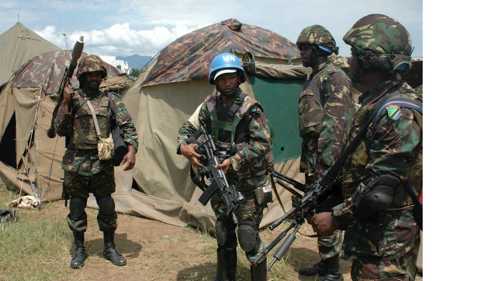
This conference will bring together scholars from multidisciplinary backgrounds to take stock of theoretical and empirical knowledge on social, political, economic and strategic effects of military interventions. Click here to view conference website and to register for the event.
When
20th of February 2021
Where
Zoom [Link will be emailed after registration]
Targeted Audience
Academics and Postgraduate Students
Program and Sessions
Three separate sessions lasting about an hour each. Click here to view full program.
Objectives
-
To enable exchange of knowledge on effects of military interventions
-
To take stock of existing knowledge on effects of military interventions
Outcomes
-
Overview of selected theoretical and empirical perspectives on the effects of military interventions
-
Increase networking amongst scholars
Advisory Committee
-
Prof. Michael Spagat (Royal Holloway, University of London)
-
Dr. Lisa Hultman (Uppsala University)
-
Mr. Luqman Saeed (Royal Holloway, University of London)
Rationale
Despite that most formal colonial regimes collapsed by mid-twentieth century, military interventions (MIs) by major powers and multilateral agencies (the United Nations and NATO etc.) have continued to take place. The United States and France intervened for about 15 and 10 years in various nations during 1950s which increased to 23 and 19 years during 1990s. Ongoing atrocities and disorders in countries of interest for big powers such as Syria, Iraq and Afghanistan, and diffusion of ISIS-affiliates, particularly in Africa, suggest that the increasing trend in MIs is likely to continue. In fact in the past two decades MIs have gained increasing level of legal and formal recognitions such as the United Nations’ World Summit unanimous adoption of resolution in favour of Responsibility to Protect in 2005 and France Defence White Paper of 2013 which enunciates interventionism as an important policy measure to protect overseas interests.
Military interventions are mainly launched to influence favourable changes in economic, political and strategic spheres in intervened nations. But are these changes favourable to the wellbeing of societies at the recipient end? Ever-since the dawn of civilization humankind has practiced warfare[1] but what distinguishes magnitude of the effects of warfare in current epoch is the spectacular rise of modern weaponries and their impact on civilian lives and means of civilized existence. According to the Centre for Civilian in Conflicts (CIVIC) 100 civilians die every day in armed conflict. London based charity, Action on Armed Violence (AOAV) documented that during 2011-2019 period 90 percent of people who fell victim to explosive violence in populated areas were civilians. More than ever before civilians and their properties are vulnerable to violence in armed conflicts. On many occasions, these armed conflicts have drawn in major powers to militarily intervene and influence conflict outcomes, as we have recently observed in Libya, Syria and Iraq. However, MIs happen at a cost. For instance, interventions against ISIS in Syria and Iraq led to between 8253-13132 civilian deaths in the US led coalition air bombings as recently reported by Airwars and Pax for Peace.
Major intervening powers, such as the United States, France, Britain, Russia and China have political and economic interests in the Middle East and Africa. Ongoing instabilities in these regions[2] imply that military interventions will remain one of the key forms of foreign involvement in the region. The consolidation of ISIS in West and Central Africa, where domestic states are weak and ill-equipped to resolve internal political tensions, further adds to this expectation; hence the need to document and study the effects of interventions.
Against this background, the Department of Economics at Royal Holloway (University of London) is pleased to convene a virtual conference on the effects of MIs. In line with Pearson and Bauman (1993) we understand military interventions as movement of regular troops or forces (airborne, seaborne, shelling, etc) of one country inside another, in the context of some political issue or dispute (Pearson and Baumann, 1993) [3]
This conference will bring together distinguished scholars from multidisciplinary backgrounds who have critically examined effects of military interventions in their research. This conference will enable pooling and synthesizing current state of knowledge on how military interventions affect political, social, strategic and economic outcomes in intervened nations.
Notes
[1] Some form of warfare was practiced amongst Neanderthal men, (Robert, 2003; 21) however warfare between organized militaries probably emerged with the increase in surplus brought forth by civilizational progress (Roberts, 2003; 34)
[2] According to the data collected by the Department of Peace and Conflict Research at Uppsala University the state based conflict in Africa hit record high in 2019, 25 in total, and number of civil wars in Middle in 2018 were at all-time high since 1996.
[3] Other conceptualizations of MIs such as by Sullivan and Koch (2009) and more recently Gromes and Dembinski (2019) are particularly focused on interventions by power states and those which only motivated by humanitarian intent. Maintaining Pearson and Bauman (1993) as a reference definition allows us to incorporate empirical studies which will otherwise be missed out if we focus on conceptualization of MIs based on type of actors or intent.
Gromes, T., & Dembinski, M. (2019). Practices and Outcomes of Humanitarian Military Interventions: A New Data Set. International Interactions, 45(6), 1032-1048.
Pearson, F. S., & Baumann, R. A. (1988). International Military Interventions: Identification and Classification. International Interactions, 14(2), 173-180.
Roberts, J. M. (2003). The New Penguin History of the World. London: Penguin Books.
Sullivan, P. L., & Koch, M. T. (2009). Military Interventions by Powerful State 1945-2003. Journal of Peace Research, 46(5), 707-718.