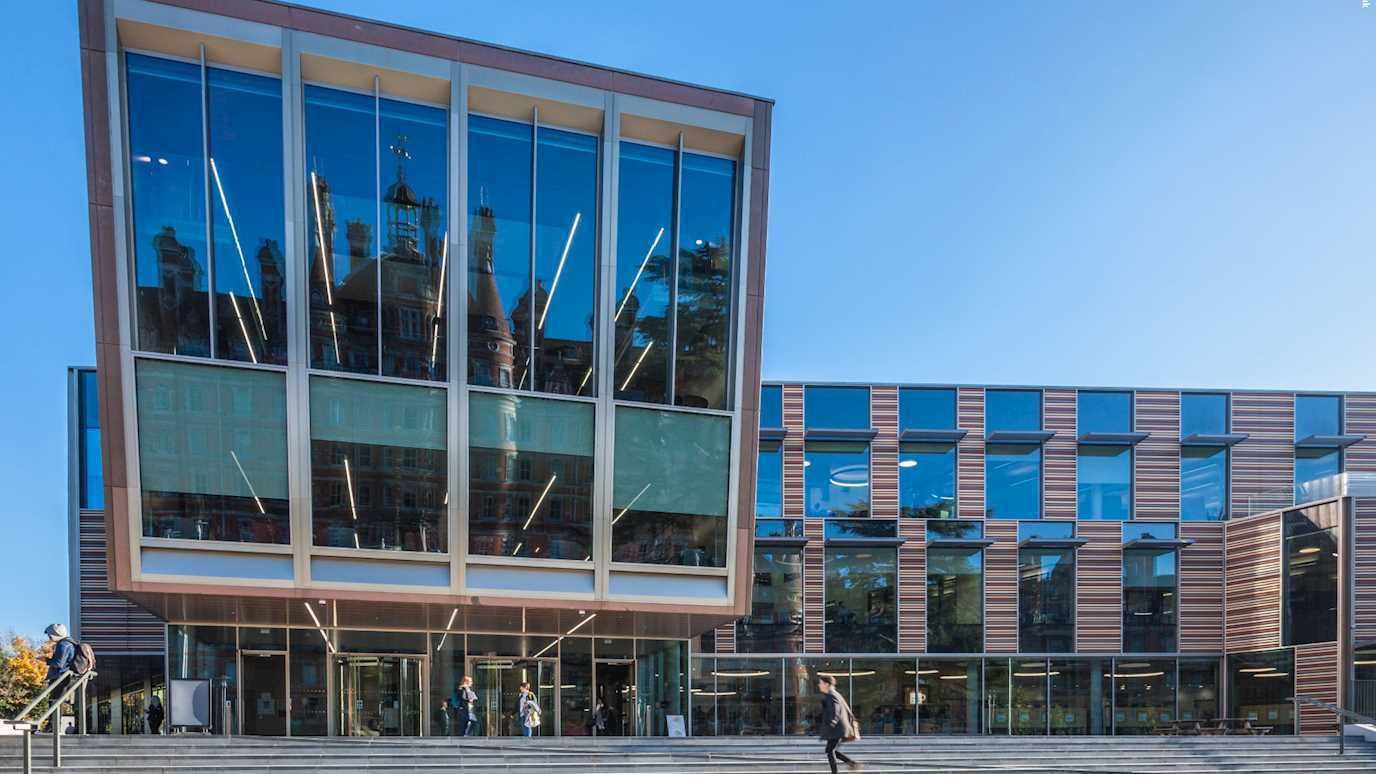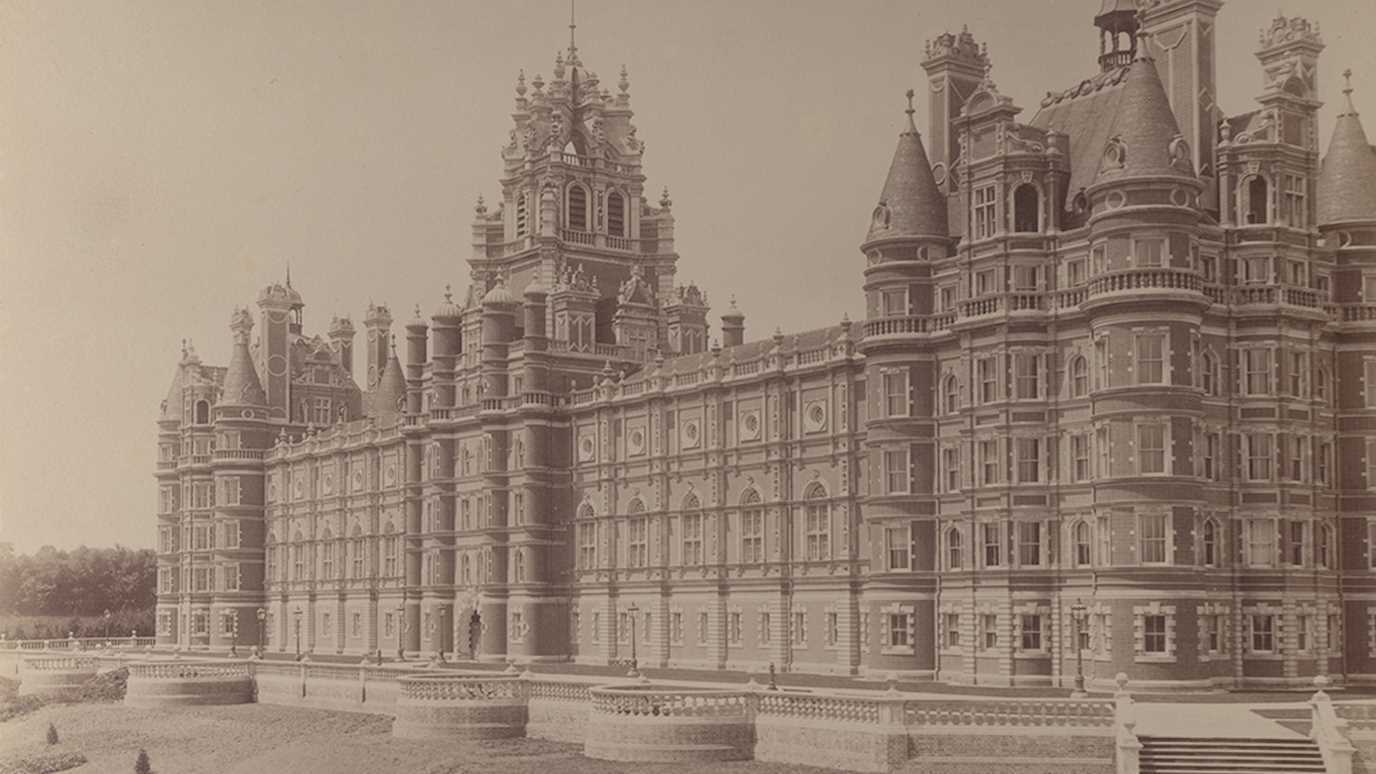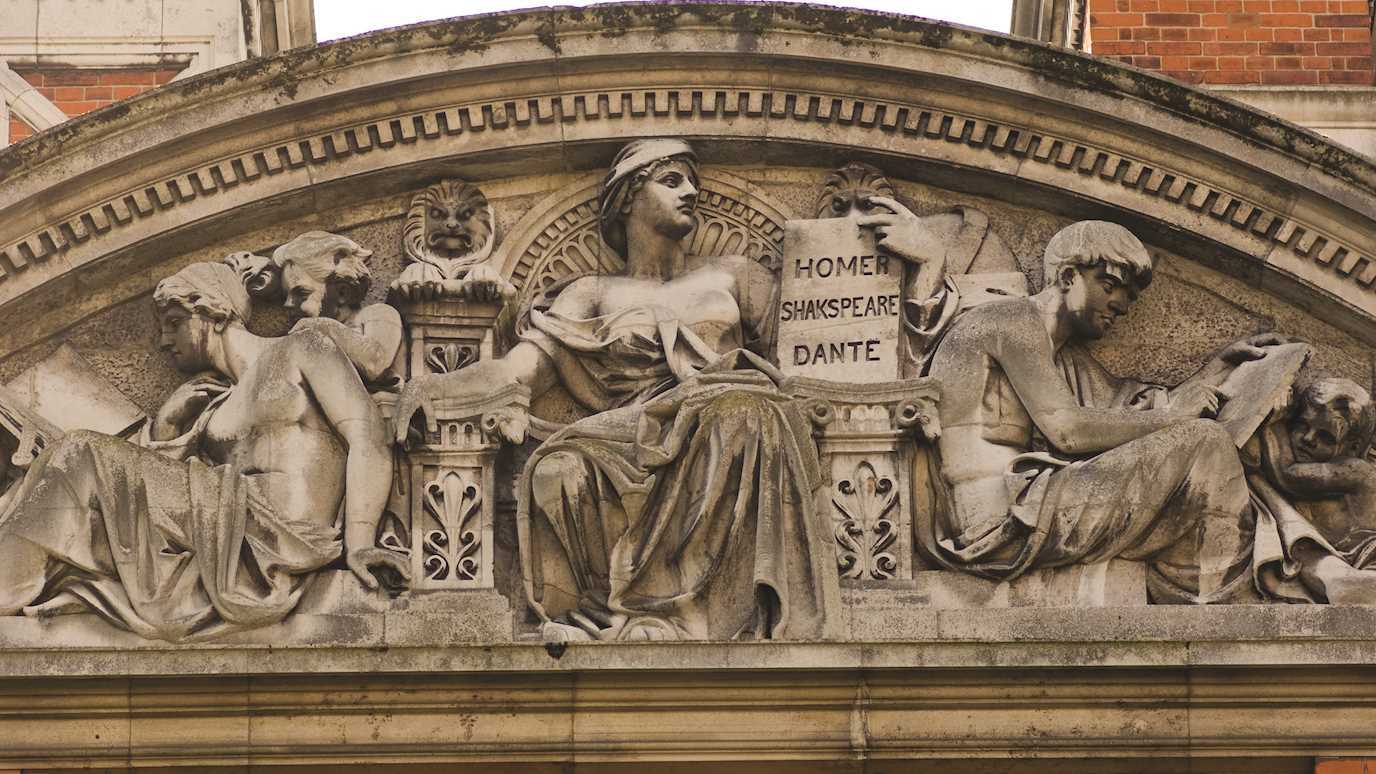
As part of our Alumni Unabridged series - in-depth narratives that explore the lives, careers, and reflections of our alumni – Jess Jonzen speaks with Tim Reeve (BA History 1994), Deputy Director of the Victoria & Albert Museum.
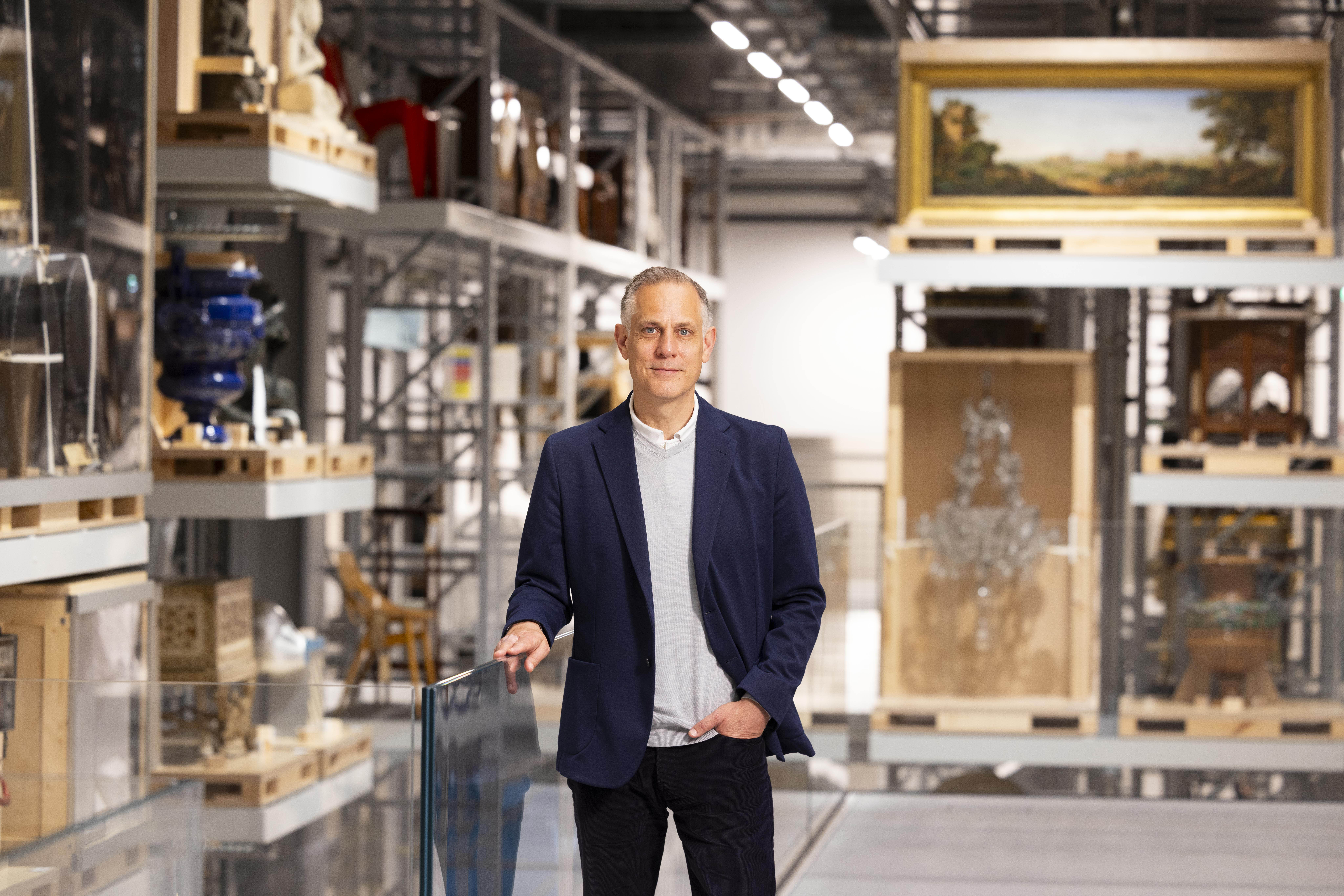
Image by David Parry/PA Media Assignments.
As Deputy Director of the Victoria & Albert Museum, Royal Holloway alumnus Tim Reeve CBE has played a pivotal role in guiding this iconic institution into the 21st century. Over the past 12 years, he has reshaped how the museum connects with the public, balancing authority with accessibility and championing a renewed social mission – most notably through his leadership in the opening of V&A East Storehouse.
Tim has spent more than a decade redefining what a national museum can be. As Deputy Director and Chief Operating Officer of the Victoria & Albert Museum, his influence is everywhere and is increasingly felt in how the institution approaches access, its authority and – most importantly in Tim’s view – public value. Nowhere is that clearer than at V&A East Storehouse, one of the most radical projects the museum’s world has seen.
Opened in May 2025 in the Queen Elizabeth Olympic Park in what was the broadcast centre for 2012 Olympic Games, V&A East Storehouse has confounded expectations. Visitors wander freely through what was once the museum’s back-of-house world: 350,000 objects, 1,000 archives and more than 300,000 books, displayed not as precious relics but as a living, working collection. In its first six months, it attracted nearly 400,000 visitors – almost double its annual forecast.
Tim is proud, but candidly relieved. “It’s not something museums do very often,” he says. “We’ve only done it once in the last 175 years with the opening of V&A Dundee back in 2018, so it was a big deal. When you carry something like this personally for a decade, you hope people will love it and get it.” They do. Visitors come in numbers that would have been unthinkable at the planning stage, drawn by the sense of access and permission that Storehouse offers. “It feels like you’re trespassing as it’s all the stuff you aren’t normally allowed to see,” Tim says. “And that’s part of the joy.”
As with many of the best projects, the origins of V&A East Storehouse lie not in grand ambition, but in necessity. In 2015, the V&A was told it would have to vacate its West London storage facility at Blythe House. The museum faced a choice: move its collections to a warehouse outside the capital or take a risk. By that point, Tim had already been involved in early conversations with City Hall about shaping a cultural presence on the Olympic Park. “It became a fork-in-the-road moment,” he says. “If we were going to keep the collection in London, we had to do something genuinely radical.”
Radical, in this case, meant transparency. The architecture reinforces the point. An international design competition was launched, but Tim and his colleagues were drawn to American studio Diller Scofidio + Renfro, known for reimagining industrial infrastructure as civic space. “Their interpretation of the brief was irresistible,” he says. “We never imagined it would look or feel quite like this.” The result is a building that reveals rather than conceals. Visitors can see deep into the collection, even where they cannot physically go. Symbolism and function align.
That principle reflects a broader shift within the V&A during Tim’s tenure: away from cultural authority as gatekeeping and towards openness as civic duty. “We’re a public institution,” he says. “We shouldn’t feel remote.”
In East London, that approach carries particular weight. Storehouse sits among communities that have historically been underserved national museums. “There was scepticism about it locally, and maybe even some cynicism, which I think we understood and respected, and recognised where it came from,” he says. “The idea of a major national museum from what is still seen as quite an elitist world of culture and connoisseurship parachuting into one of the most deprived parts of the country could have gone badly wrong.”
Instead, the V&A committed time, resources and humility. “There were myriad engagements with community groups and individuals over more than a decade of sustained time and investment,” Tim says. “And while Covid was obviously awful, it did give us the opportunity to deepen those relationships even further – to strengthen our roots and our connection to the communities we work with.”
A paid youth collective aged 16 to 24 was given real power, shaping everything from wayfinding and uniforms to catering. “There was a rolling group of 20 at a time, with around 100 involved in total. They applied to take part, we paid them and they acted as a genuine council for us,” Tim says. “But this only works if you’re prepared to let them challenge you and make real decisions – it can’t be a tick-box exercise. You must be willing to let go, and they need to see their ideas reflected in the final experience for it to be meaningful.”
The process was transformative. “We were designing this for them – they knew the area, their lives, and what mattered far better than we did, and they challenged us constantly. They added enormous value and so many of Storehouse’s defining features exist because of their input. They’ve made it far better than we could have alone. And now they visit with friends and family, because they feel a genuine sense of ownership.”
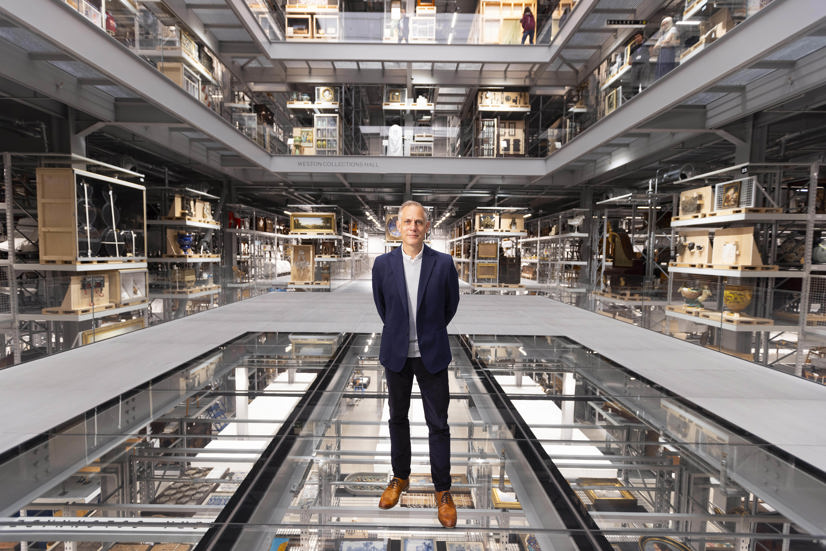
Image by David Parry/PA Media Assignments.
Before the opening, the Director of V&A East, Gus Casely-Hayford, personally took objects from the V&A’s collection – including a 17th century pomander, designed to contain fragrant substances to protect the wearer from disease – into every single school in the four Olympic boroughs: Newham, Tower Hamlets, Hackney and Waltham Forest. “We wanted to explain what the collection is, why it’s important, why we were opening V&A East Storehouse and why we wanted them to be involved in it.”
On opening day, that sense of involvement and ownership was palpable. “That’s incredibly hard to achieve and I think it's one of things that I think we're probably proudest of,” Tim says. “But local people genuinely feel they helped make this place.”
Storehouse is deliberately analogue, resisting the temptation to over-interpret or over-digitise. “It always makes me bristle when people describe it as high-tech – it isn’t,” says Tim. “You can use your phone for extra information, but at its heart this is about the objects. What’s striking is how many visitors are young and diverse, and how much they enjoy putting their phones away. You see them talking, looking closely and engaging deeply. We often stereotype young people as needing screens to connect, but Storehouse shows that simply isn’t true.”
If V&A East Storehouse represents a high point, it is also the product of a career shaped by commitment and tenacity. Before joining the V&A in 2013, Tim worked at English Heritage as Director of Historic Properties where he learned what he describes as a “relentless attention to detail”. The lesson has stayed with him. He still makes time to wander museum spaces anonymously, watching how visitors move, where they pause, where they talk. “I find it really strange when people don’t do it,” he says. “If you’re not, you can’t improve.”
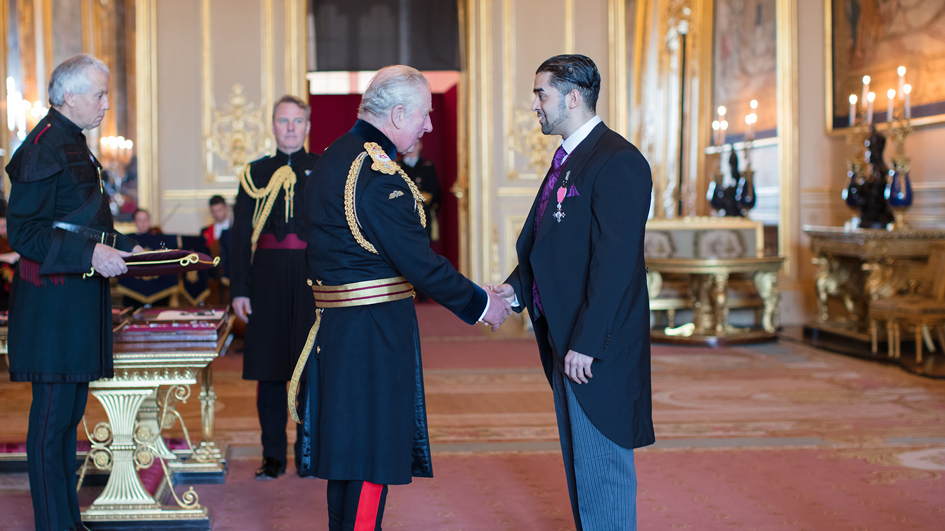
Fittingly, the month after V&A East Storehouse’s opening, Tim was made a CBE in The King’s Birthday Honours, for services to museums. “I have been so fortunate to spend nearly 30 years at two hugely important national cultural institutions… both during times of great transformation, working with very many brilliant, ambitious, expert, committed and creative people,” he said after his honour was announced.
Tim read Ancient History at Royal Holloway, graduating in 1994. “I loved my course, and the campus felt like a village, safe and intimate, which suited my personality. I have nothing but happy memories of my time at Royal Holloway,” he says. He played a lot of sport, was Captain of the football team and was in Halls in Founder’s during his first and third years. A now-infamous note from a tutor – rebuking him for missing a British Museum trip due to a football match – still makes him laugh. “He thought I didn’t care but he was wrong. Funnily enough, I bumped into him at the opening of the V&A’s David Bowie exhibition in Chicago and we had a good laugh about it.”
Tim knew he wanted to have a career in the museum world, “but I think if somebody had told me then what I would go on to do, I would have been pinching myself,” he says. Museums, he points out, rarely offer structured career pathways. His advice to aspiring museum professionals is pragmatic. “Get your foot in the door,” he says. “Any role. Summer jobs, gallery assistant work, volunteering. Learn how these places actually function.” Those early experiences, he believes, matter far more than prestige.
As the V&A prepares to open V&A East Museum in April — a more familiar type of museum experience just a ten-minute walk from Storehouse on the Stratford side of the Olympic Park – Tim is reflective. “That’s the final piece of the jigsaw, and it will probably complete the V&A’s expansion for a generation or two,” he says. “I’ve been at the V&A for 12 years now – two years longer than I ever expected – and it’s strange to think about what comes next. It will be hard to top V&A East. It’s honestly the most exciting thing I’ve ever worked on.”
Whatever the future holds for Tim, his legacy in the story of the V&A is assured. What does he think the success of V&A East Storehouse means for the future of museums? “I genuinely feel encouraged. Our museum peers have been watching closely, and it feels like a real step forward for museum practice. Storehouse has become a proof of concept, showing that you can turn the back-of-house world into a genuinely accessible public space. Seeing other institutions take inspiration from it is brilliant. It means this won’t just be a one-off at the V&A in East London.”
For Tim, that is the real achievement. V&A East Storehouse is not simply a new museum space, but a statement about what museums can be – and why they still matter.