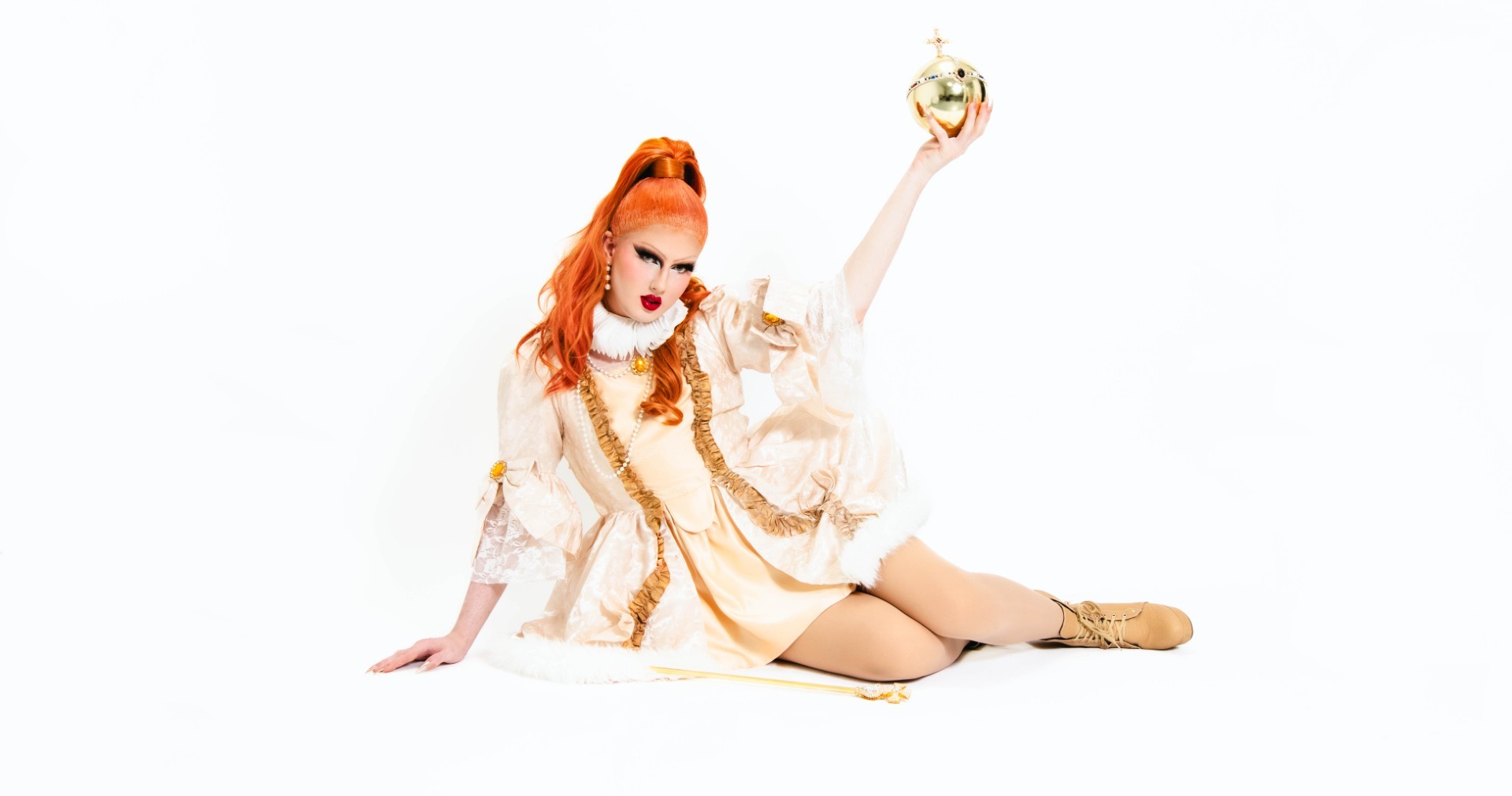
As we head towards the end of the LGBT+ History Month, we spoke with Royal Holloway alum Jack (MA Public History 2025) about creating ‘Elizabeth the Thirsty’, a drag historian using performance and digital platforms to spotlight overlooked queer histories and invite new audiences into conversations about the past.
Tell us about your career path since graduation. How did you end up where you are?
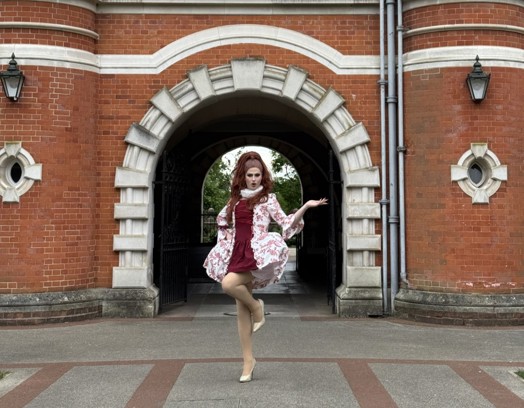
My career started when I was studying my master’s degree in public history. I decided to slightly alter my history content on social media and combine it with the art form of drag. I create my drag persona ‘Elizabeth the Thirsty’ that is a product of two of my biggest passions history and drag. The tasks and assignments that were required for my course opened up a multitude of opportunities for me. During my time on the course and since graduation I have performed in multiple venues always educating and entertaining, grew my social media presence, and featured on many podcasts with amazing historians. In June 2025 I was announced as the winner of Hearst Networks ‘Hosting History Competition’ whereby I got the chance to host my own short form history show called ‘Dragging Up The Past’ that premiered in December 2025.
What challenges have you faced working in a space that sits between education, performance, and digital media?
It can be intense working in a space that combines three massive markets and at times they can be highly saturated. Academic spaces often focus on credibility, whereas within performance spaces it is important to display charisma and humour, and digital media is based on accessibility where algorithmic visibility shapes what content gets seen. My choice to incorporate drag was a choice I made to stand out, which is a challenge in itself, but drag isn’t always immediately recognised as a ‘serious’ form of scholarship. It can also be challenging to understand what your audience enjoys but also their prior knowledge, so creating content and doing performances that are engaging, informative and accessible across multiple platforms to a wide range of people can be demanding at times but at the same time it is super rewarding.
Why do you think it’s important to tell queer histories through creative and accessible formats like drag?
Queer histories and voices have always been neglected in generalised histography but also within that certain queer voices have been neglected in queer histography. My drag is a way to not only share my story but also countless stories of communities that have been marginalised just for their sexuality or gender identity. Drag is not only just a way to share these stories but also to redistribute that history to audiences regardless of their sexuality. By using drag as a form of storytelling it invites an audience that may not necessarily attend a lecture or read an academic journal to engage with the past, making history feel alive rather than distant. Being the ‘drag queen historian’ making accessible content, whether that be a social media video or a two hour long performance, isn’t about going back to basics it is about inviting people to participate in historical conversations.
What’s one thing about working in media and creative industries that people often underestimate?
The main thing people probably don’t realise is how much hard work goes into it. Creative work can look effortless to some audiences, especially when watching a two minute video on social media. Speaking from my experience alone, there is so much research that I do for my content, writing up scripts, reading books, analysing sources. The same goes for performances and with that comes sourcing venues, paying for props and editing music. Unfortunately, being in a creative industry comes with having an unpredictable income so a lot of the time people in this industry choose to do this out of their pure passion for their craft.
Why is public engagement with the past important?
Public engagement with the past often shapes how we understand the present. If historical narratives are left solely to educational institutions they can often be narrow and/or exclusionary. Public history is all about public engagement and it allows communities, especially those who have been marginalised, to see themselves reflected in narratives that often get neglected. Public engagement with the past offers a space where people who may not have been interested in or given the opportunity to connect with the past and be involved in historical debates. Showing that history is never fixed it is constantly being interpreted and debated, thus is always being reshaped.
How has creating ‘Elizabeth the Thirsty’ helped you explore or express your own identity?
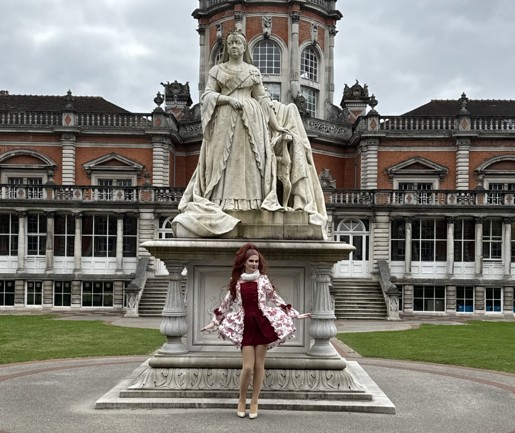
Being in drag gives you this unexplainable confidence, even your first time in drag where things may look a bit rough you feel invincible and some of that confidence has transferred into my personal life. It pushes you outside of your boundaries and comfort zone whether that be wearing something you aren’t used to or trying out a new hobby but once you start seeing that in your personal life is beyond uplifting. Since starting drag I have tapped into the flamboyancy and femineity that I loved as a child but lost during my teenage years, when I was 8 years old I remember entering my school talent competition lip syncing to lady gaga and now as a 22 year old man I’m doing the same thing which I find very wholesome. Plus making content from creating ‘Elizabeth the Thirsty’ has allowed me to connect more with the past and my identity as a gay man, from doing in depth research about historic queer icons, where some of them I didn’t know much about prior to starting drag, has made me feel seen and made me realise even more that my community has always been present throughout history.
What would you love your audiences to take away from ‘Dragging Up The Past’ and your wider work?
Drag for me was something that I always wanted to do, it was something that people in my life wouldn’t let me do until I thought to myself I live one life and I’m living it for myself, and you can’t worry what other people are going to think or say. If there is one bit of advice I can give to anyone it’s that if you want to do something that you are so passionate about, just do it, once you stop caring about what other people think then you can live life to the fullest. ‘Dragging Up The Past’ is a product of that and it is a result of perseverance and not giving up, drag is so challenging especially in today’s social climate but you have to keep on going. I also want my audiences to understand that history and how we tell history is constantly changing and that it is not boring. When an audience sees me whether that be in person or online, I want them to always be educated and entertained.