Sociology Staff
Jacqueline Sanchez Taylor
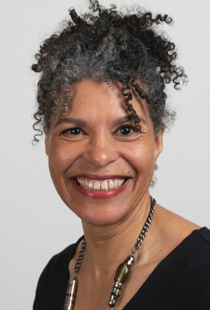
My primary research interests focus on contested markets around tourism. I have undertaken extensive research on female sex tourism, child sexual exploitation and cosmetic surgery tourism. Within these areas I explore the intersections between race gender and sexuality and explore how individuals engage with identity, agency and power to invest in embodied forms of labour.
I recently worked on a British Academy funded project in titled 'Revisiting Child Sex Tourism: Rethinking Business Responses'. This project considered questions about child sexual exploitation in relation to tourism in order to critically interrogate mainstream responses to trafficking and the impact of current policy initiatives to combat child sex tourism in Jamaica. It led to the development of police training on human rights for Jamaican sex workers through Social Science Impact Accelerator funding. My research on cosmetic surgery tourism has feed into policy on regulation of cosmetic surgery.
Suki Finn
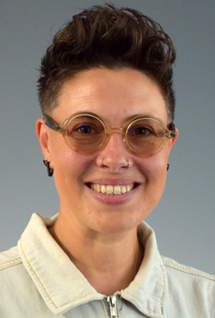
I am an Associate Professor in Social Philosophy who enjoys delving into abstract puzzles and practical issues. I specialise in applied- and meta- metaphysics, but my interests are wide-ranging and span the areas of feminist/queer theory, critical socio-legal theory, the epistemology of logic, bioethics, and the philosophy of science and technology. I am
fascinated by the emptiness of Nothing, the totality of Everything, and the lines we draw around the 'some-things' in between. My recent work has focussed on the boundaries of the pregnant body, including the ways in which gestation is gendered, medicalised, and technologised, looking specifically at trans pregnancy and new assisted reproductive technologies.
Jennifer Cole
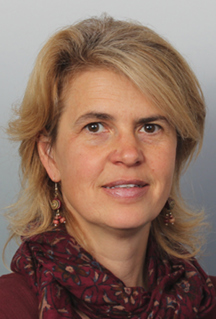
My research interests span health, risk and resilience, with specific regard to infectious disease and climate change. I focus on antimicrobial resistance, and how this can emerge, spread and be amplified by environmental conditions, including conditions of the social environment. Equity and social justice are keys part of my work, feeding from and into the Planetary Health Alliance Education Framework, which positions Equity and Social Justice as key factors underpinning human (ill)health. This, in turn, crosses over with my work on bioethics and biopolitics, incorporating issues such as intergenerational justice (encouraging us to leave the Earth and its environments in the condition we found them for the benefits of future generations), and the rights of the more-than-human world (respecting animals as more than just commoditised food, and land as more than just a provider of services and benefits for those who live on it). The influence of healthy and nutritious food on strong immune systems, and in turn on individual and community vulnerability and resilience to disease, bring these interests together. I use primarily ethnographic and mixed methods, and my research fieldwork takes place mostly in the Global South, in Sub-Saharan Africa and SE Asia.
Lynn Tang
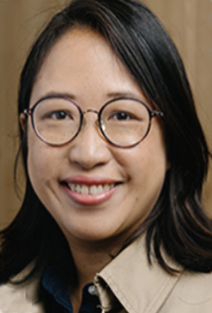
Lynn Tang’s research focuses on mental health, inequalities and related policies, with a particular interest in lived experience and service users’ perspectives. She examines how social, cultural and political contexts shape distress, recovery and access to support.
Her research has explored the recovery journeys of Chinese mental health service users in the UK and suicide prevention in the context of political crisis in Hong Kong. Current interests include suicide prevention, collective trauma, mental health inequalities, migration and minority ethnic communities, including women’s experiences of menopause. She is also interested in how people and communities respond to adversity, and how experiential knowledge can inform more inclusive approaches to care and prevention.
Alexis Artaud de La Ferrière
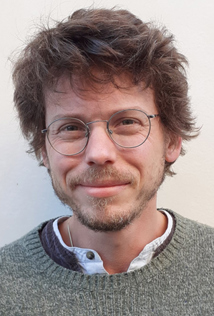
I am Lecturer in Sociology and Religion here at Royal Holloway, Associate Researcher at the Groupe Sociétés Religions Laïcités (EPHE/CNRS) in Paris, and Director of the Center for Metanoia Studies. My research lies at the intersection of the sociology of religion, social theory, and the study of personal and cultural change. A central strand of my current work concerns metanoia: how individuals undergo and sustain significant transformations in identity, belief, values, and ways of life, and how the social and institutional conditions of contemporary society enable or inhibit such change. This includes work on religious conversion and commitment, secularisation and religious change, and the effects of modern individualism, social acceleration, and changing forms of community and belonging.
Much of my research uses Catholicism as a lens through which to examine these broader questions. I have written on dynamics of change within the Catholic Church in France and the Maghrib, mission and empire, religion and immigration, post-colonial expressions of
Catholicism, and the relationship between religious institutions and secular civil society. I also maintain interests in Church–State relations, laïcité, freedom of religion and belief, and the relationship between social theory and theology.
Sylvia Walby
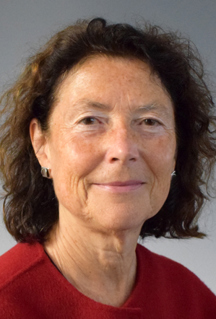
Sylvia’s research has three main themes: concept and theory of society, violence and society, and gender regimes.
Concept and theory of society: A new way of thinking about society, and theories of societal change, using complex systems theory. This is used to understand the authoritarian turn and the intersection of regimes of inequality.
Violence and society: developing the concept and measurement of violence, multiple forms of data and indicators, and removing sex bias from UK Office for National Statistics measurement of violent crime. Violence against women and girls, including domestic violence and trafficking in human beings. Analysis of government strategy to halve violence against women and girls in ten years in order to develop an alternative strategy. Working with Third Sector organisations to develop interventions that address the intersection of inequalities. Theorising the relationship between violence and society.
Gender regimes: varieties of gender regimes, changes in gender regimes, comparative histories of gender regimes and their critical turning points. Intersectionality: the intersection of regimes of inequality of capitalism, coloniality, and gender in time and space. Mainstreaming gender into central issues in social theory and policy practice.
Caterina Nirta

I’m an Associate Professor in Critical Theory. My research sits at the intersection of post-structuralist and feminist philosophy, gender and trans theory, embodiment, materialisms and spatiality. I am particularly interested in forms of embodiment that sit uneasily within established orders of intelligibility, and in their capacity to exceed, disrupt and reconfigure the categories through which identity, recognition and belonging are organised. A parallel strand of my research engages with utopian thought and philosophies of time, exploring futurity, possibility and becoming, and asking how thinking differently about time might open the present to forms of life that its existing categories cannot yet fully accommodate.
My recent work has focused on trans embodiment and recognition; trans pregnancy beyond motherhood; performance art and counter-archival practices; ageing bodies and urban space; and laughter, time and utopian possibility.