The CyberAccess project at Royal Holloway, University of London, uses interactive workshops to make cyber security more accessible and help young people who are not in education, employment or training (NEET) explore possible routes into the industry.
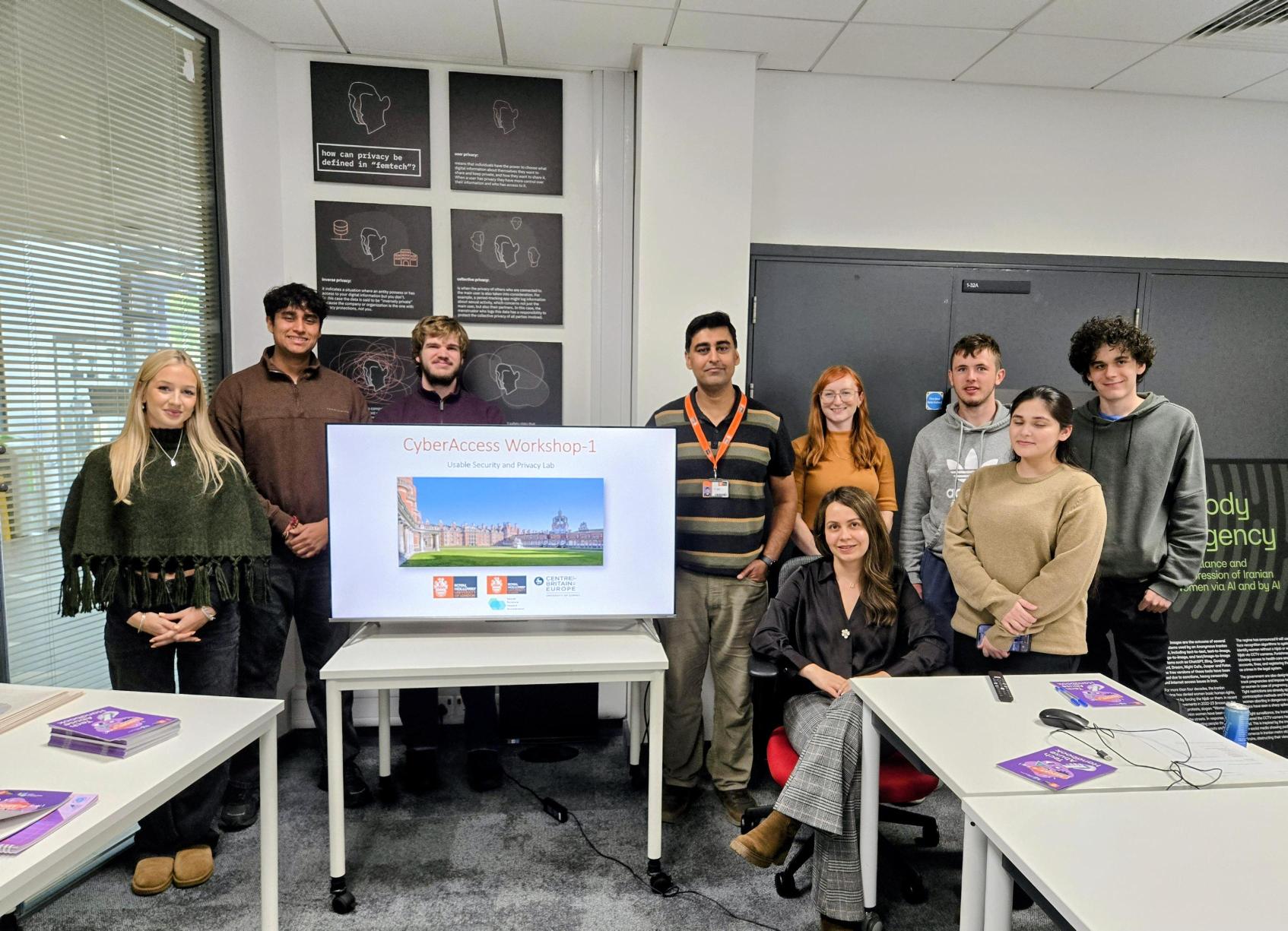
1st Workshop at the USP Lab, 17th September 2026
Cyber security is part of everyday life, from protecting personal information online to helping organisations respond to cyber-attacks. But how can young people who are not in education, employment or training find their way into this important field?
The CyberAccess project at Royal Holloway, University of London, addressed this question through two interactive workshops designed to make cyber security more accessible and help young people who are not in education, employment or training (NEET) explore possible routes into the industry.
Led by Dr Waleed Bin Shahid and Dr Maryam Mehrnezhad and supported by Research Assistant Dr Taylor Leigh Robinson at the Usable Security and Privacy (USP) Lab, the project was funded by the Royal Holloway Social Science Impact Accelerator and delivered in collaboration with the Centre for Britain and Europe, University of Surrey.
Practical cyber security workshops at Royal Holloway and University of Surrey
Through tailored training, young people developed practical cyber security skills, discussed online safety, and learned from researchers, students and industry professionals. Across two workshops, young people were given an opportunity to engage in practical exercises, including activities spanning technical and social foundations important to cyber security.
This included the technical foundations of cyber security such as cryptography, open-source intelligence (OSINT), how cyber-attacks work in practice, as well as hands-on exercises with privacy tools. This was twinned with a focus on social foundations, such as cyber safety and technology-facilitated abuse, drawing on recent research (see Tech Abuse Handbook for more information). Young people discussed why security and privacy matter in everyday life, including online data collection, scams and ways to protect themselves.
An important part of CyberAccess involved giving participants the opportunity to hear directly from people working in the cybersecurity industry. Their experiences show that there is no single route into industry and that people could develop their skills over time. This included four speakers - Dan Nye from Splunk; Molly Dewis from NCC Group; Gokul Parandhaman, SOC Analyst at Elysian IT; and George Goddard, Security Consultant at Actica Consulting - shared insights into their career journeys and professional experiences. These conversations linked the practical training with the realities of working in cyber security and technology, giving young people insight into different roles and resources to continue developing their skills. We give special thanks to Royal Holloway undergraduate student Nick Evans and USP lab PhD student, Jorele Simons, for providing dedicated sessions on OSINT and cyber safety on social media respectively.
Together, the sessions showed that cyber security is not only about technical systems. It is also about privacy, personal safety and the impact of technology on people's lives. As one participant commented: “You all managed to create an introductory session on a complex topic in a simple, understandable, and practical way.”
Helping more young people explore cybersecurity
Through CyberAccess, the USP lab in the Information Security Group is demonstrating how grounded, practice-based workshops offer an opportunity to build young people’s confidence and provide opportunities for those who are considered NEET.
Prof. Keith Martin, Director of Royal Holloway’s NCSC Academic Centre of Excellence in Cyber Security Education (ACE-CSE) recognised the importance of CyberAccess: "Part of Royal Holloway’s mission as an ACE-CSE is to act as a gateway into the cyber security profession, whether through educational programmes or other means. CyberAccess has proved to be both an innovative and inspirational means of flagging potential career opportunities to groups of young people that are otherwise often overlooked."
This is in support of Royal Holloway’s ambitions in its RH2030s strategy to provide ‘Skills for choice and opportunity’ and to support and engage with our local communities. As Professor Julie Sanders, Vice-Chancellor and Principal, said at a Higher Education Policy Institute (HEPI) fringe event at the 2026 Labour Party Conference, universities are vital to understand the growth in young people who are not in education, employment, and training – as much as respond to it.