It's a bee-hive!
There are no solutions in the manuscript from which this text is taken, so scholars have been arguing about what this is for a very long time.
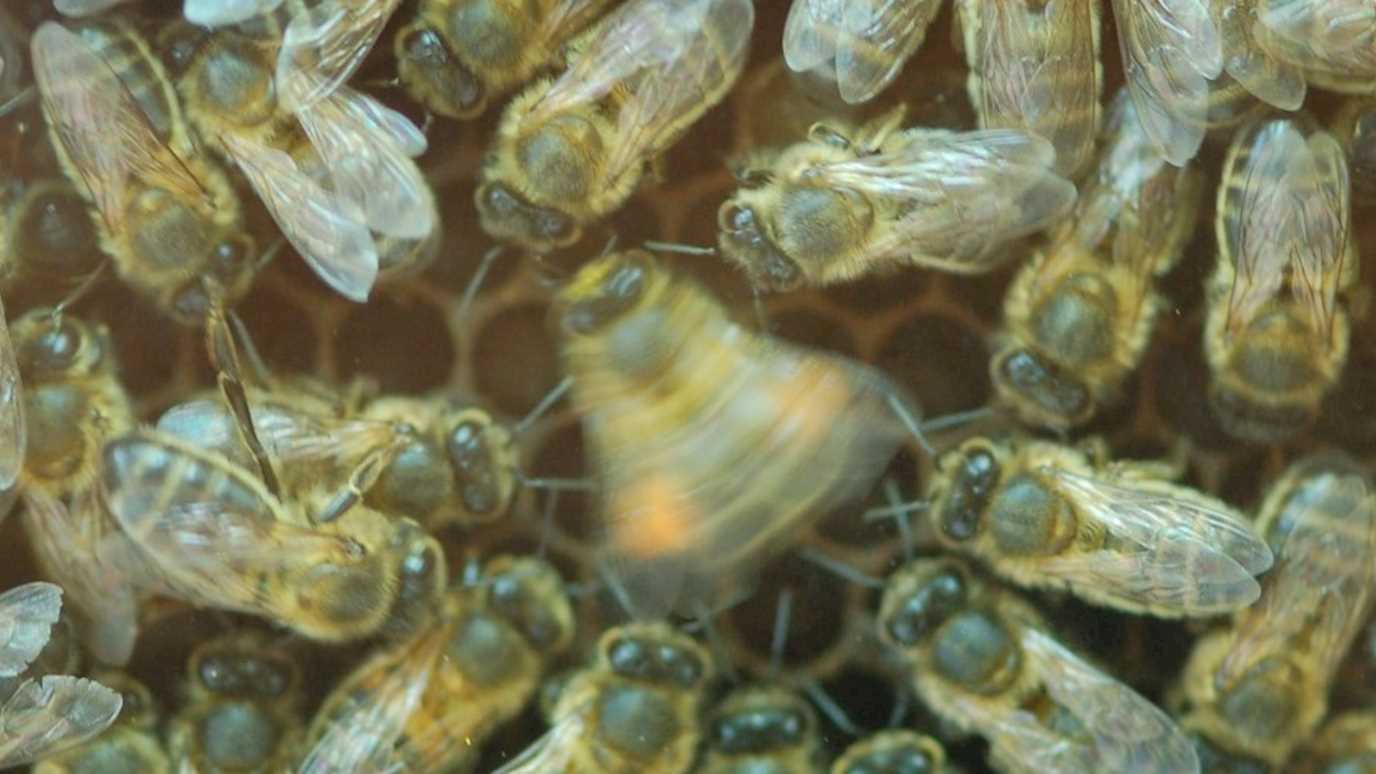
Up until very recently, we've all been fooled by the military language into thinking that this is some kind of projectile weapon, but now people are starting to accept that the flying darts here are bees--not the yellow-banded ones we know today, but very dark ones, as all honey bees were before Italian variants were imported in the 18th century. The speaker here is a bee-hive, and, like Winnie the Pooh, we remember both the sweetness of the honey and the anger of the enraged swarm that comes through its mouth.
This is one of almost a hundred Old English riddles contained in a 10th century manuscript called the Exeter Book. Their topics are very mixed, ranging from dirty jokes to mundane tools to natural history to meditations on religious mysteries, and they reveal aspects of early Medieval life and thought that we don't find in other texts.
My current project is a study of the riddles of the Exeter Book. In it, I argue that Modern readers' emphasis on finding final, authoritative solutions misrepresents the nature of the texts themselves. Rather than questions with answers, the Exeter Book Riddles are questions without answers, questions that force their audiences, whether Anglo-Saxon or contemporary, to scrutinise how information is conveyed and, perhaps most importantly, how value is ascribed to it.
Dr Jennifer Neville is a Reader in Anglo-Saxon Literature