Project Lead (Principal Investigator): Dr Zena Kamash
Senior Lecturer in Roman Archaeology, Department of Classics, RHUL
I am in charge of the day-to-day running of the project (lots of meetings and admin!). For me, as a British Iraqi archaeologist, this project is important because it links with my own heritage and opens up a way for me to impact positively on communities who have experienced so much hurt over recent decades. I have my own creative practice that I find therapeutic and restorative, so I wanted to find ways to bring together that joy with the joy I also find in heritage of all kinds, whether natural or cultural, old or new. Teaming up with psychologists, Emma and Anne, and with other Iraqis from a range of cultural and educational backgrounds, Omar, Layla and Zhala, has meant that we can pool our expertise and lived experience to create what we hope is a vibrant project with a long-lasting legacy. I love so much about this project and its collaborative ethos, but especially seeing how the workshops bring out so much creativity in the participants.
Quantitative Lead and Co-Investigator: Dr Emma Palmer-Cooper
Lecturer in Psychology, Centre for Innovation in Mental Health, University of Southampton
On the project, I lead on the quantitative data analysis, methods planning and developing the handbook for future groups to use following the end of the project. This project will help us understand potential culturally-inspired wellbeing support that can be provided by non-experts at low cost.
Qualitative Lead: Dr Anne Ferrey
Senior Researcher and MSc Course Director, Nuffield Department of Primary Care Health Sciences, University of Oxford
My role on the project is to lead on the qualitative data analysis and other aspects, for example the development of handbooks for future groups to use following the end of the project. I think this project is important because very little evidence has examined the link between crafting that has a heritage element and well-being. It seems likely that including a heritage aspect will magnify the positive effects of crafting workshops (such as social interaction, an opportunity to exercise creativity, a sense of accomplishment etc). This project will help us start to understand why and how workshops like these may be beneficial to people living in Iraq. I am enjoying working with the team and seeing the creativity and beauty of the finished projects. I also enjoy reading the qualitative interviews - it is very interesting to hear how people think about crafting and about their own heritage.
Research assistant: Dr Omar Jassam
Archaeologist, American University of Iraq, Sulaimani; Cultural Heritage Management Department, University of Mosul
My main roles on the project are: quantitative data gathering and analysis, and managing and arranging workshops, including taking lots of photos! I feel that it is important to make clear the value, benefits and the power of cultural heritage when we use it to promote well-being for societies who have experienced conflict and trauma. I think this project is a great opportunity to support our people using our cultural heritage.
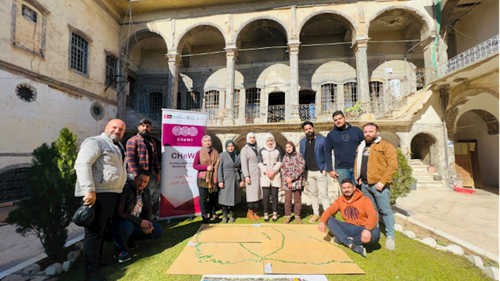
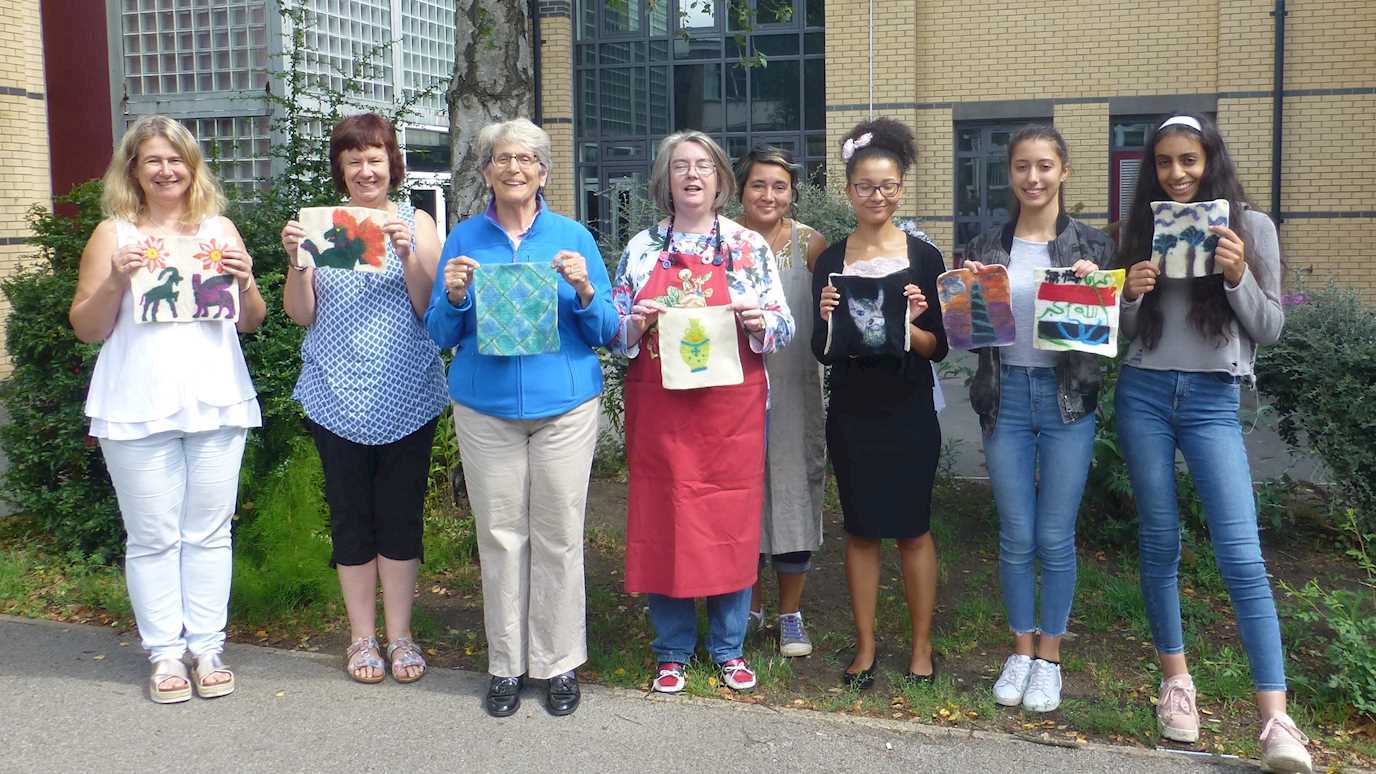
The Lamassu Group at the end of one of a series of workshops making mosaics and textile art in a historic house in Mosul, Iraq. CHeWI team member, Omar Jassam, is standing at the front left of the group.
Research assistant: Zhala Jabar Hama Amin
Craft practitioner, American University of Iraq, Sulaimani
On the project, I am the crafts manager and facilitator at the workshops. I also support my team members with the questionnaires and interviews, and help with translation into and out of Kurdish. I really enjoy the practical part aspects of the crafting. I like to choose crafts that I think will speak to the interests of participants. So far we have tried drawing, embroidery, mosaic making, wet felting and candle decoration. When I see a participant's enthusiasm for crafting, it sparks my enthusiasm and interest too.
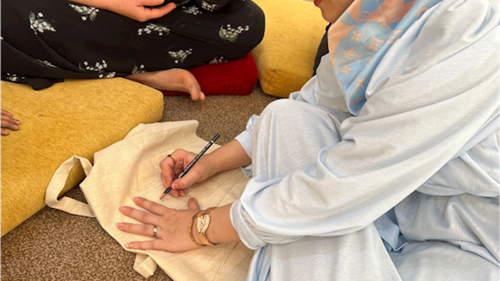
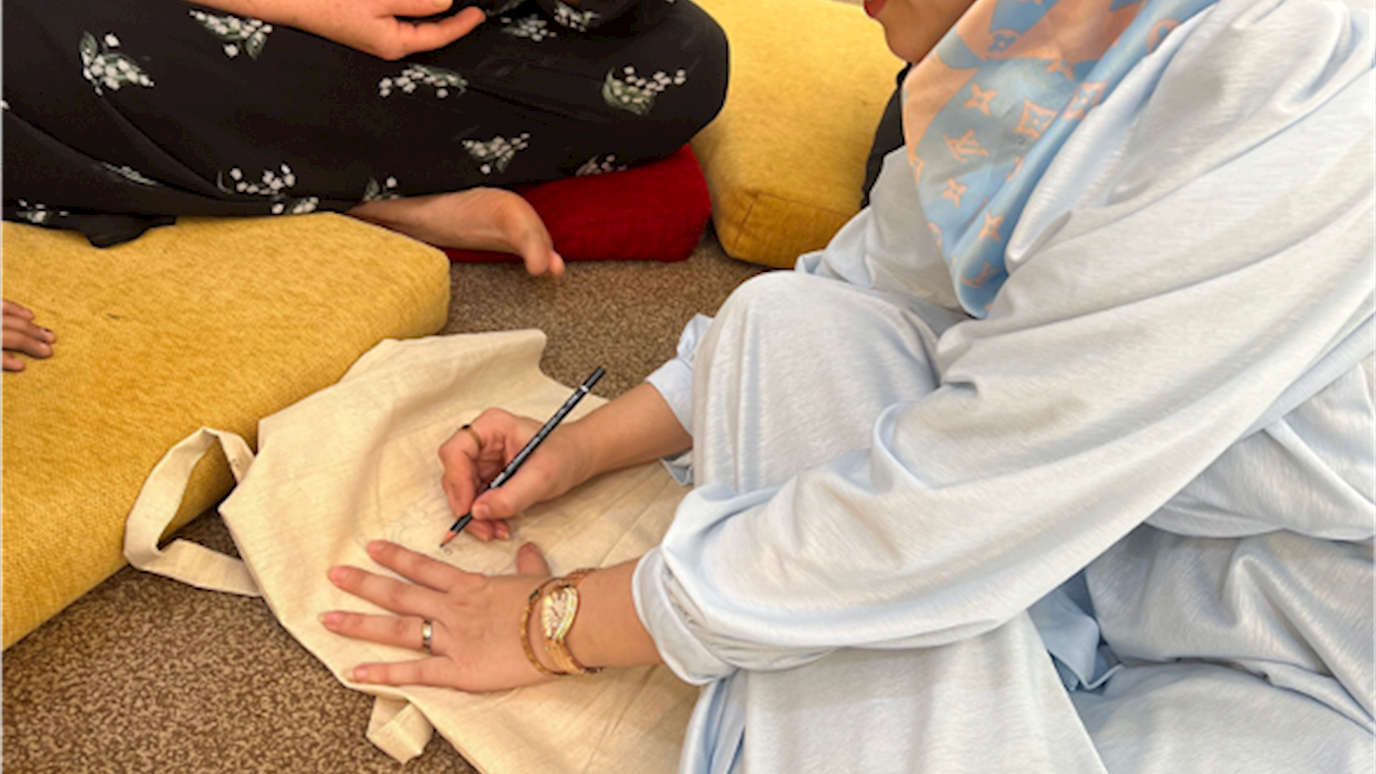
A workshop in progress with the Jiyan Foundation for Yezidi women. CHeWI team member, Zhala Amin (right), is helping a participant (left) start their embroidery design.
Research assistant: Layla Salih
Museum professional and heritage practitioner, American University of Iraq, Sulaimani
My main role on the project is to gather and analyse the qualitative data through participant interviews. I am also involved in setting up and organising workshops, ensuring their smooth running.
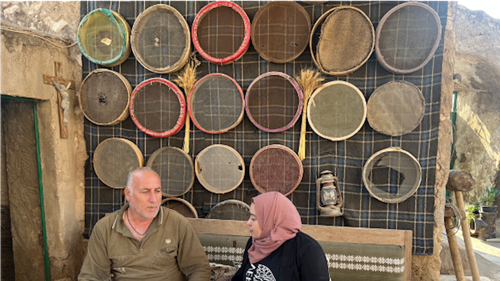
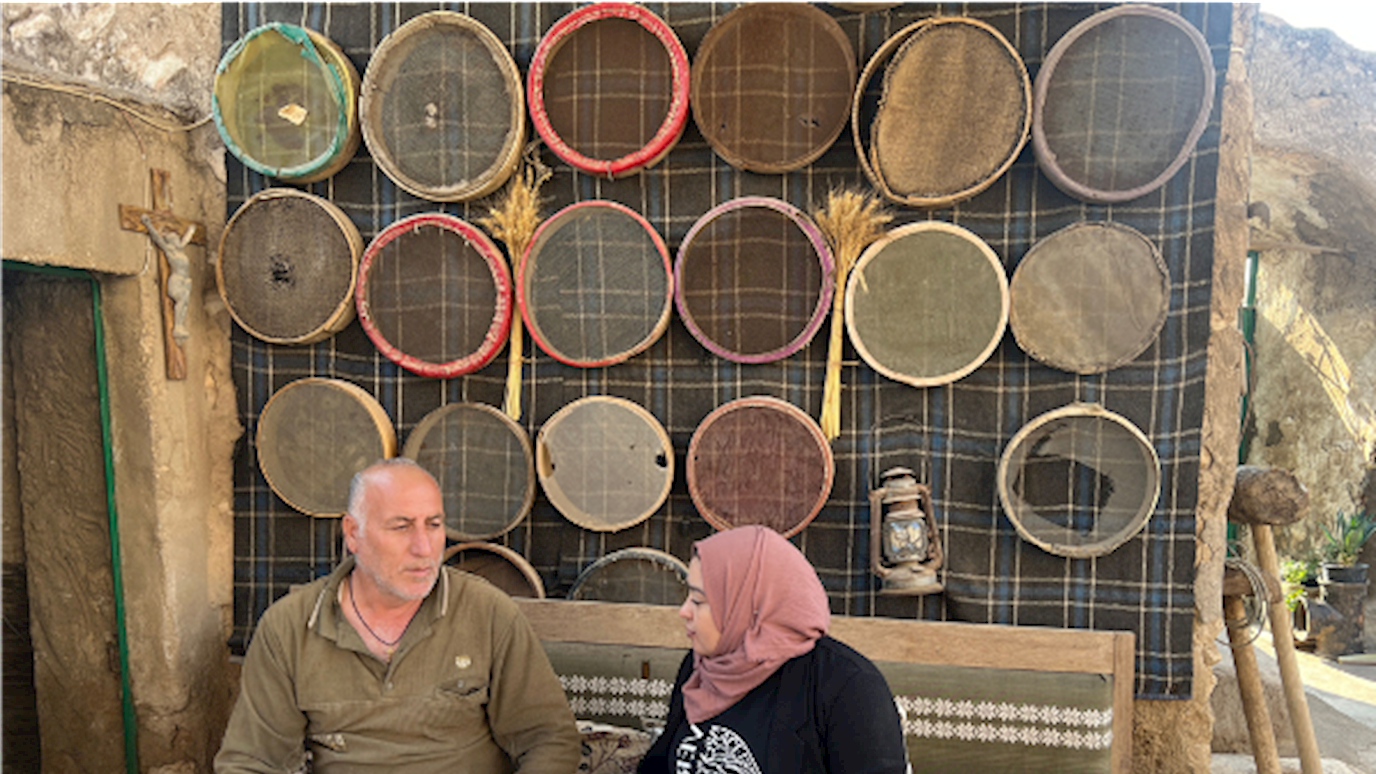
CHeWI team member, Layla Salih (right), interviewing a workshop participant (left).