We have already reached the half-point of Autumn term and Study Week is upon us.
The past six weeks were stressful for us all, but I hope that you've all enjoyed your modules so far. In the second half of the term, most of you will have coursework to submit, there will be Staff-Student Action meetings (SSAMs), where your reps will have an opportunity to discuss various issues with members of staff and identify actions to be undertaken. Towards the end of November, an exciting Symposium organised by the Classics Society will bring together students and staff (more details to follow). But first, Study Week, during which a group of students taking the “City of Athens” module will go to Athens for a week led by Professor Jari Pakkanen. We all expect a report (and photos) in the next issue of our newsletter.
In this week’s newsletter we have three items:
- Dr Liz Gloyn writes about the Vesuvius Project
- “And the Grote Prize for Ancient History goes to…”
- Classics and Dance
Dr Liz Gloyn writes about the Vesuvius Project
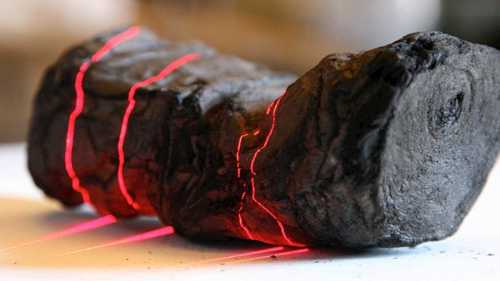
“On social media, you often see classicists answering which three texts they would like to have saved from antiquity that we don’t already have. The answers always tell you a great deal about the person answering; for instance, I would love Agrippina’s Memoirs, Ovid’s Medea, and one of the historical plays that was written in the gap between the Republican comedies and the Senecan tragedies, which is all we have of the vibrant and vigorous genre of Latin comedy. We might have come one small step closer to recovering those lost texts with the recent news that the Vesuvius Project has bestowed its award for discovering the first word on an unopened scroll from Herculaneum to a 21 year old computer science student. The library in Herculaneum is a gold mine of texts and we have absolutely no idea what’s in there – and until now, had no way to get into the carbonised scrolls without totally destroying them in the process. When I was an undergraduate, the view was that putting the scrolls aside until the technology was available to read them was a smart move – which makes it even more remarkable, for me, that we are now living in the future and that technology is, slowly but surely, starting to recapture texts which might otherwise have been lost for ever.’
“And the Grote Prize for Ancient History goes to…”
Our very own PhD Candidate in Classics, Ellis Cuffe, was awarded the Grote Prize in Ancient History on Thursday 19th October. The Grote Prize is offered every year by the Institute of Classical Studies from the fund bequeathed by the late Professor V. L. Ehrenberg. The Prize of £3000 is awarded for an original and hitherto unpublished study on a topic in ancient history and is open to current research students of the University of London. Ellis was awarded the Grote Prize for a submission of an edited chapter from his PhD dissertation, 'Household Strategies and Community Resilience in Rural Roman Egypt (ca. AD 160-180)’. He was subsequently invited to present his research on 'Unmet Labour Demand in Roman Egypt: Household Migration Strategies, Risk-Management and Rural Resilience (ca. 30 BC – AD 230)’ at the Institute for Classical Studies Ancient History seminar series.
That makes it 3 George Grote Prizes for Classics at RHUL in the past 5 years! Back in 2018, Peter Olive was awarded the Prize for his MPhil thesis, ‘The Greek vocabulary of incest’. Then in 2020, Giulia Maltagliati (now Isaac Newton Junior Research Fellow at Newnham College, Cambridge) was awarded the Prize for a chapter from her PhD dissertation, ‘Persuading by Paradeigmata: the role of historical examples in Attic Oratory’. Warmest congratulations to Ellis on this achievement!
Classics and Dance: Beth Thompson writes about her experience in the Dance Society
“Hi, my name’s Beth and I’ve been a part of Dance Society for 3 years. My favourite style is tap dancing which I’ve done since I was about 9 but I had no training in any other styles when I initially joined the society. Since then, my confidence as a dancer has grown so much and I’ve done things I never thought I could, such as co-choreographing our Advanced Tap competition team last year, which won second place once and first place twice.
This year I’m Events Coordinator on our committee. My job is to organise our showcases where we perform routines that we teach across the term. Our showcase for this term will be happening on December 2nd – please get tickets and come watch!
My passion for dance has led me to write my dissertation on ancient Greek dance. Currently I’m researching how ancient dance is gendered, looking at war dances and dancing in religious cults. One source that’s been helpful is “Dance and ritual play in Greek religion” by Steven H Lonsdale as well as various vases - I’m very excited to see where it takes me!”
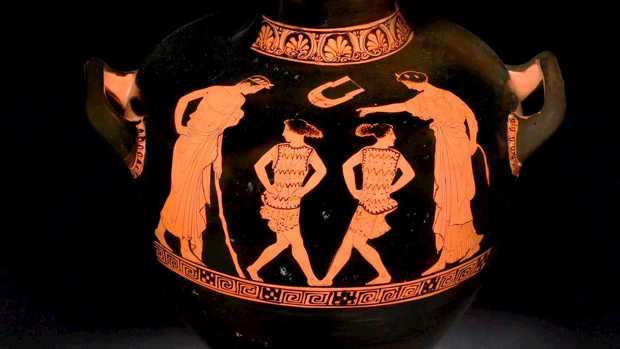
Red-figured hydria, depicting a Dancing lesson. Attributed to the Phiale Painter. Athens, date: ca. 430 BC. © The Trustees of the British Museum
I hope you all stay safe, wind down and recharge your batteries during Study Week. The next issue of our newsletter will be emailed to you on 10 November.
Best wishes,
Christos