



The limits of civilization: opera and bullfighting in 19th century Lima
In 1840 the first formal opera company arrived to Lima from Havana, Cuba. That same year, English steamers for the first time connected with a commercial network the ports of the American South Pacific. Peru had only been independent for little more than a decade, and both events -opera and steam- were heralded as the signs of a new form of modernity. The impact of the opera company, led by Raffaelle Pantanelli and his wife Clorinda Corradi, cannot be denied: by the 1850s, almost all medium and large cities in the Andes had built opera houses to support and attract singers and troupes from abroad. Some of those, like the ones in Santiago and La Paz, still survive. In its nineteenth-century rise to global cultural domination, Italian opera conquered South American audiences, and the region became one of its primary markets in the following decades. However, the reception of opera was nor passive or simple. In the old "City of Kings", the capital of the Spanish Empire in South America, opera had first to prove itself against bullfighting, then the most prestigious and popular form of entertainment across the ex-Spanish colonies.
In this seminar, I will discuss how the debates for and against opera and/or bullfighting in Lima in the 1840s can show the limits not only of Italian opera's dominance over the cultural scenes of Western capitals in this period, but also of the very notion of civilization that was then becoming a key concept for understanding the relationship between Europe and the Americas. As Bizet's Carmen showed a few decades later, bullfighting also served and serves as a mirror to discuss nineteenth-century opera in ways that are not always self-evident; for example, its complex interrelation of voyeurism, violence and showmanship. Confronted with the rise of Italian opera, Limenian audiences rightfully debated: Where is the locus of civilization? What form does it take? Who should decide that? Today, when both opera and bullfighting are confronted by changing notions about culture, elitism and violence, the ways in which Limenian audiences either accepted and rejected operatic practices in the 1840s can serve as a useful reminder of the limits of our own ideas about the borderlines of Western art music, including notions of appropriation, reception and local agency.
José Manuel Izquierdo is a Chilean musicologist. He got his PhD in Music from the University of Cambridge, where he was a Gates Cambridge Scholar, working under the supervision of Benjamin Walton. He is currently the director of the PhD in Arts program from the Pontificia Universidad Católica de Chile, where he is a reader in musicology and music history. His main interests are music in Latin America in the nineteenth-century, the recovery of music archives from the Andes, and the issues of networks, appropriations and agency in the global expansion of Italian opera. For his work he has received several awards, including the Otto Mayer Serra award from the University of California Riverside for studies on Latin American music, and the Tosc@ award for transnational studies in opera; his dissertation was recently awarded by the Fondazione Rossini and will be published as a book in 2020.
Further information
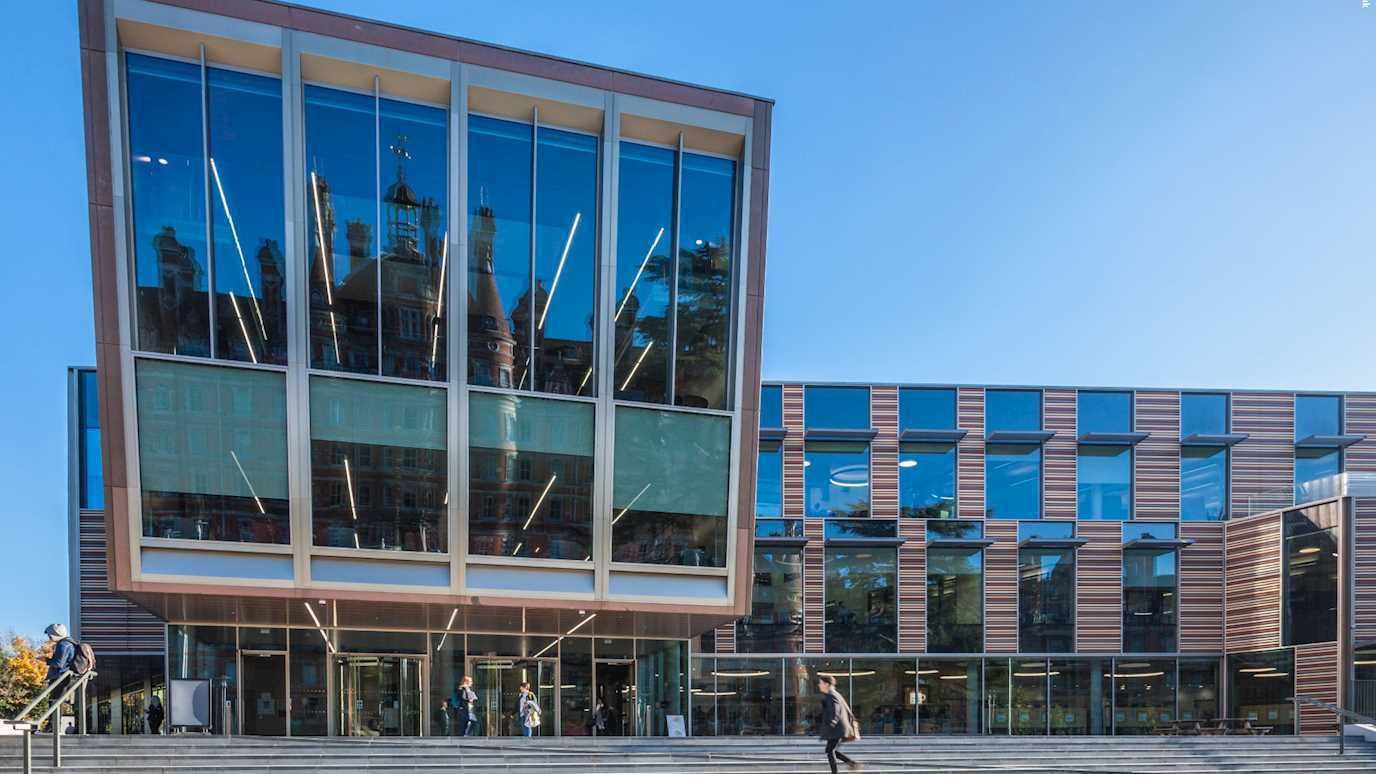
Location: Wettons Terrace, room 001