BAFTA-winning actress Georgina Campbell graduated from Royal Holloway in 2014. More than a decade later, she is living in Los Angeles, working with some of the biggest names in film and television and preparing for another major Netflix series. She talks to fellow alumna Jessica Jonzen about trusting her instincts, why Film Studies proved the perfect foundation for an acting career and the importance of making space for your own voice.
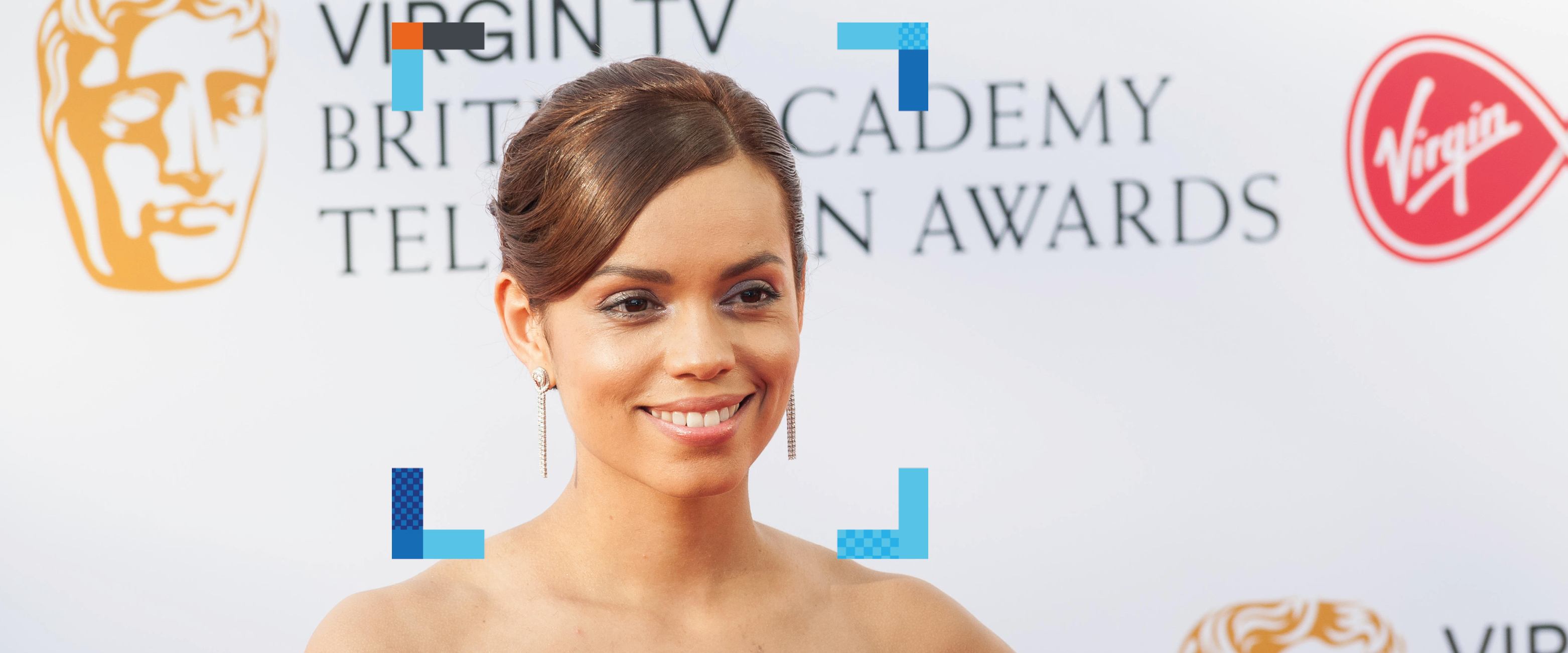
When Georgina Campbell arrived at Royal Holloway in 2011, she was already ahead of many aspiring actors. She had an agent, was auditioning professionally and had begun building the career others were still hoping to break into. Yet rather than taking the conventional route into the industry, she chose to study Film Studies, switching from Media Arts when the demands of auditions made the course's collaborative projects increasingly difficult to balance. It proved to be a defining decision, broadening not only her understanding of cinema but the way she thinks about storytelling itself.
More than a decade later, Campbell is speaking from Los Angeles, where a career that began with instinct rather than strategy has taken her far beyond the plans she imagined as a student. She has a Best Actress BAFTA to her name, recent projects include the acclaimed horror film Barbarian which co-starred Bill Skarsgård and Cold Storage with Liam Neeson, Lesley Manville and Vanessa Redgrave, as well as a reunion with Charlie Brooker almost a decade after her appearance in his cult anthology series Black Mirror. Yet despite an international career spanning film and television, she remains strikingly resistant to the idea of having followed any carefully mapped-out plan.
Indeed, her acting career began with a chance encounter when she was spotted walking down Tottenham Court Road as a 16-year-old by Sarah Walker, the writer and director, who asked her to audition for a part in her show Freak. She got it, and she took her first tentative steps on her career path.
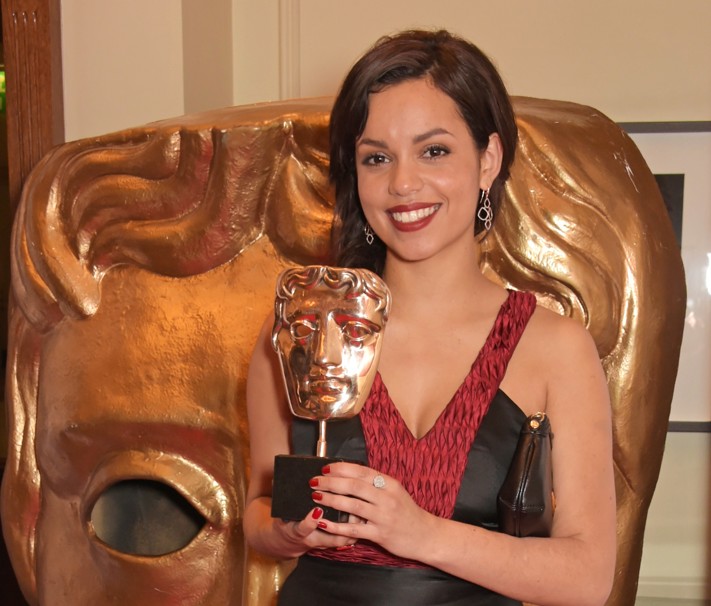
The year after graduating, Campbell won one of television’s biggest accolades: a BAFTA for Best Actress. She beat established names including Sarah Lancashire, Keeley Hawes and Sheridan Smith for her performance in the BBC Three drama Murdered by My Boyfriend, a powerful and critically acclaimed adaptation of a true story about domestic abuse. Without the widespread attention surrounding shows such as Happy Valley and Line of Duty, it was Campbell’s quietly devastating portrayal of a young woman trapped in an abusive relationship that ultimately set her apart.
If there is a thread running through Campbell's career, it is an ability to recognise the right opportunity when it appears. Her move to Los Angeles was a case in point. “It was a slow development. After graduating I was living in London building up my resume and then I filmed the DC Comics series Krypton in Ireland and from that got a US agent, so I started to go to America more for meetings and auditions and it developed from there,” she says. More auditions followed, then more work, and eventually a move across the Atlantic, helped, she says, by meeting her now-husband, editor and director Dawson Taylor.
Her willingness to embrace the unexpected is probably best illustrated by taking a part in the 2022 film Barbarian. When Zach Cregger's script first arrived, it seemed an unlikely prospect: an unsettling horror film from a relatively unknown director, before the attachment of its eventual stars, Bill Skarsgård and Justin Long. "It was completely bonkers," she laughs. "I remember reading it and thinking, 'Oh my God, this is incredible.'"
Her agents were less convinced. "They weren't worried exactly, but they were a bit unsure because it was such a strange script. They didn't know what it was going to become." Campbell trusted her own reaction. "I just thought, 'No, I really want to do this. I think this is going to be a great film.'"
She was right. Barbarian became one of the surprise critical and commercial successes of the year and led to her working on several other horror movies, including Bird Box Barcelona, T.I.M, Lovely, Dark, and Deep and The Watchers. "I genuinely love horror films," she says. "The nice thing about the genre is that they're often smaller budget, so there can be more openness to casting people who aren't necessarily the biggest stars. The genre itself is the star."
Still, she has little interest in staying in one lane. "The industry does like putting people in boxes," she says. "You do one thing and people think, 'Great, let's get them to do that again.'" In Campbell's case, that meant horror. "I'm starting to look at things that feel a bit different now."
For Campbell, the conversation around diversity in storytelling is not simply about who is cast, but about whose histories are given space on screen. “I feel like there's a whole world of diverse storytelling in period pieces especially that's missing, rather than it necessarily being that you just swap the race of a character,” she says. “I feel like there are not as many stories that are told from the perspective of people of colour that were in the UK at these times in history; they're usually pushed out of the stories that we end up seeing.”
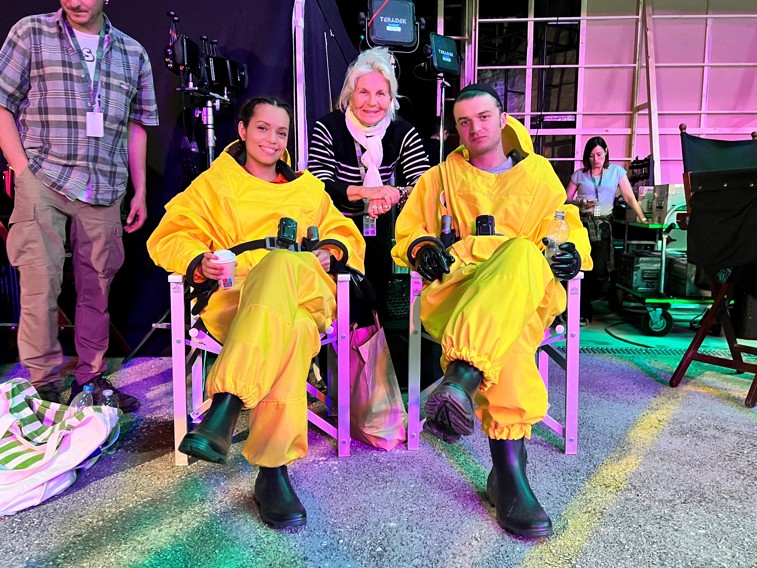
She is particularly interested in the stories that have remained largely unexplored, including the experiences of the mixed-race children born in Britain during the Second World War to African American servicemen and British women. It is a part of history she would love to see brought to life – not only because of the complexity of the characters involved, but because of what it reveals about identity, belonging and the realities of post-war Britain. For Campbell, these are the kinds of narratives that demonstrate the power of more inclusive storytelling: not simply adding different voices to familiar stories but uncovering the stories that have been overlooked altogether.
Her instinct to look beyond the obvious perhaps owes something to the way she first learned to think about film. Initially enrolled on the Media Arts BA course, she soon realised its emphasis on collaborative projects was becoming increasingly difficult to reconcile with a growing audition schedule. “I realised I couldn't disappear for a day to do an audition and leave everyone else relying on me."
Switching to Film Studies gave her the flexibility she needed, but it also opened up an entirely new way of engaging with cinema. Rather than concentrating solely on performance, she found herself immersed in the history, theory and language of film.
"It was more essay-based, so I could manage it alongside acting. But I also just really enjoyed film." The course exposed her to international cinema, different movements and ways of thinking about storytelling that extended far beyond Hollywood.
"We looked at films from different countries, different eras, different movements. There was so much history involved,” she says. Studying the work of stars such as Barbara Stanwyck and Katharine Hepburn alongside film criticism and theory transformed the way she watched films, encouraging her to think not just about performance, but about the choices being made behind the camera. "It definitely changed the way I watched films."
That broader perspective continues to shape the way Campbell approaches her career. While actors are often portrayed as carefully steering every step, she is quick to dismantle the idea that success comes from following a perfectly plotted route. "The reality is you're constantly auditioning," she says. "There are so many parts where you think, 'I really want to do that,' but you don't get them."
The profession, she points out, is as much about reality and resilience as ambition. "It is a job. Sometimes you make choices because you need to work. You need to pay the bills. It's always a balance."
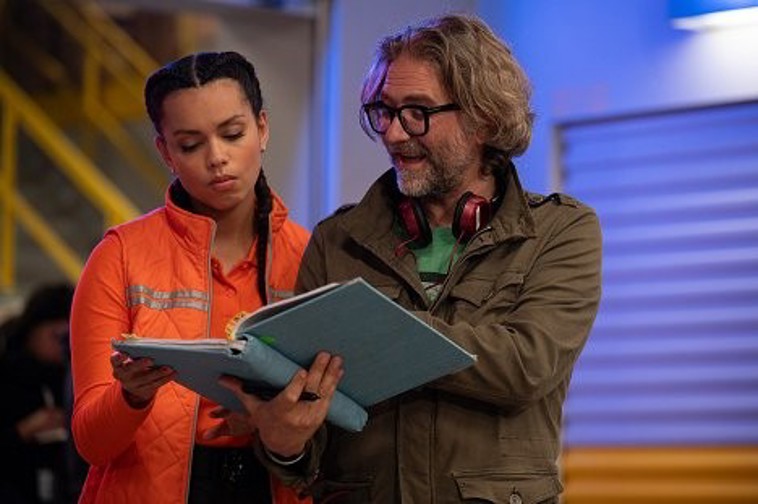
It is a refreshingly unsentimental perspective from an actor whose career has taken her from independent British television to Hollywood productions. 2025 was particularly demanding: six months filming an independent project in Canada, followed by the as yet unnamed Charlie Brooker series, co-starring Paddy Considine and Lena Headey, and another horror film, The Shepherd. This year has been quieter – and she is enjoying it.
"I used to find that really difficult," she says. "When you're younger, you're hungry and you just want to keep pushing,” she says. "I'm trying to separate who I am when I'm working from who I am when I'm not working."
Recently, Campbell began taking acting classes in Los Angeles – surprising, given her experience and achievements, yet this reflects her desire to remain open and curious rather than assume she is the finished article. "I think there's always more to learn."
That same sense of curiosity brought her back to Royal Holloway after graduation, when she supported the University's StoryFutures project, the National Centre for Excellence in Immersive Storytelling.
The project, which ran until 2023, explored new forms of digital storytelling and came about through her ongoing connection with Professor Adam Ganz, who had taught her screenwriting. "He got in touch and asked if I would be interested," she says. "It was really good timing."
Working alongside her husband, who also works in film, Campbell helped create an audio-based project inspired by the possibilities of immersive technology. "It was like writing a radio play, but the sound could move around you. It was really exciting."
Returning to Royal Holloway gave her a chance to contribute to a place that had played an important role in shaping her career. "I really loved being there," she says. "It was such a great course and such a lovely environment."
Her advice to students hoping to work in film is practical rather than lofty: make things, meet people and take every opportunity available. "Try to get yourself out there as much as you can – and spend as much time as you can in London and see as much theatre as you can. It doesn’t have to be expensive West End Shows – if you do some digging, there are lots of smaller productions and things you can see," she says.
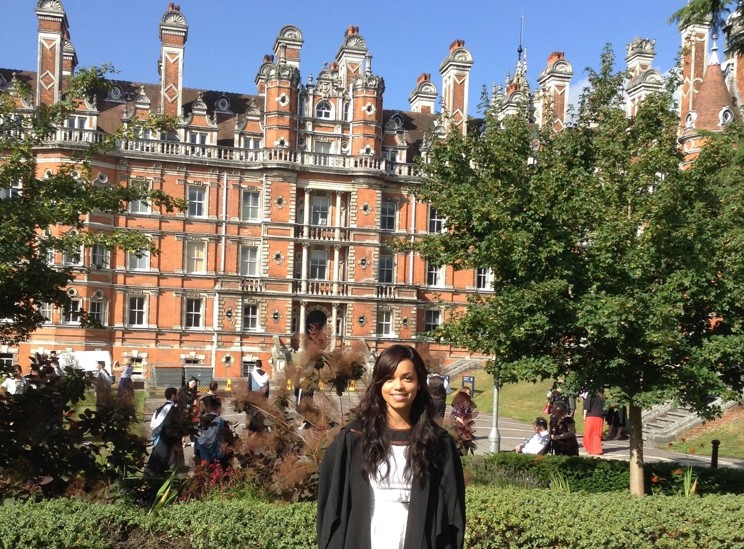
For those studying at Royal Holloway now, she believes the connections made at university can be invaluable. "The people you're studying with might become the people you work with later. Keep those relationships going."
She points out that some of her own contacts from the Media Arts department have gone on to work in the industry, and those relationships have endured. "I've had friends send me scripts and ask for notes. I've acted in some of their short films. You can all help each other."
Her advice to her younger self is simple, but it speaks to everything she has learned along the way. "Connect with your own feelings and thoughts," she says. "When you're young and you're coming into the workplace, there are lots of people who have opinions and lots of people who know more than you. Some of that is valuable, but sometimes it can squash your own voice. You deserve to be in the room. You deserve to have opinions. You deserve to think about what you want for your future."
It is a fitting conclusion for an actor whose career has been built not by following a prescribed route, but by listening closely to her own instincts – from choosing Film Studies over drama school, to taking a chance on a strange and unexpected script, to crossing an ocean without quite knowing what would come next.