New research, co-led by an academic from the Department of Psychology, investigated how traits of different neurodevelopmental conditions strongly overlap with each other and relate to wider emotional and behavioural challenges and real-world outcomes from childhood through adolescence
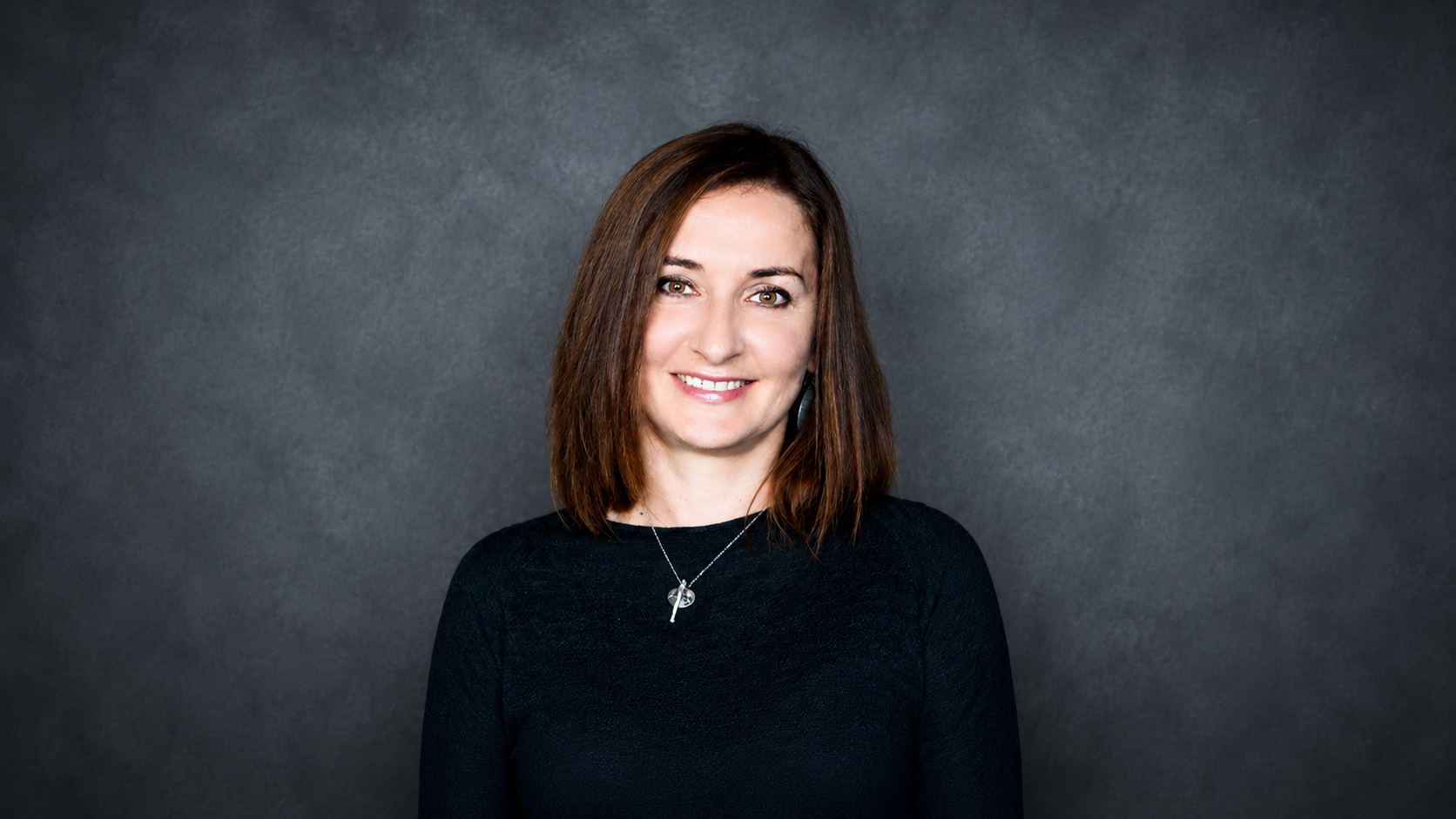
Dr Kaili Rimfeld, Associate Professor from the Department of Psychology at Royal Holloway.
New research published in the leading journal Molecular Psychiatry, and led by researchers from Queen Mary University of London and Royal Holloway, University of London, challenges the way we think about neurodevelopmental conditions. The study suggests it would be better for experts to focus on a broad constellation of traits (a “neurodevelopmental spectrum”) to identify potential challenges and support children and young people, rather than looking at individual conditions like autism, ADHD, and dyslexia in isolation.
This study used data from more than 10,000 children in the UK (the Twins Early Development Study) and is the first to take a large-scale, in-depth look at how traits of different neurodevelopmental conditions overlap and relate to a wide set of outcomes from childhood through adolescence.
Around 15% of individuals worldwide have one or more neurodevelopmental conditions. These conditions are categorised separately in psychiatric manuals used for diagnosis and supported across a range of separate healthcare and community services.
However, the focus on individual neurodevelopmental conditions has significant limitations, as most people with neurodevelopmental conditions have more than one condition, or traits of multiple conditions. This can lead to co-occurring conditions and associated needs being overlooked. Instead, research indicates it is more useful to consider all these traits and needs jointly when thinking about how best to support children and young people.
The research identified a common underlying dimension, called the neurodevelopmental spectrum, that reflects the constellation of traits characterising these conditions across development. The study combines developmental, genetic, and environmental information to understand the architecture of this novel spectrum. It also shows how it relates to a wider set of emotional and behavioural challenges and predicts future real-world outcomes, such as school achievement and special educational needs and disability (SEND) status.
Dr Giorgia Michelini, Senior Lecturer in Neurodiversity & Mental Health at Queen Mary University of London and lead author of this paper, said:
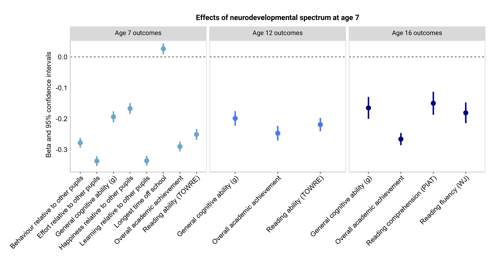
“It is striking that this aggregate index of neurodevelopmental traits showed strong associations with academic performance and related challenges, explaining up to 21% of differences between children in real-world outcomes. For example, a child with a high neurodevelopmental spectrum score at age 7 was more than twice as likely to have a SEND statement at age 12 as a child with a low score. And elevated scores across childhood and adolescence were closely linked to poor school performance, with medium-to-large effects (see Figure 1).
"These associations were not better explained by other emotional and behavioural challenges that are often experienced by neurodivergent children. Together, our study highlights that focusing on a broad set of neurodevelopmental traits spanning autism, ADHD and other forms of neurodivergence is crucial for understanding and supporting children’s needs, while also helping to predict later outcomes.”
Importantly, findings closely mirror and provide novel scientific evidence for the concept of neurodivergence, which is increasingly used as an umbrella term for neurodevelopmental conditions and differences.
Dr Michelini said: “In recent years, we have seen a growing advocacy and community-led movement to reconceptualise neurodevelopmental conditions as forms of "neurodivergence”, bringing different conditions under the same umbrella.
"Yet, identification and support for these conditions is still provided by different groups of professionals (i.e., child psychiatrists, paediatricians, speech and language therapists) across separate settings. Our findings provide strong evidence that a more joined-up (transdiagnostic) approach to identification and support will likely be more beneficial, as it provides a fuller picture of an individual's needs and strengths.”
The utility of this approach was also recently highlighted by government-commissioned reports on autism and ADHD.
Dr Kaili Rimfeld, from the Department of Psychology at Royal Holloway and co-lead author, added: “Our findings have important implications for influencing SEND provision, psychiatric classification and clinical pathways, and personalising care.
"The findings support the use of broad needs-based approaches to assessment of neurodevelopmental differences beyond traditional diagnostic categories in school and clinical settings. A shift towards more joined-up, personalised, inclusive practices can improve identification and ensure support is tailored to individual strengths and needs, leading to better outcomes for neurodivergent children and young people.”