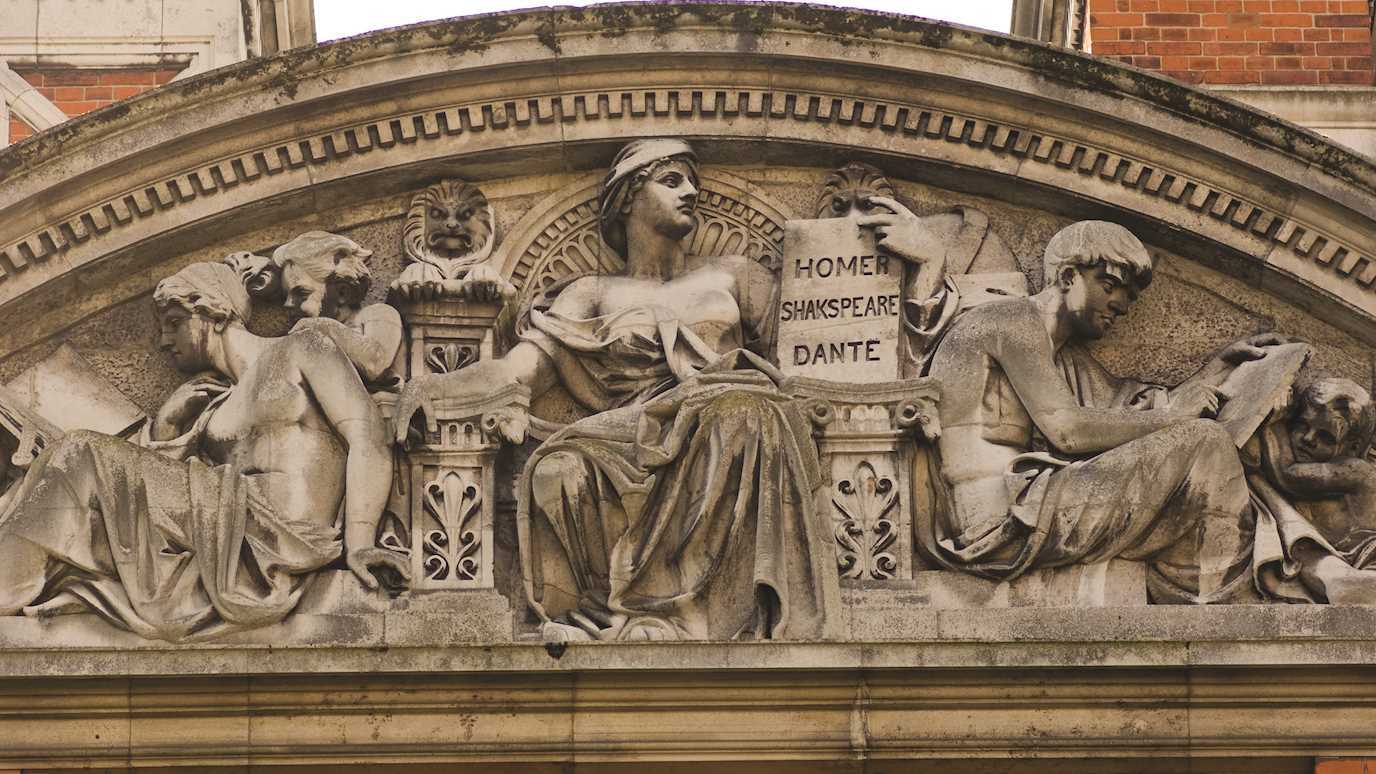
Royal Holloway and Bedford New College has commissioned a new portrait of Elizabeth Jesser Reid, founder of Bedford College and one of the nineteenth century’s most important advocates for women’s higher education. The artist undertaking this commission is Robin-Lee Hall, a renowned portrait painter and former President of the Royal Society of Portrait Painters.
The commission became possible thanks to the generous support received during the 175th anniversary celebrations of Bedford College to safeguard Bedford’s heritage and to ensure that the stories of its founders and students continue to be shared with future generations.
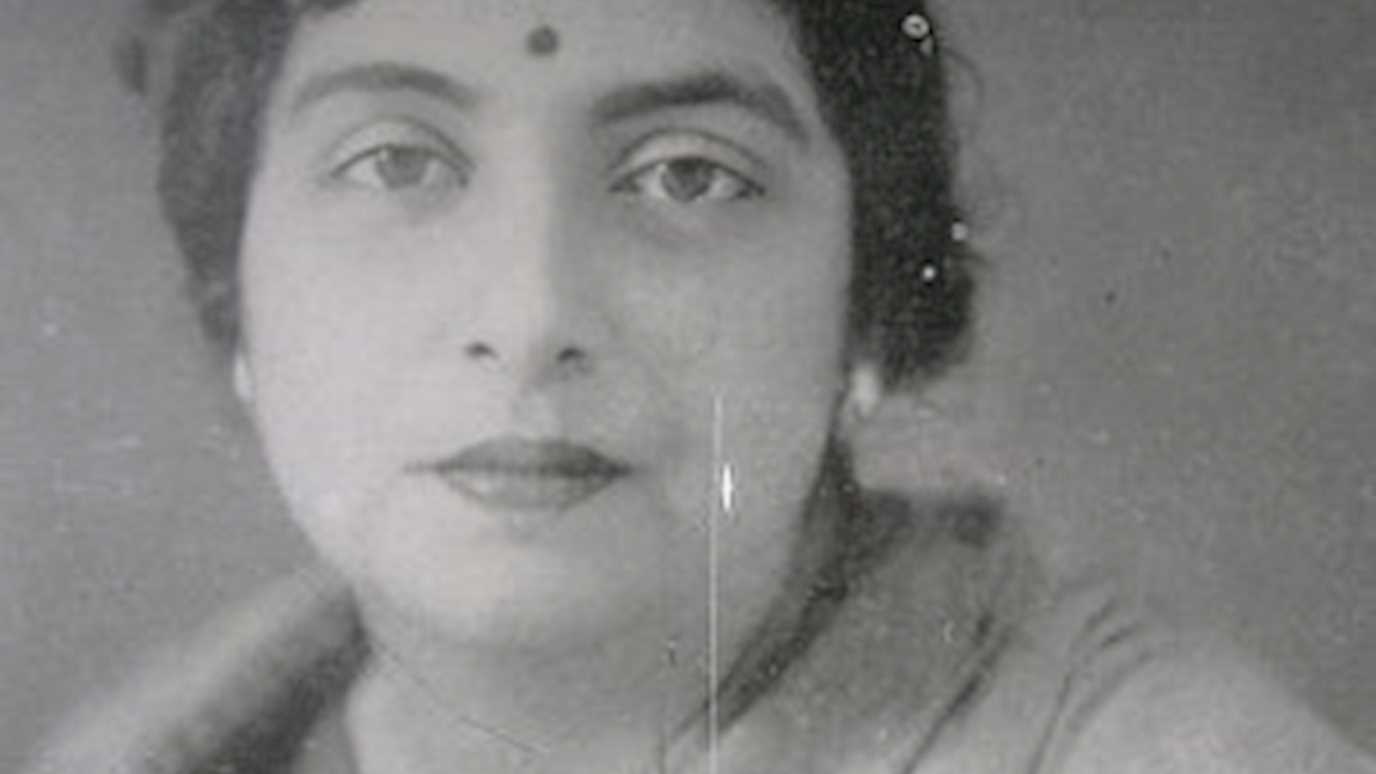
There is a particular urgency to this commission. No painted portrait of Elizabeth Jesser Reid is known to survive. The University’s collections contain only a single photographic likeness, taken late in her life. For a woman whose vision transformed educational opportunities for women, this absence has long been felt.
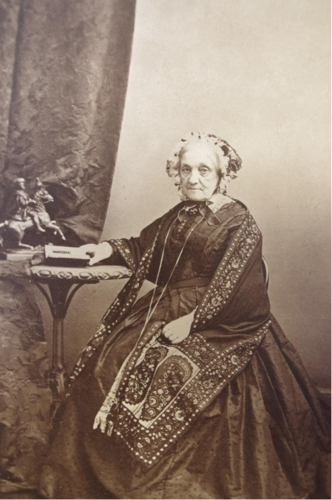
This photograph now forms the key source material for the new painting and will guide Robin-Lee Hall as she develops the likeness and character of the portrait.
Studying the Founder in the Archives
Work on the commission began in the summer of 2025, when Robin-Lee Hall visited Royal Holloway’s Archives and Special Collections. There she studied original documents, early photographs and contextual material relating to Elizabeth Jesser Reid, Bedford College and the women who studied and taught there.
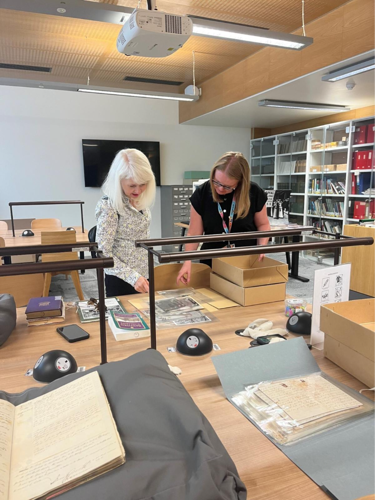
These visits allowed Hall to gain a sense not only of how Reid looked, but also of her values and the world she inhabited. Notes, letters and institutional records revealed a woman deeply committed to social reform and to widening access to education. This research will shape the tone and atmosphere of the final portrait.
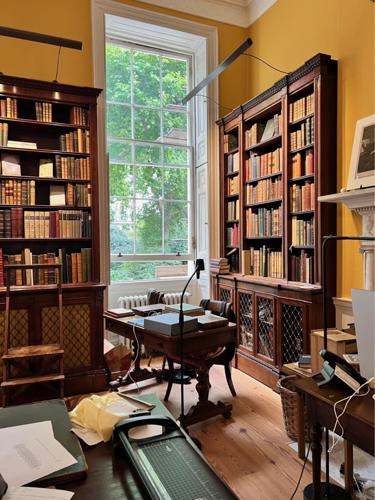
To deepen the sense of place, Hall also travelled to Bedford Square, the first home of Bedford College and now the premises of Maggs Bros. Ltd. Inside, she observed surviving architectural details such as window proportions, doorways and interior finishes that could provide a fitting backdrop for Reid.
Learning from Christiana Herringham
As part of her preparation, Hall has also spent time in the University’s art stores studying works by Christiana Jane Herringham. Herringham, an artist, scholar and campaigner for women’s rights, played a central role in reviving the technique of tempera in the late nineteenth and early twentieth centuries. Her husband, Sir Wilmot Herringham, was a member of Bedford College Council. Following Christiana’s death in 1929 he donated a substantial part of her collection to the College, giving it one of the most important groups of tempera works in the country.
Among the pieces Hall examined were Herringham’s detailed mixed media portrait studies in watercolour, gouache and tempera. These include an arresting image of a woman in a bonnet with a large white bow at her throat, where the face is carefully worked but the clothing remains loosely indicated, revealing the artist’s process from drawing to colour.
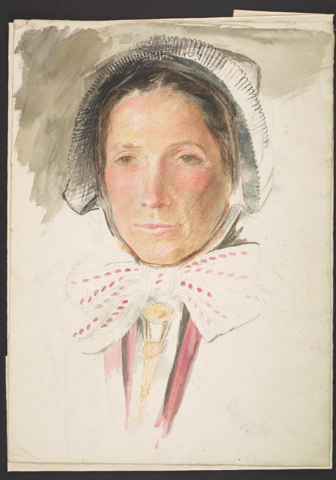
[Christiana Herringham, Woman Wearing a Black Bonnet with a Pink and White Bow (2019.74)]
A more fully developed version of the same sitter, now dressed in a richly painted blue shawl, shows how Herringham layered colour to bring both costume and character to life.
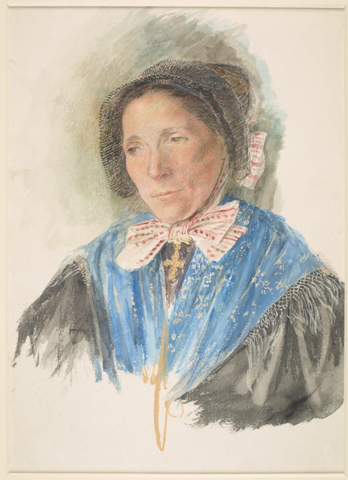
[Christiana Herringham, Woman Wearing a Black Bonnet and Dress, Blue Shawl, and White and Pink Bow (2019.75)]
Hall also looked closely at Herringham’s tempera copies after Italian Renaissance painters. These meticulous studies, such as the serene heads of angels and saints in profile or three-quarter view, reveal the artist’s fascination with the clarity and luminosity of Renaissance painting.
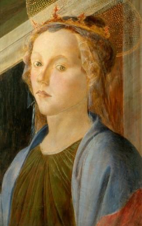
[Christiana Herringham, Head of St Catherine (after Sandro Botticelli), (PO145)]
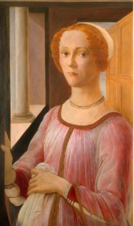
[Christiana Herringham, Portrait of a Lady Known as Smeralda Bandinelli (after Sandro Botticelli) (PO451)]
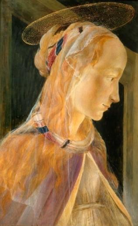
[Christiana Herringham, Head of the Magdalene (after Sandro Botticelli) (PO746)]
By engaging with these works at close range, Hall could see exactly how Herringham handled line, colour and glazing in tempera. This experience has fed directly into her own approach to the Elizabeth Jesser Reid commission and continues a conversation between two women artists separated by more than a century but united by their interest in the same demanding medium.
Choosing Egg Tempera
The new portrait will be painted in egg tempera, a medium closely associated with early Renaissance art. To make tempera, the artist mixes dry pigments with egg yolk and a little water to create a fast-drying paint. The surface is built up through countless fine strokes and glazes. Each layer is thin and translucent, allowing light to pass through and bounce back from the white ground beneath. The result is a painting with a distinctive inner glow, precise detail and remarkable longevity.
Robin-Lee Hall’s own preparatory studies demonstrate this process clearly. She begins with a highly controlled cross-hatched drawing in which every plane of the face is mapped through line. Delicate washes of colour are then added, first cool, then warm, and finally with subtle variations that suggest the shifting tones of skin, hair and fabric. As the layers accumulate, the figure gains solidity, depth and a quiet sense of presence.
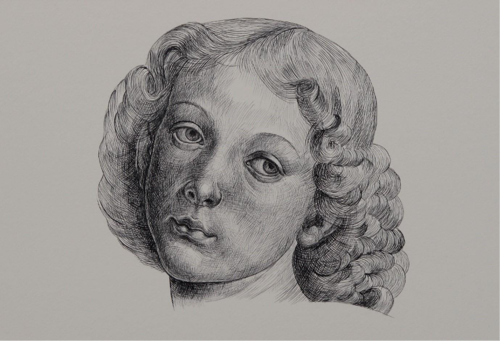
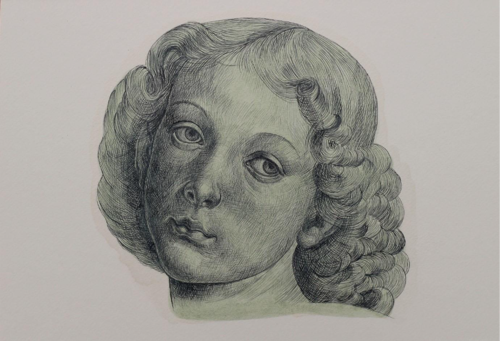
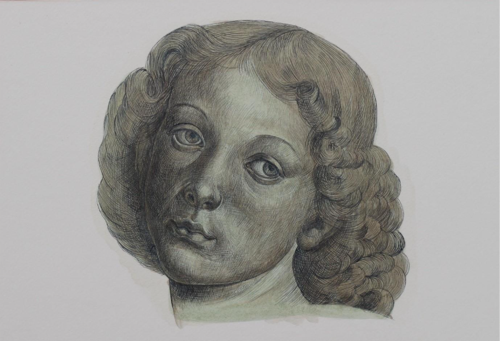
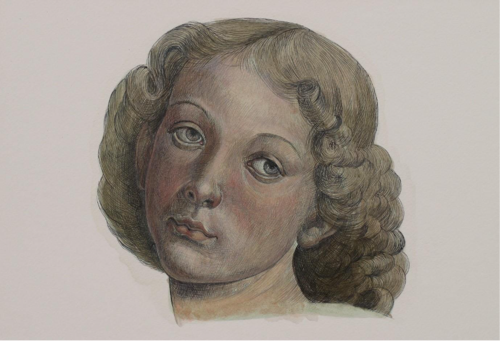
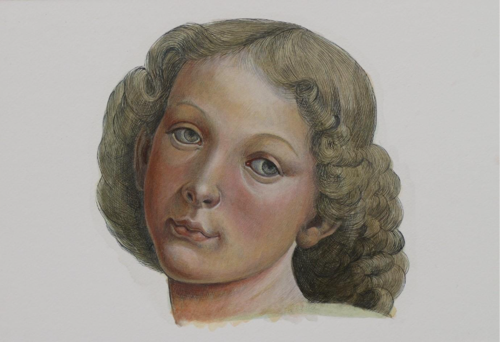
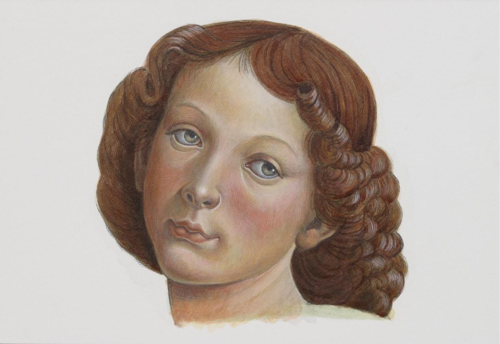
[Sequence of six studies of an angel’s head in tempera, moving from linear drawing to fully coloured head, courtesy of Robin-Lee Hall]
Hall explains her choice of medium in the following terms:
“Egg tempera lends itself to portrait painting because the layers are rather like the layers of skin on a person’s face. The process is quite slow in comparison with oil painting but it rewards patience with beautiful luminous colour and depth.”
The decision to use tempera therefore has both a technical and a symbolic dimension. It suits the archival nature of the source material and resonates deeply with the history of Bedford College’s art collection and its association with Christiana Herringham.
In the Studio
Back in her studio, Hall has been working from the archival photograph and her research at Bedford Square to develop compositional ideas that balance likeness, scale and setting and how references to architecture and interior space might support the narrative of the portrait. As the source material is black and white, she also plans to visit the V&A to see what colour dress a lady of this class and period might wear.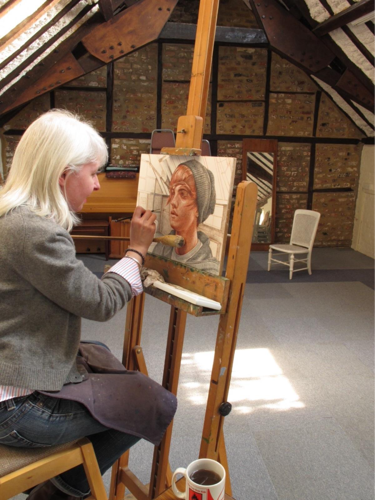
Looking Ahead
The completed portrait is expected this summer. Once finished, it will join the public art collection of Royal Holloway and Bedford New College, giving Elizabeth Jesser Reid the visibility her achievements deserve. It will be used in teaching and research, featured in exhibitions and events, and encountered by students, staff, alumni and visitors as a reminder of the values on which Bedford College was founded.
By bringing together careful archival research, the historic technique of egg tempera and the rich legacy of Christiana Herringham’s work in the University collection, this commission offers not only a new image of a remarkable woman but also a renewed connection between Bedford’s past and its future.